

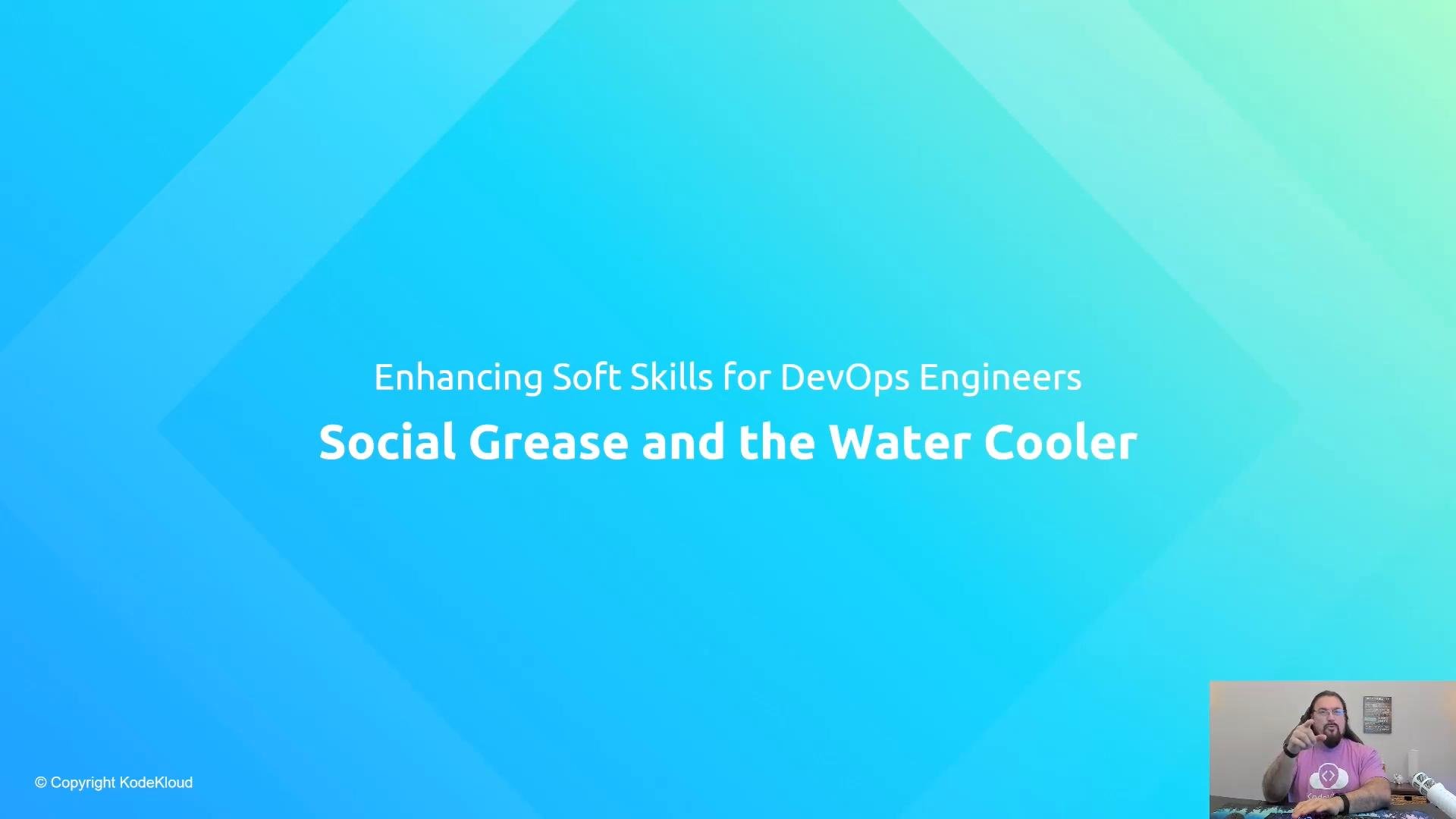
- Social grease is the informal, often invisible social currency accumulated through casual, non-work interactions.
- These moments—smalltalk in hallways, quick Slack jokes, or a coffee break—give context about someone’s background, temperament, and interests. That context reduces friction during future professional interactions and makes collaboration smoother.
- Speed: People who already know and trust one another communicate faster during incidents or tight deadlines.
- Context: Personal insights reduce misunderstandings and help tailor requests so they’re easier to accept.
- Psychological safety: Casual interactions help normalize vulnerability and increase willingness to ask for help.
- “Water cooler” refers to any casual gathering spot—physical or virtual—where unstructured conversations happen. Today this could be a coffee station, a Slack channel, or a recurring “no-agenda” video hangout.
- These spaces let teams share early signals you might not hear in formal meetings: a platform upgrade, budget changes, or someone’s migration to a new technology.
- Be curious: Ask about weekends, hobbies, or projects outside work. Small, genuine questions build rapport faster than long forced conversations.
- Surface-level is OK: You don’t need deep friendship to gain social grease—regular short interactions are enough.
- Facilitate visibility: Spotlight teammates during all-hands, rotate “show-and-tell” demos, or run lightning talks so people learn about each other’s skills and interests.
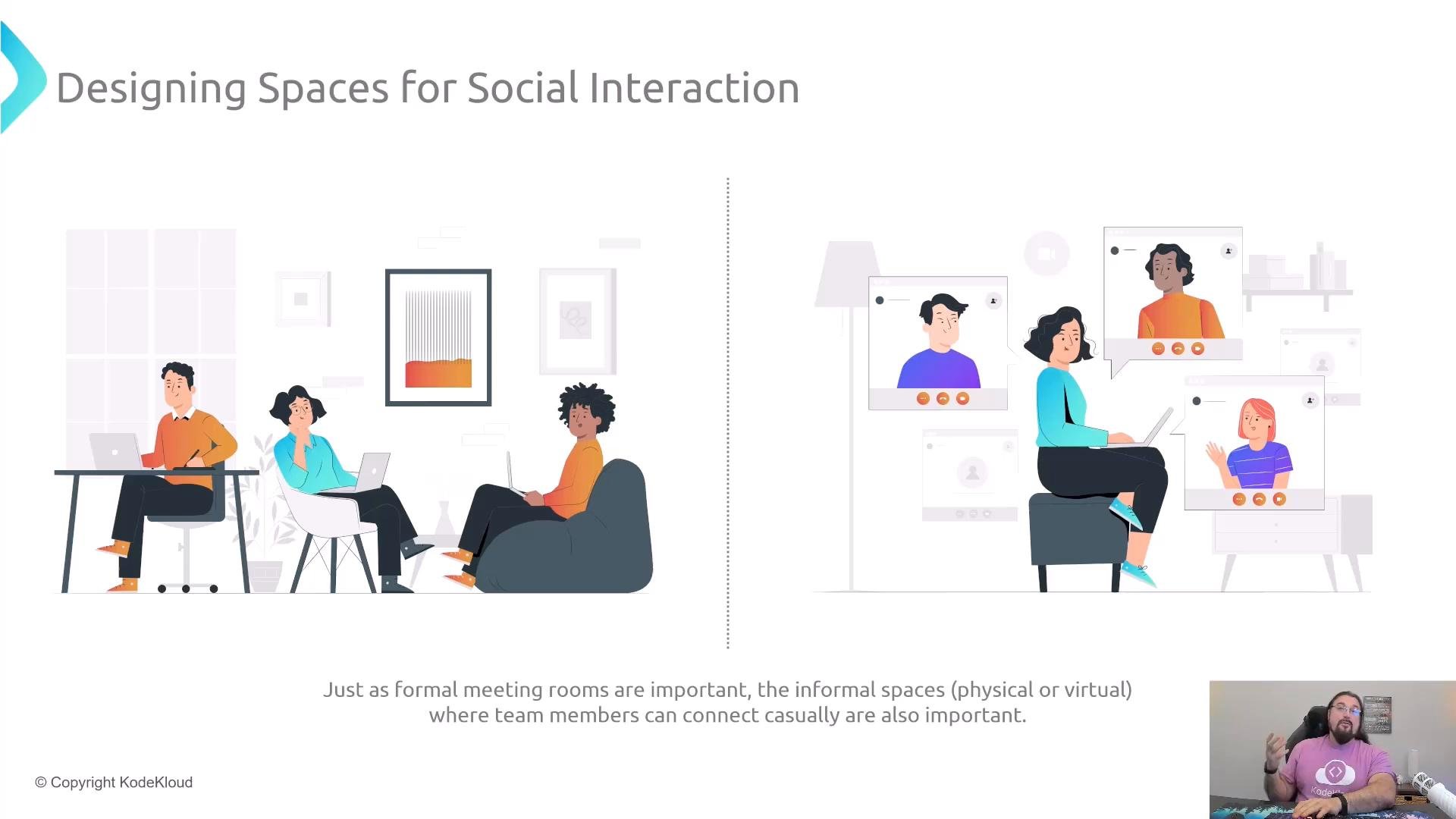
Remote teams: create a dedicated, low-pressure channel (e.g.,
#watercooler) for shareable non-critical items, schedule optional virtual coffee chats, and run short “get-to-know” segments during team meetings. Consistency beats volume—regular 10–15 minute informal windows work well.
Why this matters for DevOps
- DevOps and incident response are high-pressure, collaborative activities. Social grease reduces coordination overhead when you’re troubleshooting or firefighting.
- Knowing how teammates think and what calms them can accelerate decisions and improve resilience during outages.
- Teams with pre-existing informal connections are more likely to collaborate and share knowledge proactively.
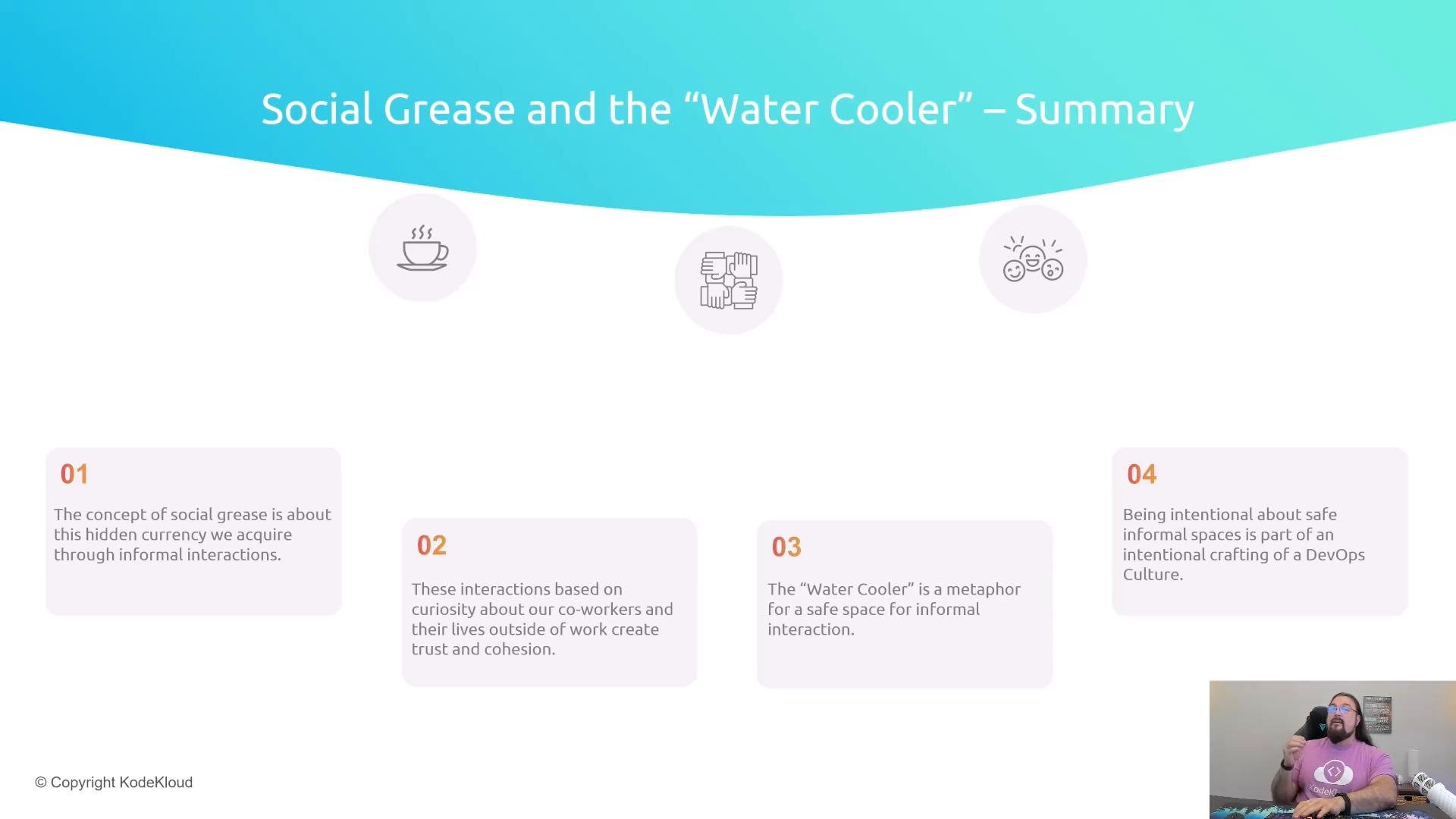
- Social grease is the informal trust and goodwill built through casual interactions.
- The water cooler is a metaphor for informal spaces—physical or virtual—where those interactions happen.
- Small acts of curiosity and intentional spaces for casual conversation build rapport, speed collaboration, and improve responses under stress.
- Leaders who encourage low-pressure social spaces strengthen team cohesion and problem-solving ability.
- Where is your safe space at work—digital or physical?
- What small steps can you take this week to add a little more social grease to your team?