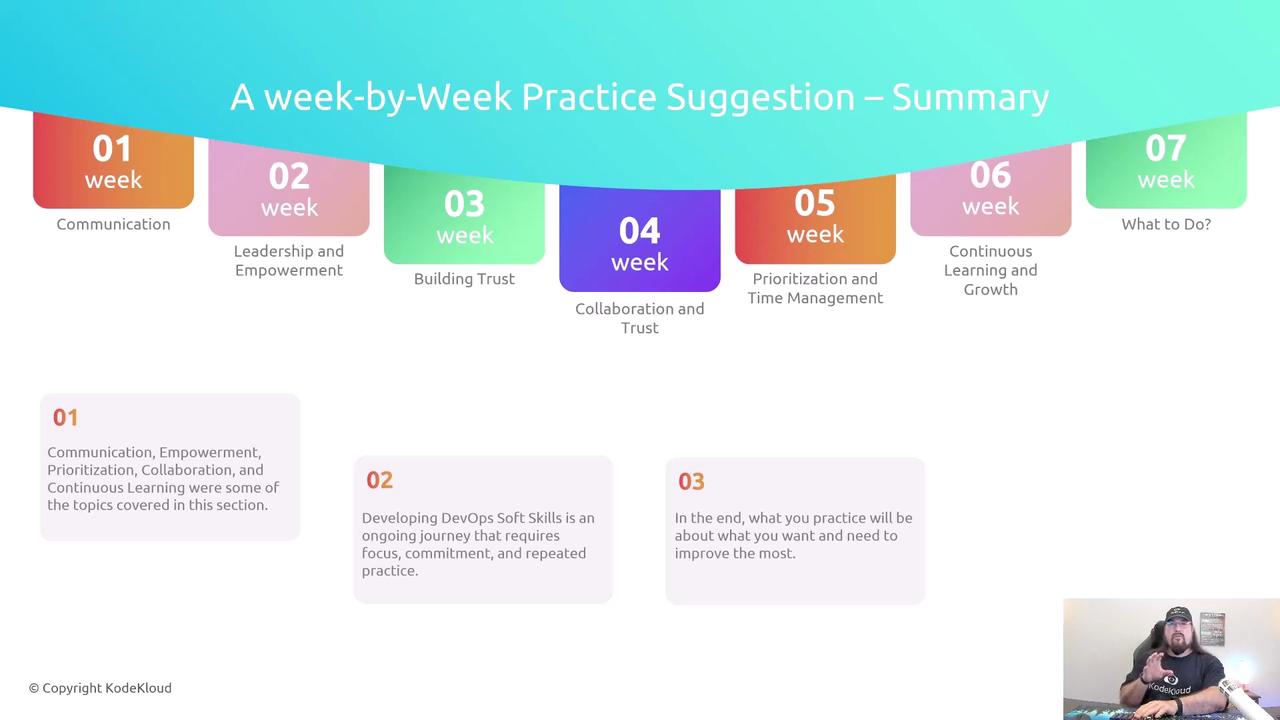
Adapt this roadmap to your team’s context and your personal goals. Use it as a springboard for deeper research, peer feedback, and real-world application.
At a Glance: Weekly Focus
Week 1: Communication
Mastering effective communication sets the foundation for every DevOps team.- Active Listening: Absorb and confirm understanding.
Example:
“Problems with testing? Tell me more about them.” - Clear & Concise Writing: Focus on one of the 7 C’s each day:
- Monday: Clarity
- Tuesday: Conciseness
- Wednesday: Correctness (grammar & spelling)

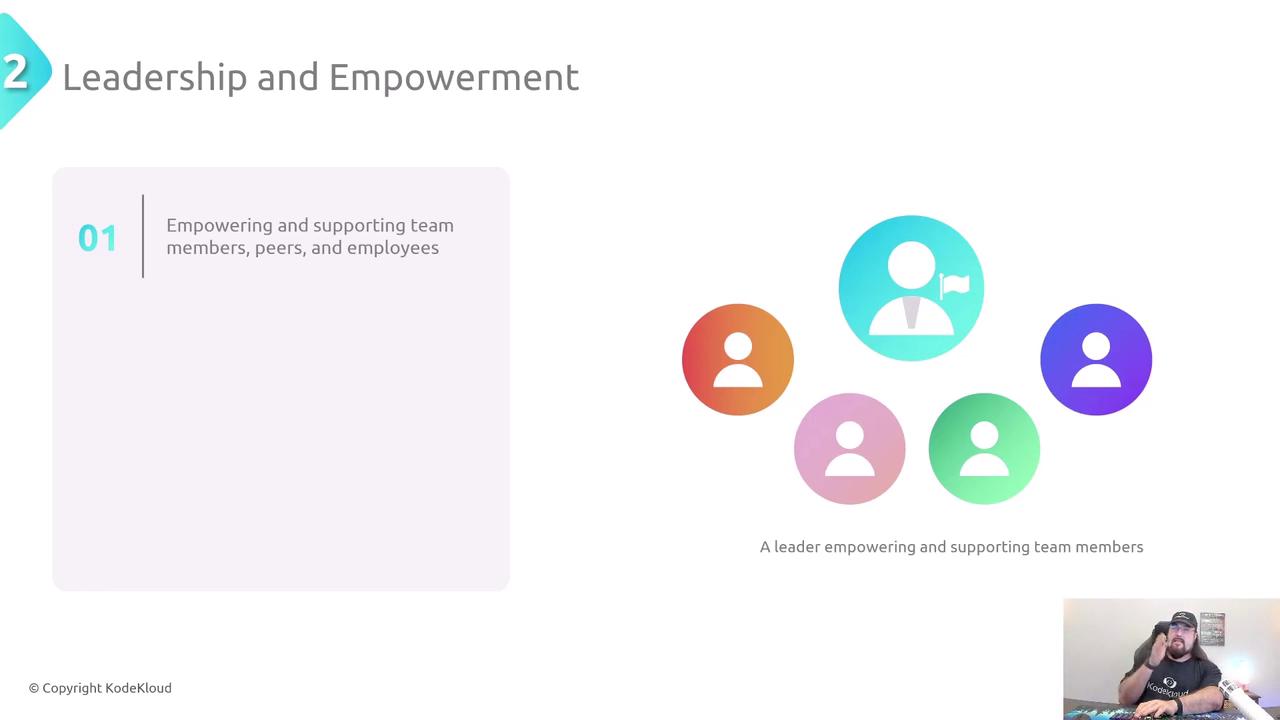
Week 2: Leadership & Empowerment
Empower your peers and foster ownership.- Delegate meaningful tasks while offering guidance.
- Celebrate wins and recognize contributions.
- Request feedback:
“I’m refining my leadership style—what could I do differently?”
Week 3: Building Trust
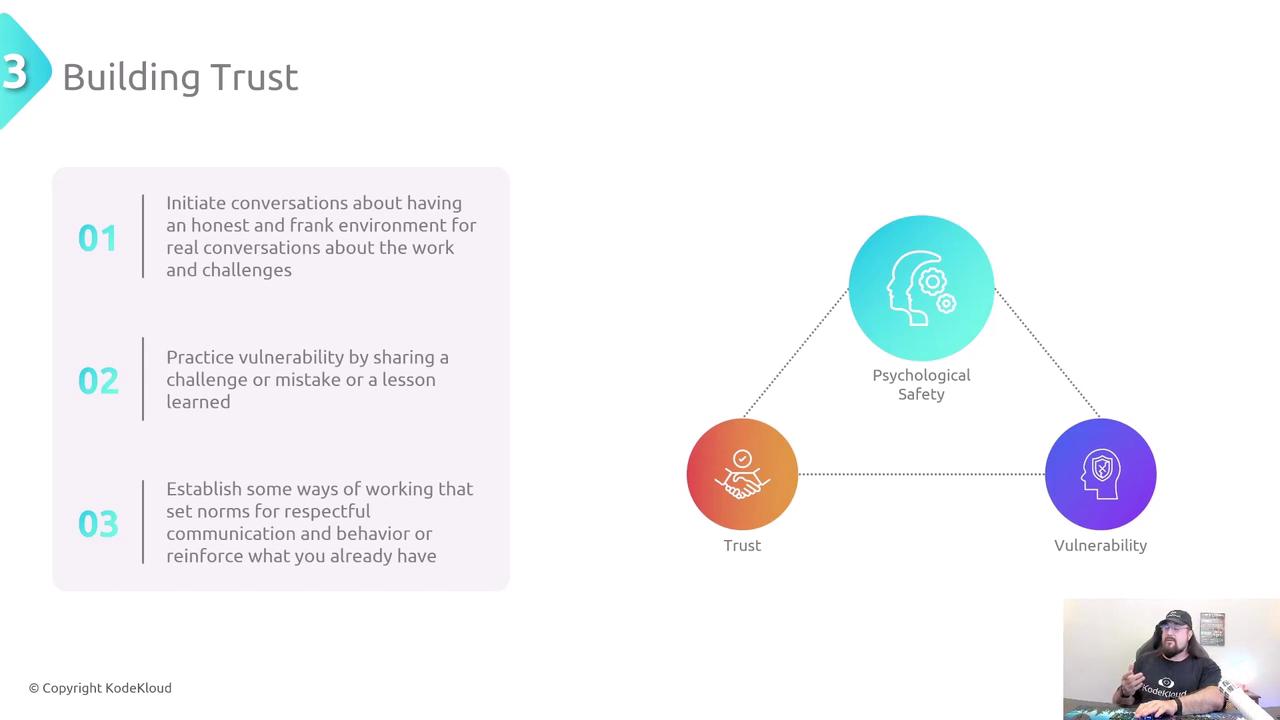
Trust is the backbone of high-performing teams.- Hold honest conversations about challenges and successes.
- Share mistakes and lessons learned in retrospectives.
- Create a working agreement with norms for respect and quality.
Week 4: Collaboration
Translate trust into productive teamwork.- Host knowledge-sharing sessions (huddles, Discord, Slack).
Prompt: “What’s one insight you discovered this week?” - Launch learning circles focused on software testing, microservices, or Kubernetes.
- Practice pair or mob programming to tackle real issues together.

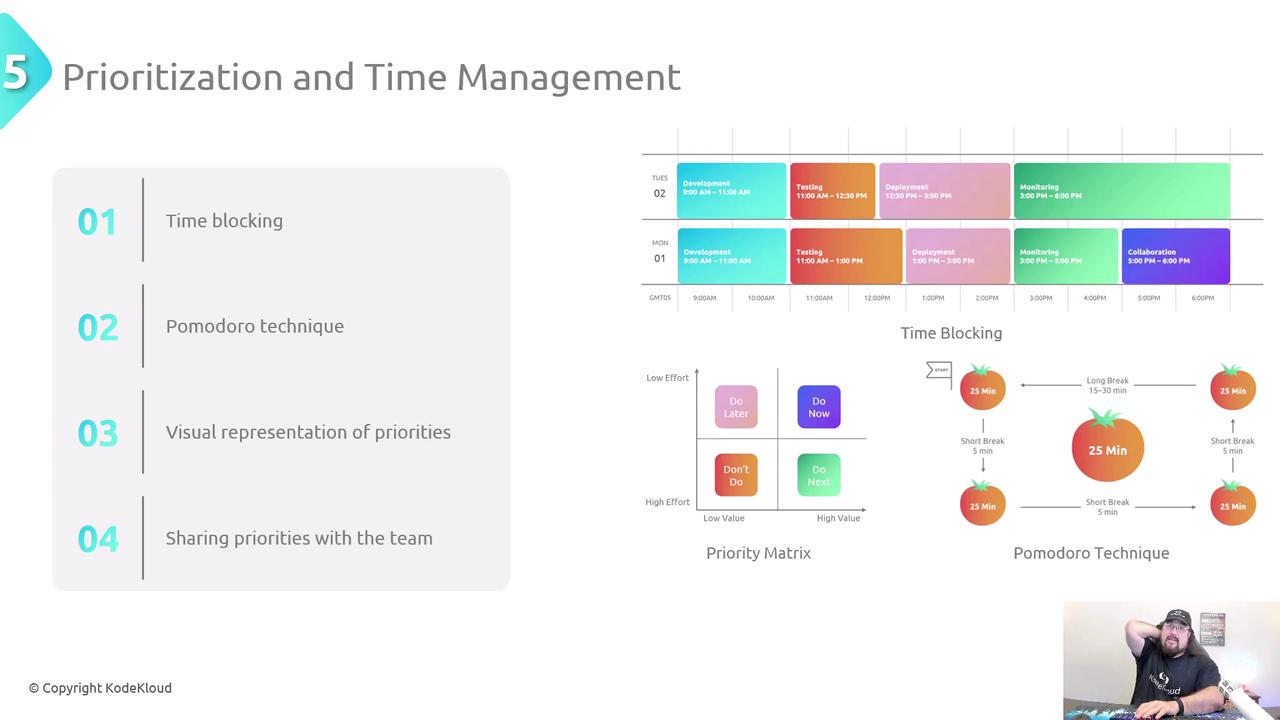
Week 5: Prioritization & Time Management
Optimize your workflow with proven techniques.- Time Blocking: Reserve dedicated slots (e.g., two hours) for deep work.
- Pomodoro Technique: 25 min work, 5 min break; after four cycles, take a longer break.
- Visual Board: Keep a live priority board (Kanban or Trello) and share updates with your team.
Avoid multitasking. Context switching can drop productivity by up to 40%. Stick to one focus block at a time.
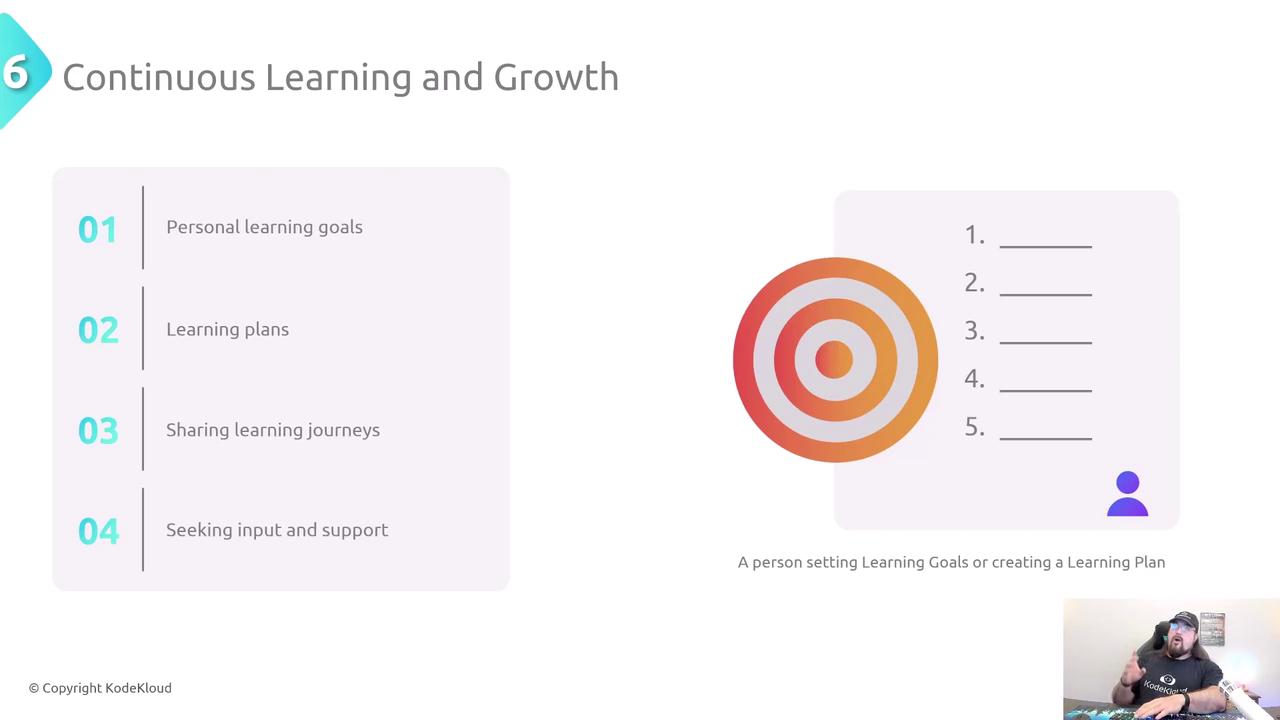
Week 6: Continuous Learning & Growth
Stay ahead in the fast-evolving DevOps landscape.- Define learning goals: certifications, AI, Kubernetes, new CI/CD pipelines.
- Break goals into milestones (tutorials, hands-on projects, exams).
- Share progress and solicit feedback:
“I’m targeting these certifications—any recommendations?”
Beyond Week 6: Reflection & Next Steps
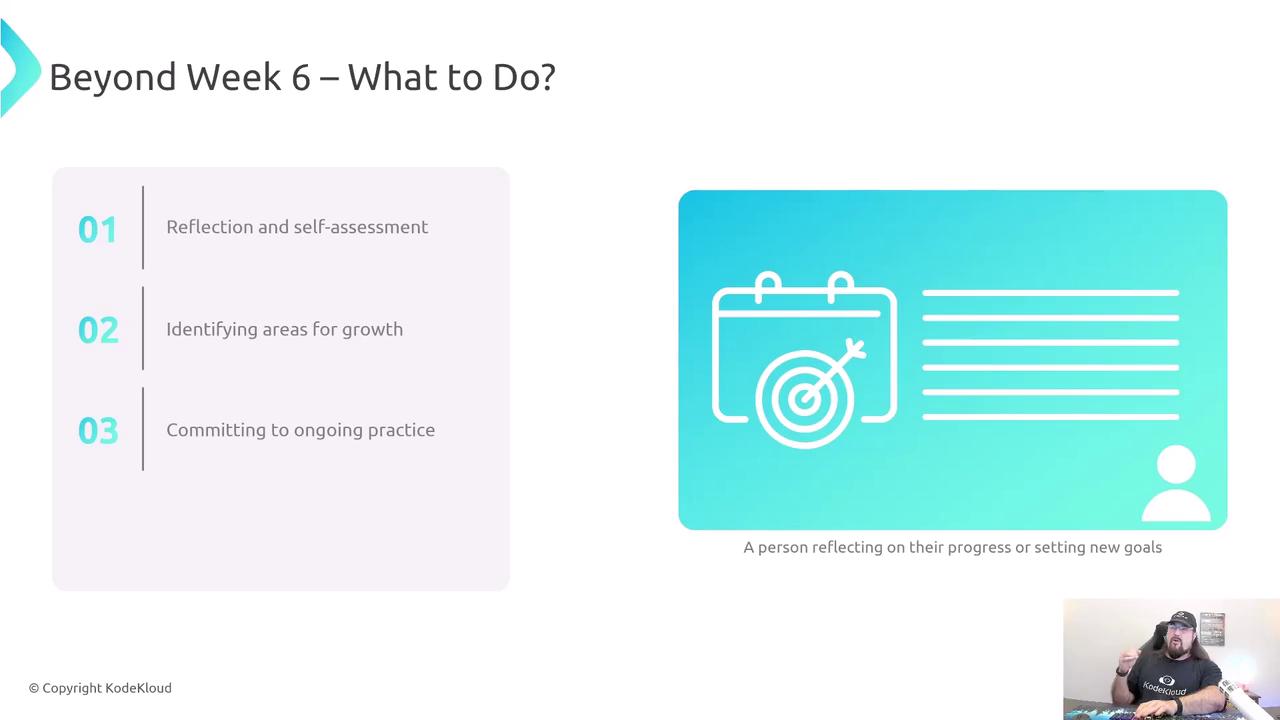
Keep momentum by:- Reviewing your progress and setting fresh goals.
- Identifying skill gaps (e.g., negotiation, client management).
- Committing to ongoing practice and advanced topics.
- “How can I better understand stakeholder needs?”
- “What adds the most value for my clients?”
Summary & Resources
You’ve built a flexible, week-by-week blueprint for DevOps soft skills. Tailor it to your context, repeat cycles as needed, and link these skills to your technical mastery.