

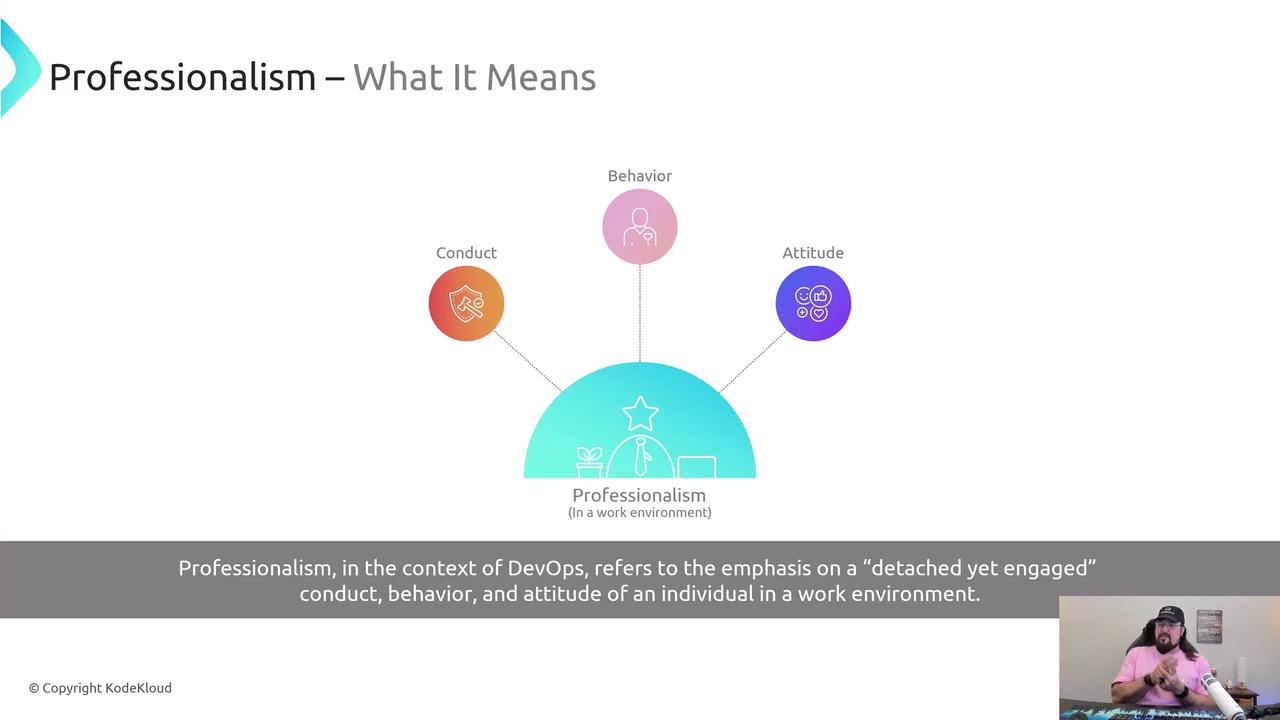
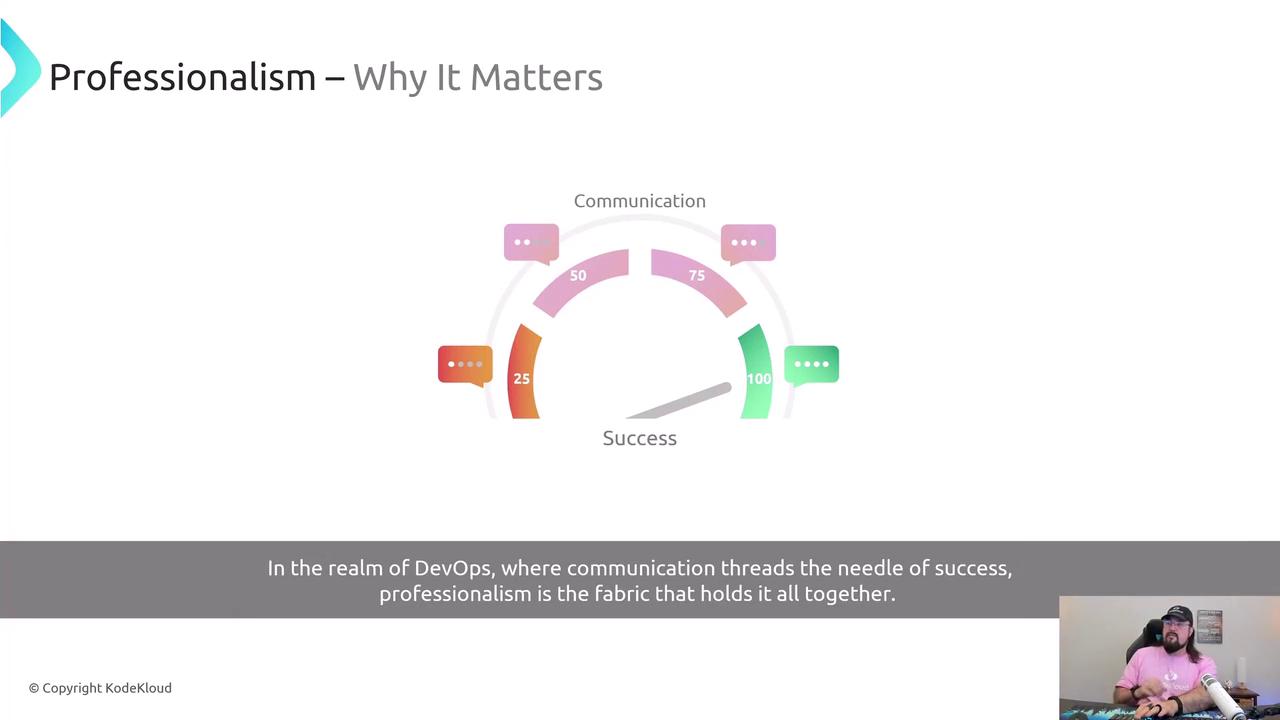
Why Professionalism Matters in DevOps
Professionalism is the foundation of career growth and high-performing teams. When you communicate clearly, deliver on commitments, and project confidence, you:- Strengthen collaboration across development and operations
- Build credibility with stakeholders and leadership
- Promote a culture of continuous improvement
Defining Professional Behaviors in DevOps
Below are concrete behaviors that make professionalism actionable in a DevOps environment: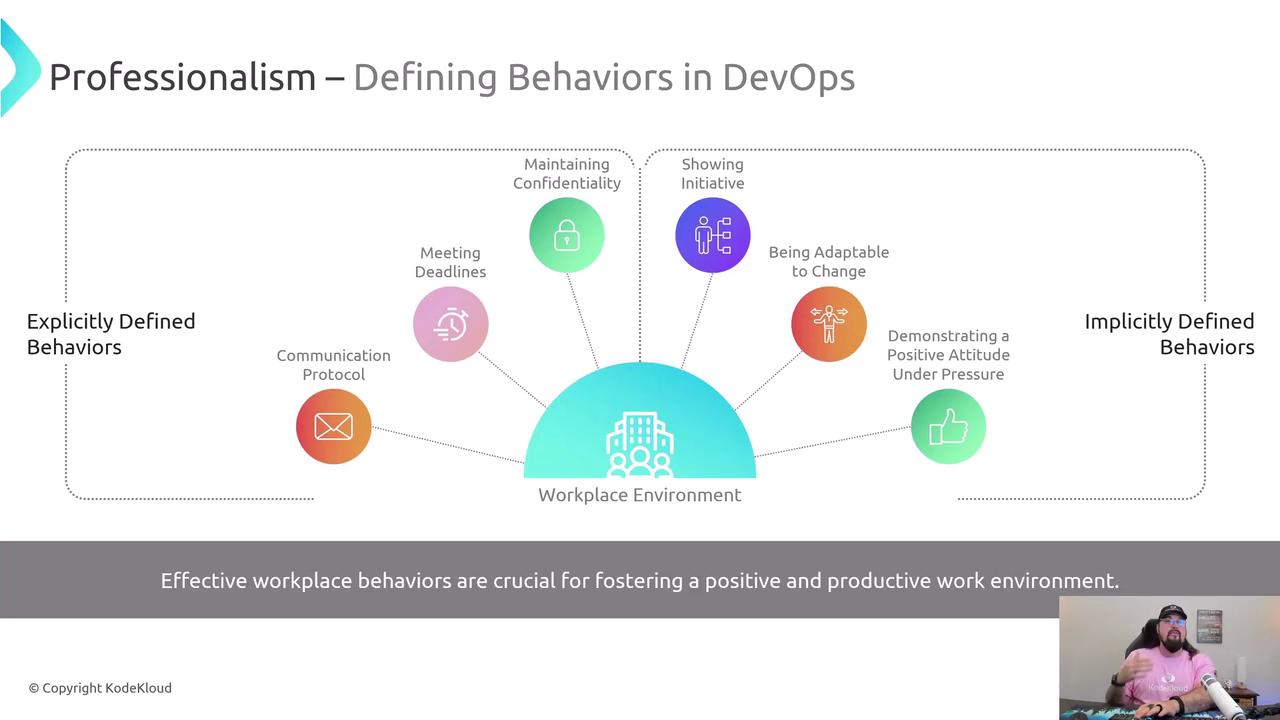
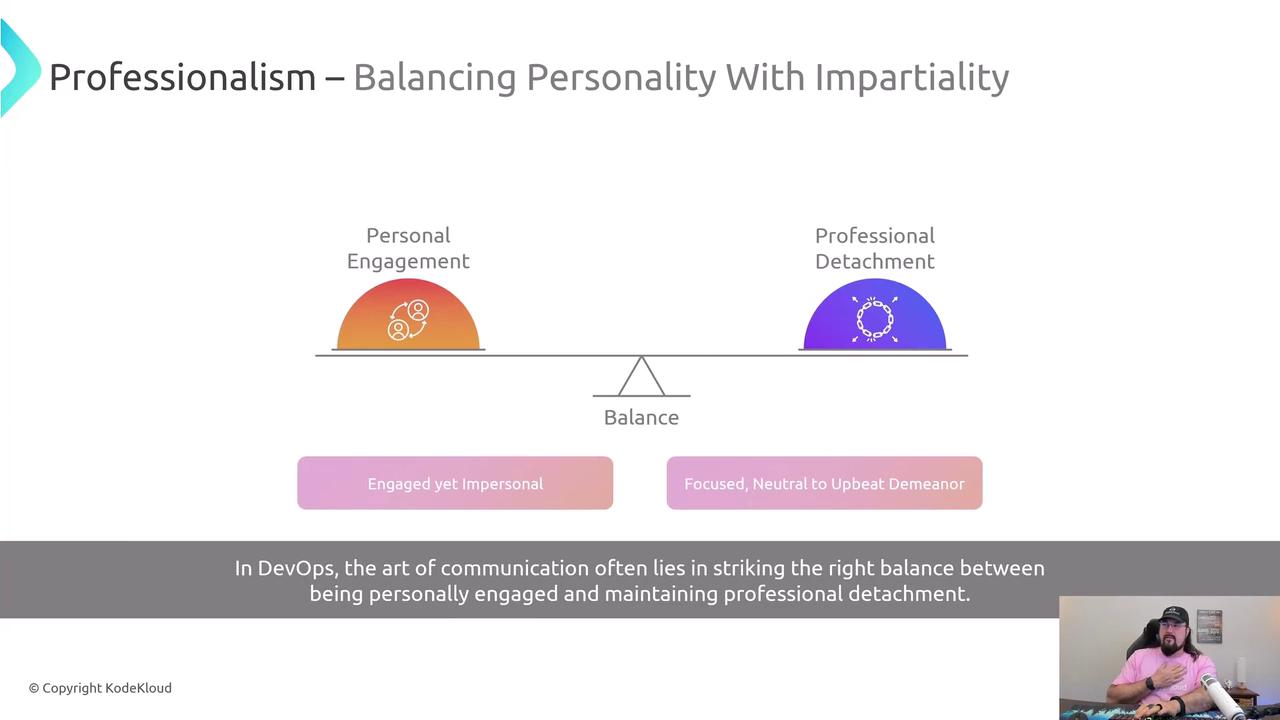
Balancing Engagement and Detachment
Professionalism means staying present and empathetic while protecting your focus. To strike this balance:- Bring your full expertise and humanity to each task
- Compartmentalize off-topic personal matters during core work hours
Avoid disengaging entirely. Professional detachment means managing personal matters, not ignoring team dynamics or feedback.
Applying Professionalism in Every Interaction
Every message—written, verbal, or nonverbal—is an opportunity to reinforce your professional brand. Keep the Seven C’s in mind:- Clarity
- Completeness
- Conciseness
- Courtesy
- Correctness
- Concreteness
- Consideration
- Timely and responsive
- Constructive and forward-thinking (without forcing unsustainable change)
- Consistent in word and deed

Strategies for Navigating Challenges
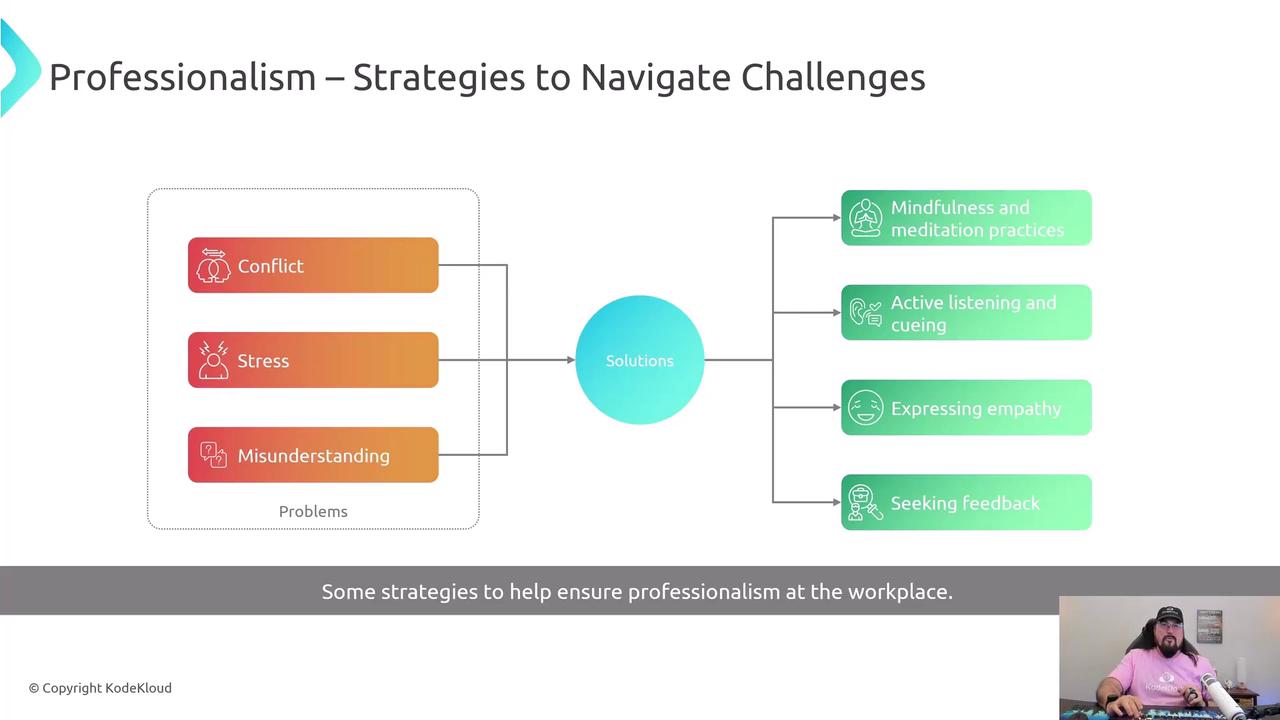
Conflict, stress, and misunderstandings test professional composure. Use these tactics to turn obstacles into growth opportunities:- Mindfulness Practices: Short, corporate-friendly meditation to reset focus.
- Active Listening: Signal engagement with phrases like “Great point!” to foster open dialogue.
- Empathy: Show genuine concern without overstepping boundaries.
- Feedback-Seeking: Engage peers or leaders early to co-create solutions.
Summary of Professionalism Elements
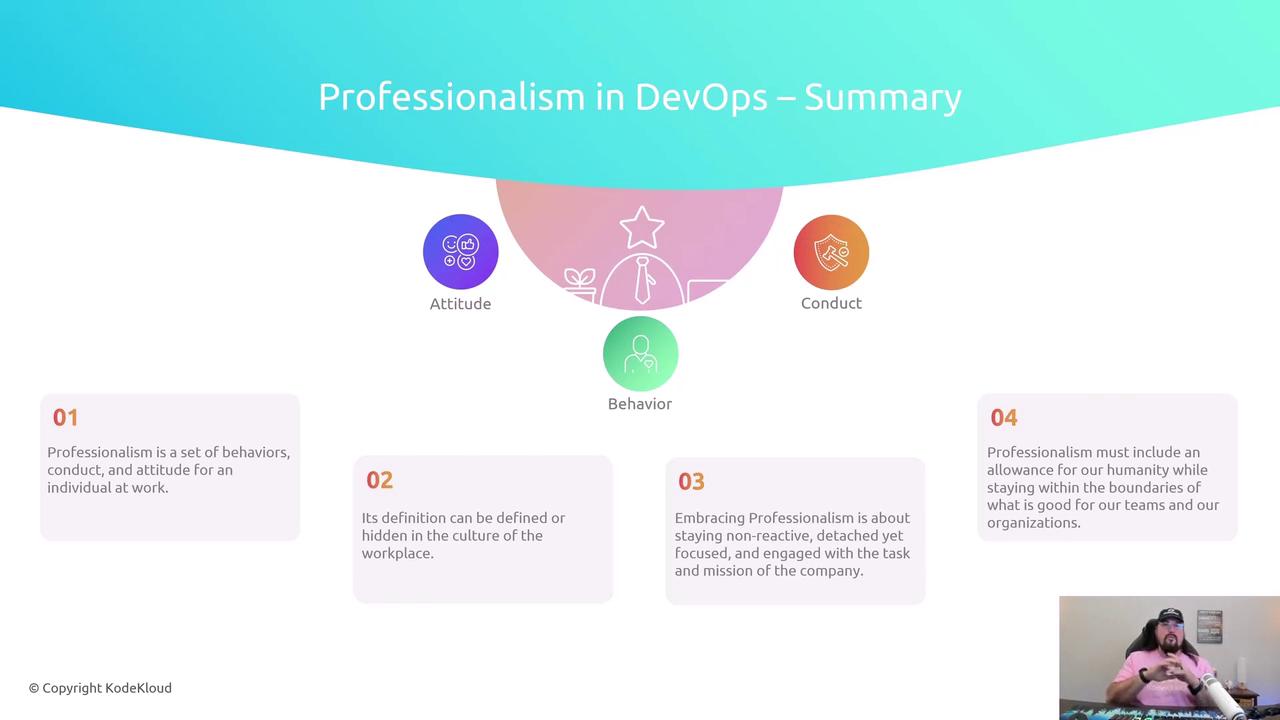
Professional norms vary by industry and company culture. Adapt these principles to your organization’s expectations while preserving the core of engagement, non-reactivity, and goal-orientation.