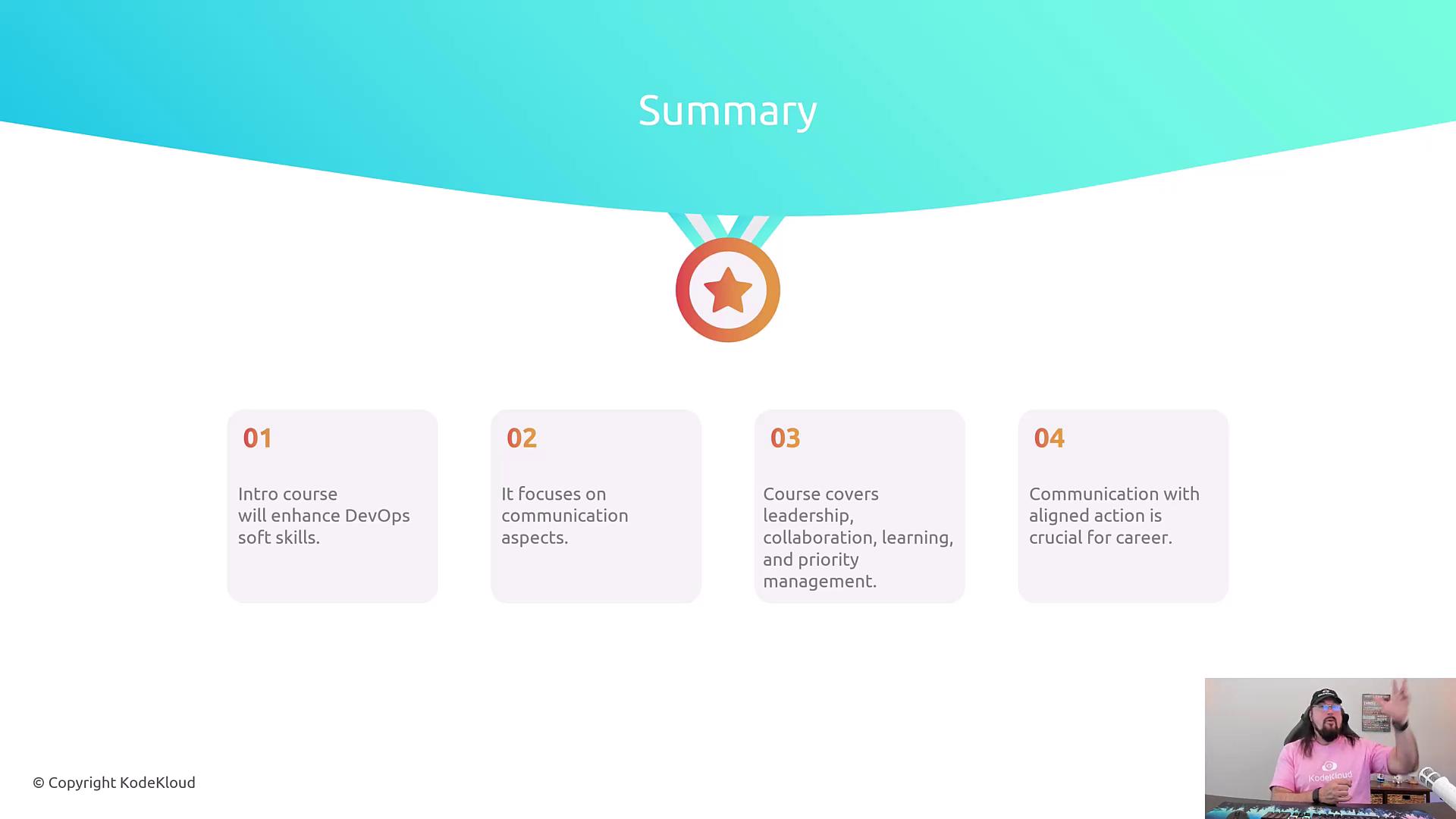
Enhancing non-technical skills is just as critical as mastering tools in modern DevOps teams.
1. Effective Communication Drives Team Productivity
Research from McKinsey, CMSWire, and Think Talent shows that improving team communication can increase productivity by 20–25%. Organizations with top-tier communication practices achieve up to 3.5× higher output, better alignment, and superior quality—directly satisfying customer expectations.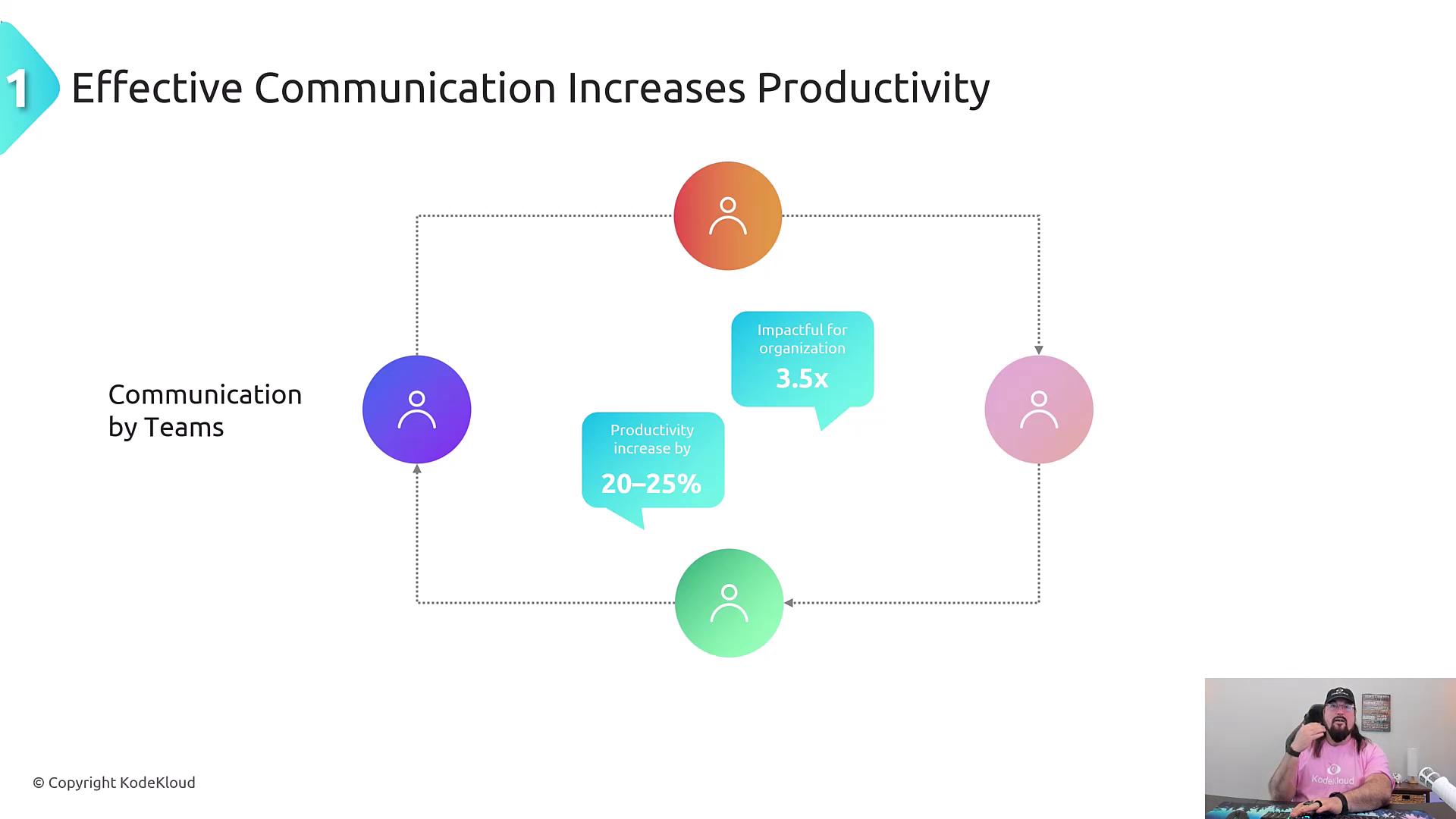
2. Collaboration Boosts Workplace Satisfaction
When team members build genuine connections beyond task-related discussions, trust and engagement soar. A collaborative environment feels like a community, driving satisfaction and retention.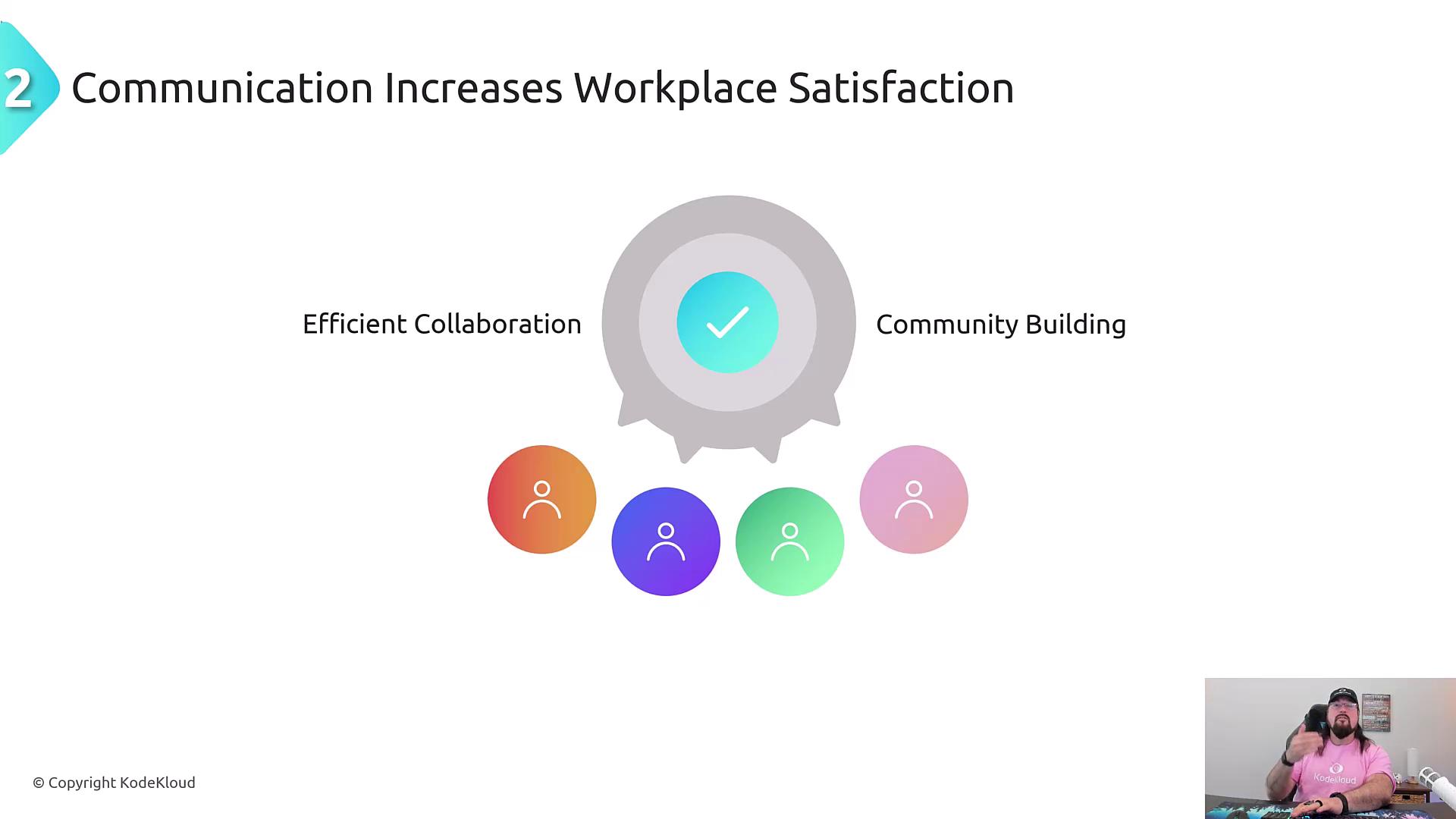
3. Clear Communication Forges Trust
Trust emerges when commitments are honored and values are shared. Consistency in messaging ensures every team member aligns with organizational goals, creating a foundation for high performance.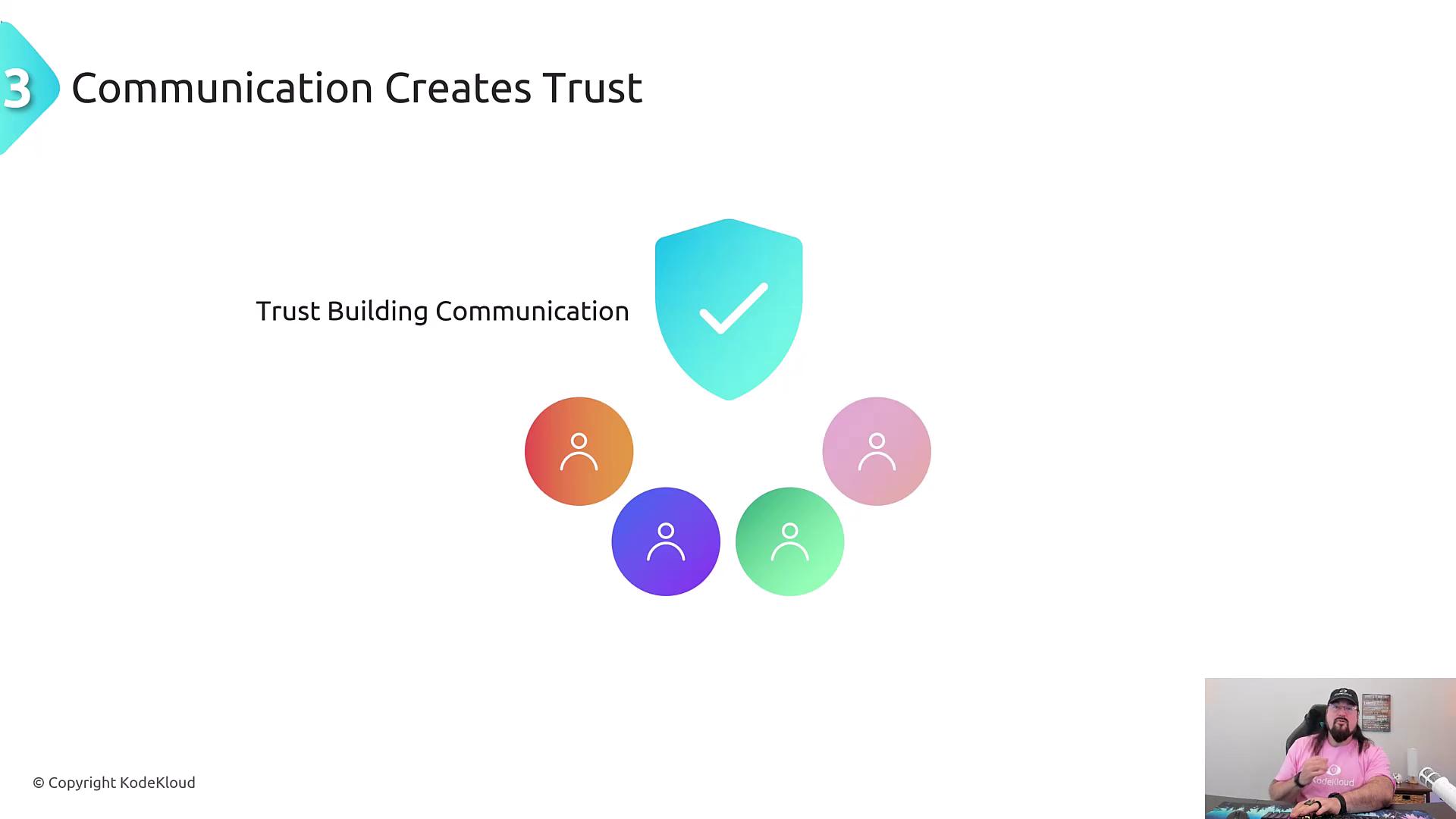
4. Beyond Communication: Comprehensive Soft Skills Coverage
While communication underpins every lesson, this course also dives into: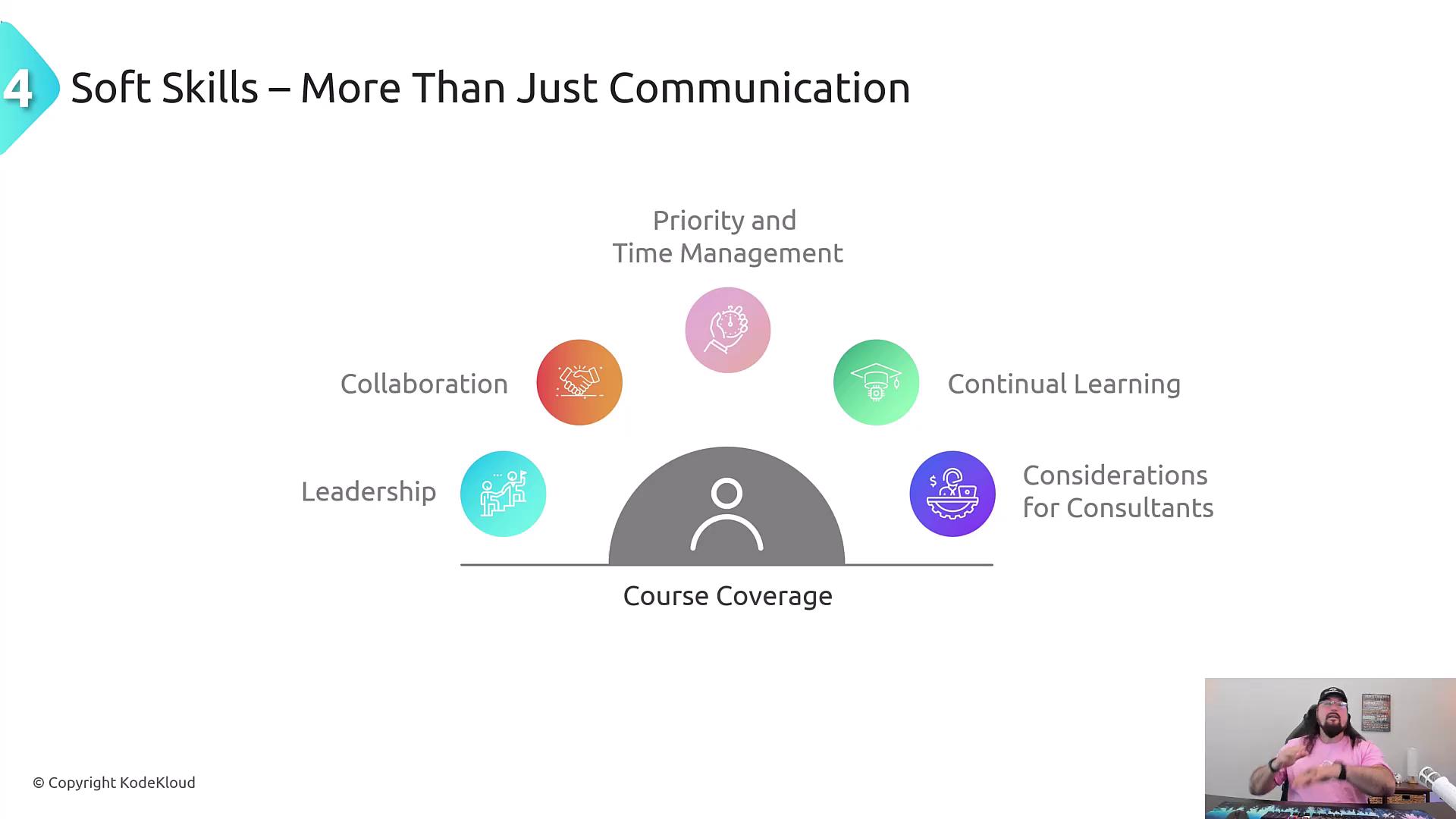
5. People Are Harder to Manage Than Technology
With nearly 30 years in IT—from help desk roles to positions at ThoughtWorks, Red Hat, and AWS—I’ve found that team dynamics often present bigger challenges than coding or Kubernetes operations. Mastering soft skills accelerates career growth far beyond technical expertise alone.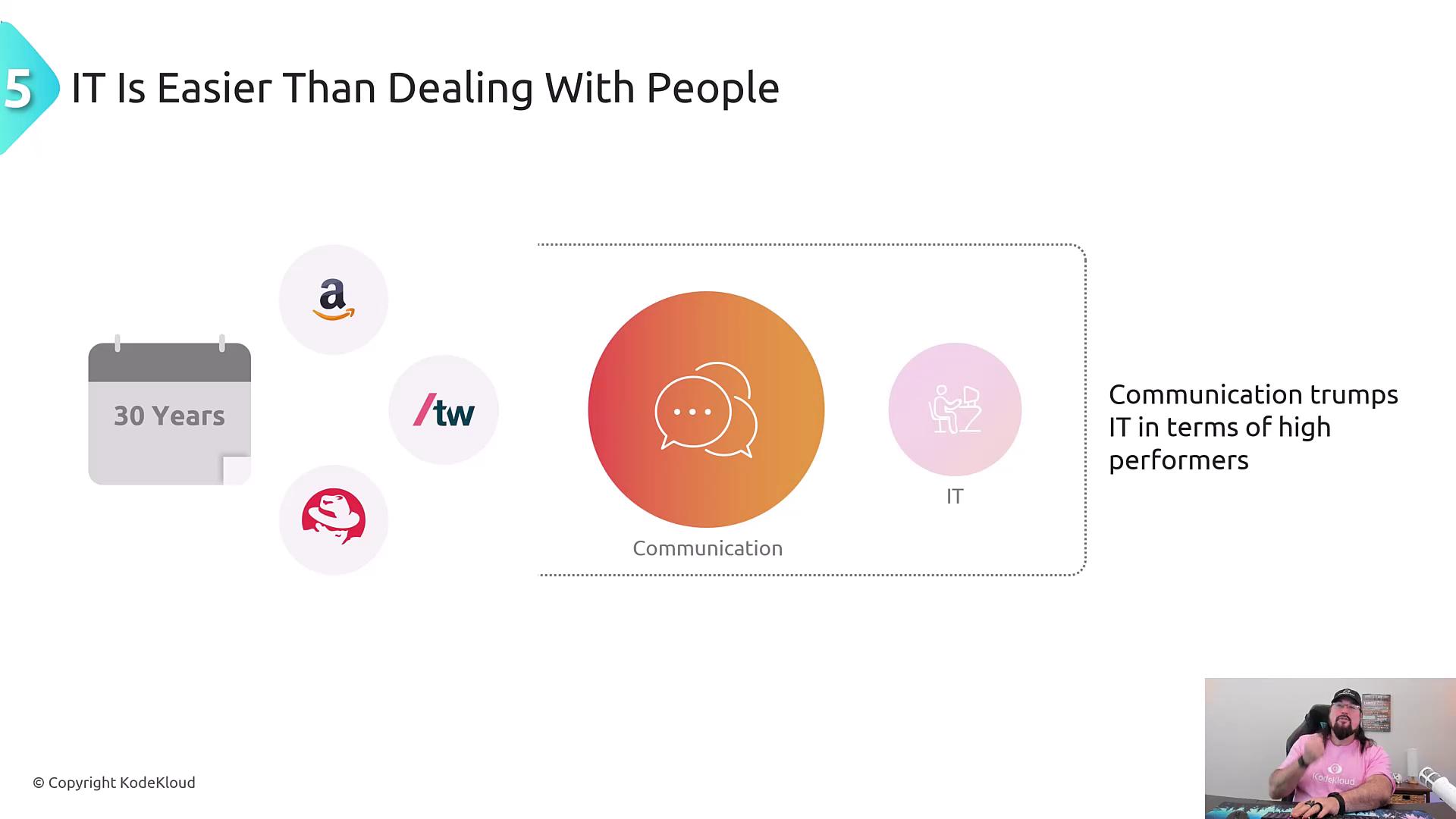
About the Instructor
I’m Michael Forrester, a KodeKloud instructor with almost three decades in IT. I’ve guided organizations through virtualization, cloud migration, containerization, and now AI. Throughout, communication has been the linchpin of success. Today, I specialize in organizational transformation, helping teams perform at their best.Course Summary
You’ll master these core areas:
Aligned communication and action will help you meet—or exceed—expectations from customers, peers, and leadership. This course equips you with the essential soft skills to thrive in any DevOps environment.