

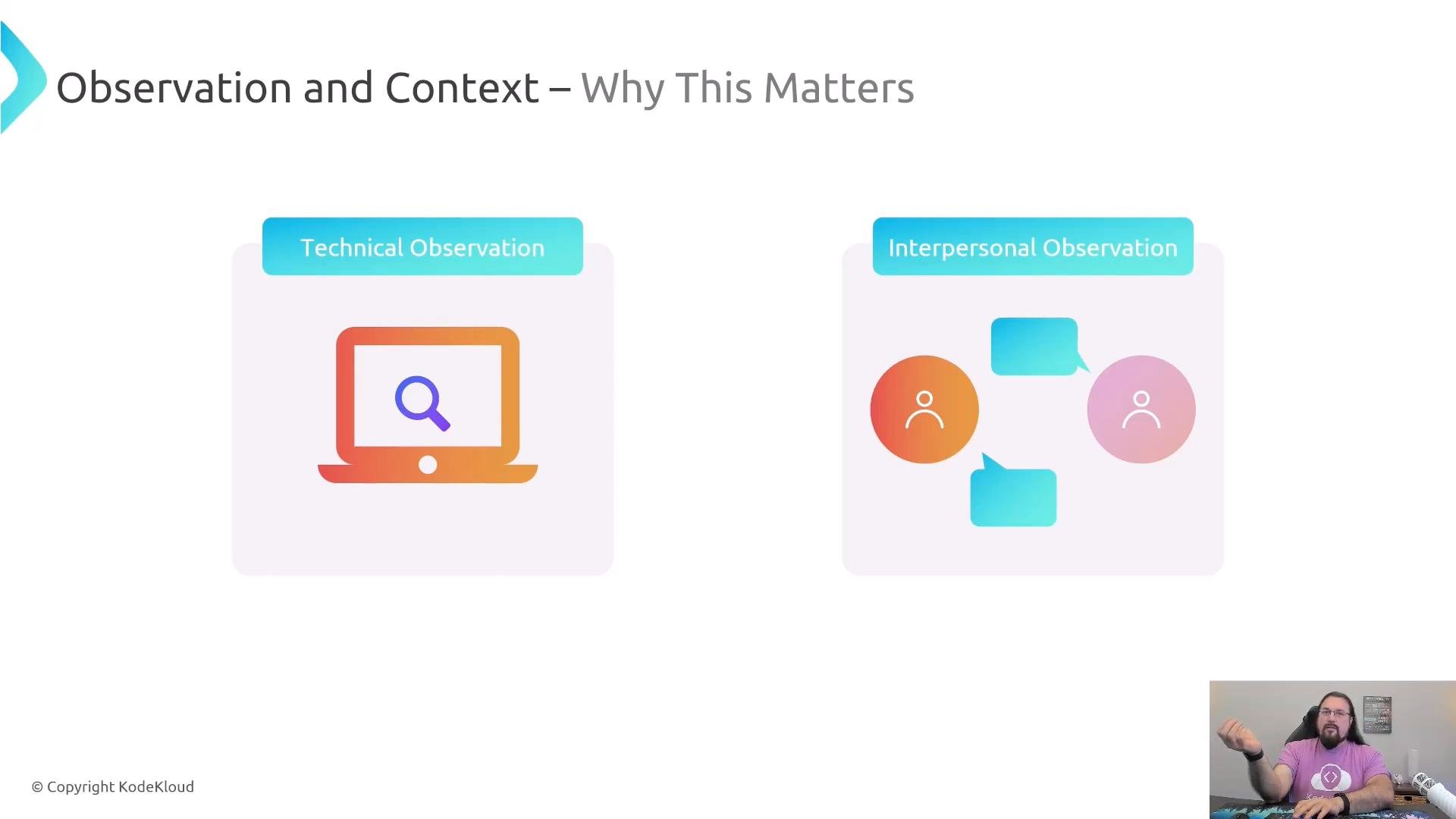
- Notice verbal cues (word choice, emphasis) and nonverbal cues (tone, posture, facial expression).
- Form lightweight hypotheses about why someone reacts as they do.
- Try small, low-cost experiments to test hypotheses and observe outcomes.
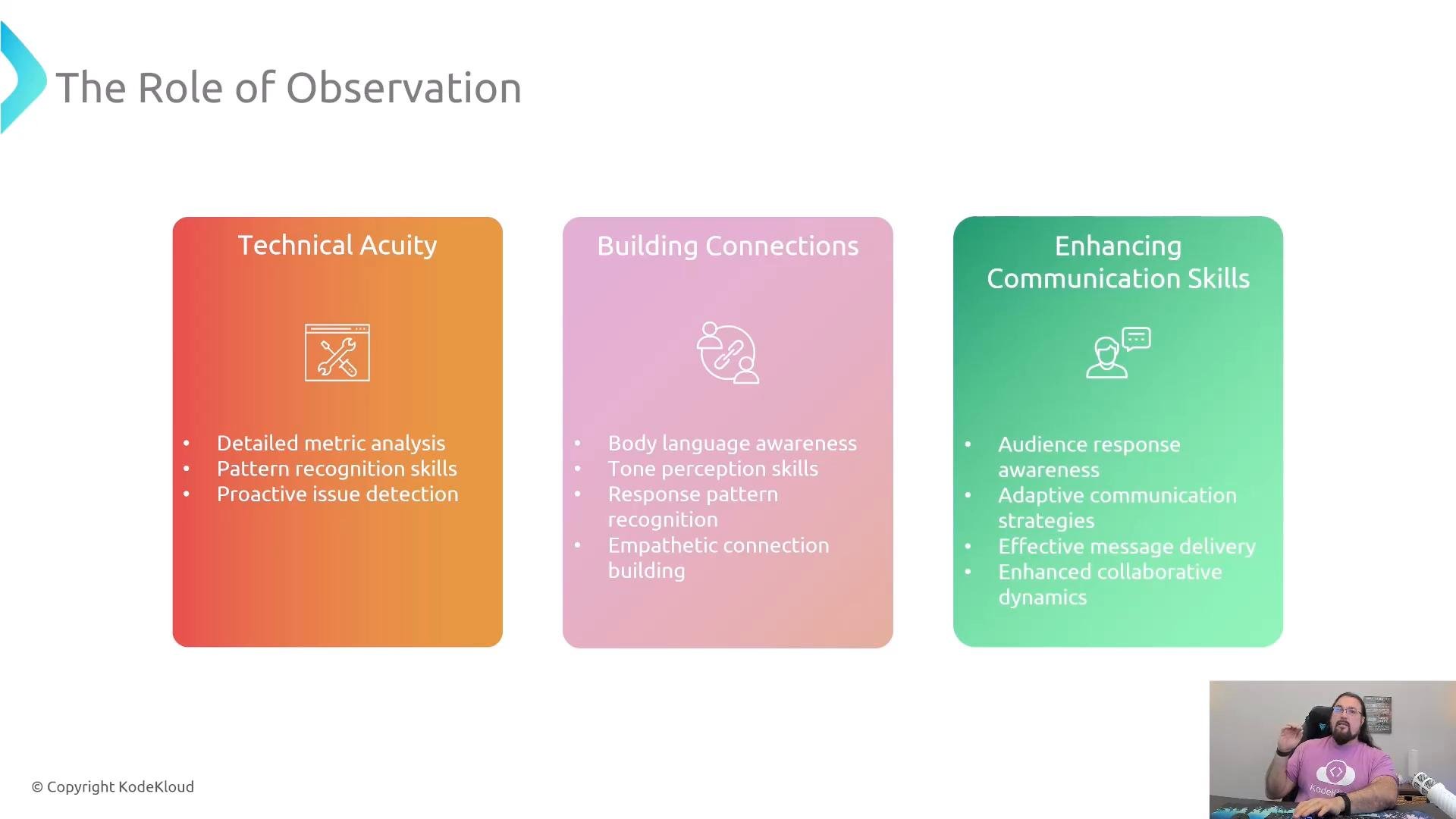
- If five people in a meeting are enthusiastic about a proposal but one person is quiet or visibly disengaged, that single deviation is meaningful.
- Rather than assigning blame or assuming disinterest, observe and form a hypothesis (e.g., “They had a prior bad experience with this tech”), then test it by changing the framing, asking a direct but respectful question, or inviting their perspective.
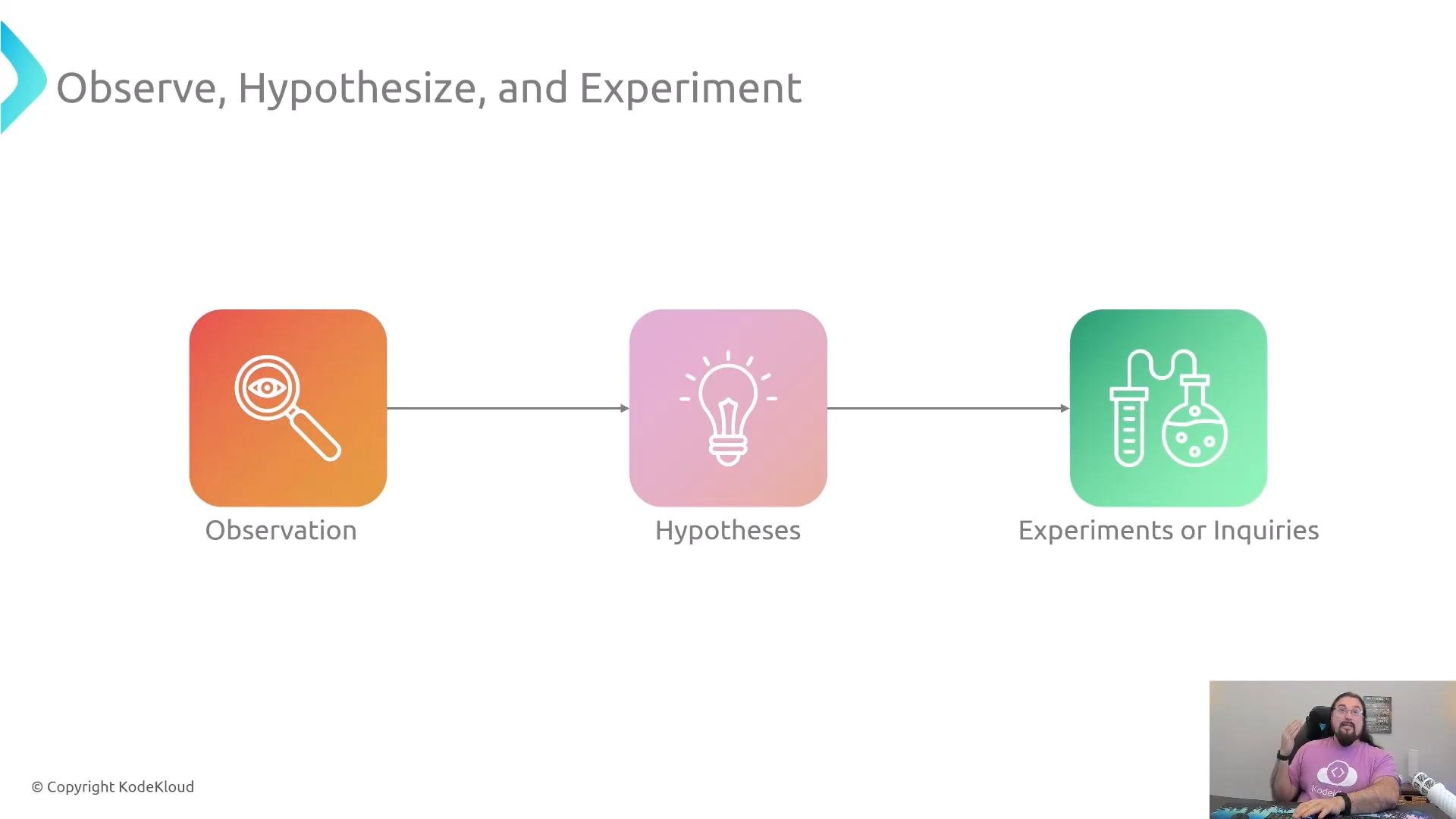
Start by observing, then form simple hypotheses and run low-cost experiments. This iterative approach reduces assumptions and increases alignment.
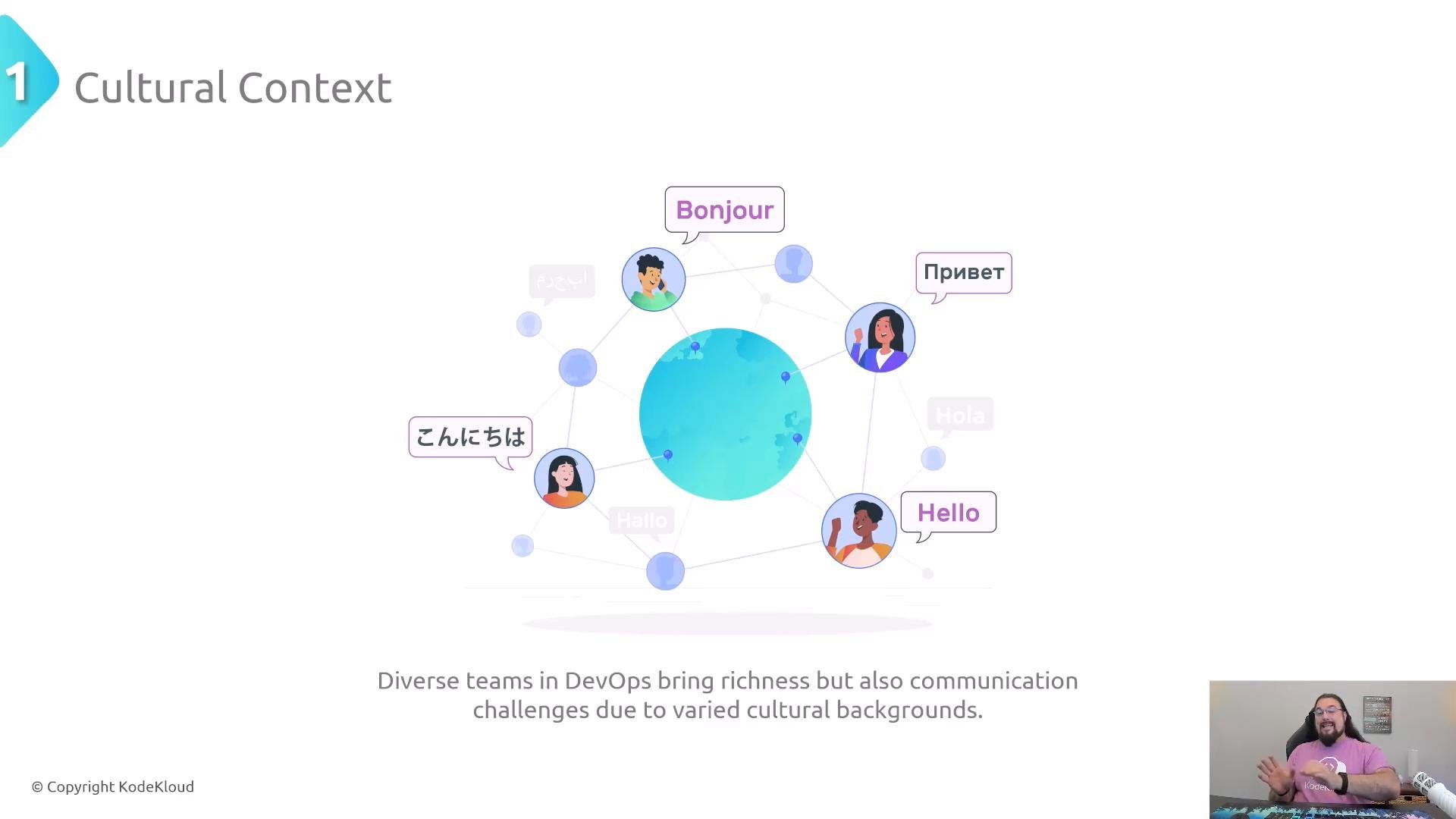
- Do a bit of research on preferred communication styles (ask, don’t assume).
- Avoid stereotyping—focus on individual preferences.
- Consider recent interactions; a string of urgent asks or pushback can make someone guarded.
- Time sensitive or emotionally charged conversations for formats that enable immediate feedback (video call or in-person).
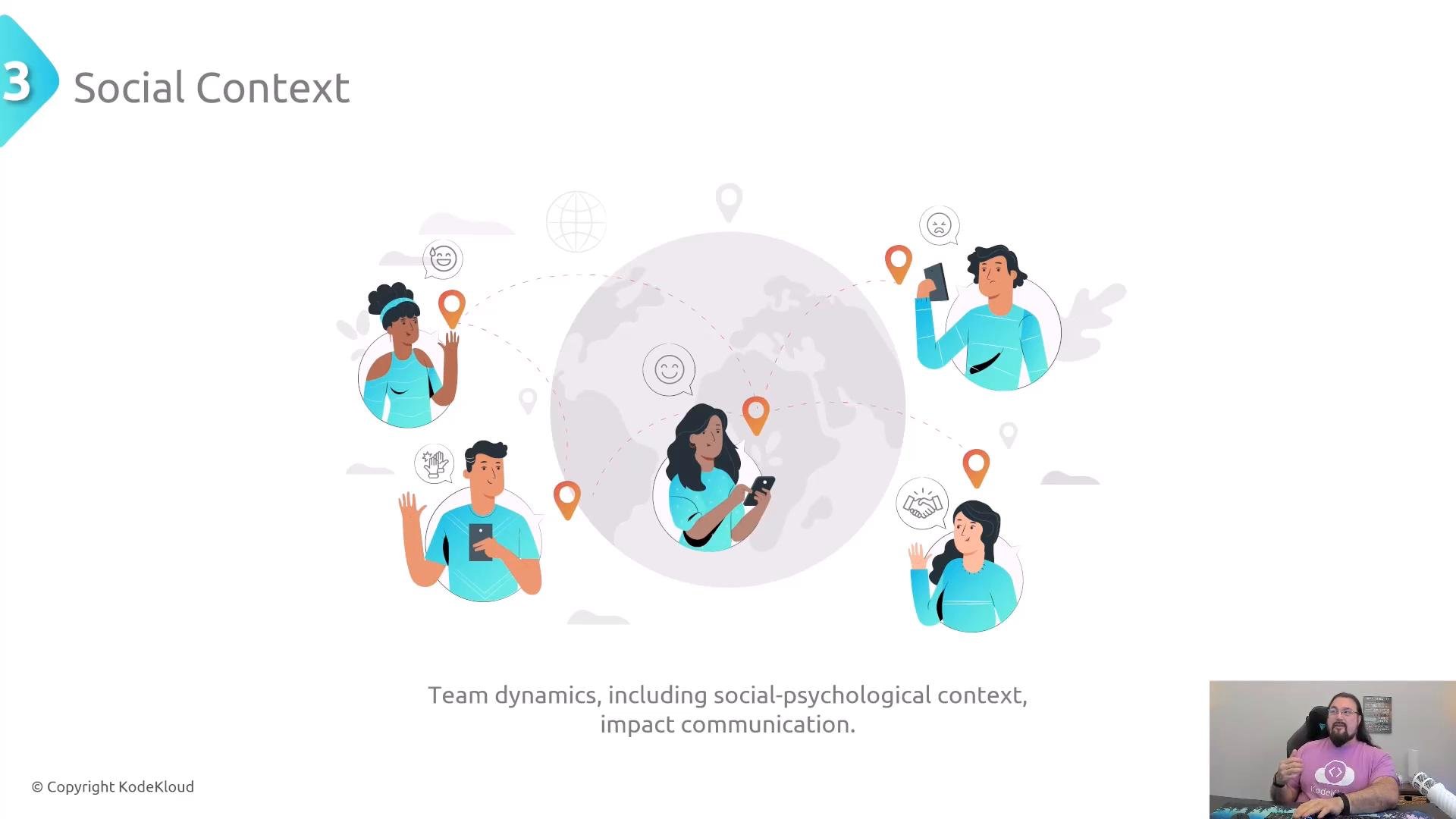
- Virtual meetings with cameras off reduce nonverbal data; rely more on tone, explicit check-ins, and written summaries.
- Sensitive or complex topics are usually better handled synchronously (call or in-person) where you can read responses and answer questions immediately.
- Use asynchronous channels (email, doc comments) for information that needs time to process or to create an auditable record.
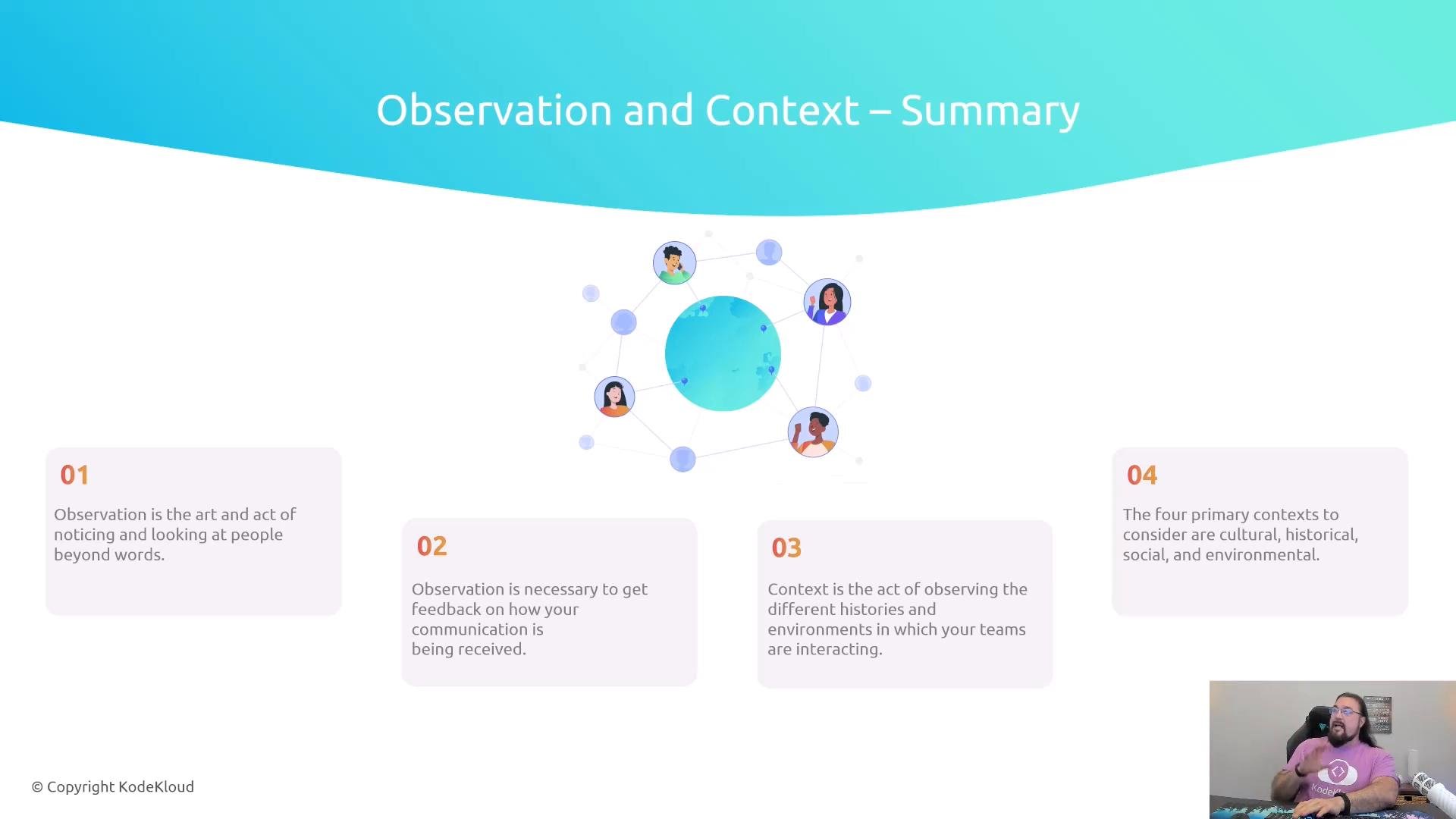
- Observation: noticing beyond words — tone, posture, facial expressions, and behavioral patterns.
- Context: the combination of cultural norms, recent history, social dynamics, environment, and timing that explains why people behave the way they do.
- Observe consistently: look for patterns and deviations across interactions.
- Form simple, testable hypotheses: keep them short (e.g., “They prefer written updates”).
- Run low-cost experiments: reframe the message, change the communication medium, or directly ask a clarifying question.
- Reflect and iterate: track what works and adjust future approaches.
- Respect privacy and dignity: don’t publicize sensitive observations; ask permission before probing personal reasons.
- Active Listening — Wikipedia
- Nonverbal Communication — Verywell Mind
- Cultural Communication Styles — Harvard Business Review