

This course is designed for engineers, ML practitioners, and technical product owners who want practical, production-focused guidance on generative AI systems, including operationalization, model stewardship, and integration with enterprise data sources.
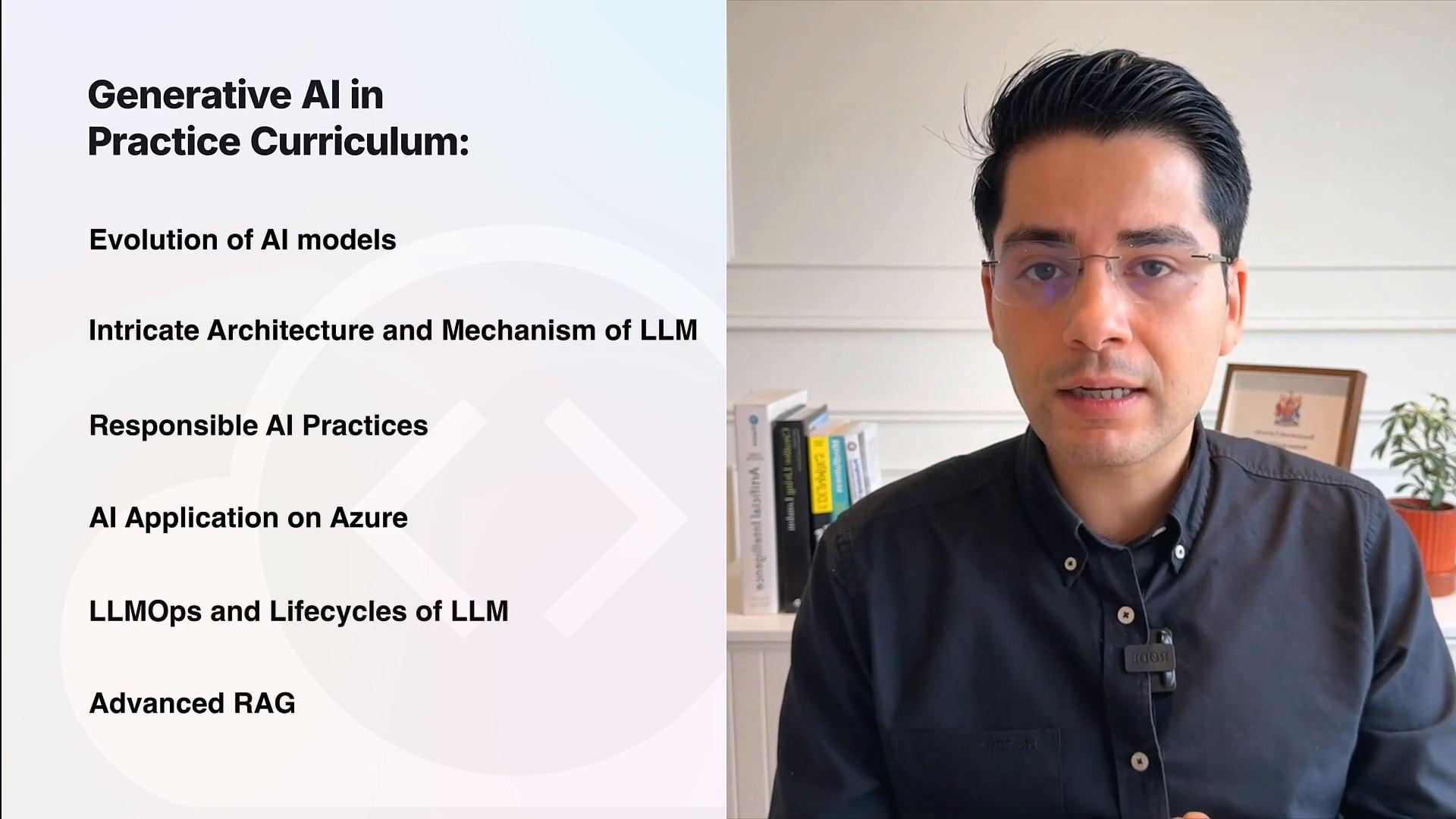
- The evolution of AI architectures — from rule-based systems and classical ML to modern transformers and multimodal generative models.
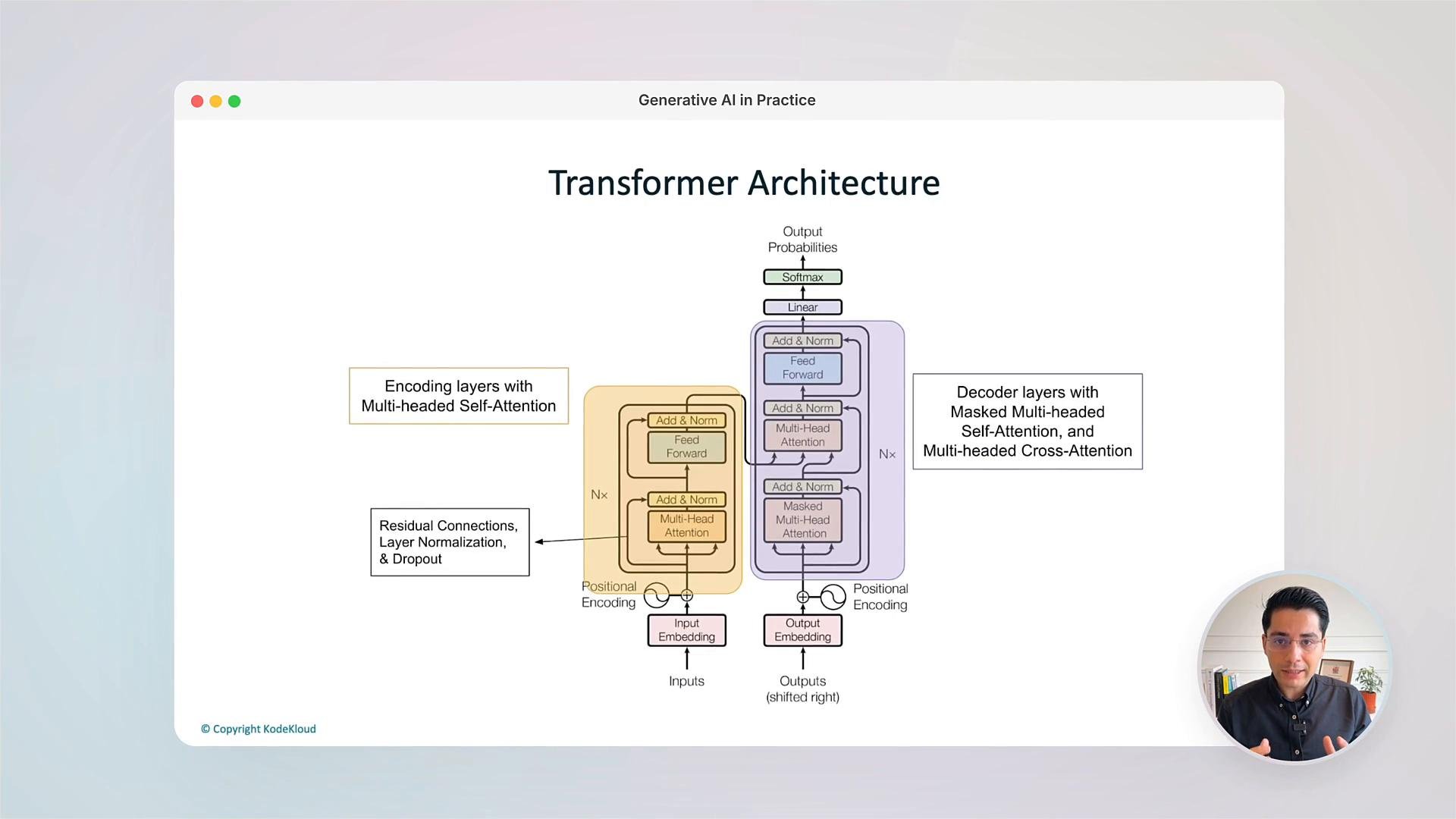
- Deep dive into transformer internals: multi-head self-attention, positional encodings, tokenization, embeddings, and tuning hyperparameters for performance and safety.
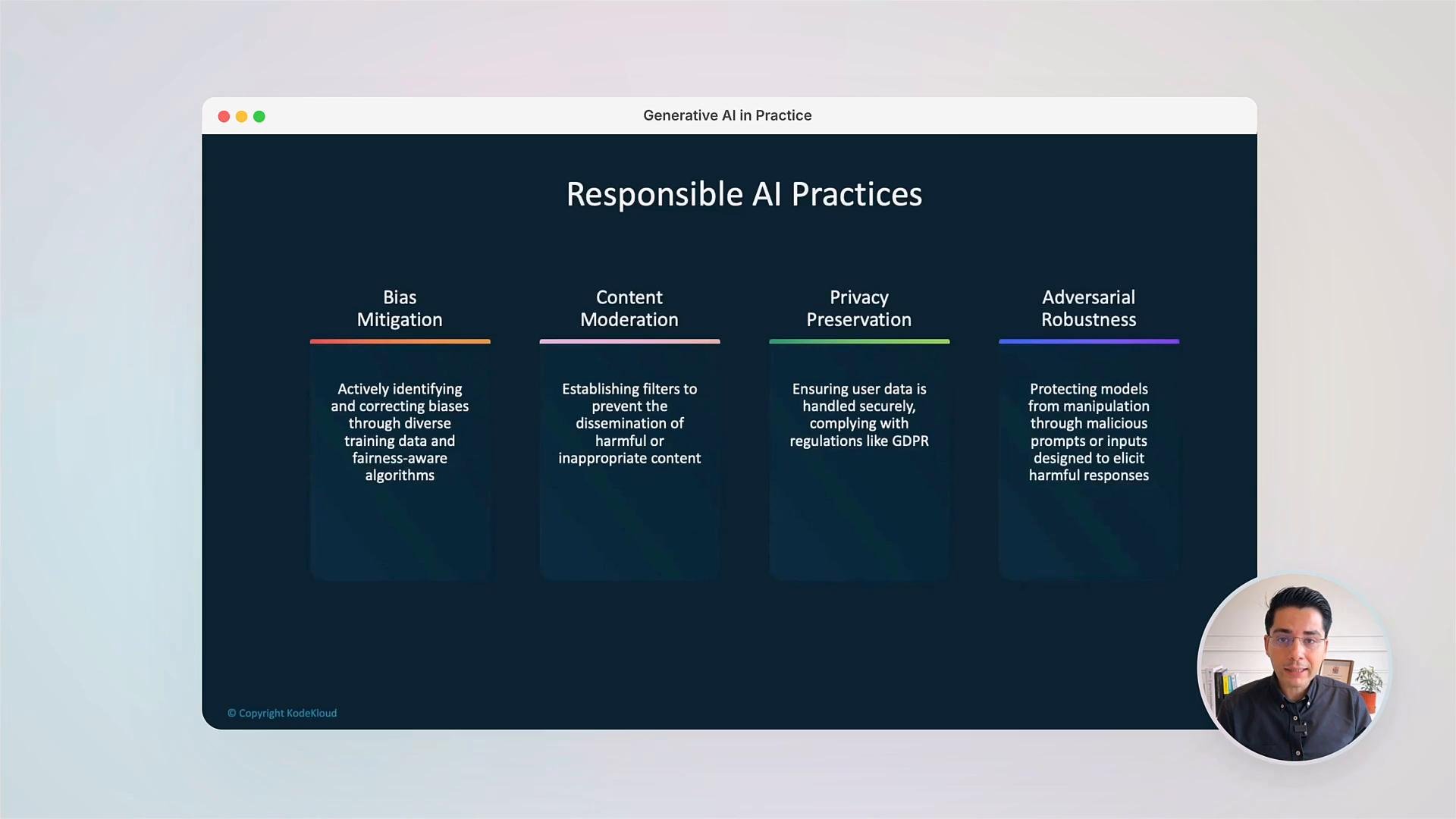
- Responsible AI: bias mitigation, content moderation, privacy preservation, and adversarial robustness with deployment best practices.
- Operationalization and MLOps for generative systems: model hosting, data ops, monitoring, logging, and continuous evaluation.
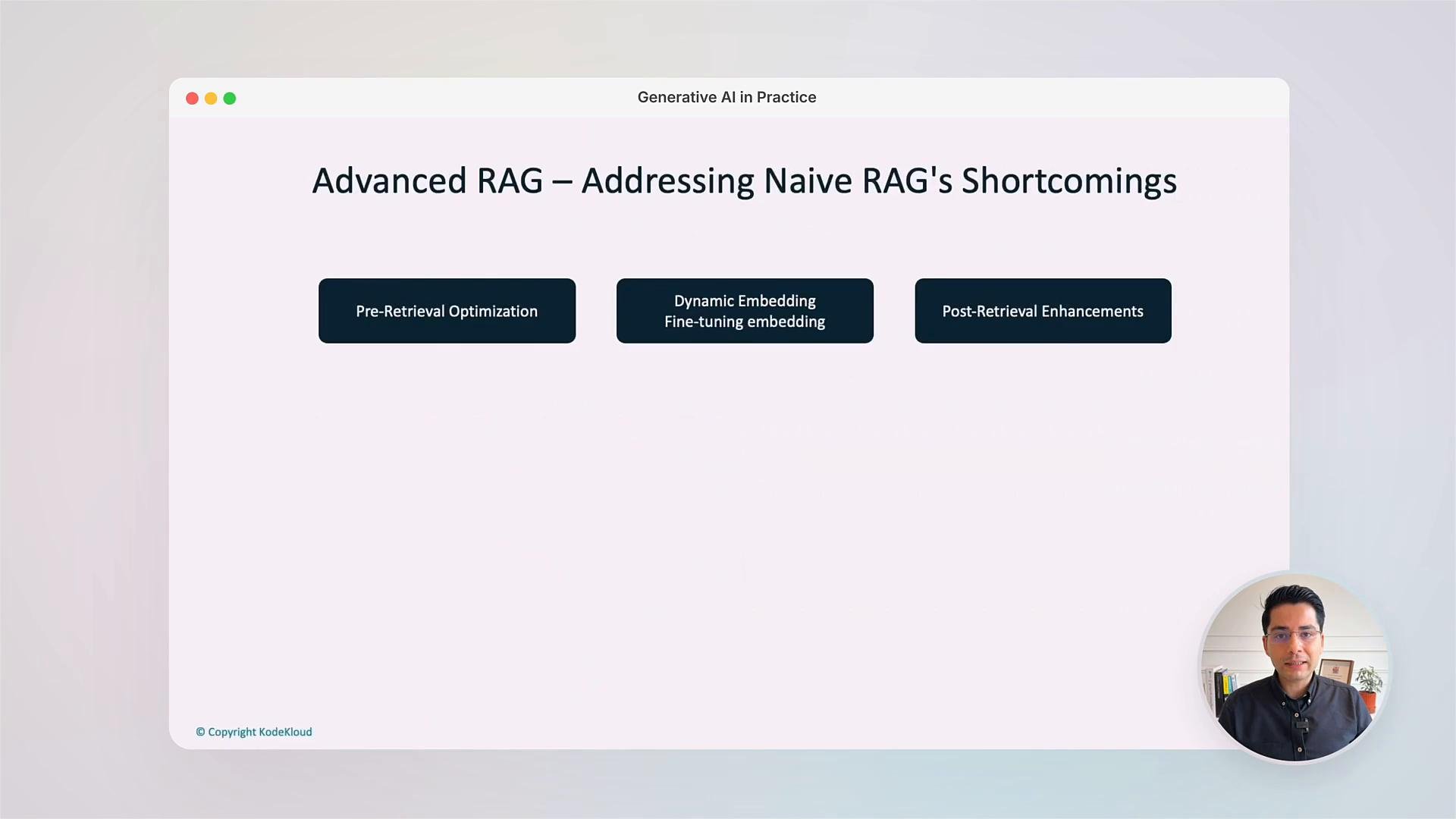
- Advanced Retrieval-Augmented Generation (RAG) and semantic retrieval: pre-retrieval optimization, dynamic embeddings, and post-retrieval re-ranking strategies.
- Hands-on sessions using production tools, including hands-on examples with
Azure AI Studio.
Responsible AI is not optional. When deploying generative models, implement bias audits, content filters, differential privacy or synthetic-data strategies where appropriate, and continuous monitoring for safety and fairness.
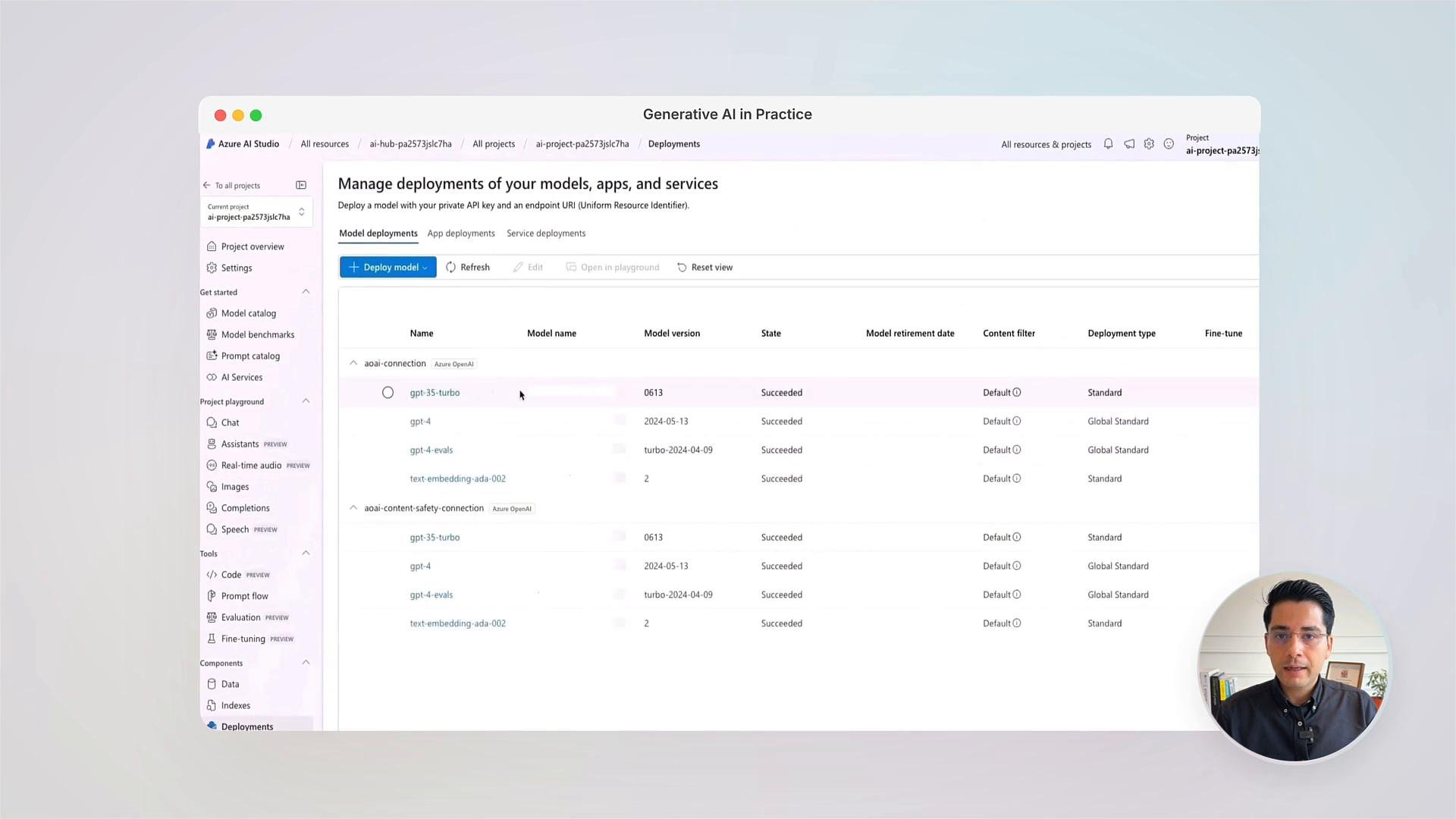
Azure AI Studio for model deployment, health checks, and scaling.
Further reading and references
- Azure AI Studio: https://learn.microsoft.com/en-us/azure/ai-services/ai-studio/overview
- Transformers and Attention: https://arxiv.org/abs/1706.03762
- Retrieval-Augmented Generation (RAG) overview: https://arxiv.org/abs/2005.11401
- Responsible AI guidance (Microsoft): https://learn.microsoft.com/azure/ai/responsible-ai/