Advanced Techniques in RAG
One proven method in advanced RAG is query expansion. By passing the original query to a large language model (LLM), the system generates multiple versions or extended queries. This approach helps clarify ambiguous or incomplete user queries—particularly valuable in fields like legal research where detailed queries may be lacking.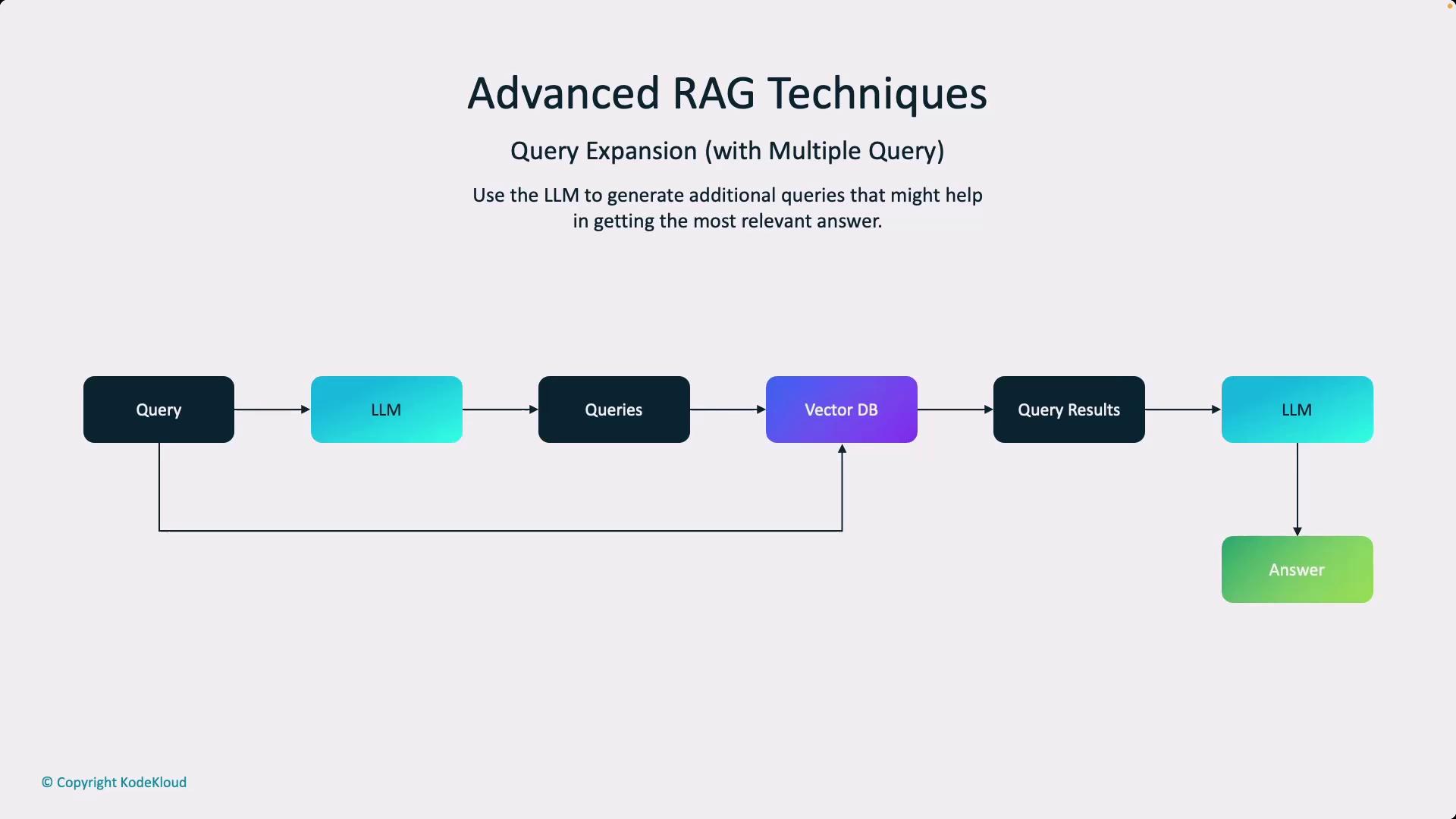
Strategies for Enhancing RAG Performance
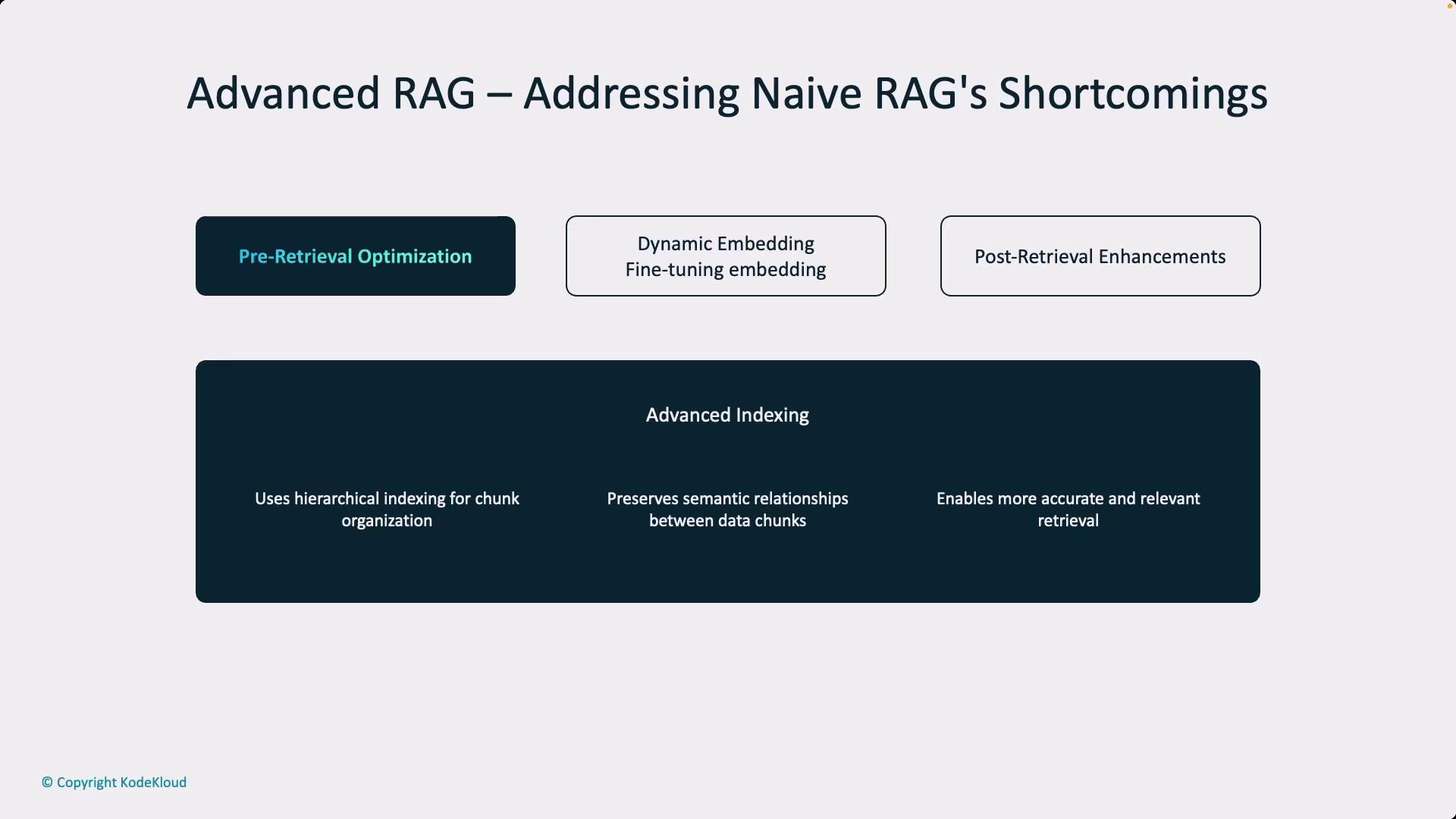
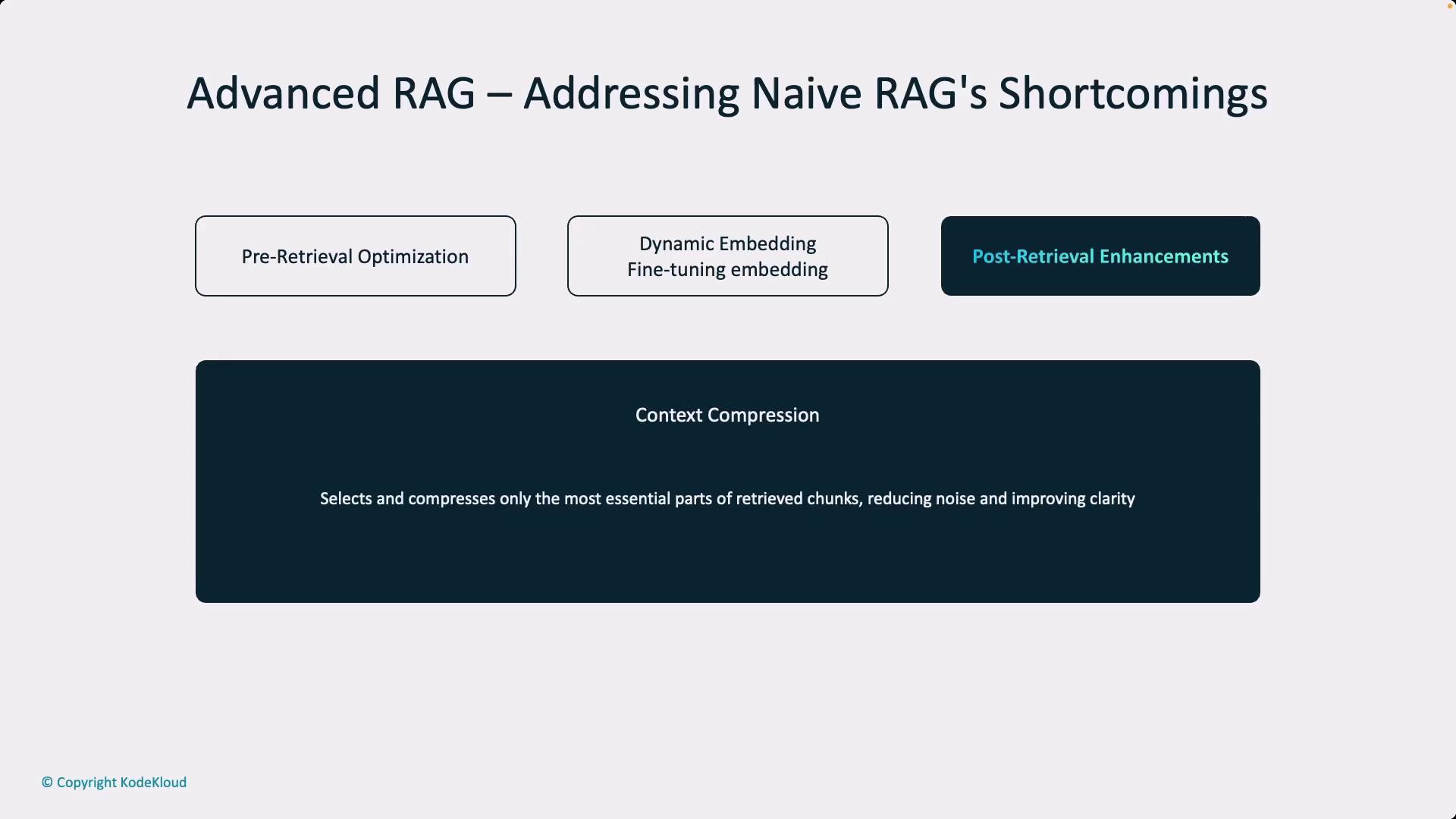
There are three main strategies to improve RAG performance:- Pre-retrieval optimization involves refining the data before it is even queried
Pre-retrieval optimization involves refining the data before it is even queried. Techniques include:
- Advanced Indexing: Hierarchical indexing techniques improve data organization.
- Chunk Organization: Maintaining semantic relationships between data segments.
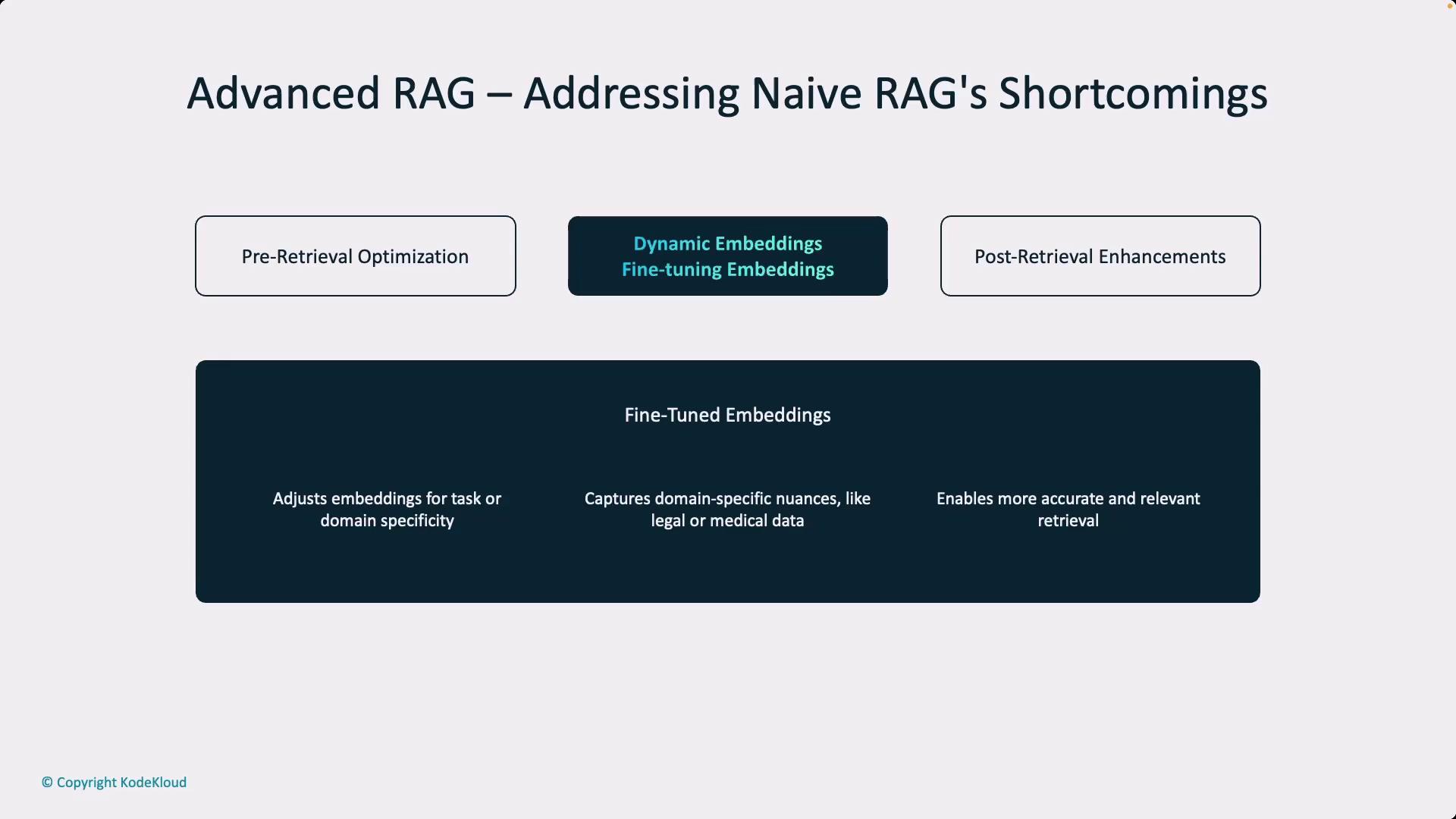
- Dynamic or Fine-Tuned Embeddings: Enhancing data representation with approach-tailored embeddings.
-
Query Retrieval Enhancement
At the query level, enhancements can be applied to further refine searches, including:- Query Rewriting: Clarifying implicit details in the query.
- Synonym Expansion: Introducing synonyms to widen the search scope.
- Dynamic Embedding Techniques: Allowing the query to influence its embedding, moving away from static document embeddings.
- Post-retrieval enhancement focuses on refining results after initial data ret…
Post-retrieval enhancement focuses on refining results after initial data retrieval. Key techniques include:
- Intelligent Re-ranking: Prioritizing the most relevant documents.
- Context Compression: Extracting only the critical parts of retrieved information to reduce noise.
Traditional RAG vs. Advanced RAG
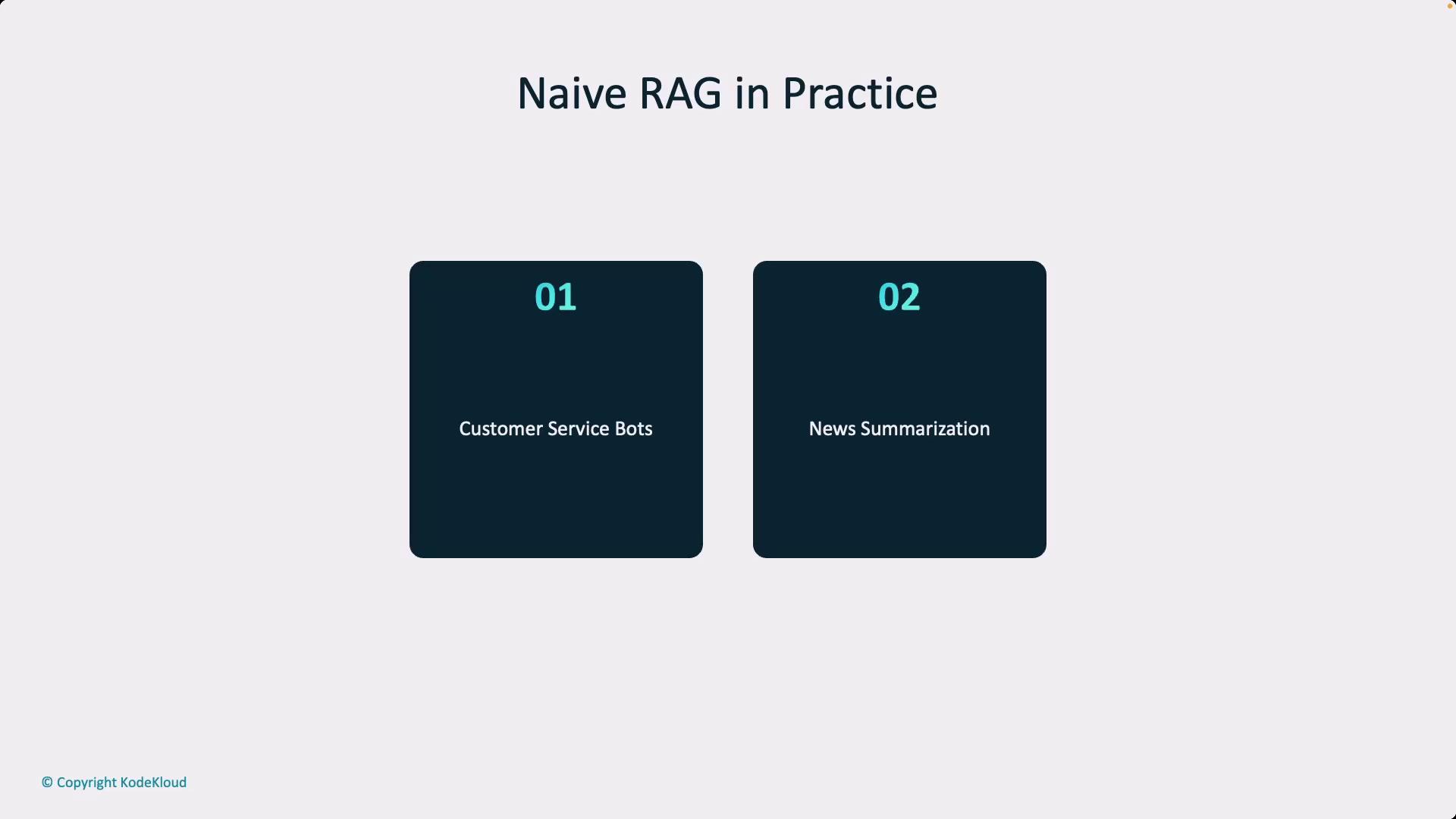
While traditional keyword-based search methods form the basis of basic RAG implementations, advanced agentic RAG methods have been refined over years of natural language processing (NLP) research—long before the rise of generative AI. For simpler applications, such as customer service bots or news summarization, a Naive RAG strategy might be sufficient. In contrast, enterprise-level requirements for enhanced precision and domain-specific adjustments call for the sophistication offered by agentic RAG systems.