The HashiCorp Certified Terraform Associate Certification is an associate-level exam focused on infrastructure automation using Terraform. Although a basic understanding of on-premises and cloud architecture is useful, it is not mandatory. If you are new to cloud concepts or Terraform, I highly recommend starting with the Lab - Terraform for Beginners course. This beginner-friendly course offers hands-on labs, demos, and an introductory overview of AWS, making it easier to grasp the examples and sample code used throughout this article.
Exam Objectives Overview
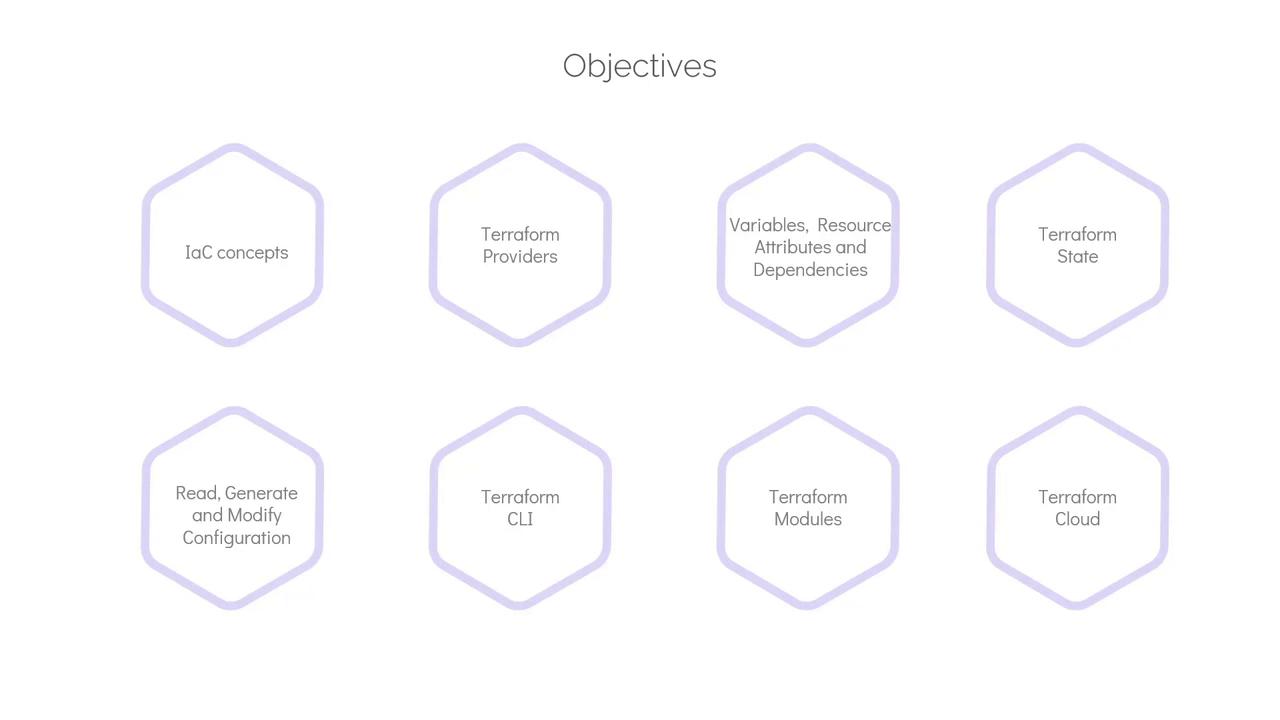
The content in this article is tailored to match the objectives of the HashiCorp Certified Terraform Associate exam. Key topics include:- Infrastructure as Code (IaC): Understand the IaC concept at a high level, compare popular IaC tools, and explore the core Terraform workflow.
- Terraform Providers: Learn about provider plugins, using multiple providers, version constraints, and aliases.
- Variables and Resources: Gain insights into input/output variables, resource attributes, dependencies, resource targeting, and data sources.
- Terraform State: Understand the significance of Terraform state, including managing local state and migrating to remote backends like S3.
- Terraform Fundamentals: Master reading, generating, and updating Terraform configurations. Topics include using loops, provisioners, built-in functions, operators, conditional expressions, local values, and dynamic blocks.
- Terraform CLI and Workspaces: Get acquainted with common CLI commands, lifecycle rules, resource states, logging, debugging, input parameters, and an introduction to Terraform workspaces.
- Terraform Modules: Discover why modules are essential, learn how to integrate modules from the Terraform Registry, and create your own modules complete with input and output variables.
- Terraform Cloud: Explore how Terraform Cloud supports collaborative infrastructure management, including account setup, organization and workspace creation, integration with version control systems, governance plans, and an overview of policy-as-code frameworks.