

1. Configuration Management Tools
Tools such as Ansible, Chef, Puppet, and SaltStack are used to install and manage software on existing infrastructure resources like servers, databases, and networking devices. They help maintain a consistent code structure, enable version control, and ensure idempotency (i.e., re-executing the code only applies necessary changes).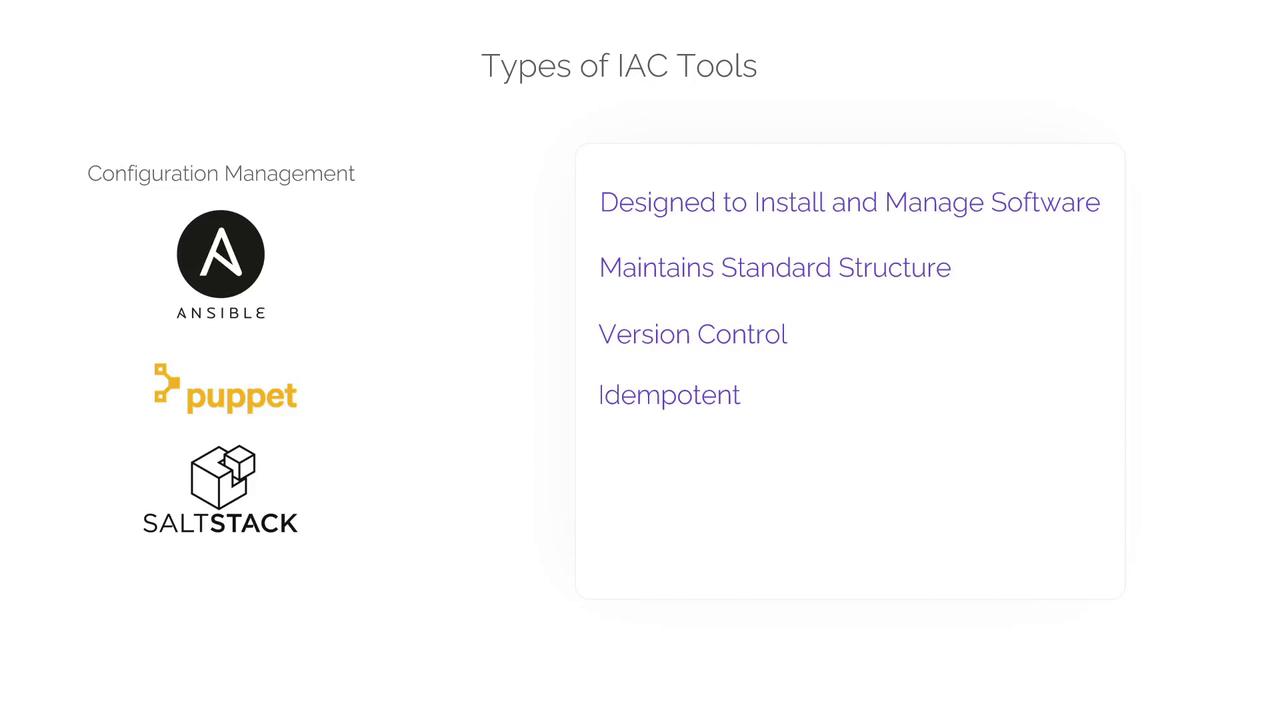
2. Server Templating Tools
Server templating tools such as Docker, Packer, and Vagrant are used to create custom images of virtual machines or containers. These images are pre-installed with the required software and dependencies, eliminating the need for post-deployment software installation. Common examples include VM images from osboxes.org, custom Amazon AMIs, and Docker images from Docker Hub. Server templating supports an immutable infrastructure model—making updates as simple as redeploying a new instance with an updated image rather than modifying a running system.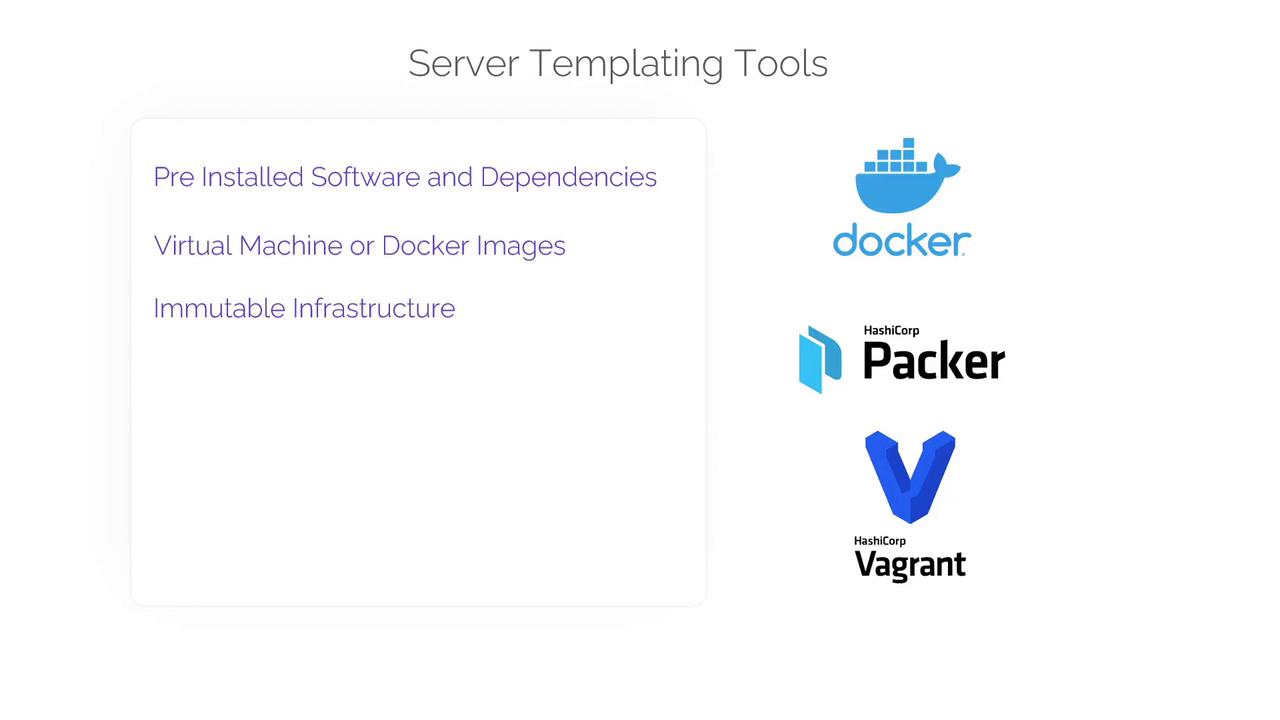
3. Infrastructure Provisioning (Orchestration) Tools
Provisioning tools, such as Terraform and CloudFormation, enable you to manage a variety of infrastructure components like virtual machines, databases, VPCs, subnets, security groups, and storage using declarative code. CloudFormation is ideal for AWS-only deployments, whereas Terraform offers a vendor-agnostic solution that supports multi-cloud or hybrid environments through numerous plugins.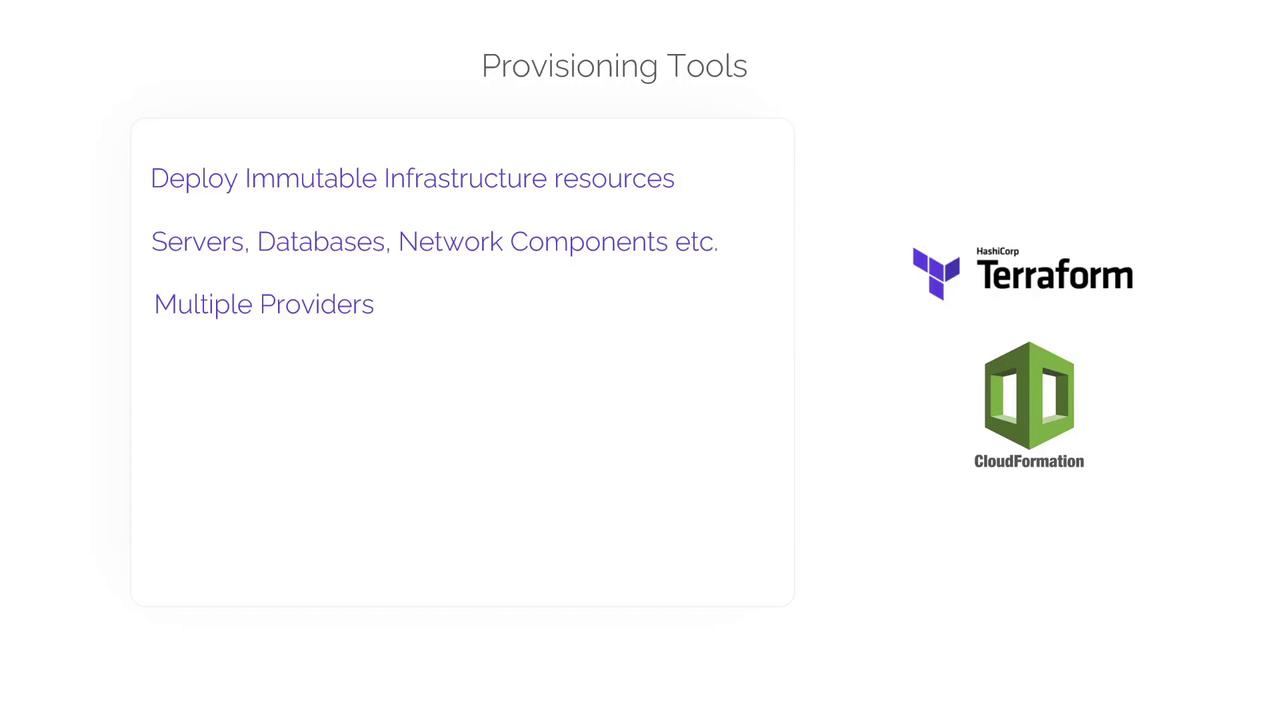
Although configuration management tools can provision infrastructure (for example, using Ansible’s EC2 module), this approach is less effective for managing larger infrastructures due to its procedural nature.
Procedural vs. Declarative Approach
Understanding the difference between procedural and declarative approaches is crucial when working with IaC tools.Ansible Example (Procedural)
Ansible employs a procedural approach in which every step must be explicitly defined. Consider the following playbook that provisions two EC2 instances:Terraform Example (Declarative)
In contrast, Terraform uses a declarative approach where you specify the desired end state of your infrastructure. Consider the Terraform configuration below that ensures exactly two EC2 instances:Choosing the Right IaC Tool
There is no one-size-fits-all solution when it comes to selecting an IaC tool. For deployments exclusive to AWS, CloudFormation offers simplicity and direct integration. However, for multi-cloud or hybrid environments, Terraform’s vendor-agnostic design makes it an excellent choice.Maximize efficiency by leveraging the strengths of each IaC tool: use Terraform for resource provisioning and configuration management tools like Ansible for post-deployment tasks such as software installation and configuration.