

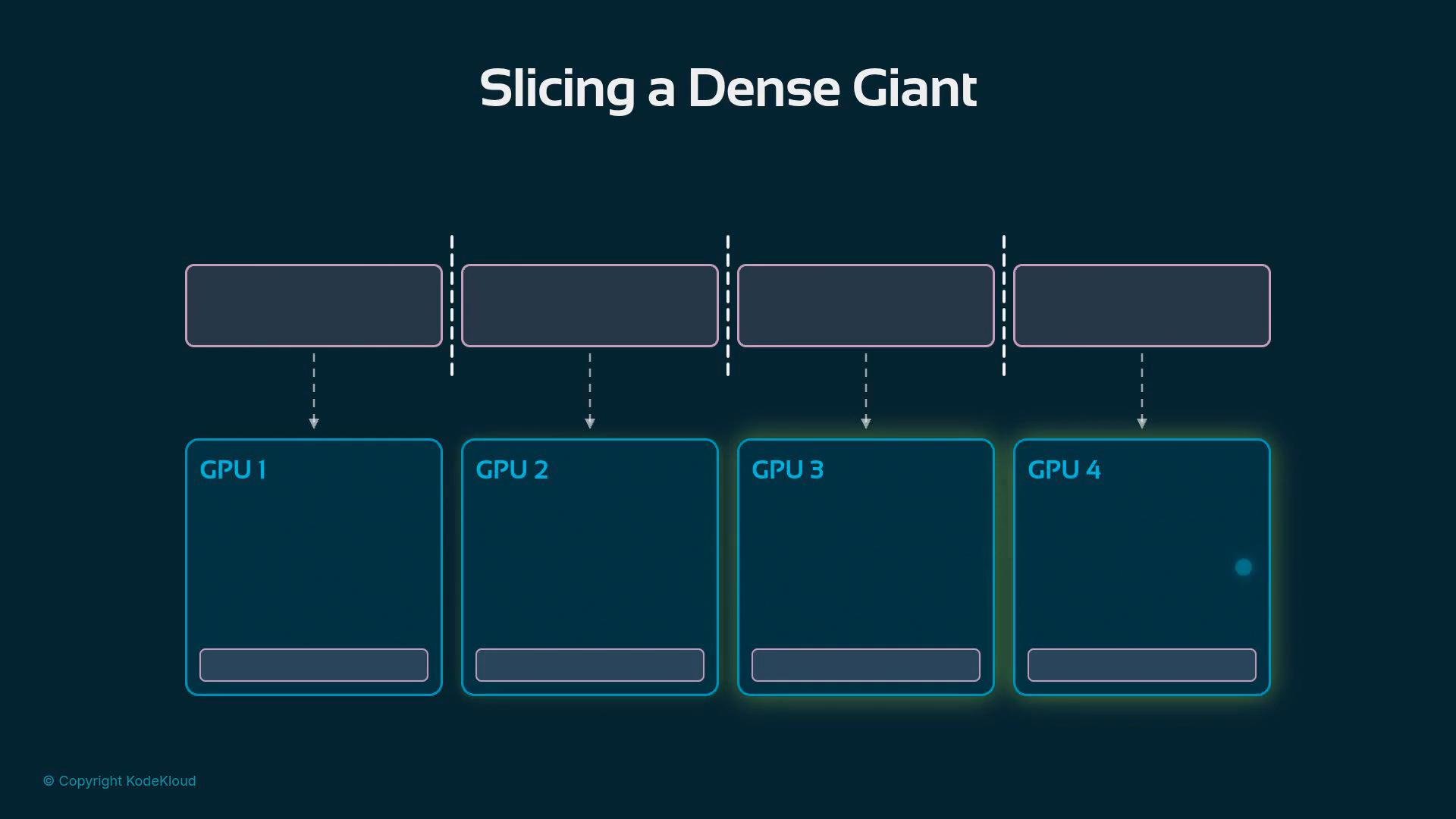
- Put whole layers on different GPUs (pipeline / layer parallelism).
- Split individual layers across GPUs (tensor / intra-layer parallelism).
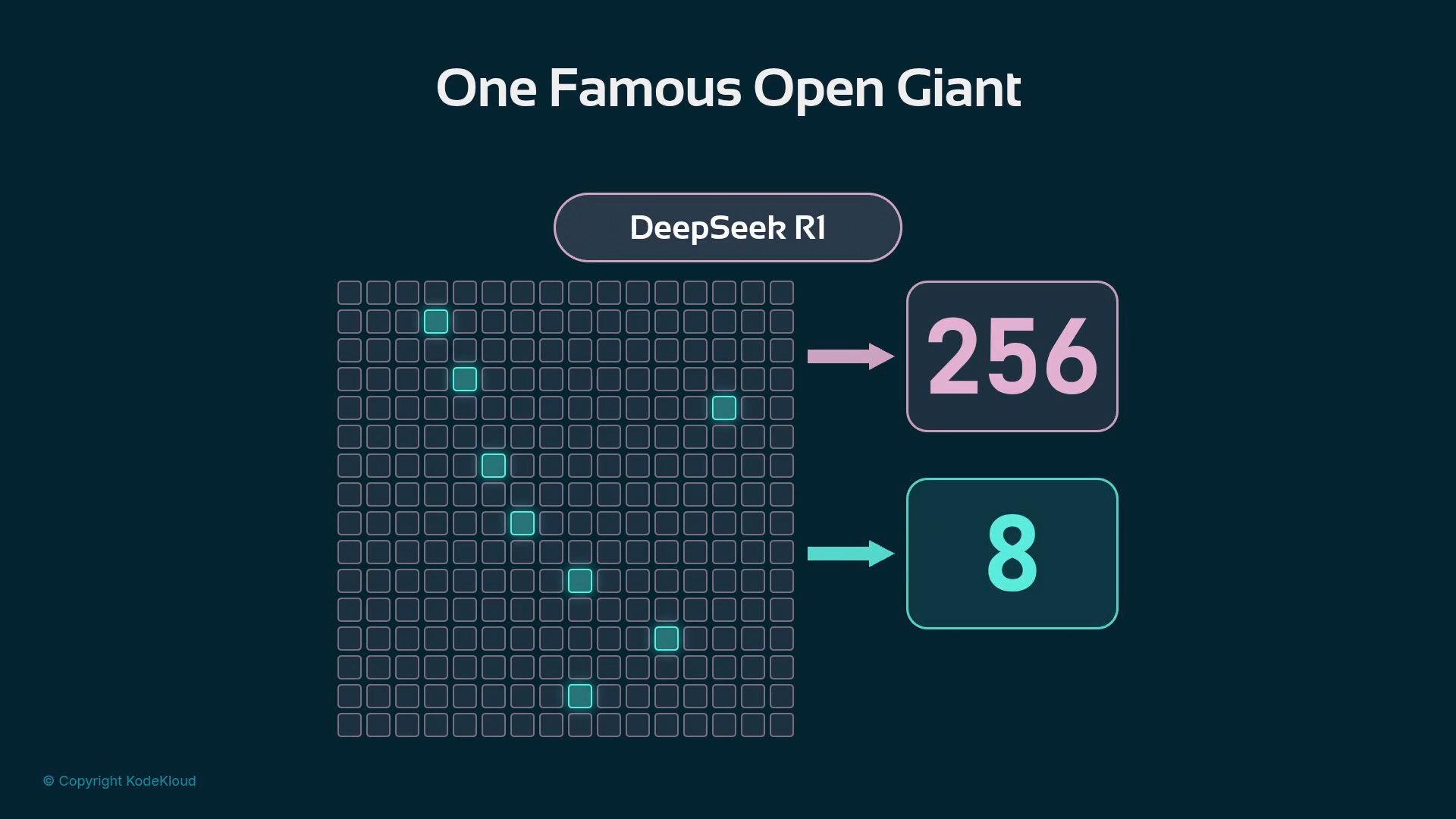
- A Mixture-of-Experts layer contains many independent expert subnetworks plus a small routing gate.
- The gate inspects each token and routes it to a small subset of experts; the remaining experts remain idle for that token.
- That design creates many specialist blocks where, for any given token, only a few experts are active.
- In dense models, every token is processed by the same weights; slicing those weights (tensor or layer slicing) distributes those frequently-accessed pieces across GPUs efficiently.
- For MoE, slicing each expert across many GPUs fragments whole specialists. You end up with many GPUs holding tiny portions of many experts — most of which are unused for most tokens — and you still pay distribution and coordination costs.
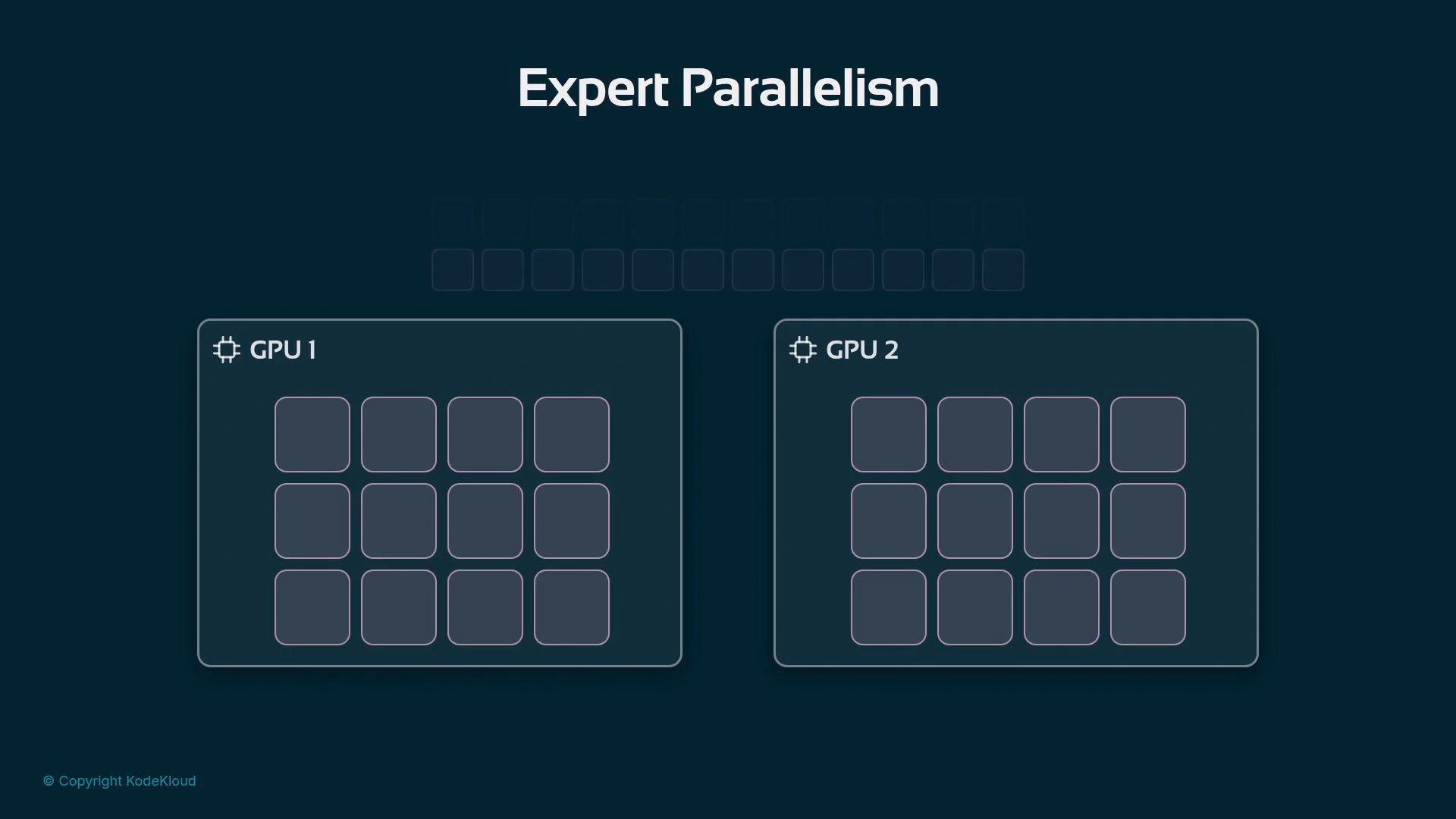
- Expert Parallelism assigns whole experts to individual GPUs. Rather than splitting a single expert across devices, each GPU owns several complete experts (e.g., GPU A holds experts 1–12, GPU B holds 13–24, etc.).
- This avoids fragmentation, reduces bookkeeping and cross-device assembly, and keeps each expert intact for efficient local execution.
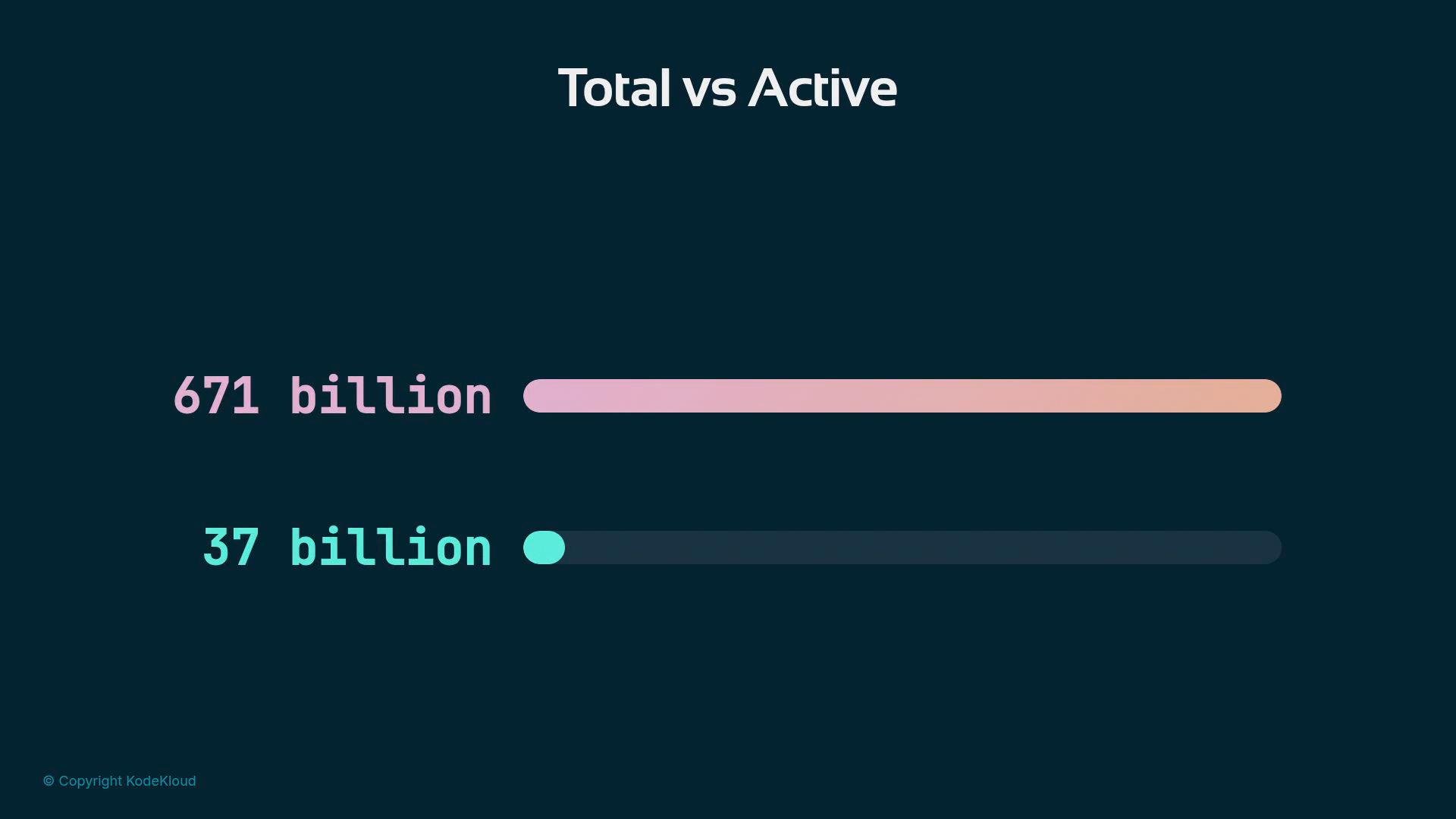
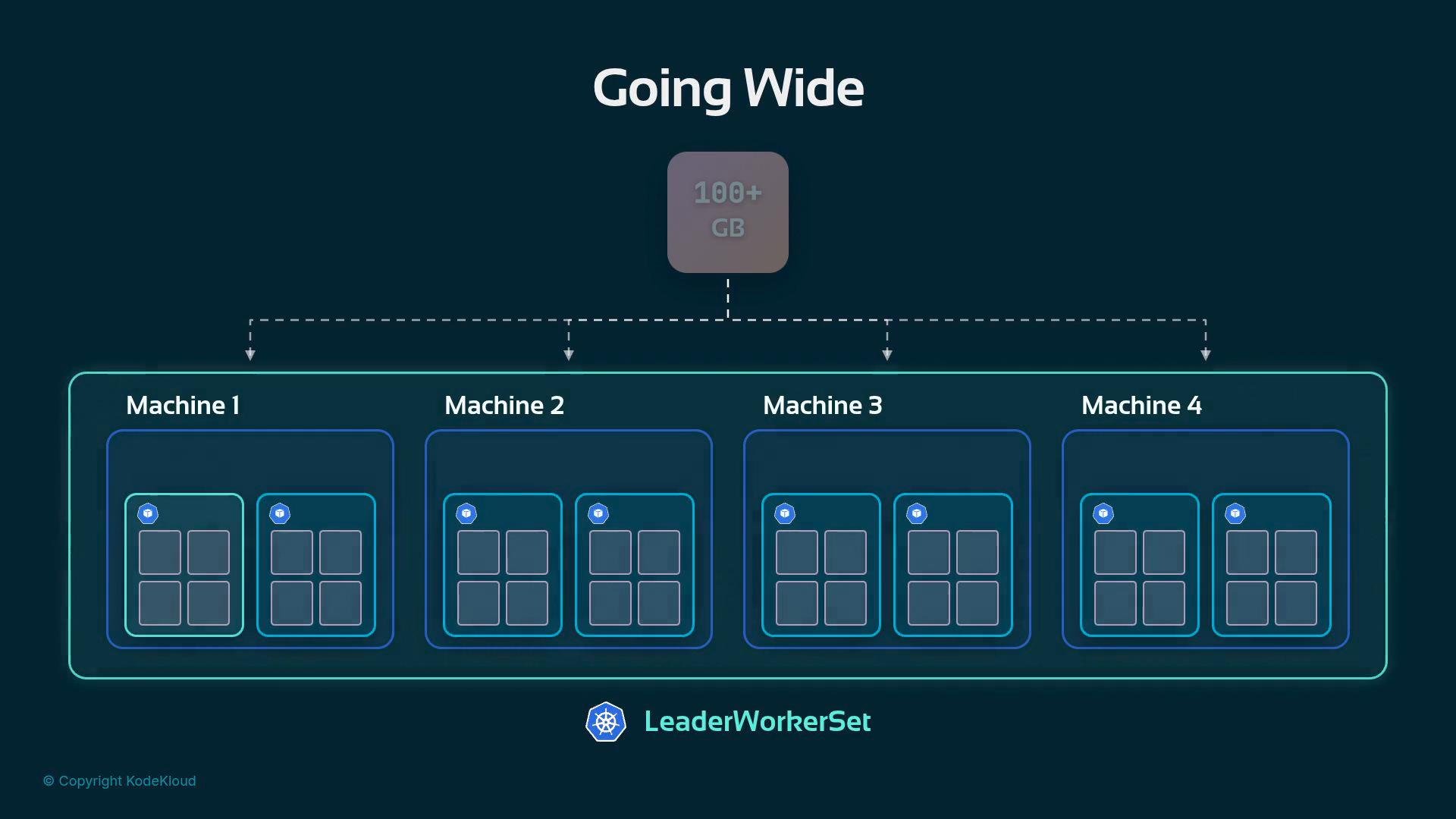
- MoE models still require hundreds of gigabytes for weights, so we scale them “wide” across many GPUs.
- The cluster exposes the distributed experts as a single logical model (one serving unit). Orchestration and health coordination use patterns like LeaderWorkerSet to keep the distributed experts functioning as a coherent service.
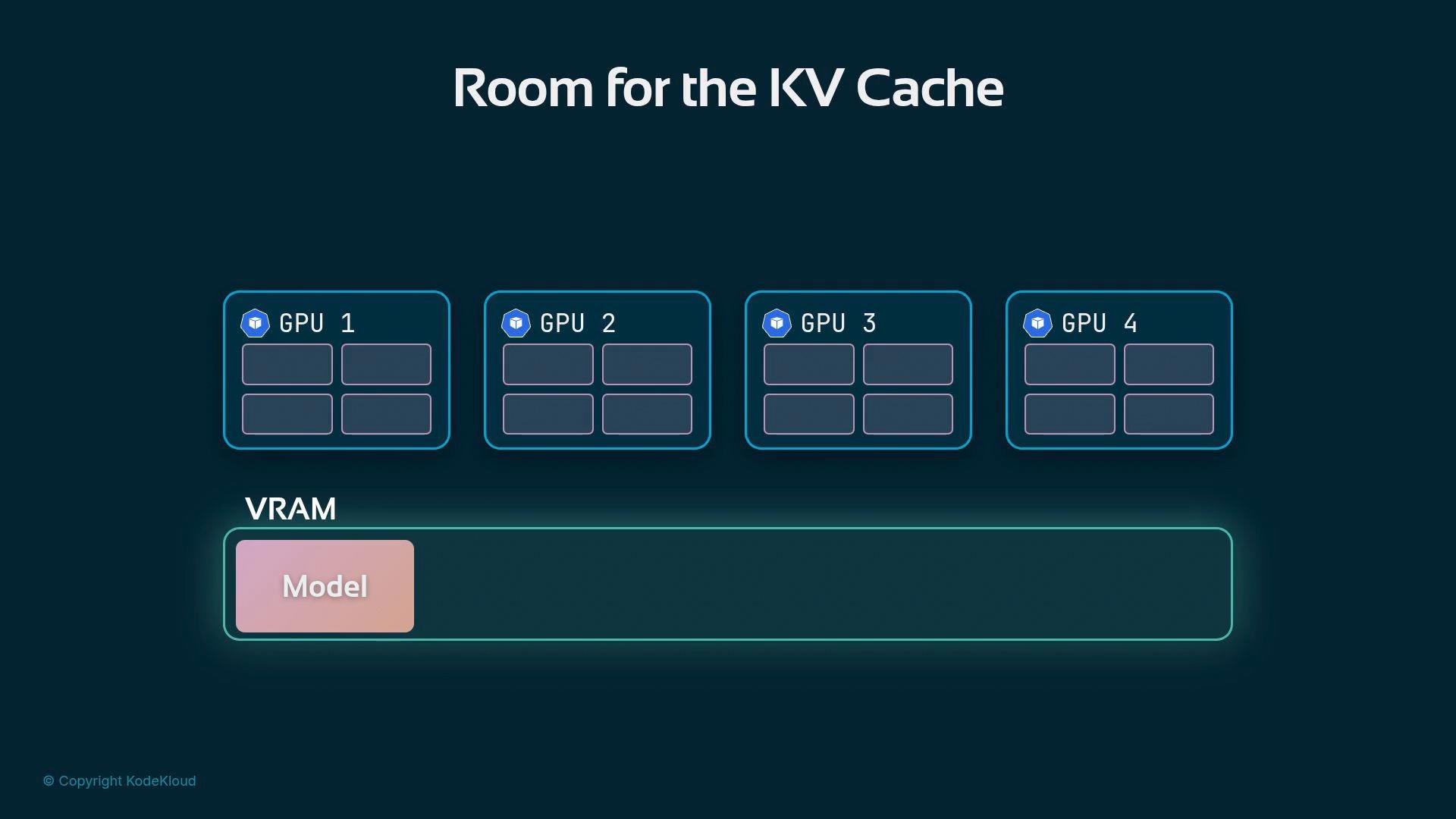
- No unnecessary replication of expert weights across GPUs.
- Freed device memory can be reallocated—for example, to increase KV cache capacity during generation.
- Simpler local execution for each expert reduces runtime overhead.
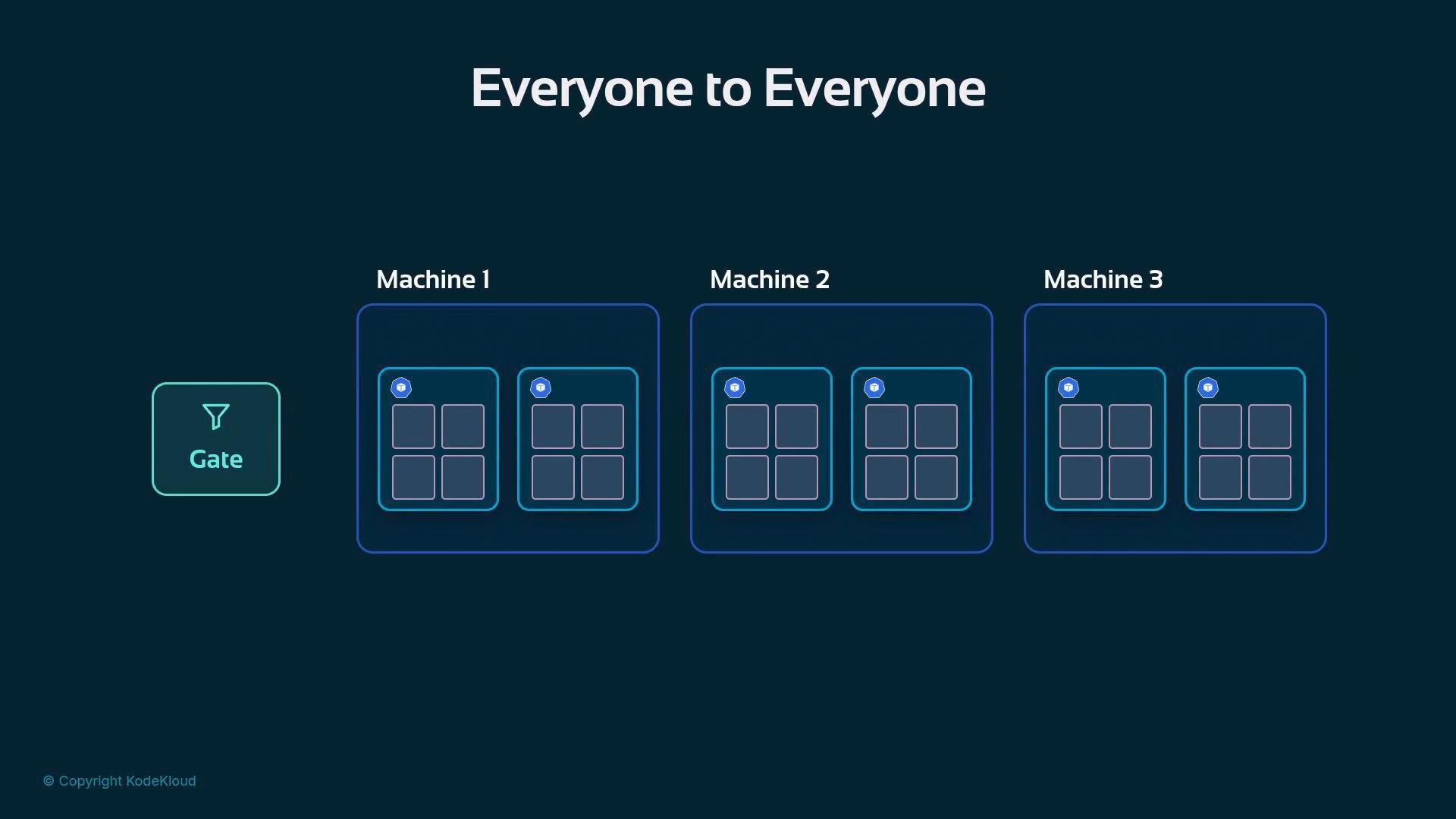
- When the router selects experts for tokens, tokens often need to be sent to experts on other machines, producing an everyone-to-everyone (all-to-all) communication pattern for each MoE layer.
- This pattern places a strong demand on the network fabric; it performs well only on RDMA-capable networks that support efficient GPU-to-GPU transfers.
- High-performance fabrics such as InfiniBand or RoCE are required in production-scale MoE deployments.
- Technologies like GPUDirect RDMA allow network adapters to move GPU memory across nodes without staging through host memory, which is crucial for low-latency, high-throughput all-to-all transfers.
- Conventional Ethernet-based datacenter networks typically cannot match this performance for large-scale MoE traffic patterns.
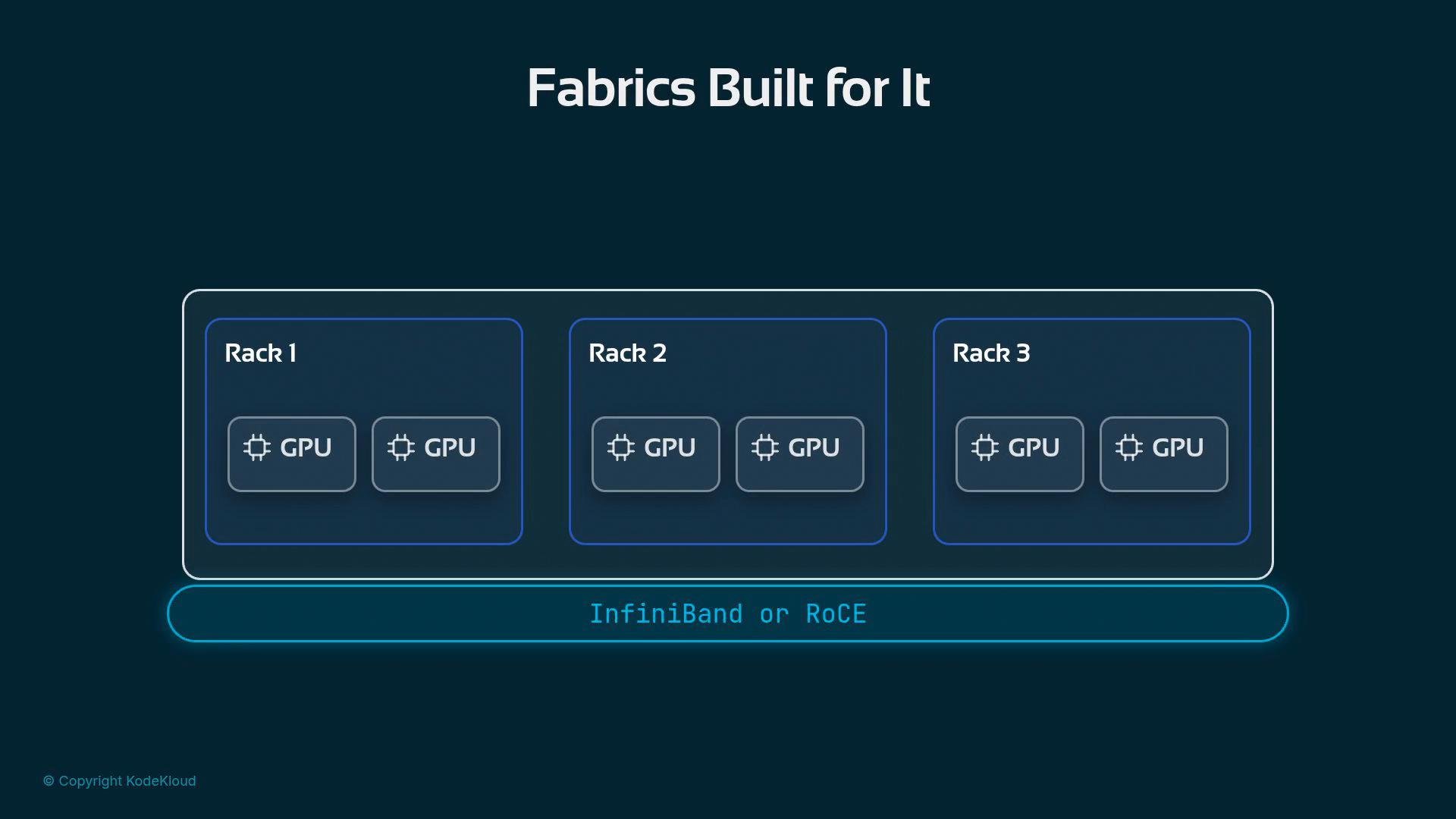
For MoE serving at scale, plan for an RDMA-capable fabric (InfiniBand or RoCE). Without it, the all-to-all transfers between experts will be a major bottleneck.
- llm-d separates prefill (building the KV cache for past tokens) from decode (online token-by-token generation).
- Prefill is expensive but embarrassingly parallel across tokens; it benefits from wide expert-parallel deployments.
- Decode is latency-sensitive; splitting the phases reduces bandwidth pressure and latency during interactive, token-by-token generation while retaining the cost-effective scaling of wide deployments for the expensive prefill work.
Links and References
- InfiniBand Trade Association
- RoCE (RDMA over Converged Ethernet) Overview
- NVIDIA GPUDirect RDMA
- For more on MoE architectures, see seminal papers and open-source MoE model releases for concrete examples and router designs.
- MoE models change the economics of model-parallel design: instead of slicing experts, give each GPU whole experts and scale wide.
- Expert Parallelism reduces weight replication and frees memory, but it trades those benefits for a heavier dependency on the network fabric.
- Plan cluster networks, GPU topology, and runtime phases (prefill vs decode) together for efficient, low-latency MoE serving.