

What Are ConfigMaps and Secrets?
A ConfigMap lets you inject non-sensitive configuration (files, environment variables, command-line arguments) into your pods. This decouples application images from their runtime settings, enabling updates without rebuilding containers. A Secret follows nearly the same API as a ConfigMap but is designed for sensitive information such as passwords, tokens, and keys. Here’s a quick visual comparison: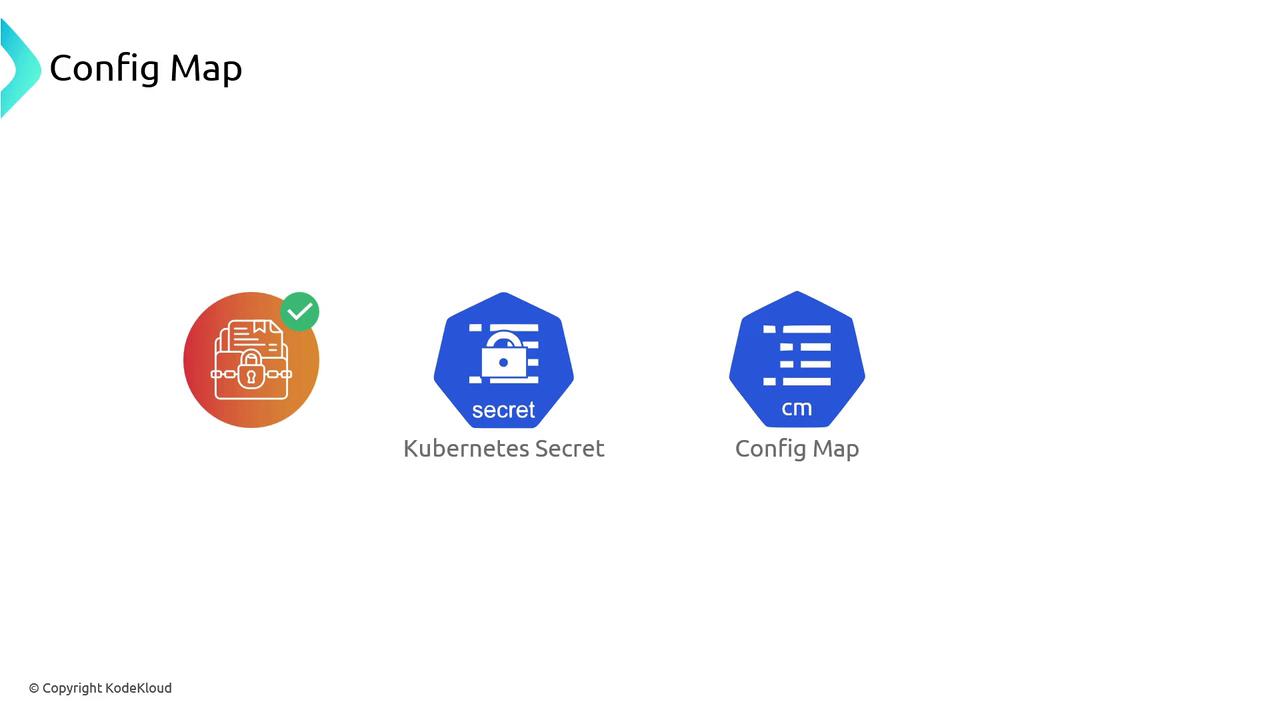
Secret vs. ConfigMap: Feature Comparison
Storing configuration separately lets you update settings dynamically without rebuilding or redeploying your app.
How Pods Consume Secrets
You can mount Secrets into your workloads via:- Environment variables
- Volume mounts
- Direct API calls
Why a Secret Is Not Truly Encrypted
By default, Kubernetes stores Secret data in etcd after applying only base64 encoding. Base64 is an encoding mechanism, not encryption. Anyone with API read access can decode it back to plain text.
- No encryption keys are used
- Data is merely obscured
- Read access to the API server lets users decode values
Relying solely on base64 encoding leaves your secrets exposed. Always implement encryption-at-rest and secure access controls.
Tip: Base64 encoding also increases payload size, and Kubernetes enforces a 1 MB limit per Secret object.
Restricting Access with Namespaces and RBAC
Even though base64 encoding isn’t encryption, you can limit who reads Secrets by leveraging namespaces and RBAC:- Dedicated Namespaces
Organize applications and their Secrets into separate namespaces. - RBAC Policies
Grant minimal permissions so service accounts or users in one namespace cannot access Secrets in another.
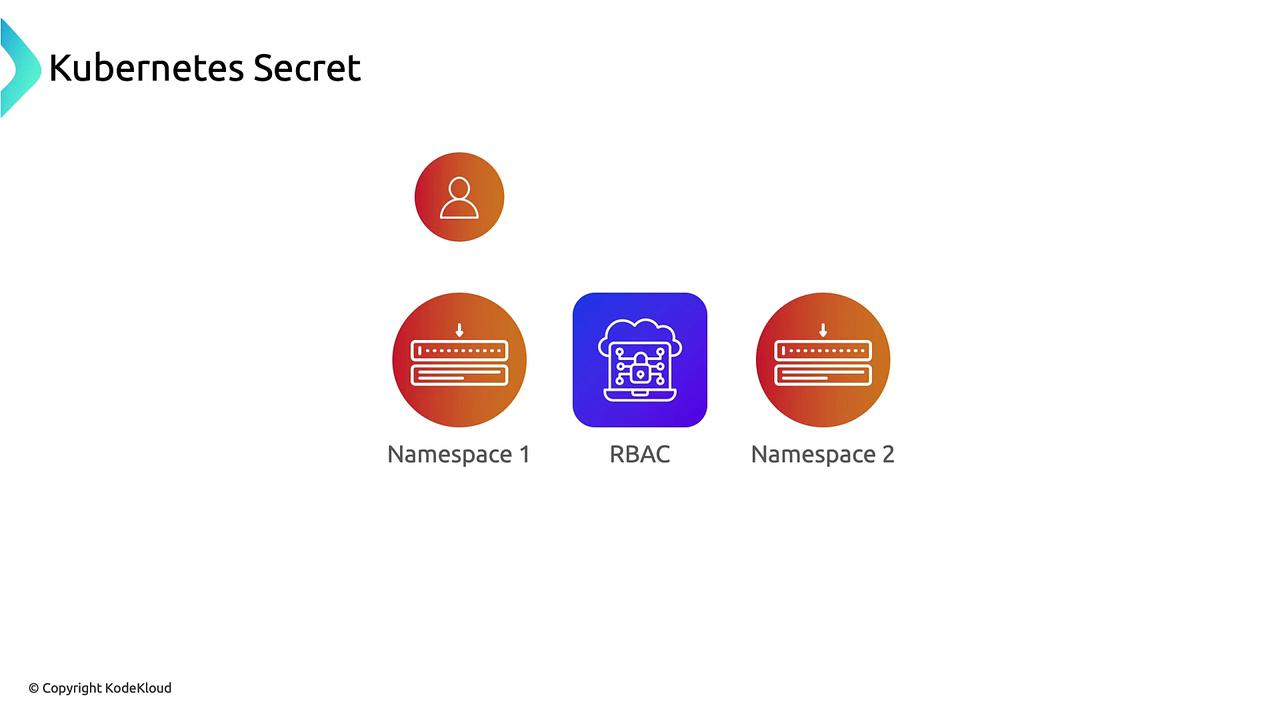
Namespaces and RBAC scoping help restrict access, but they do not encrypt data at rest or in transit.
Next Steps
In upcoming sections, we’ll explore advanced strategies to secure your Secret data:- Envelope Encryption with Kubernetes EncryptionConfiguration
- Cloud KMS Integration (AWS KMS, Google Cloud KMS)
- External Secrets Operators for automatic secret synchronization