This lesson provides an understanding of structs, a user-defined data type for grouping related data elements in programming languages.
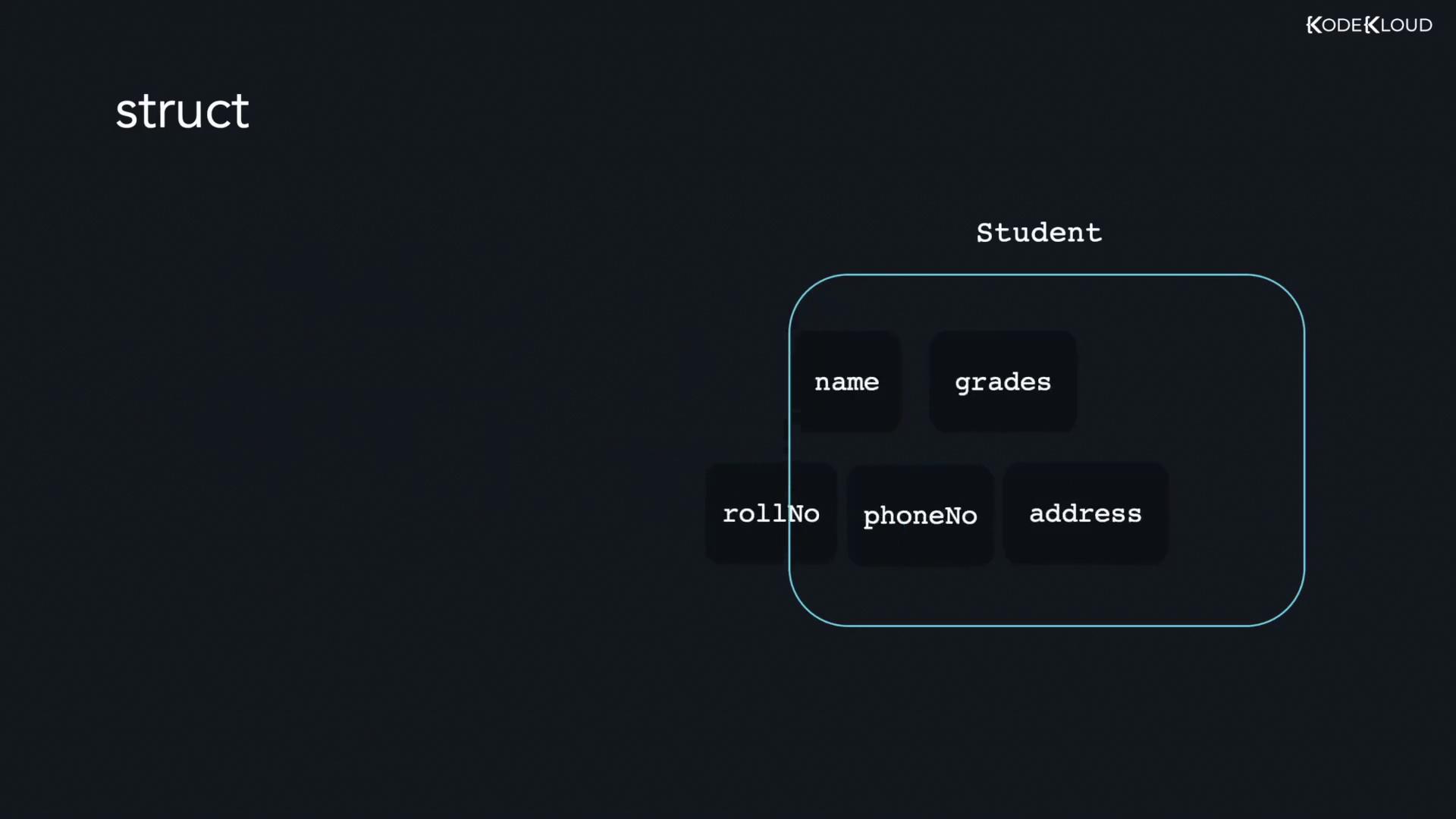
In this lesson, you’ll gain a comprehensive understanding of structs, one of the foundational components in many programming languages, along with a brief overview of methods and interfaces. We begin our discussion by delving into the concept of structs.A struct is a user-defined data type that groups together related data elements. By bundling different fields—each potentially of a different type—into a single composite data structure, structs allow you to manage and access logically connected information more efficiently.Consider a scenario where you need to manage data about a student. Instead of handling separate variables for name, grades, roll number, phone number, and address, you can combine these related fields into a single entity called a Student struct. This approach not only simplifies data management but also enhances code readability and maintainability.
This diagram clearly shows how related data can be structured within a single entity, making it easier to handle complex datasets that are logically related.
Using structs helps in creating cleaner code by encapsulating related data in one place. This concept is particularly useful when designing applications that require a structured representation of objects.
That concludes our lesson on structs. In future lessons, we will expand on this foundation by exploring methods and interfaces, further enhancing your programming toolkit. For more detailed examples and advanced techniques, be sure to continue with our subsequent discussions.