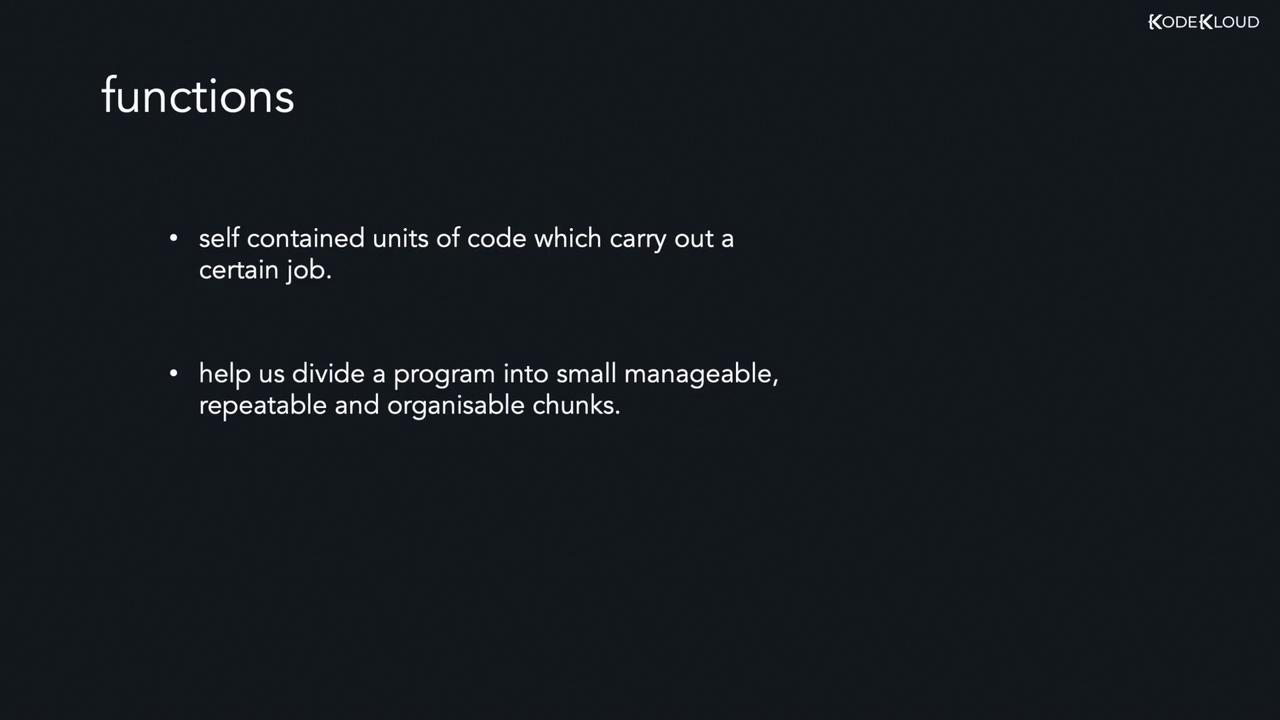
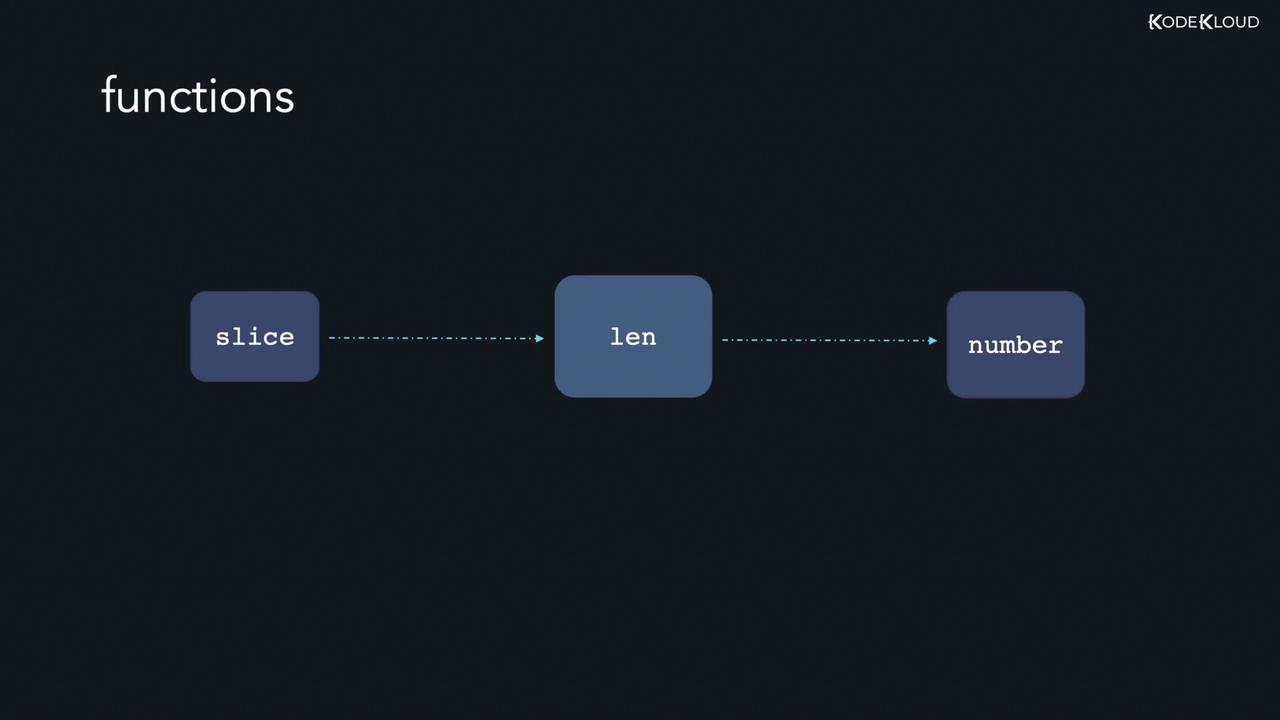
In this lesson, we explore functions in Go—a fundamental element in programming that plays a pivotal role in building clean, maintainable, and scalable code. Functions in Go allow you to structure your programs into reusable blocks of code, making it easier to debug and enhance your applications over time. Functions are self-contained units of logic that perform specific tasks. By encapsulating operations within a function, you can divide your program into manageable and repeatable segments instead of maintaining one large block of code.Documentation Index
Fetch the complete documentation index at: https://notes.kodekloud.com/llms.txt
Use this file to discover all available pages before exploring further.


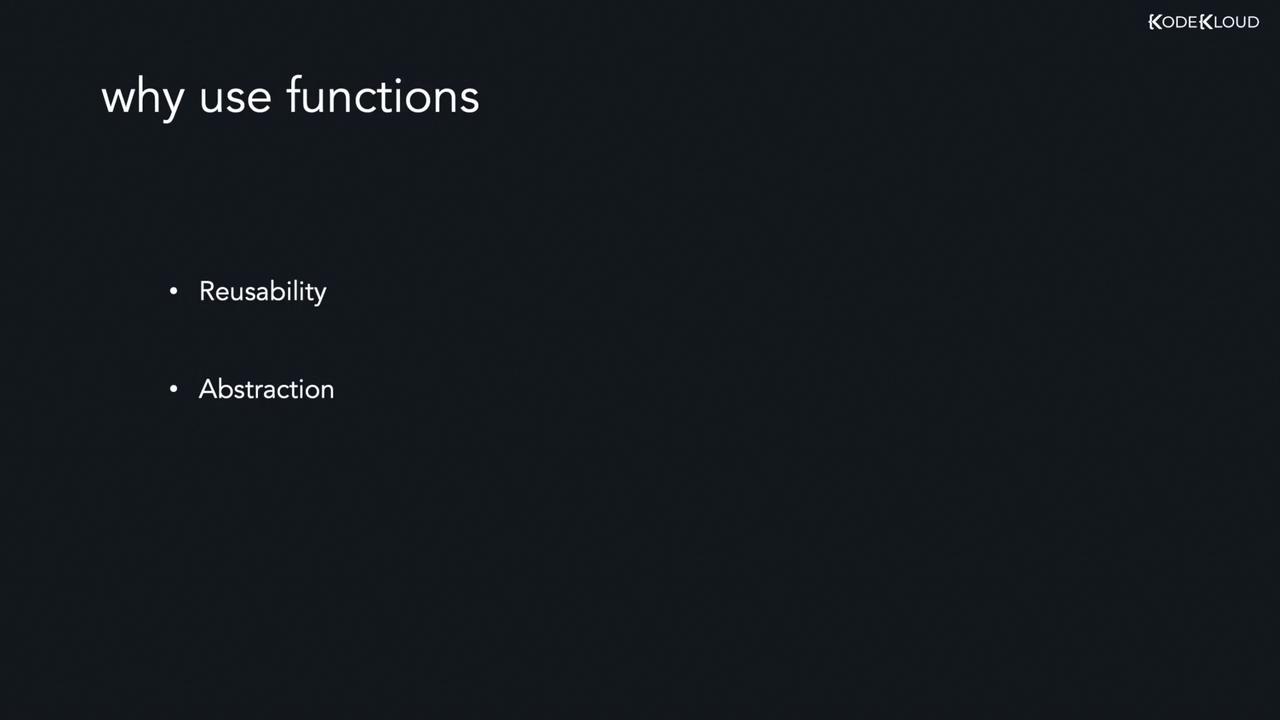
The main benefits of using functions include:
- Reusability: Write a function once and call it multiple times throughout your project.
- Abstraction: Hide complex implementation details, allowing you to focus on what the function does rather than how it does it.
| Function Type | Description | Example Use Case |
|---|---|---|
| Standard Functions | Basic functions that perform defined tasks | Code organization and reusability |
| Higher-Order Functions | Functions that can accept other functions as parameters | Functional programming patterns |
| Variadic Functions | Functions that accept a variable number of arguments | Flexible parameter handling |
| Anonymous Functions | Functions defined without a name | Inline operations and closures |