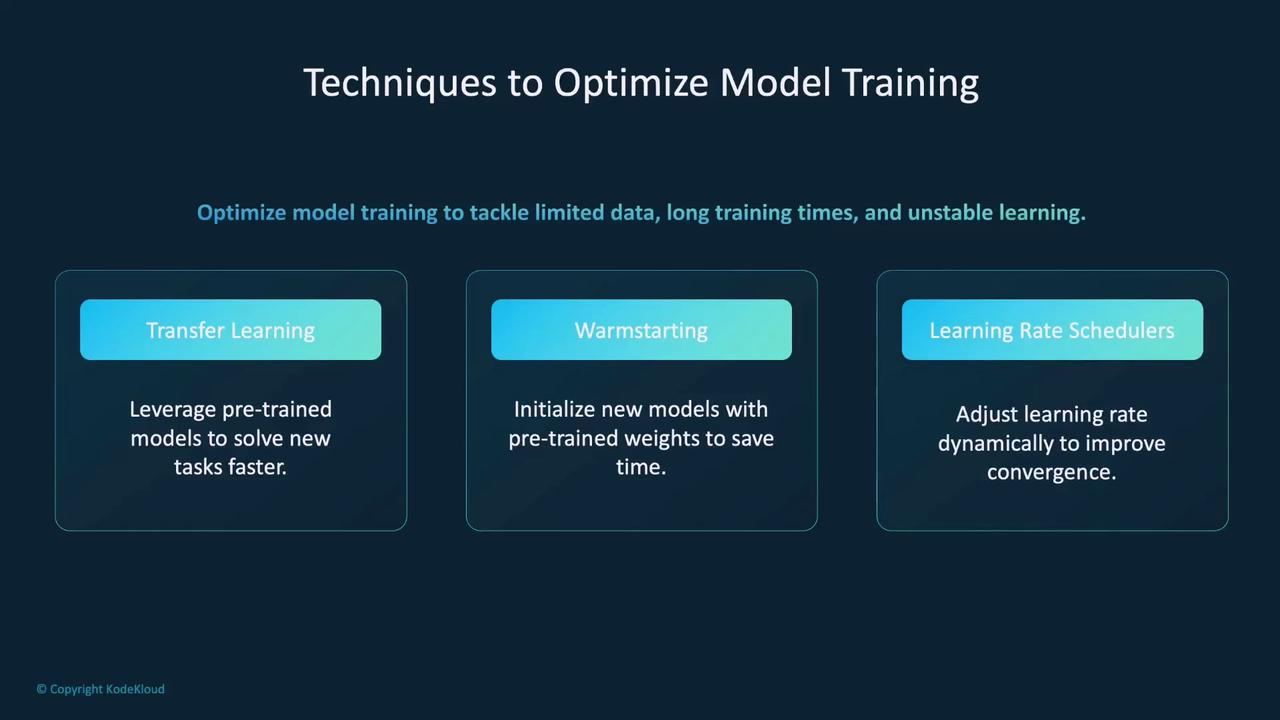
- Transfer Learning: Leveraging pre-trained models for new or related tasks.
- Warm Starting: Initializing models with pre-trained weights to accelerate training.
- Learning Rate Schedulers: Dynamically adjusting the learning rate for better convergence.
Transfer Learning
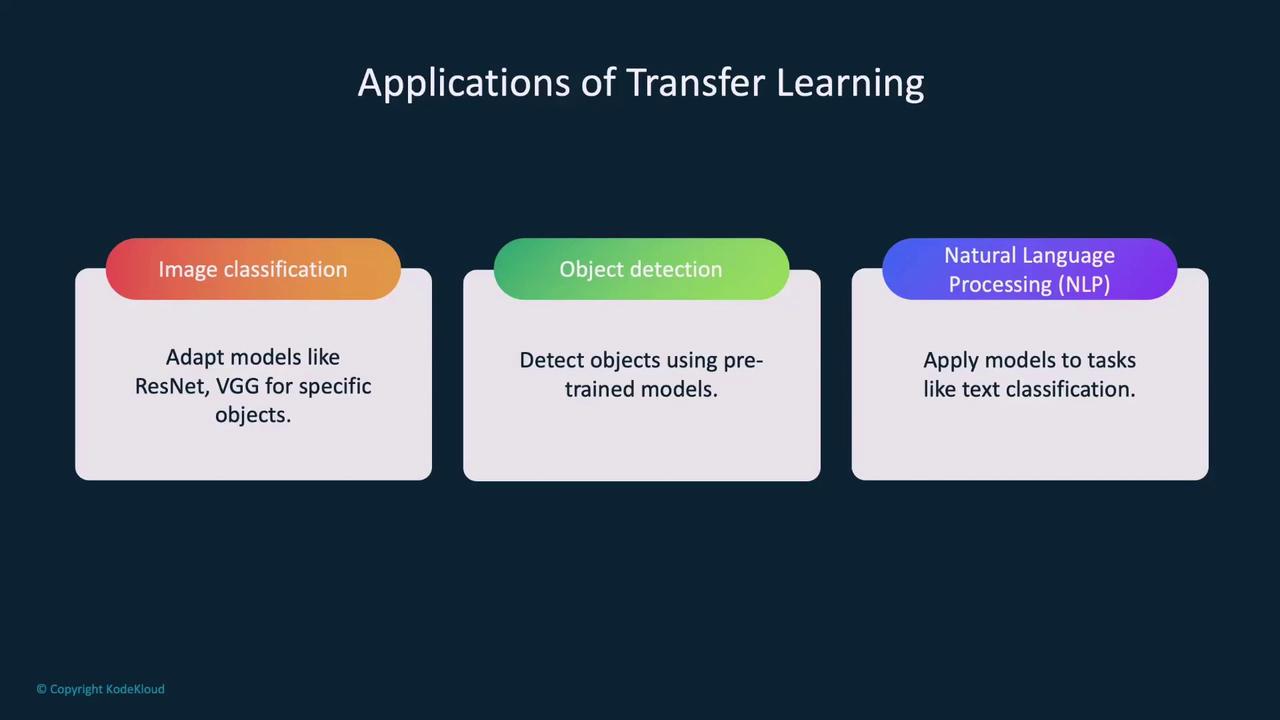
Transfer learning repurposes pre-trained models for new or similar tasks. By starting with a model trained on a large dataset (such as ImageNet), you can significantly reduce the training time for your own application.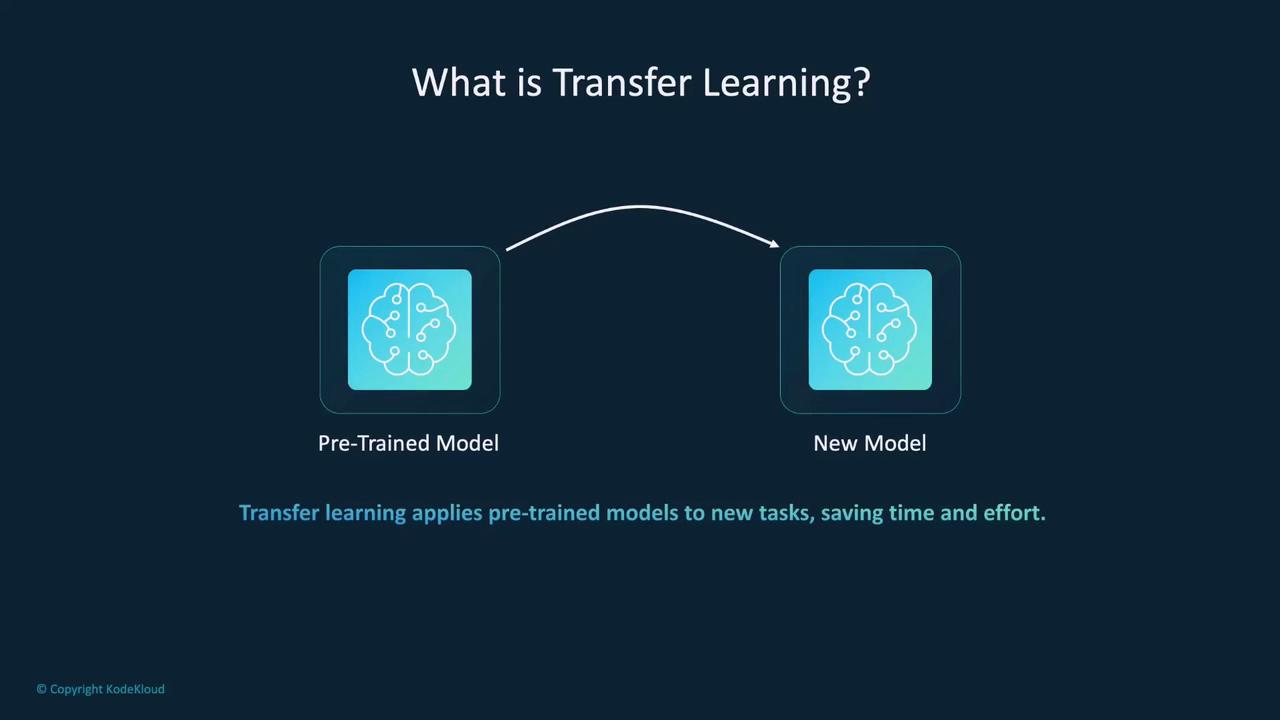
How Transfer Learning Works
The initial layers of a pre-trained model capture generic features common to many tasks. Depending on your dataset size and the similarity between tasks, you can either freeze these layers or fine-tune the entire network.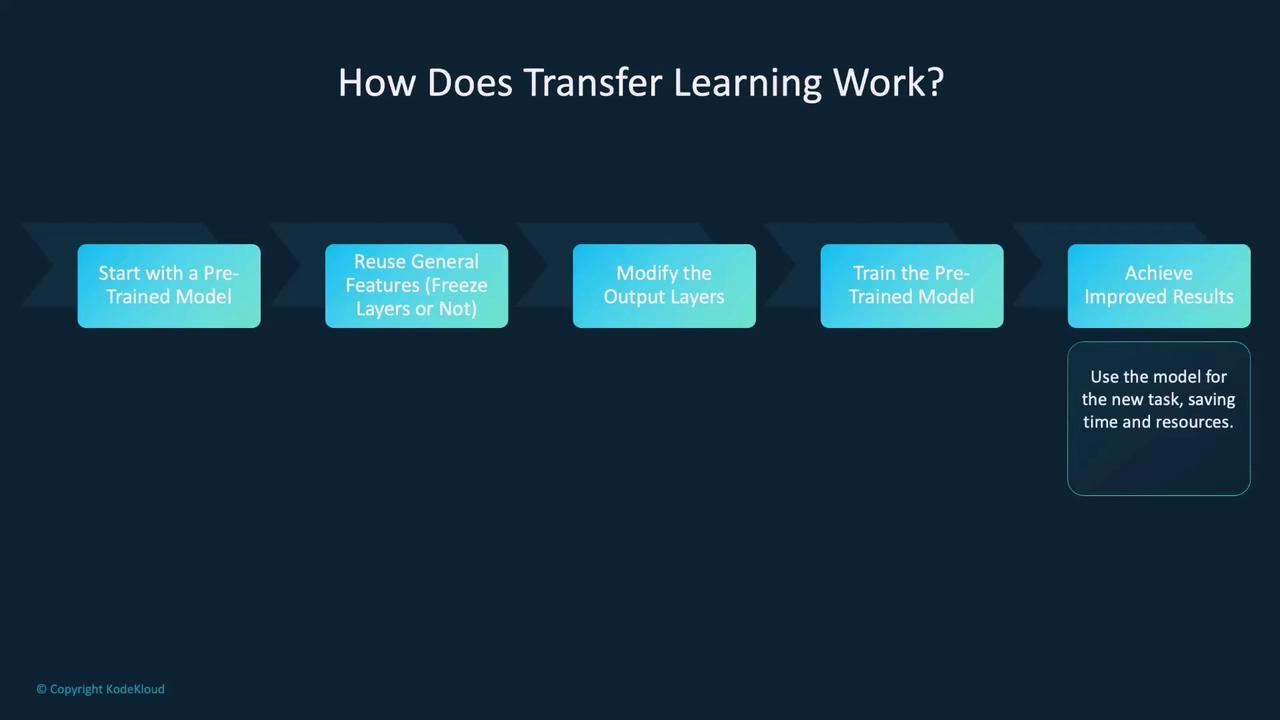
Modifying a Pre-Trained Model
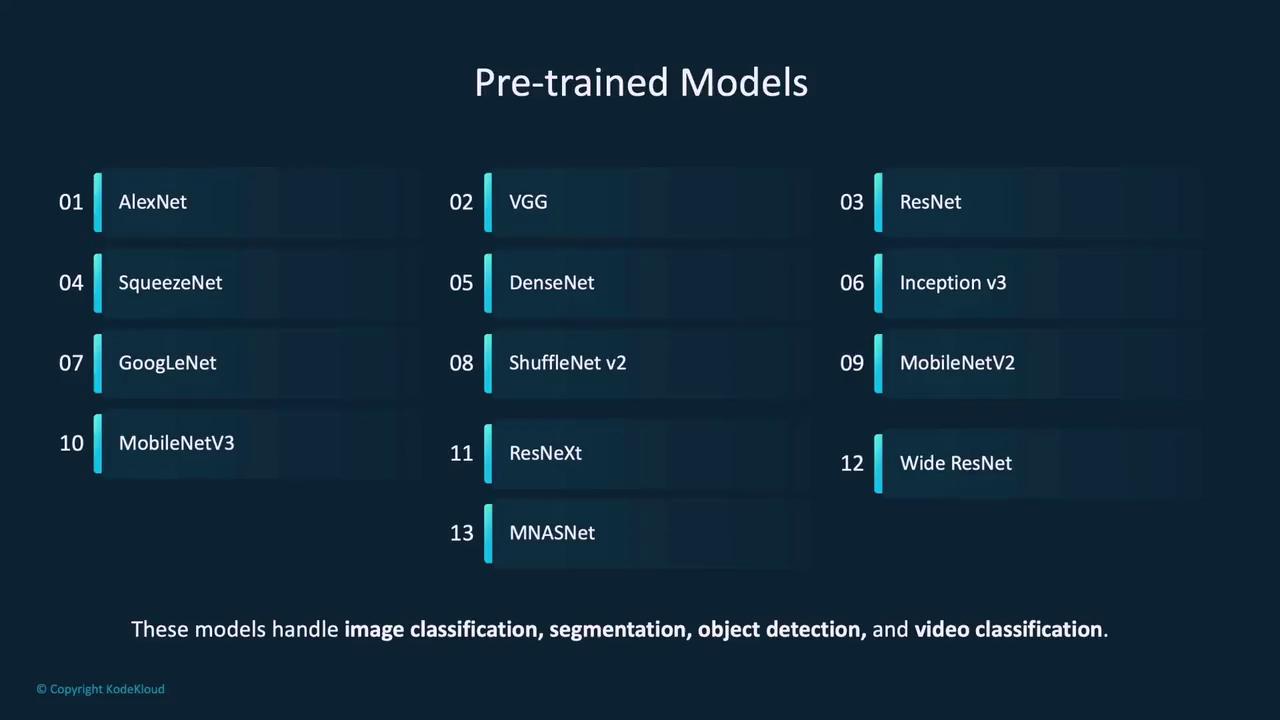
The example below demonstrates how to adapt a pre-trained ResNet-18 model for a new task involving 10 output classes:When modifying pre-trained models, remember to adjust the network’s final layer to match the number of classes in your new task.
PyTorch Hub
PyTorch Hub is a community-driven platform that provides access to a wide range of pre-trained models. It simplifies the process of exploring, downloading, and sharing models contributed by researchers around the world.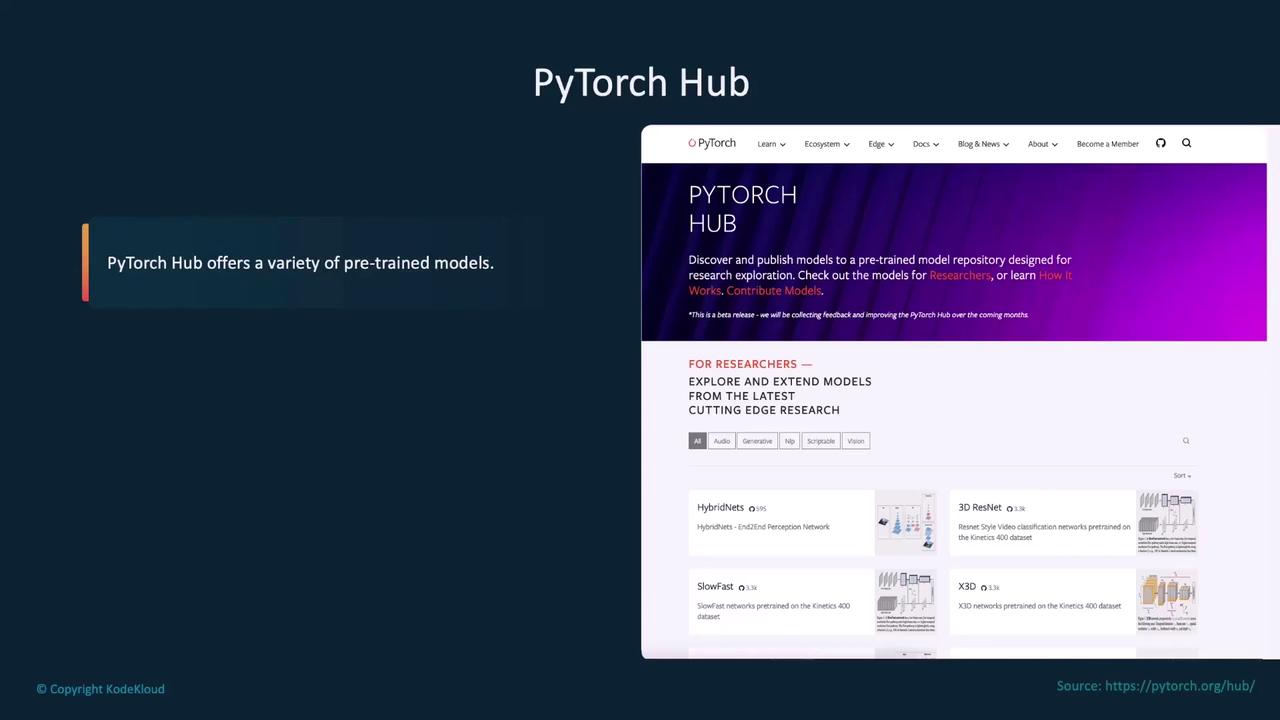
torch.hub.list function by specifying the GitHub repository. For example, to list vision models from the PyTorch/vision repository, execute:
torch.hub.load function. For example, to load the pre-trained VGG-16 model:
hubconf.py in your repository. This file defines the entry point for your model. The following example illustrates how to set up a hubconf.py for a ResNet-18 model:
Learning Rate Schedulers
Learning rate schedulers play a crucial role in training by adjusting the learning rate throughout the training process. This dynamic adjustment ensures that the model takes larger steps in the early stages and fine-tuned adjustments later, preventing issues like overshooting optimal parameters.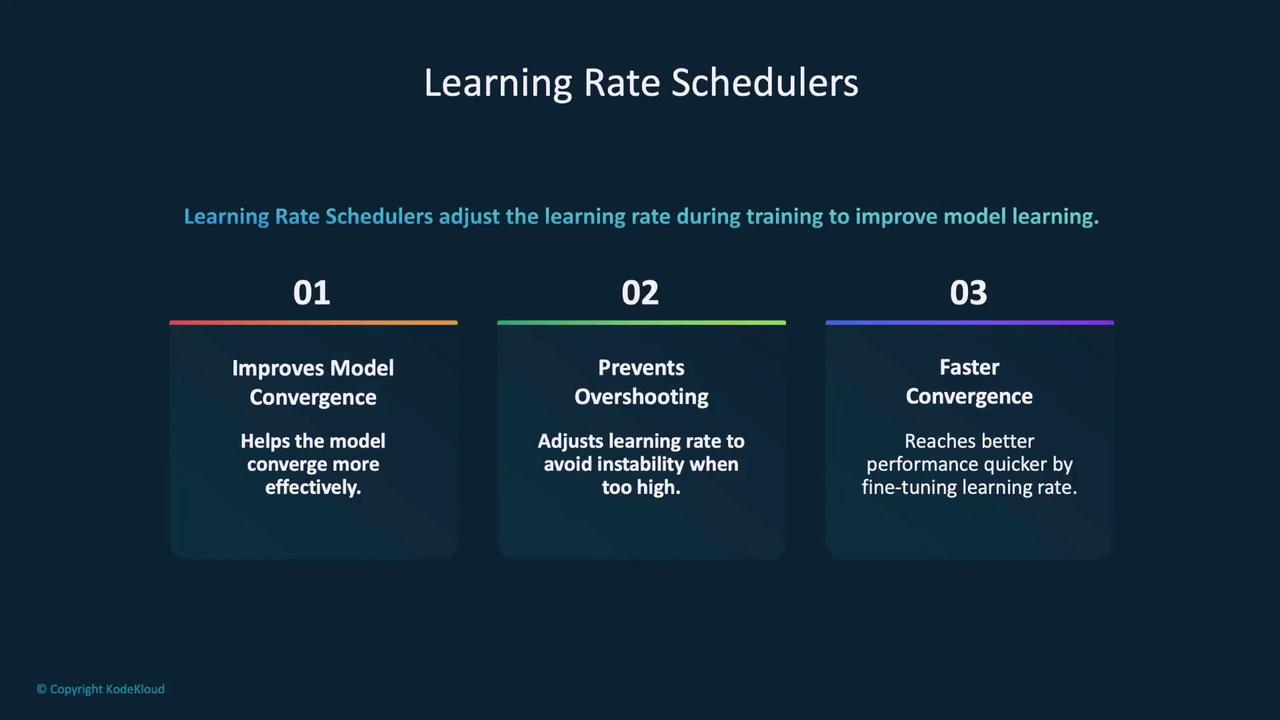
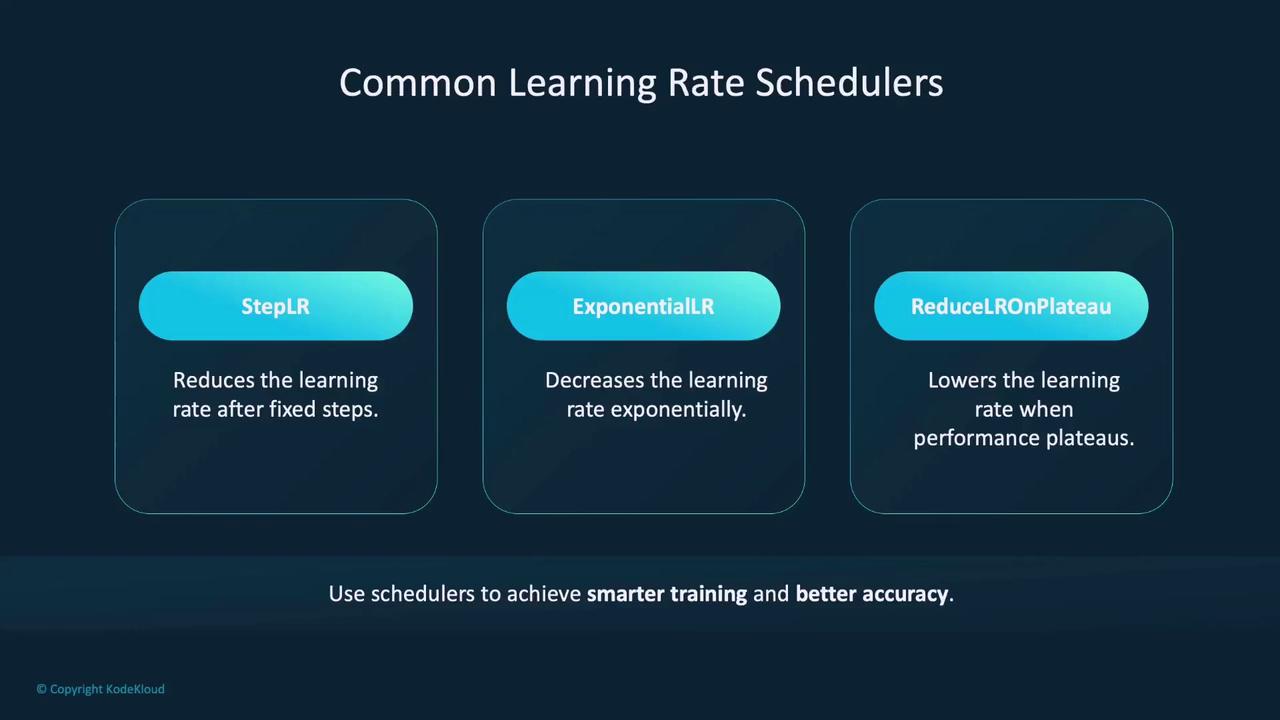
- StepLR: Decreases the learning rate by a fixed factor (gamma) after a set number of epochs.
- ExponentialLR: Applies an exponential decay to the learning rate.
- ReduceLROnPlateau: Lowers the learning rate when performance metrics stagnate.
Summary
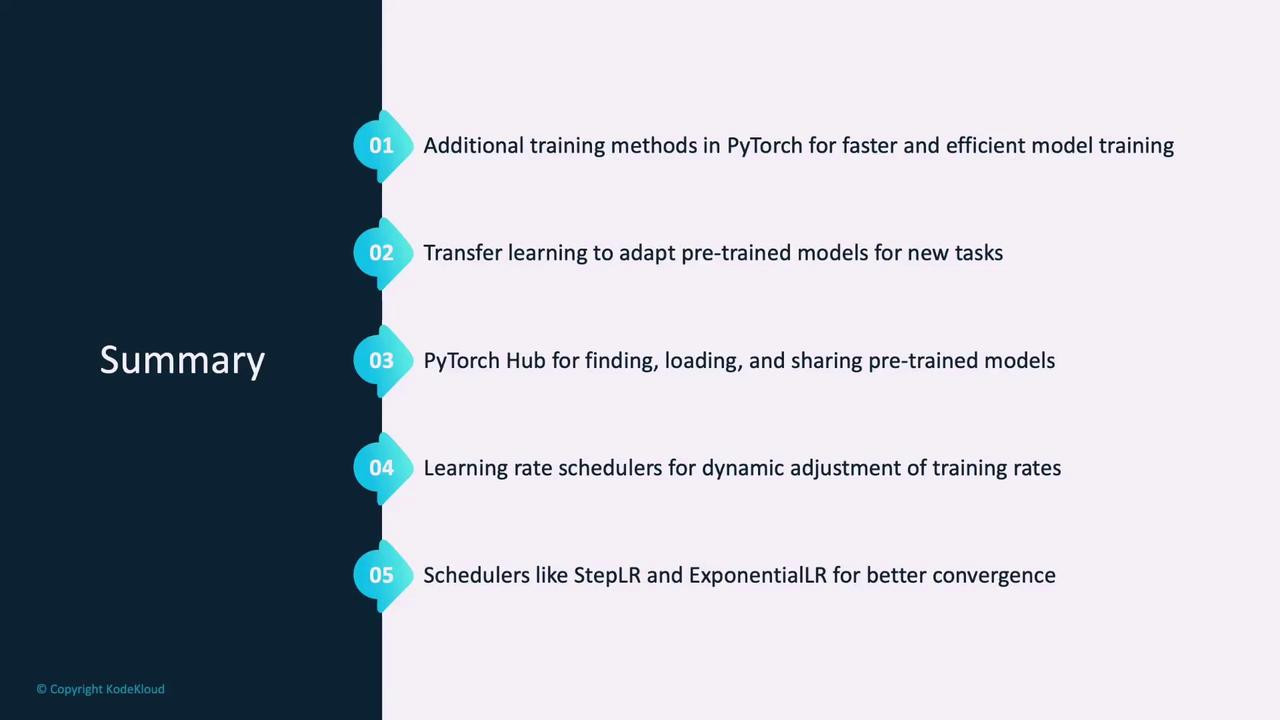
In summary, this article has covered several advanced training methods in PyTorch:- Transfer Learning: Utilize pre-trained models to achieve faster convergence and reduce training time.
- PyTorch Hub: Access and share a wide range of pre-trained models through a community-driven platform.
- Learning Rate Schedulers: Dynamically adjust learning rates during training to avoid overshooting and ensure efficient convergence.