

- On LinkedIn the first screen shows posts from people you follow — that is its news feed.
- On X (formerly Twitter) the first screen shows tweets from accounts you follow — that is its news feed.
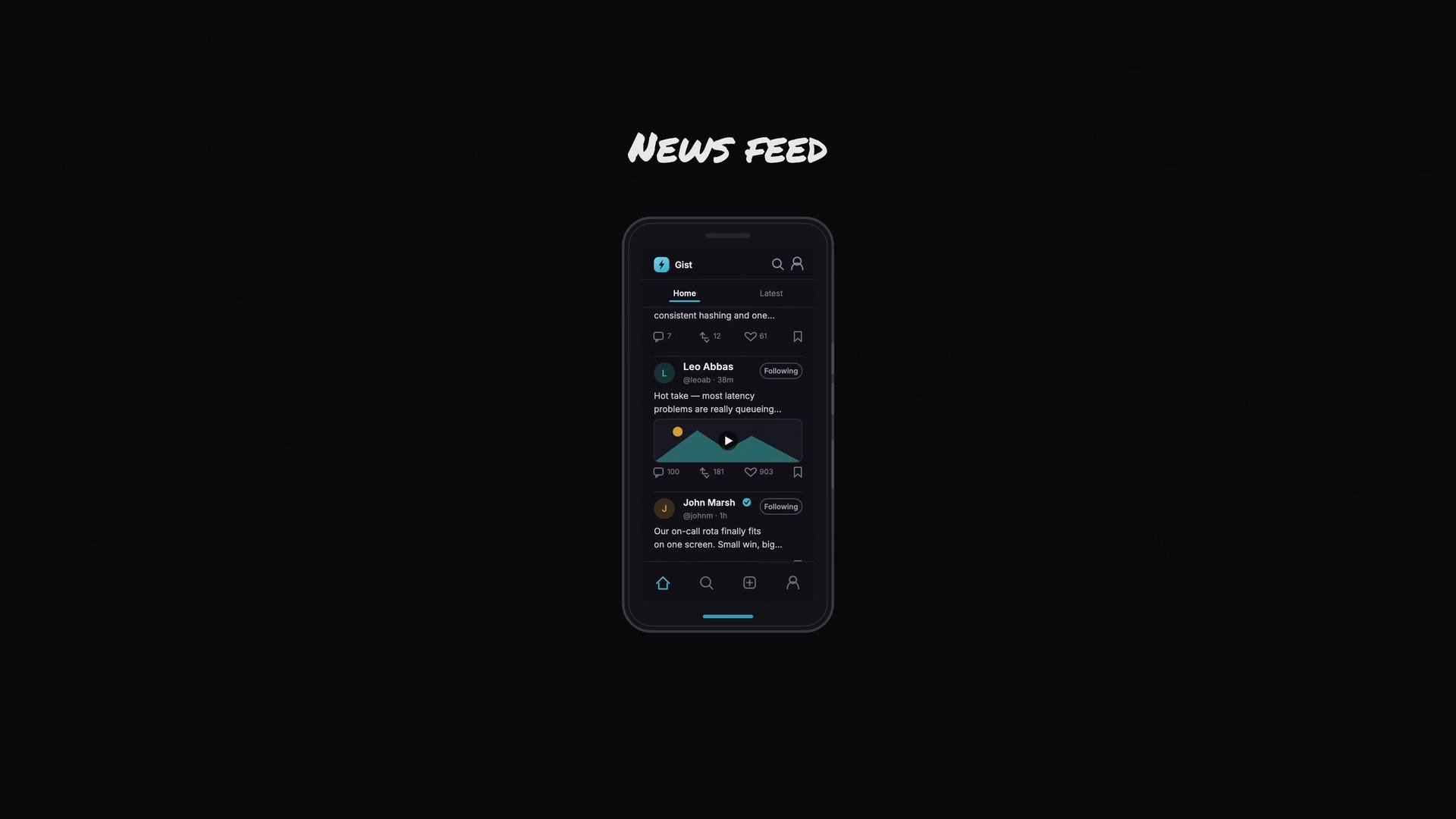
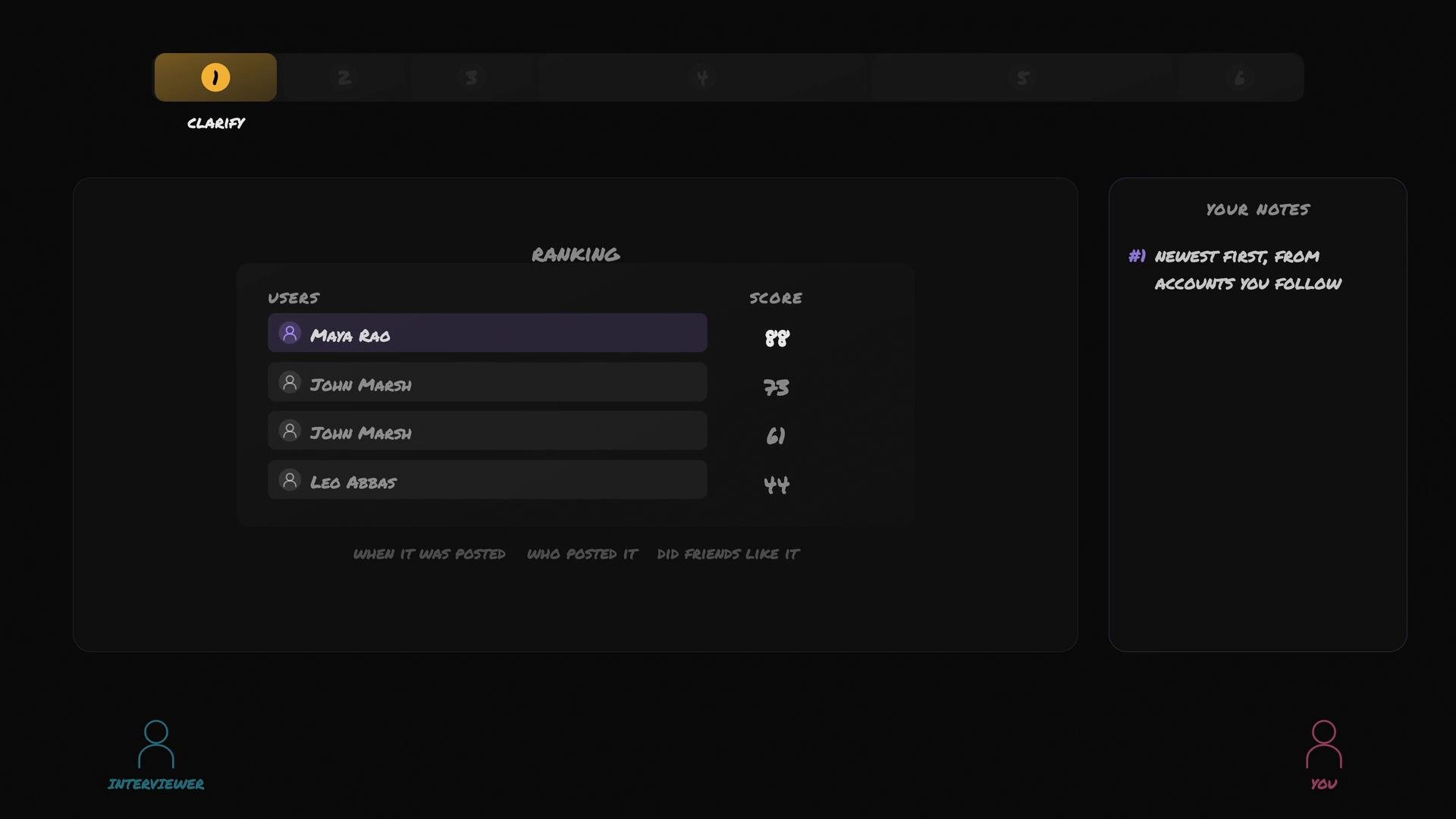
- What goes into the feed and how is it ordered?
- If the interviewer limits the feed to posts from accounts a user follows and asks for newest-first ordering, the problem reduces to timestamp-based sorting. If instead a ranking algorithm is required, that becomes a larger ranking problem that needs signals (post age, creator relationship, likes/reactions, engagement, etc.) and an online or offline scoring pipeline.
-
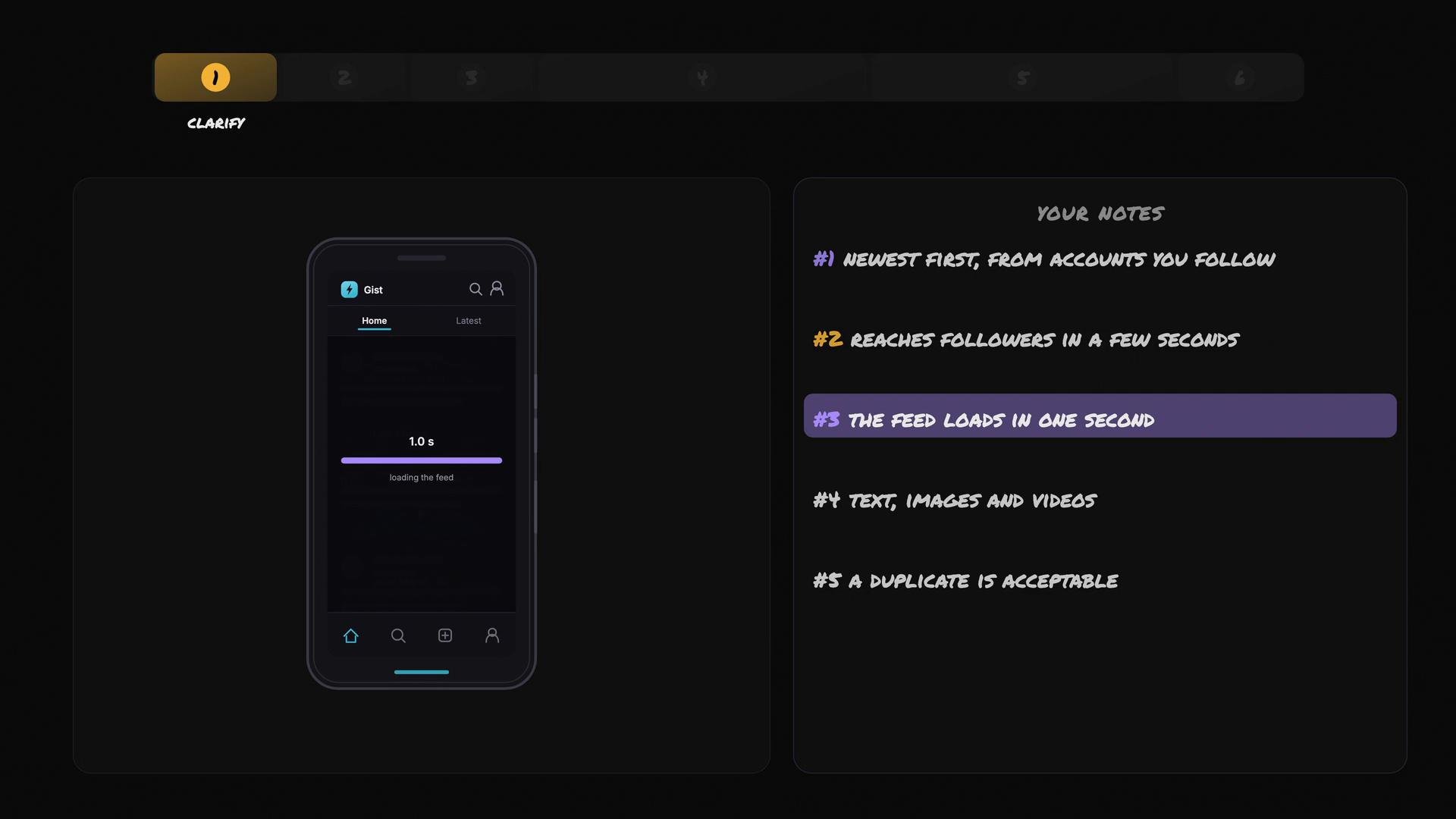
How quickly must a new post appear in followers’ feeds?
- Example: “A few seconds is fine; it shouldn’t take minutes.”
-
What is the target feed load latency?
- Example: “The feed should load within 1 second on open.”
-
Which content types should the feed support?
- Example: “Text, images, and videos.”
-
Is occasional duplication after refresh acceptable?
- Example: “Yes — occasional duplicates after a refresh are acceptable.”
- Users can follow other accounts.
- Users create posts that include text, images, or videos.
- The feed shows the newest posts only from accounts a user follows.
- Feed must load within 1 second on open.
- A new post should reach followers within a few seconds.
- Occasional duplicate posts on refresh are acceptable.
- Daily active users (DAU): 10,000,000
- Average opens per user per day: 5
- Average posts per user per month: 3
- Feed reads/day = 10,000,000 × 5 = 50,000,000 reads/day
- Seconds per day = 86,400 → reads/sec ≈ 50,000,000 / 86,400 ≈ 580 reads/sec
- Total posts/month = 10,000,000 × 3 = 30,000,000 posts/month
- Posts/day ≈ 30,000,000 / 30 ≈ 1,000,000 posts/day
- Writes/sec ≈ 1,000,000 / 86,400 ≈ 12 writes/sec
- Read : write ratio ≈ 580 : 12 ≈ 48 : 1 (≈ 50 reads per write)
These numbers show the system is read‑heavy. That should drive design decisions: favor low-latency read paths, caching, and pre-computation (fan-out strategies) over write-optimized designs.
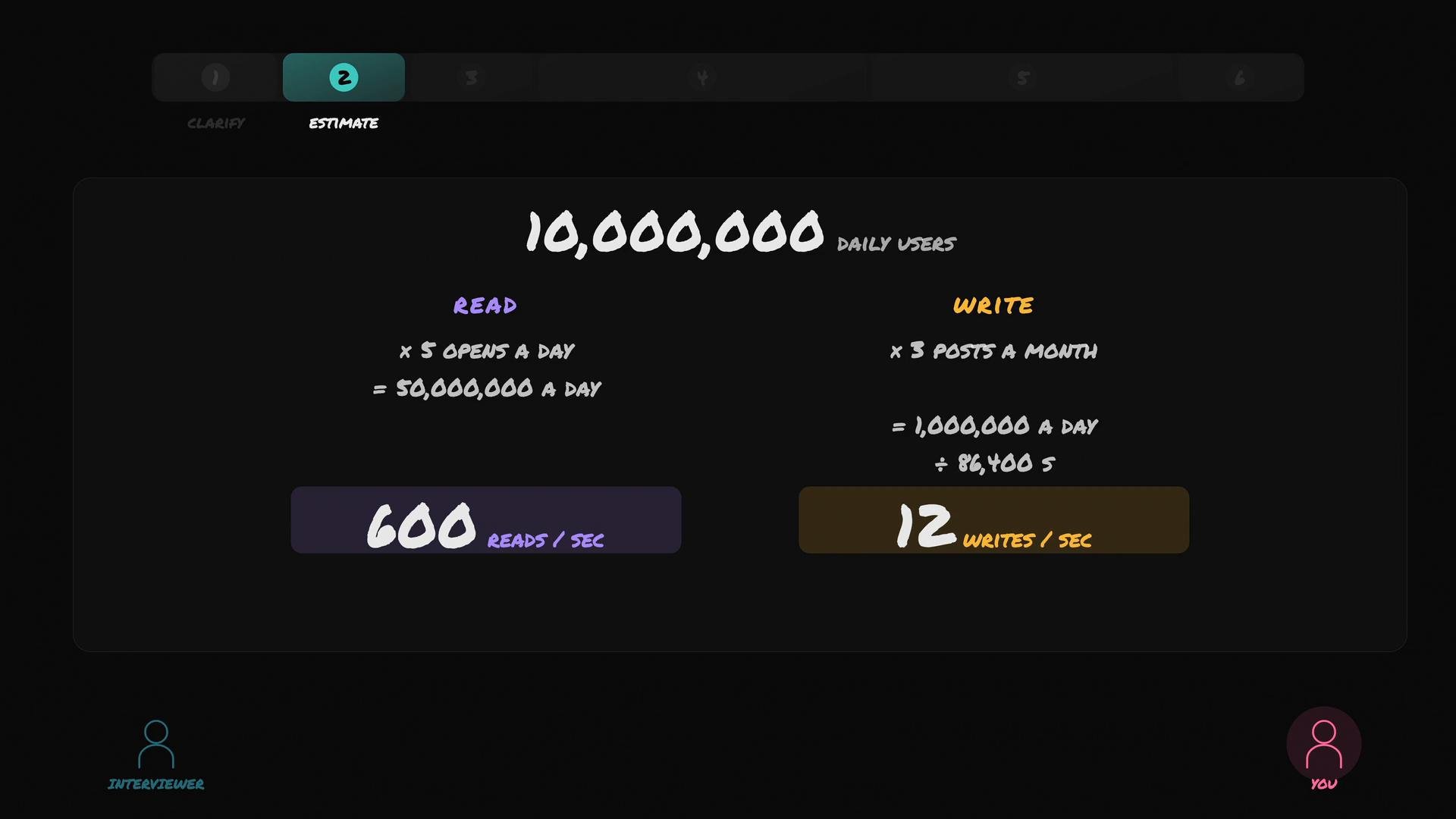
The key takeaway from estimation: the feed is read-heavy. Prioritize fast read paths (caching and pre-computation/fan-out) and acceptable eventual consistency. Use the read/write ratio to justify design trade-offs during your interview.
- Kubernetes Documentation — for running scalable services
- System design primer on GitHub — good interview prep and patterns
- Designing data-intensive applications (book) — background on storage and replication patterns