This article provides a comprehensive guide on containers, Docker, and Kubernetes, covering setup, management, and deployment of applications.
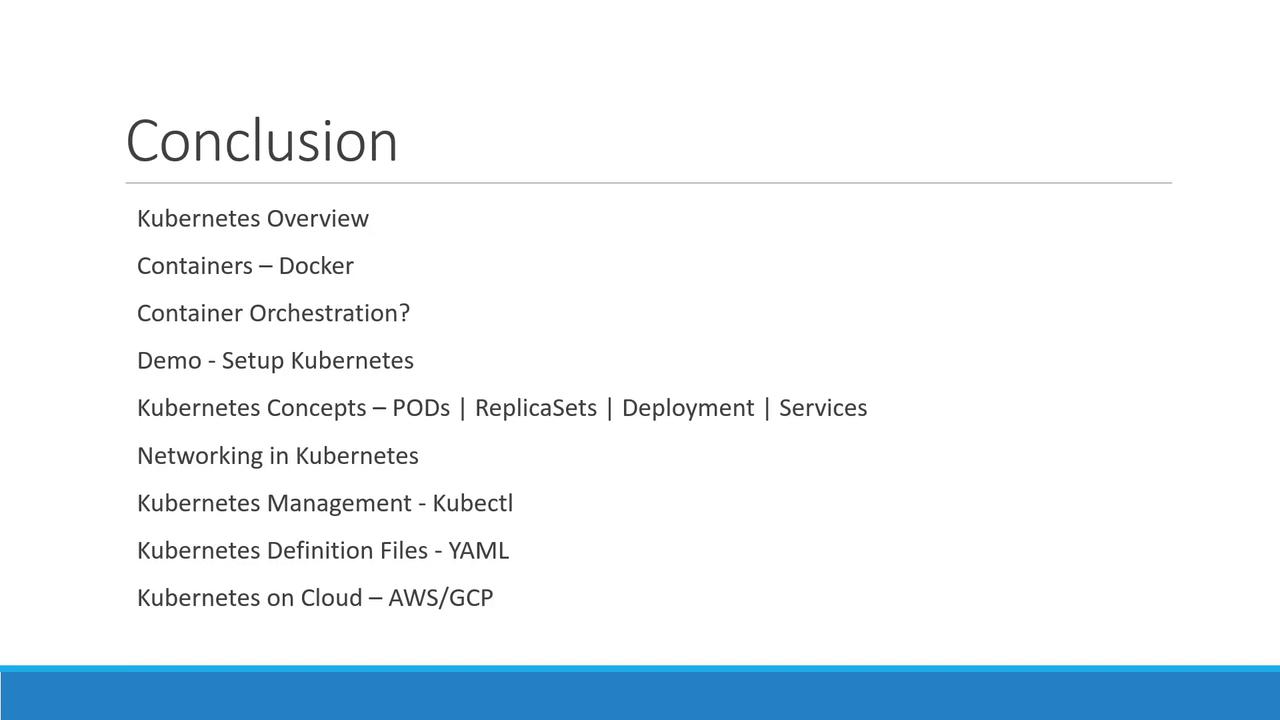
We have reached the end of this comprehensive guide on containers, Docker, and Kubernetes. In this article, we began by exploring the fundamentals of containers and Docker, then transitioned into container orchestration with Kubernetes—covering everything from setup options to in-depth cluster management.
We started with an introduction to containers and Docker. Then, we discussed the basics of Kubernetes, highlighting critical concepts such as Pods, ReplicaSets, Deployments, and Services. Along the way, we provided an overview of Kubernetes networking, demonstrated essential kubectl commands, and explained how to create Kubernetes definition files.Towards the end of the article, we showcased the deployment of a sample microservices application on Kubernetes using Google Cloud Platform.
This guide is designed to equip you with the knowledge and practical experience needed to confidently work with Kubernetes. Whether you are deploying projects in your organization or experimenting with cloud deployments, the concepts covered here will help you get started.
Thank you for following along in this tutorial. Good luck on your Kubernetes journey, and we look forward to seeing you in our next guide. Until then, happy container orchestration!