

-
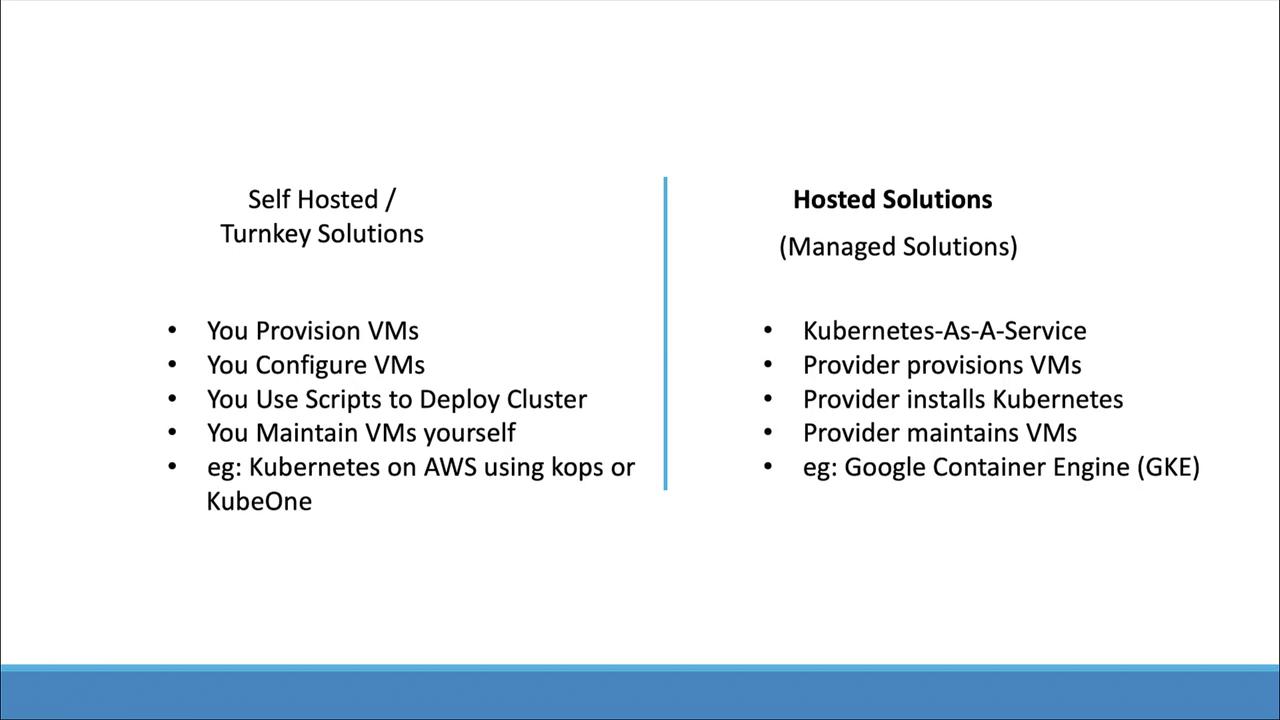
Self-hosted (Turnkey) Solutions
With turnkey solutions, you provision the necessary virtual machines and use automation tools or scripts to set up your Kubernetes cluster. Although tools like Kops or KubeOne (for AWS, for example) streamline cluster provisioning, you still maintain responsibility for patching, upgrading, and overall VM management. The CKA Certification Course - Certified Kubernetes Administrator provides detailed instructions on setting up clusters using tools such as Kubeadm. -
Hosted (Managed) Solutions
Managed solutions deliver Kubernetes as a service. Here, the cloud provider is responsible for deploying the virtual machines, configuring the Kubernetes cluster, and handling maintenance tasks such as upgrades and patches. A great example is the Google Kubernetes Engine (GKE), which allows you to provision a cluster in minutes with just a few clicks—eliminating the need for manual infrastructure configuration. With managed solutions, access to master nodes or underlying VMs is typically restricted.
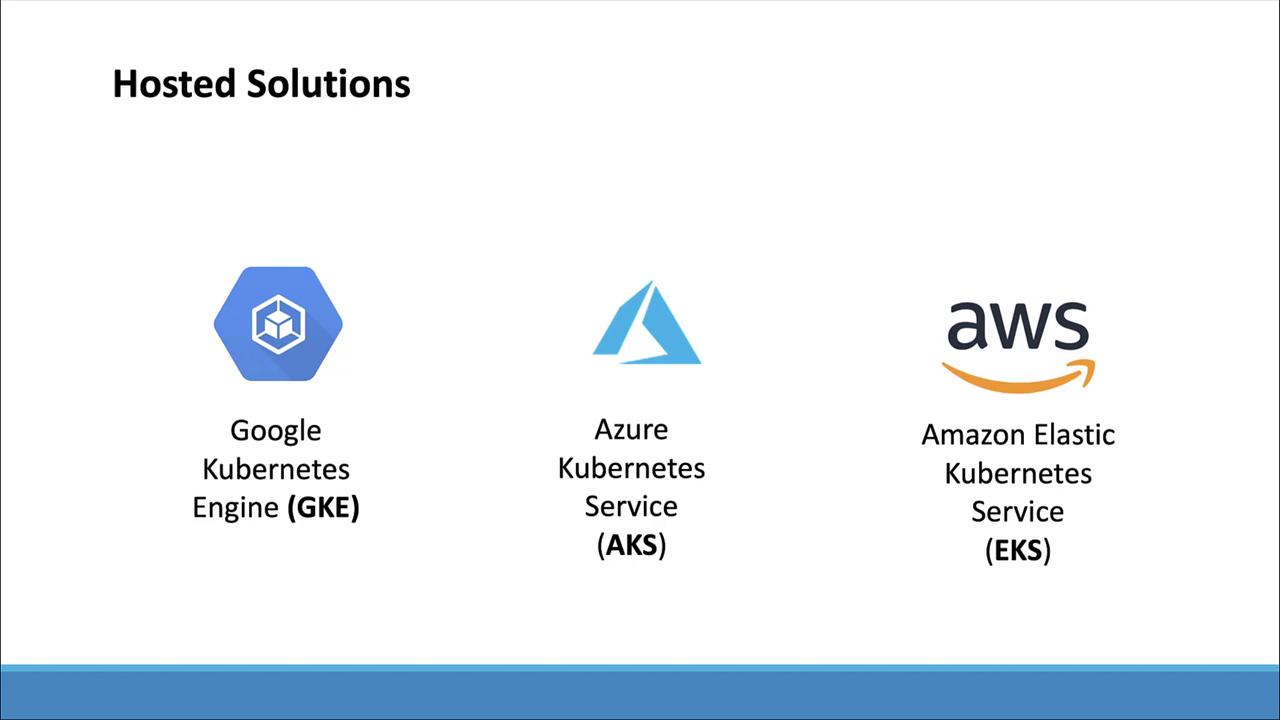
- Google Kubernetes Engine on Google Cloud
- Azure Kubernetes Service (AKS)
- AWS Elastic Kubernetes Service (EKS)
This lesson is designed as a beginner’s guide. While it demonstrates the simplest method to provision and deploy a managed Kubernetes cluster, many concepts overlap across different platforms.
This guide is intended for educational purposes only. Before deploying production environments, ensure you have a comprehensive understanding of Kubernetes and the necessary operational best practices.