This article explores the Kubernetes service type ClusterIP and its
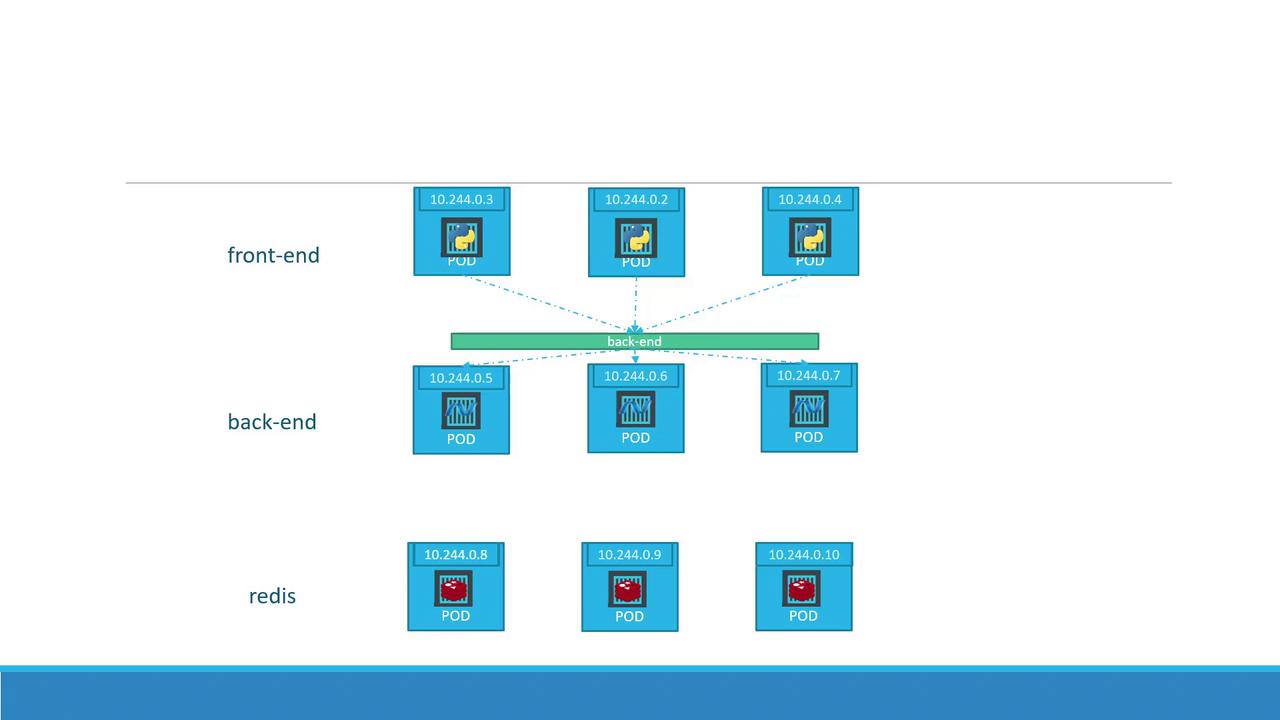
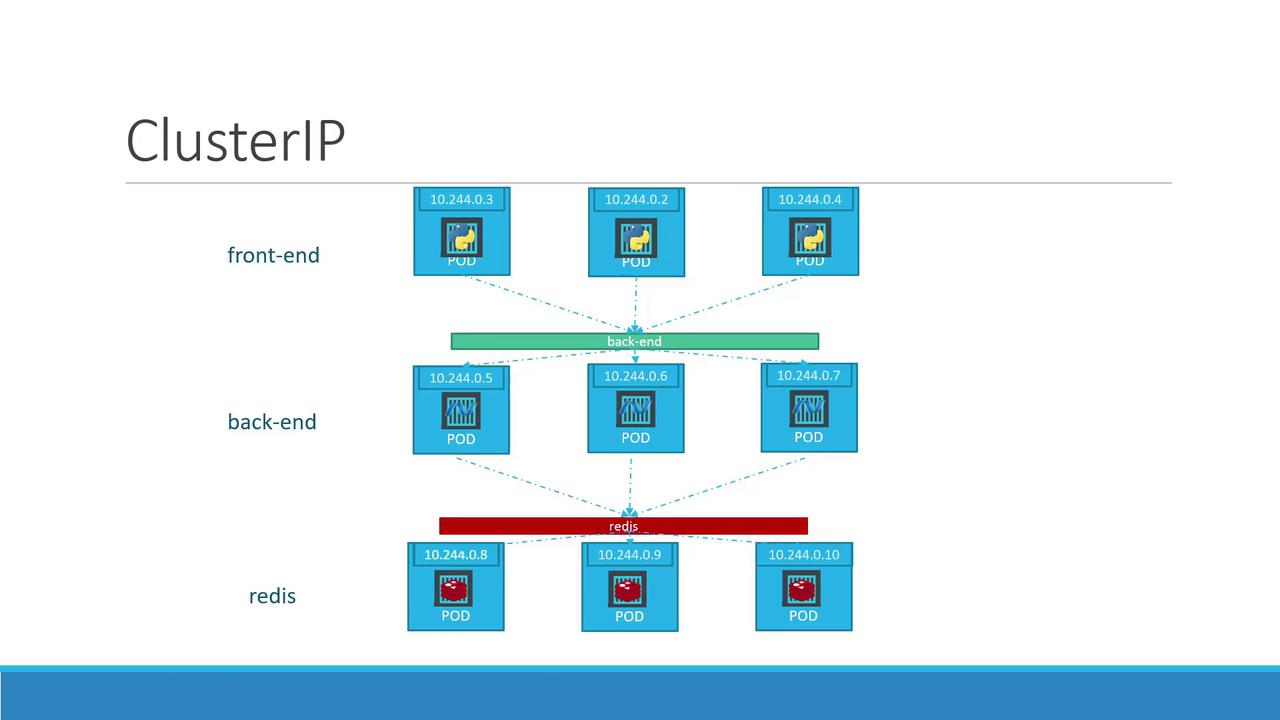
Welcome to this article where we explore the Kubernetes service type known as ClusterIP. In typical full-stack web applications, different pods host various components, such as a front-end web server, a back-end server, a key-value store like Redis, and a persistent database such as MySQL. Establishing reliable connectivity among these tiers is critical, particularly because pods are dynamic and their IPs are ephemeral.Consider the scenario: the front-end server needs to communicate with multiple back-end pods. Each pod receives an IP address, but these addresses can change as pods are terminated and recreated. Thus, it’s impractical to rely on pod IPs for internal communication. Additionally, if a request comes from the front-end (for example, from IP 10.244.0.3), it must be intelligently routed to one of the several available back-end pods.
A Kubernetes service overcomes these challenges by grouping related pods and exposing a single, stable interface. When you create a service for the back-end pods, Kubernetes aggregates them and provides a unified endpoint. Incoming requests are automatically load balanced across the available pods, ensuring efficient resource utilization and high availability. Similarly, additional services can be set up for components like Redis, facilitating seamless communication between different parts of your application.
ClusterIP is the default service type in Kubernetes. When you omit the type field in your service specification, Kubernetes automatically assumes ClusterIP.
Once your YAML files are ready, you can deploy the service using the following kubectl command:
kubectl create -f service-definition.yml
Upon successful creation, your console will display a confirmation similar to:
service "back-end" created
Now, other pods in your Kubernetes cluster can communicate with the back-end service using its DNS name (back-end) and the assigned ClusterIP. This setup guarantees that even if pods are rescheduled, scaled, or replaced, the internal communication remains consistent and reliable.For further reading, explore: