

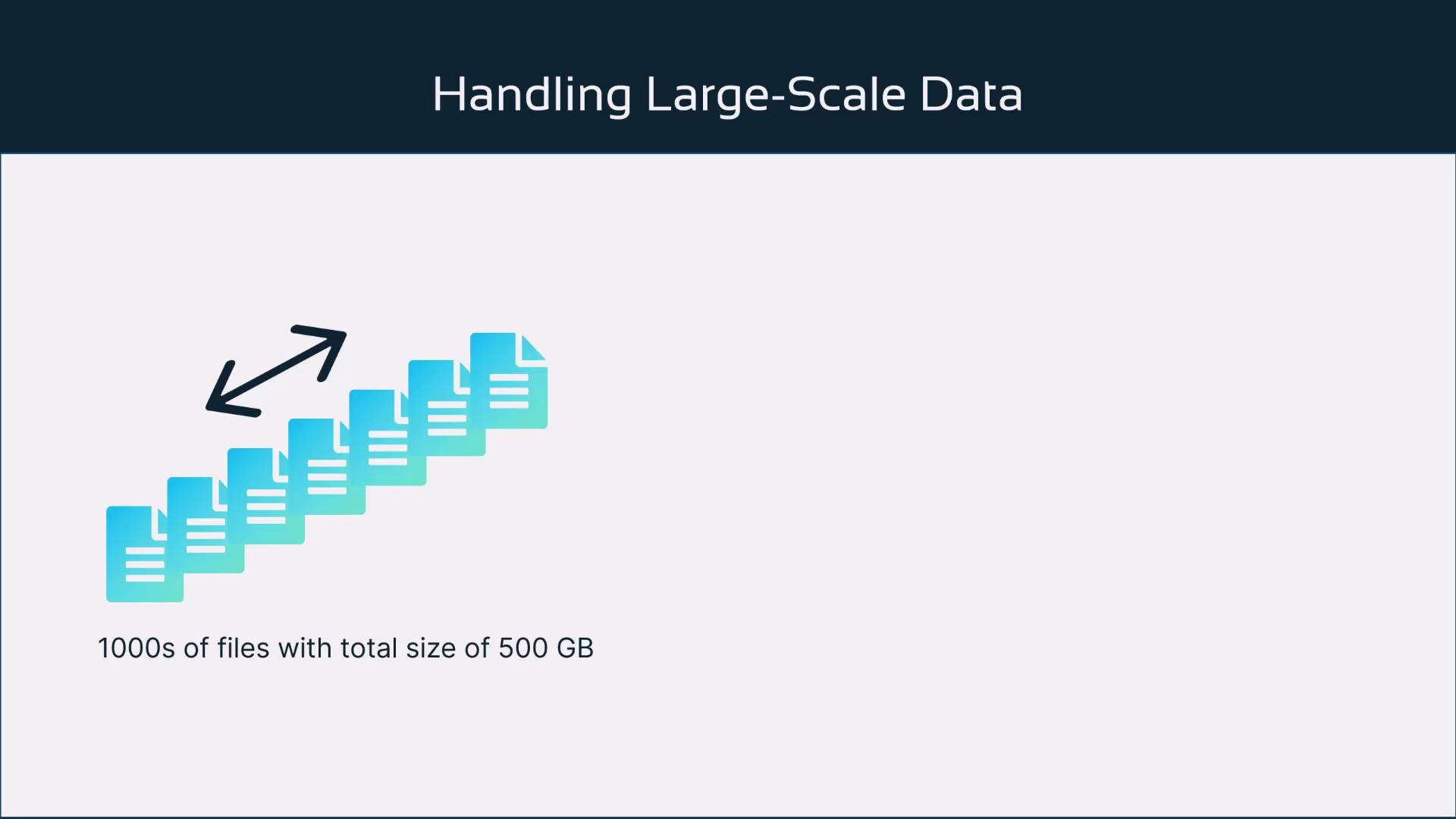
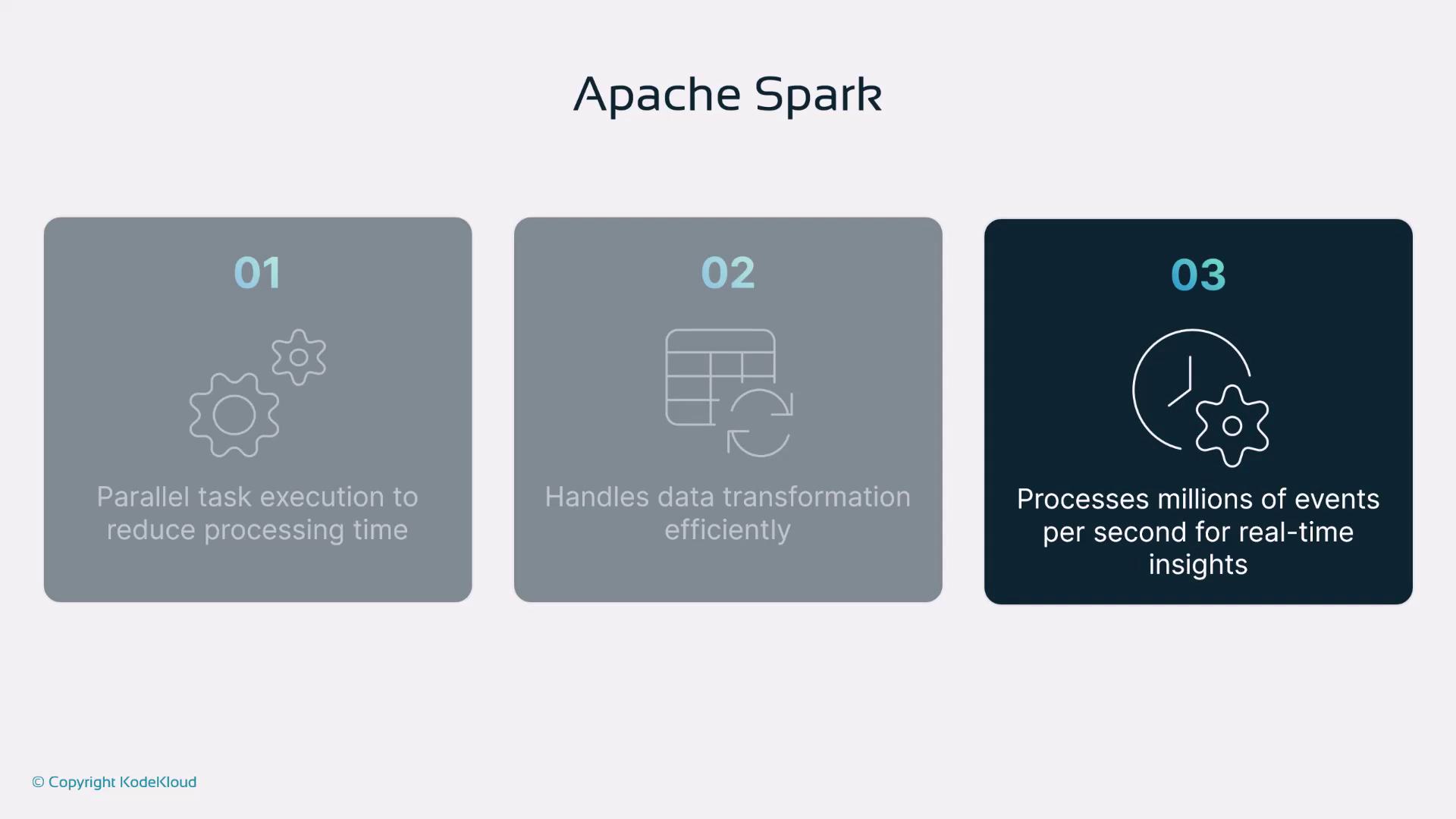
- Parallel Processing: Enables real-time data analysis by dividing work across clusters.
- Fault Tolerance: Uses Resilient Distributed Datasets (RDDs) to automatically recover from node failures.
- In-memory Computation: Minimizes latency by reducing reliance on disk storage.
- Unified API: Supports multiple programming languages including Python, Java, and Scala.
-
Distributed Processing and Speed
Spark divides large datasets across multiple nodes, enabling parallel processing. For instance, sensor data from IoT devices can be processed in real time for predictive maintenance in manufacturing. -
Fault Tolerance for Reliability
Spark automatically recovers from node failures using Resilient Distributed Datasets (RDDs). This reliability is crucial in environments such as financial institutions where data integrity and uninterrupted processing are vital. -
In-Memory Computation for Efficiency
By processing data directly in memory rather than via disk storage, Spark minimizes latency. This advantage is particularly important in scenarios like fraud detection, where real-time insights are essential to preventing losses. -
Unified API for Versatility
Spark offers a unified API that supports multiple languages, making collaboration across diverse technical teams seamless.
