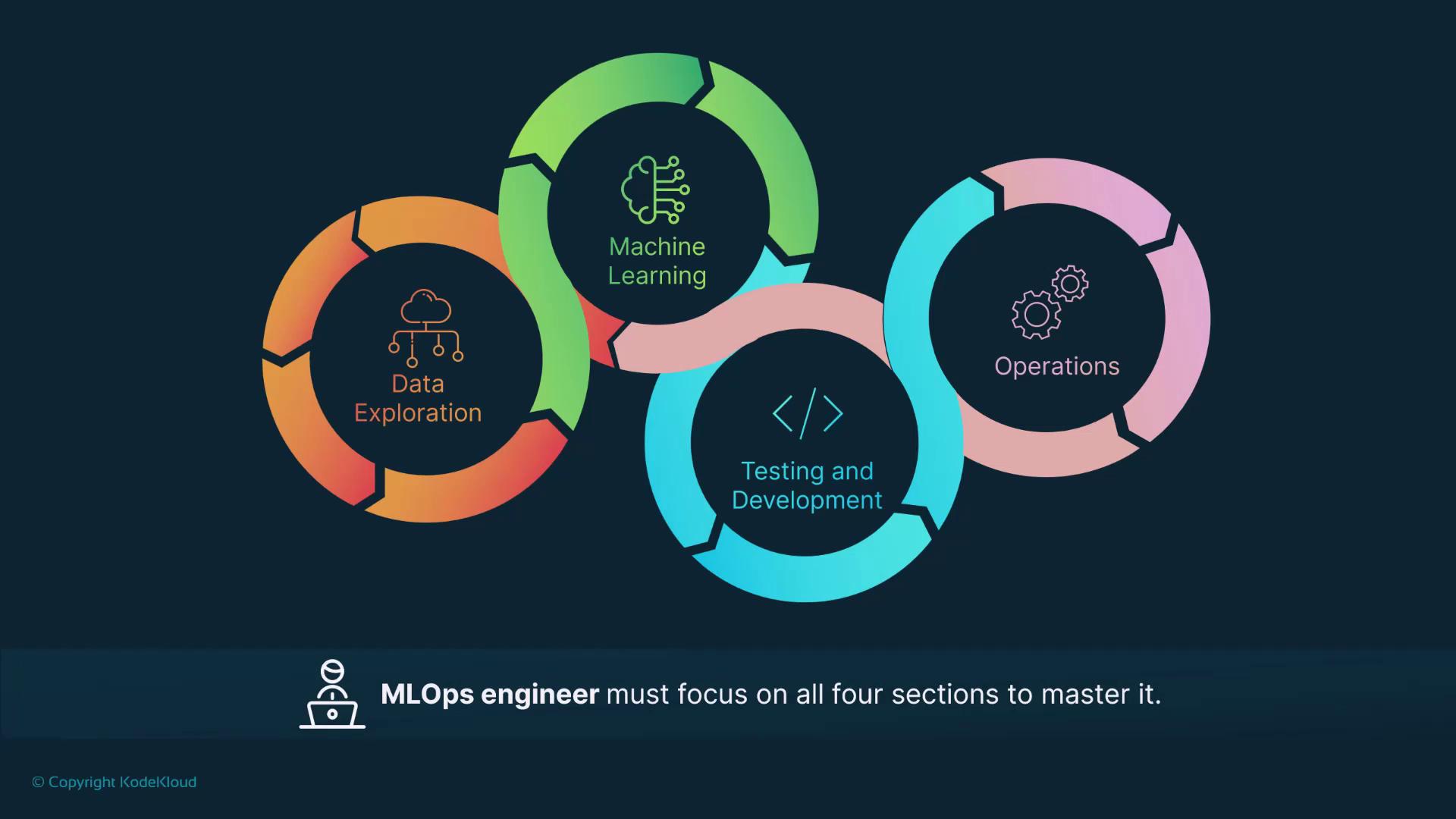
Data Exploration
The first stage involves curating, collecting, transforming, and validating data to ensure a solid foundation for machine learning. High-quality data is key to successful model training and performance. For example, an e-commerce company might analyze historical sales data to predict future trends.
Around 30 to 40 percent of a machine learning project’s timeline is dedicated to data exploration, underscoring its critical importance.
Model Building
Once the data is refined, the next phase is constructing the machine learning model. This involves selecting the appropriate algorithm, training the model, and fine-tuning its performance. Data scientists invest significant time in experimenting with various models to align the chosen approach with the project’s specific objectives.Testing and Development
Before moving to production, it is crucial to rigorously test the model. During this phase, the model is validated using methods like cross-validation or holdout testing to ensure reliability on unseen data. For example, testing a fraud detection model on new, unencountered data helps confirm its real-world effectiveness.Skipping comprehensive testing can result in critical production errors, so thorough validation is a necessary safeguard.
Model Evaluation and Deployment
After successful testing, the model undergoes evaluation based on key performance metrics such as accuracy, precision, and recall. When the model meets the desired standards, it is deployed into production. Continuous monitoring is then set up to ensure the ML service delivers consistent performance and to facilitate future updates.