1. Running Flask Application Tests
Start by defining fixtures and writing basic tests for your Flask app:2. Browsing Model Options in Cursor
Open the chat interface to explore AI model settings:- Left sidebar: Toggle autocompletion modes (Ask, Agentic, Edit).
- Right pane: Choose a specific model or leave on Auto-select.
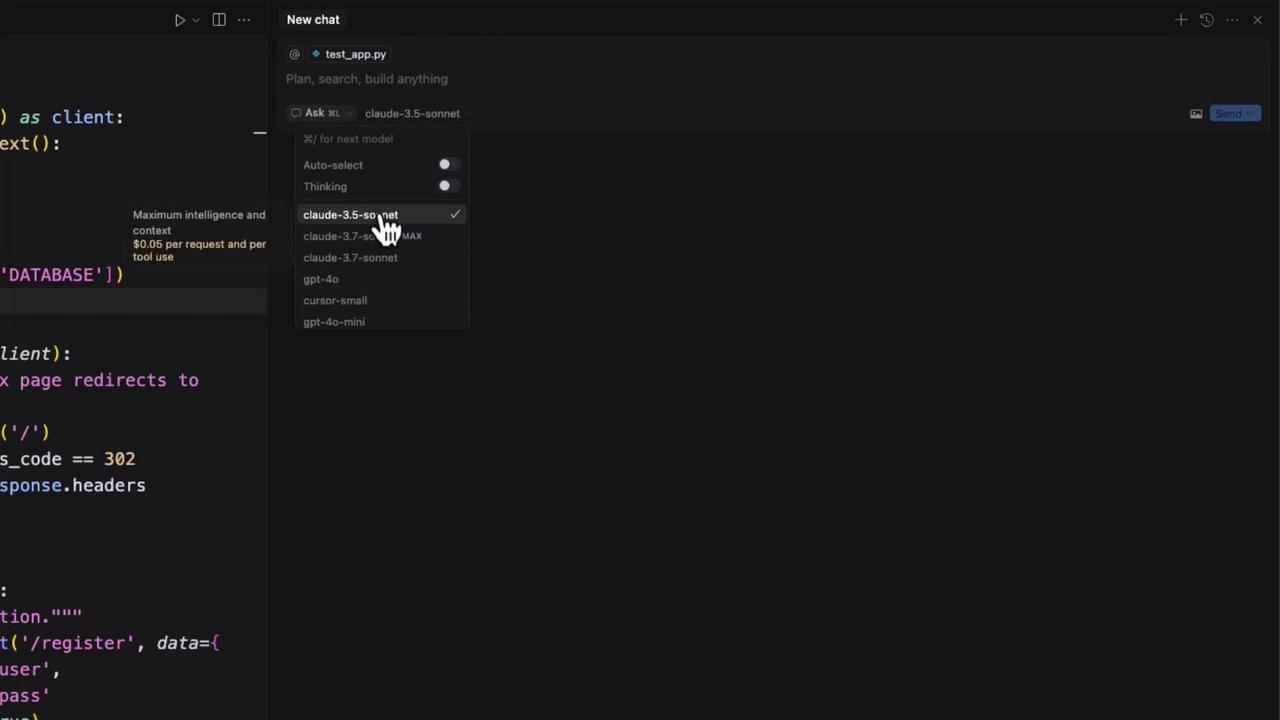
Auto-select lets Cursor pick the best model based on your preferences and credits.
3. AI Model Categories
Example: 2 + 2
Traditional LLM4. Popular Models in Cursor
Costs can add up quickly—monitor your credits and usage in Cursor Pro or via public API billing.
5. Ask Mode for Detailed Explanations
Switch to Ask Mode to request human-friendly explanations:
“Explain what def test_index_redirect means.”
“This function uses Flask’s test client to ensure a request toExperiment by selecting a thinking model and adding prompts like “explain it like I’m five” for varied results./returns a 302 redirect to/login.”
6. Customizing Models in Settings
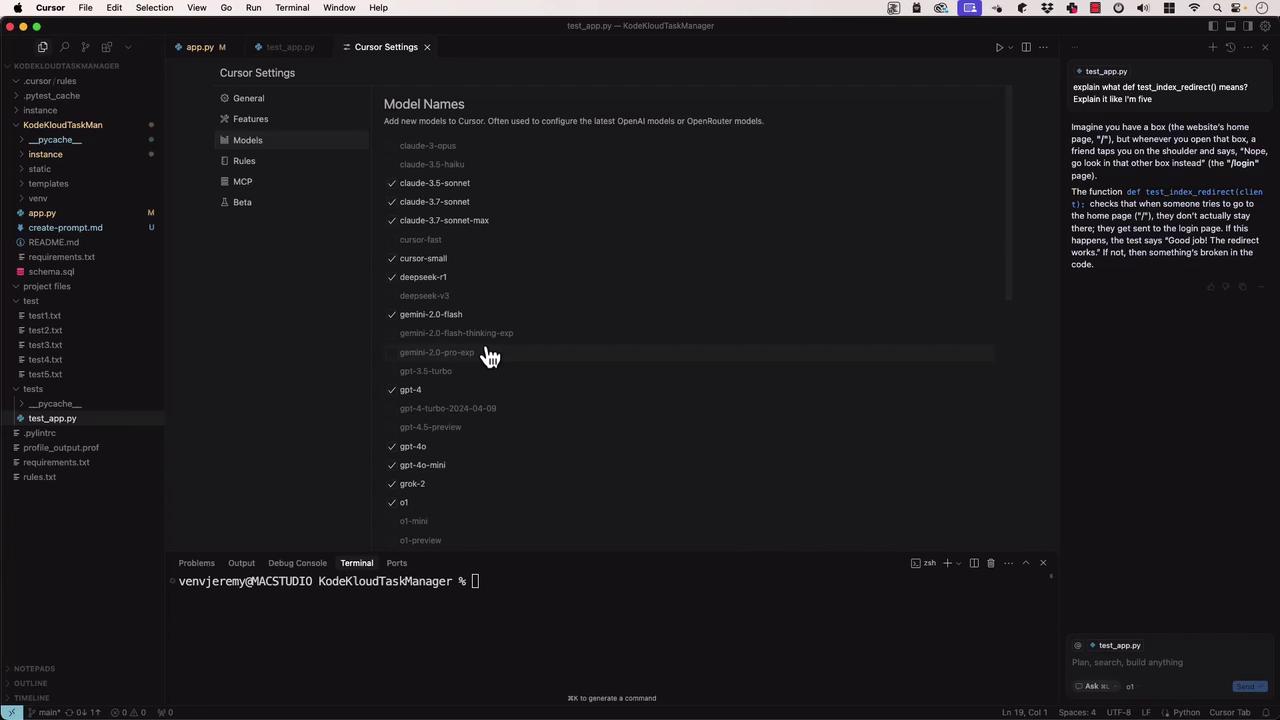
Under Cursor Settings → Models, you can:- Toggle models on/off
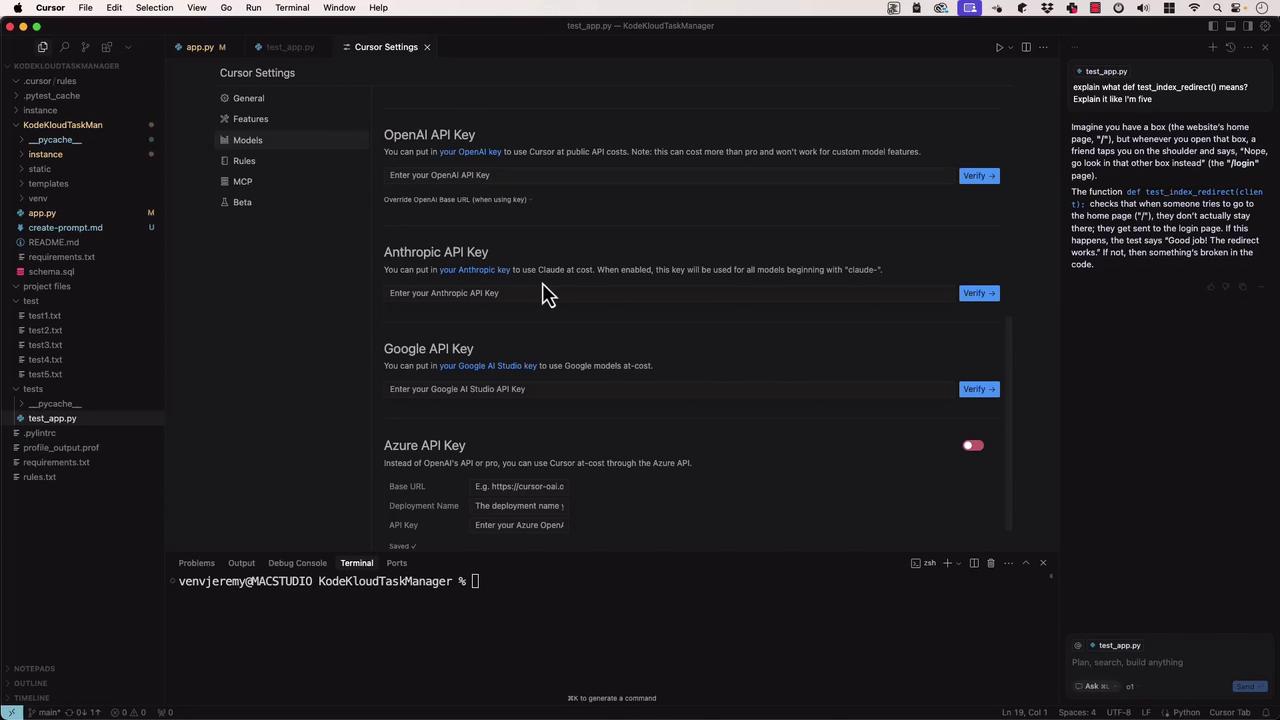
- Enter API keys for OpenAI, Anthropic, Google Cloud, Azure
- Manage billing preferences (Cursor Pro vs. public API)