DNS as a System
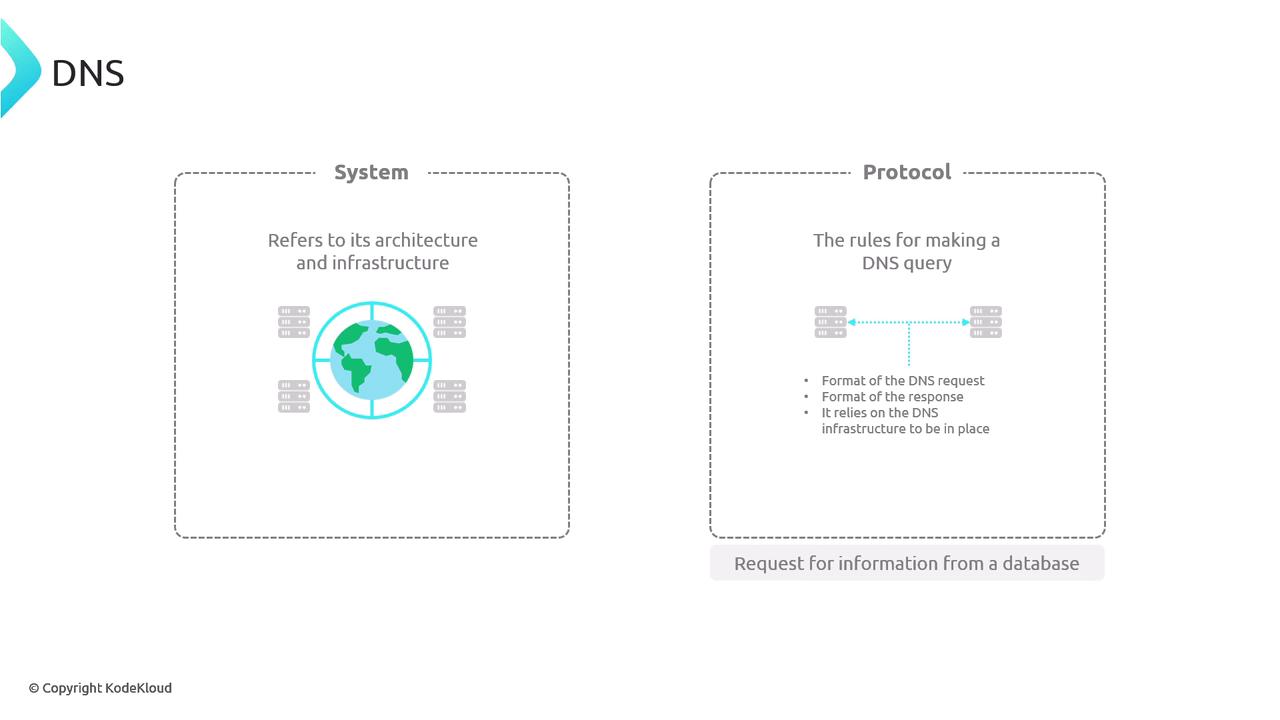
When referring to DNS as a system, we’re discussing the robust architecture and global infrastructure that supports its operations. This system is responsible for converting human-friendly domain names into numerical IP addresses. The translation process is complex and is performed by a network of distributed servers arranged in a hierarchical structure.The DNS system operates through multiple layers of servers that work together to ensure accurate and efficient domain resolution.
DNS as a Protocol
DNS also functions as a protocol, which defines the rules for making DNS queries. In this role, it specifies the format for both requests and responses, ensuring smooth communication between clients and servers. It relies on the underlying infrastructure to execute these transactions effectively.