This article explores zone transfers, a process that synchronizes DNS records across authoritative nameservers for reliability and efficiency.
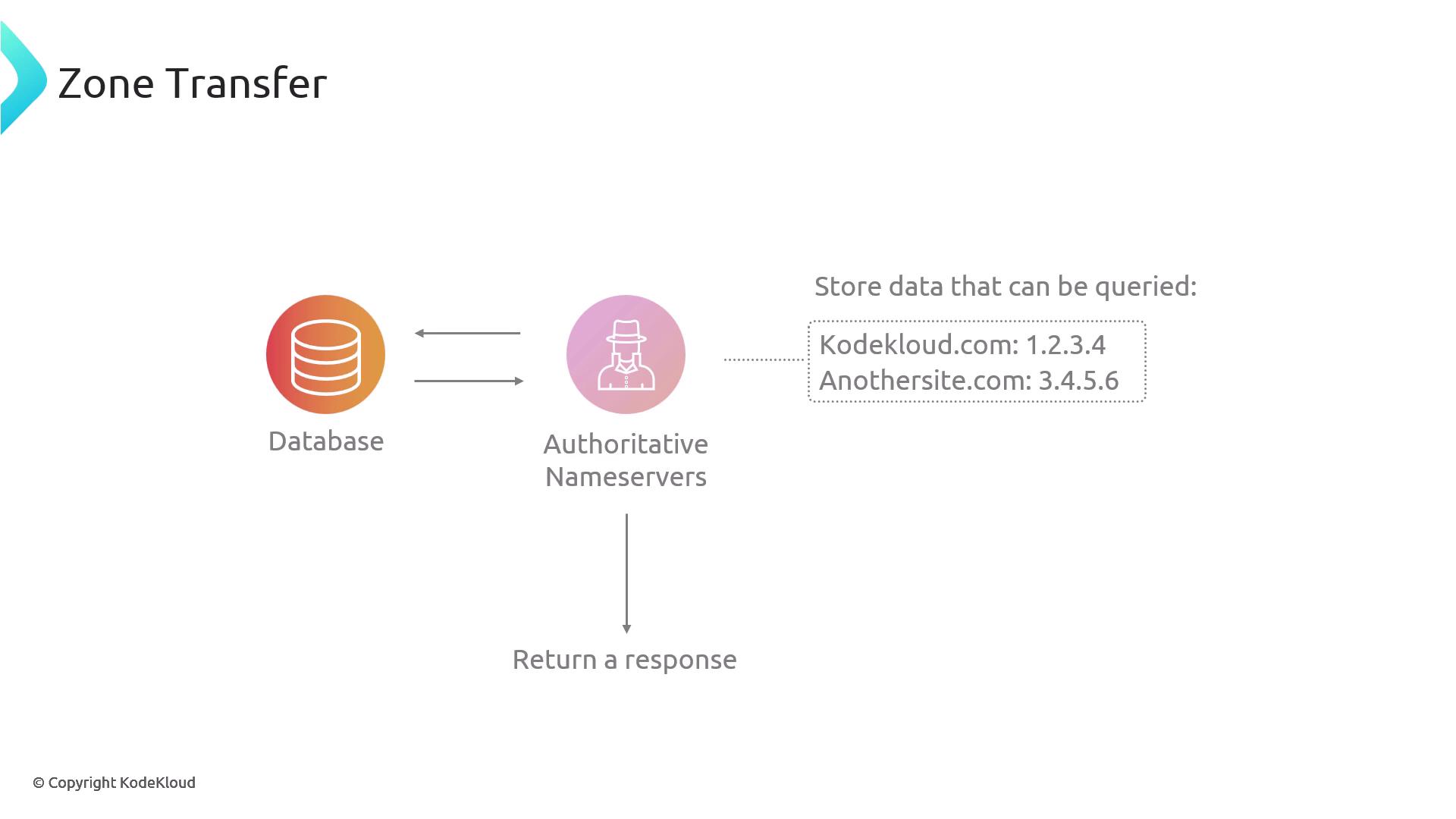
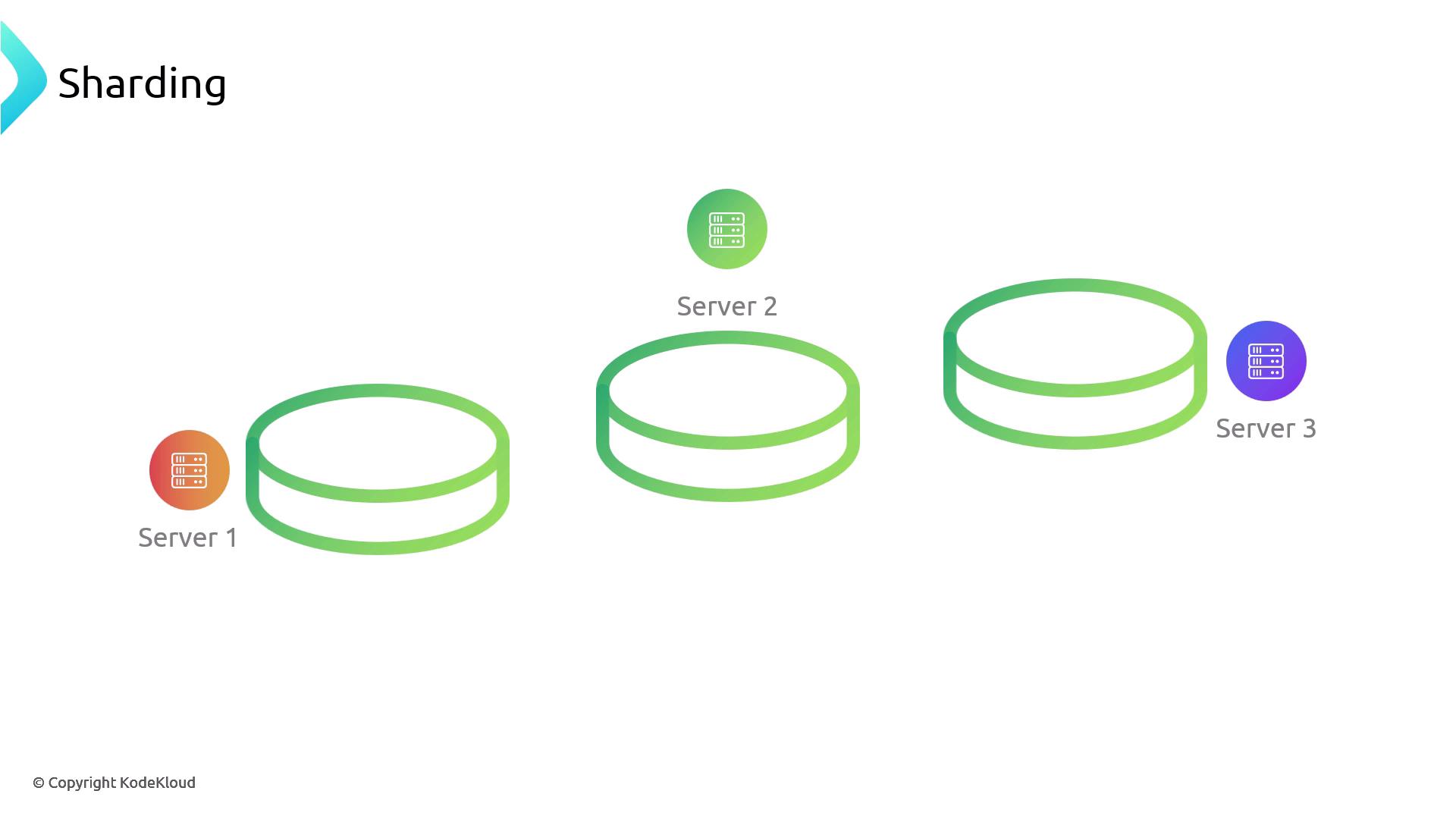
In this article, we explore the concept of a zone transfer—a critical process that keeps nameservers in sync. Authoritative nameservers function like databases, storing queryable data while adhering to design principles such as speed, reliability, fault tolerance, and scalability.Throughout this discussion, you’ll notice how authoritative nameservers share similarities with database architectures. For example, in database design, sharding splits a large dataset across multiple servers so that each server handles only a portion of the data. This same principle applies to DNS: domain records are divided among different zones rather than being stored on a single server.
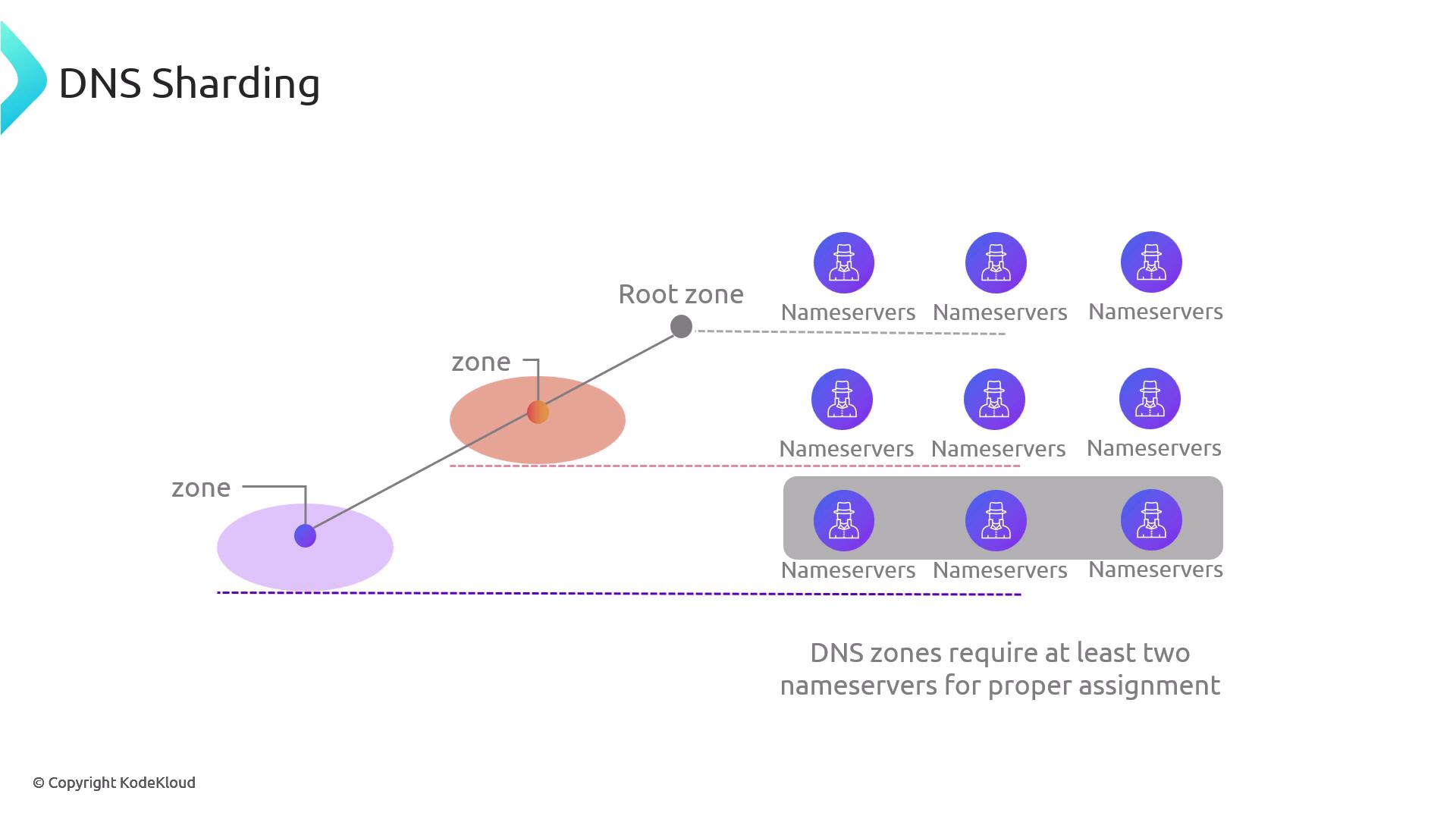
In DNS, sharding splits the domain namespace into various zones. Instead of one server managing all Internet domains, the DNS system allocates them into smaller segments managed by dedicated nameservers. For example, nameservers responsible for .com domains only manage those zones, while .org nameservers handle .org domains. Similarly, amazon.com nameservers handle records for amazon.com exclusively, not for other entities like walmart.com. This distributed approach minimizes bottlenecks and efficiently handles DNS traffic.
DNS also emphasizes redundancy. Each zone is managed by multiple nameservers to ensure high availability and resilience. If only one nameserver were used and it failed, the entire domain could become unreachable. By distributing nameservers across various networks and geographic locations, the DNS system remains accessible even during localized outages.
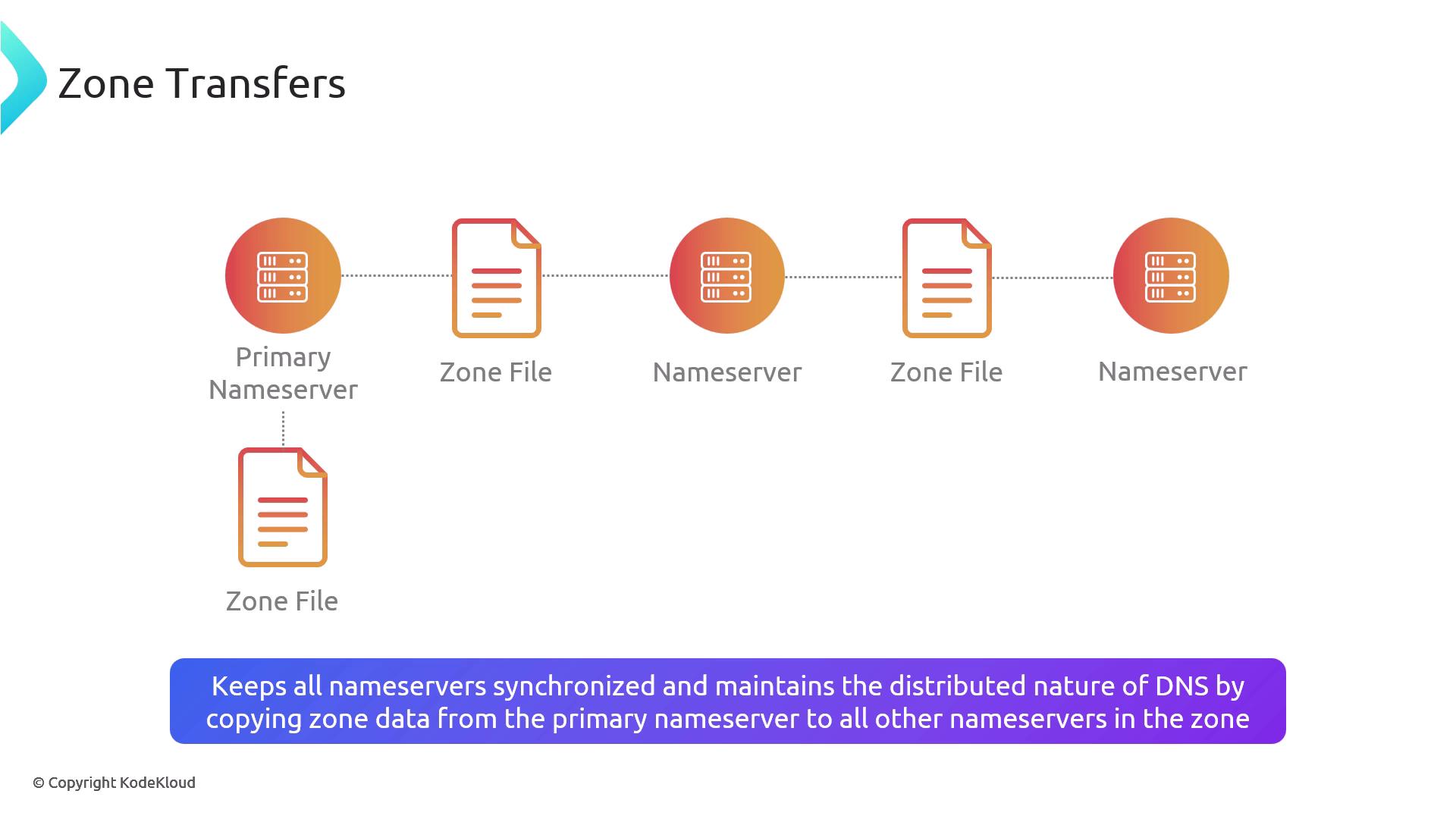
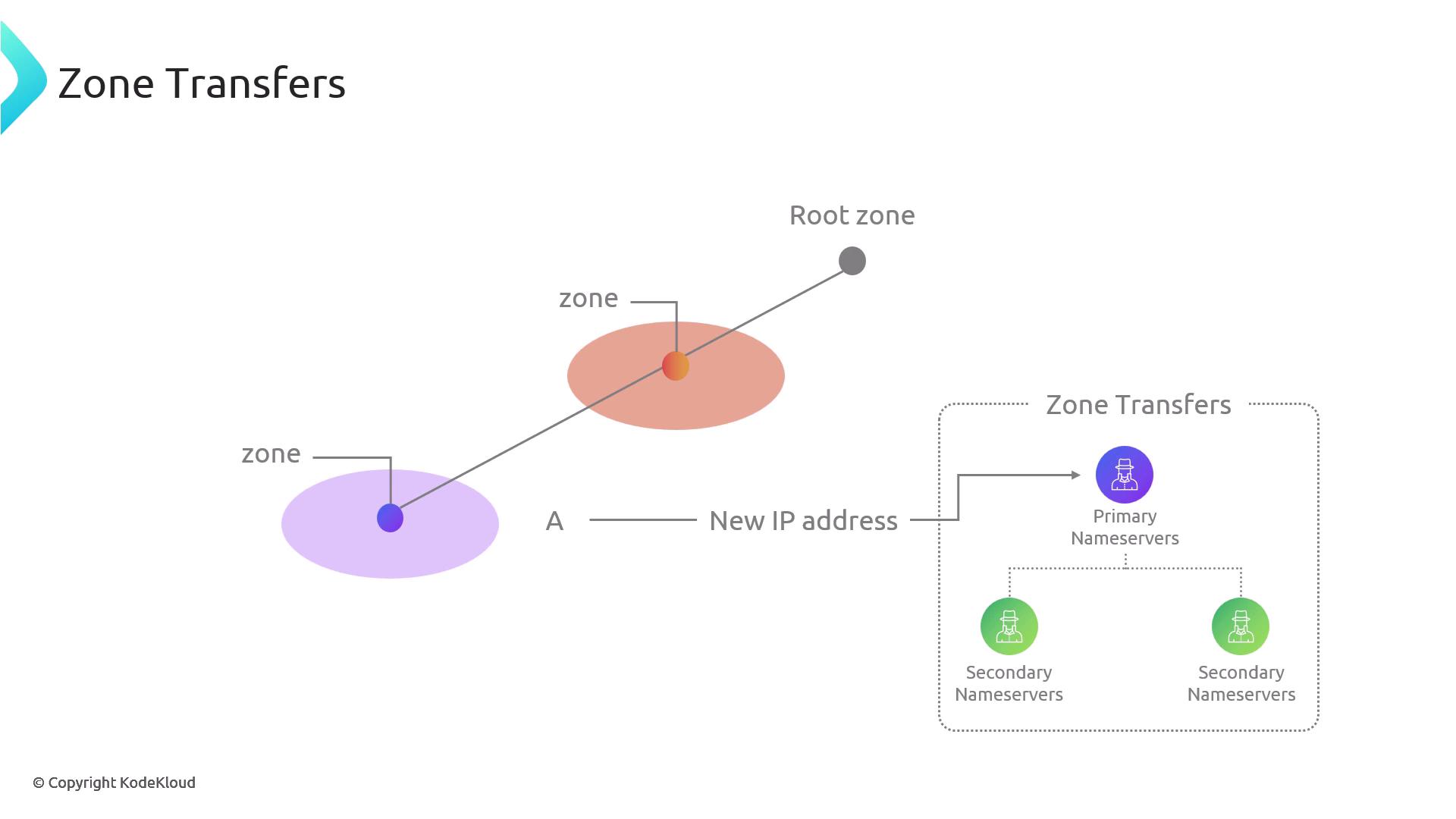
When a zone record is updated—such as changing an A record to point to a new IP address—the update is first applied to the primary nameserver. A replication mechanism known as zone transfer then synchronizes this update across all secondary nameservers, maintaining consistency throughout the system.
It is important to differentiate between several related concepts: zone transfer, domain transfer, and delegation of authority. Each plays a distinct role in managing DNS records. A clear understanding of these terms is essential for effective DNS management.In a typical DNS setup, the nameservers operate within a leader-follower (primary-secondary) model. The primary nameserver for a zone is identified by checking the Start of Authority (SOA) record using tools like dig. The SOA record also reveals the NS records that designate all nameservers for that zone. Once an update is made on the primary nameserver (such as a change to an A record), the zone transfer process ensures that all secondary nameservers remain up to date.
Modern DNS providers, including Cloudflare and AWS Route 53, use proprietary mechanisms to handle zone transfers. Updates are usually propagated across nameservers within seconds, ensuring that the system remains current and responsive. In contrast, traditional DNS deployments—particularly for managing top-level domains like .com or .net—rely on AXFR and IXFR replication methods:
AXFR (Full Zone Transfer): This method copies the entire zone data from the primary to a secondary nameserver. It is especially useful when a new nameserver is added and requires a comprehensive set of records.
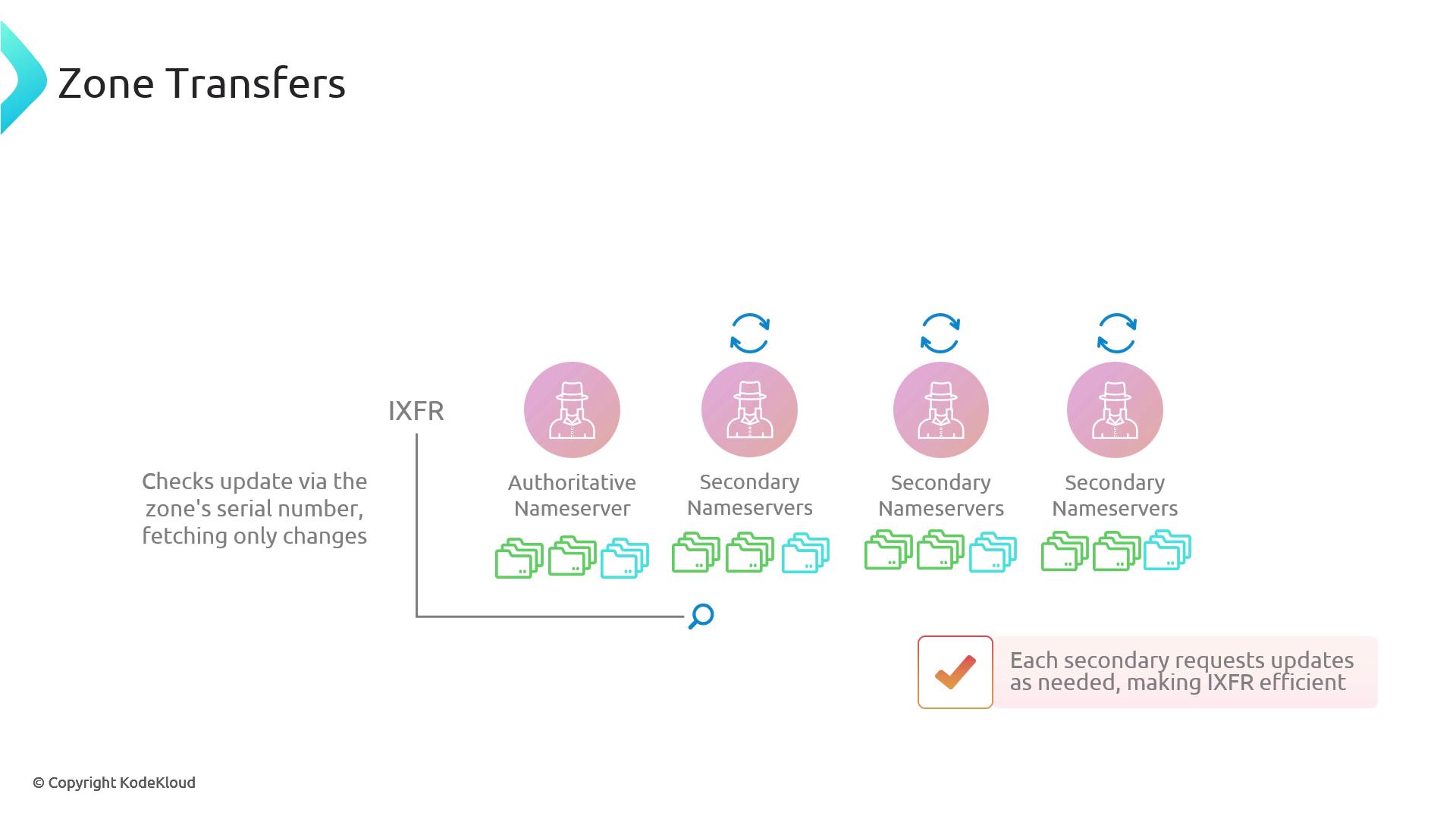
IXFR (Incremental Zone Transfer): This pull-based mechanism enables a secondary nameserver to check for updates by comparing the serial numbers in the zone’s SOA record. If the primary’s serial number is higher, the secondary requests only the changes made since its last update, making this method more efficient.
A zone transfer replicates DNS records from a primary nameserver to its secondary counterparts, ensuring that all servers managing a zone remain synchronized. This process underpins a robust, fault-tolerant, and scalable DNS system.