Geographical Distribution
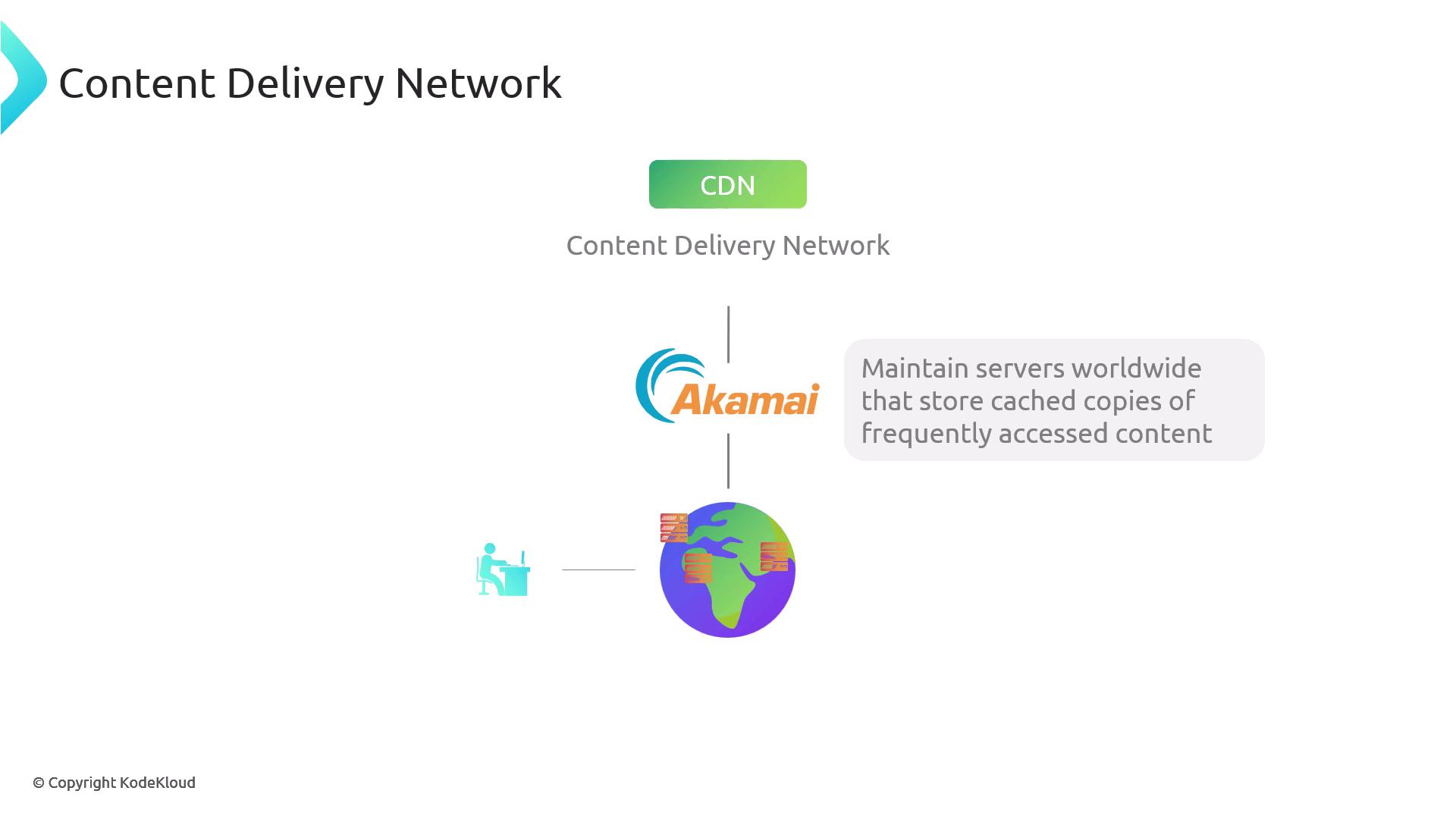
In globally distributed systems, Content Delivery Networks (CDNs) play a critical role. Think of a CDN like a worldwide chain of McDonald’s restaurants: rather than serving the entire world from one location, thousands of outlets are positioned to meet local demand. Companies like Akamai leverage globally dispersed servers to cache frequently accessed content, significantly reducing content delivery delays.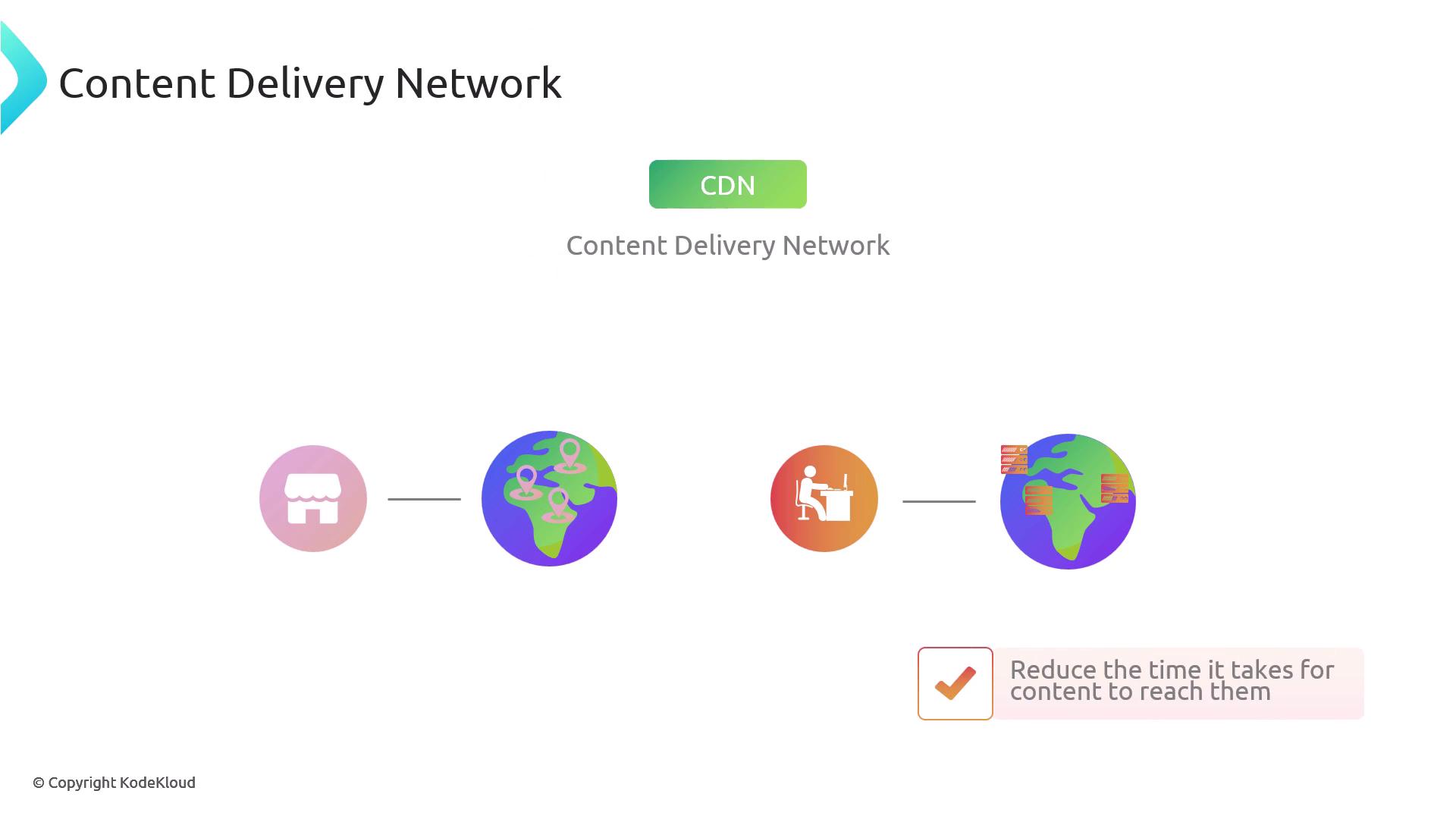
Server Health and Operational Status
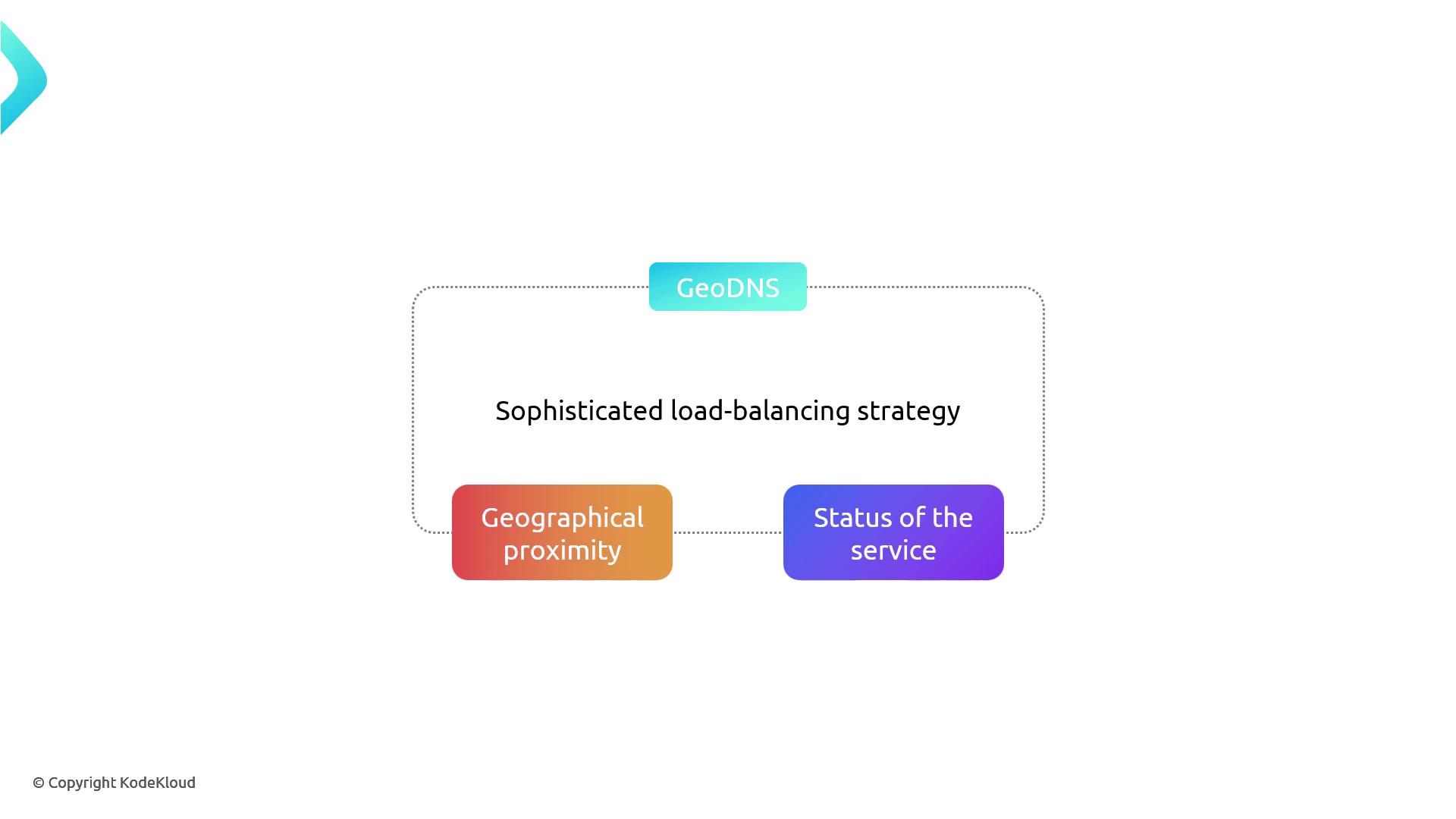
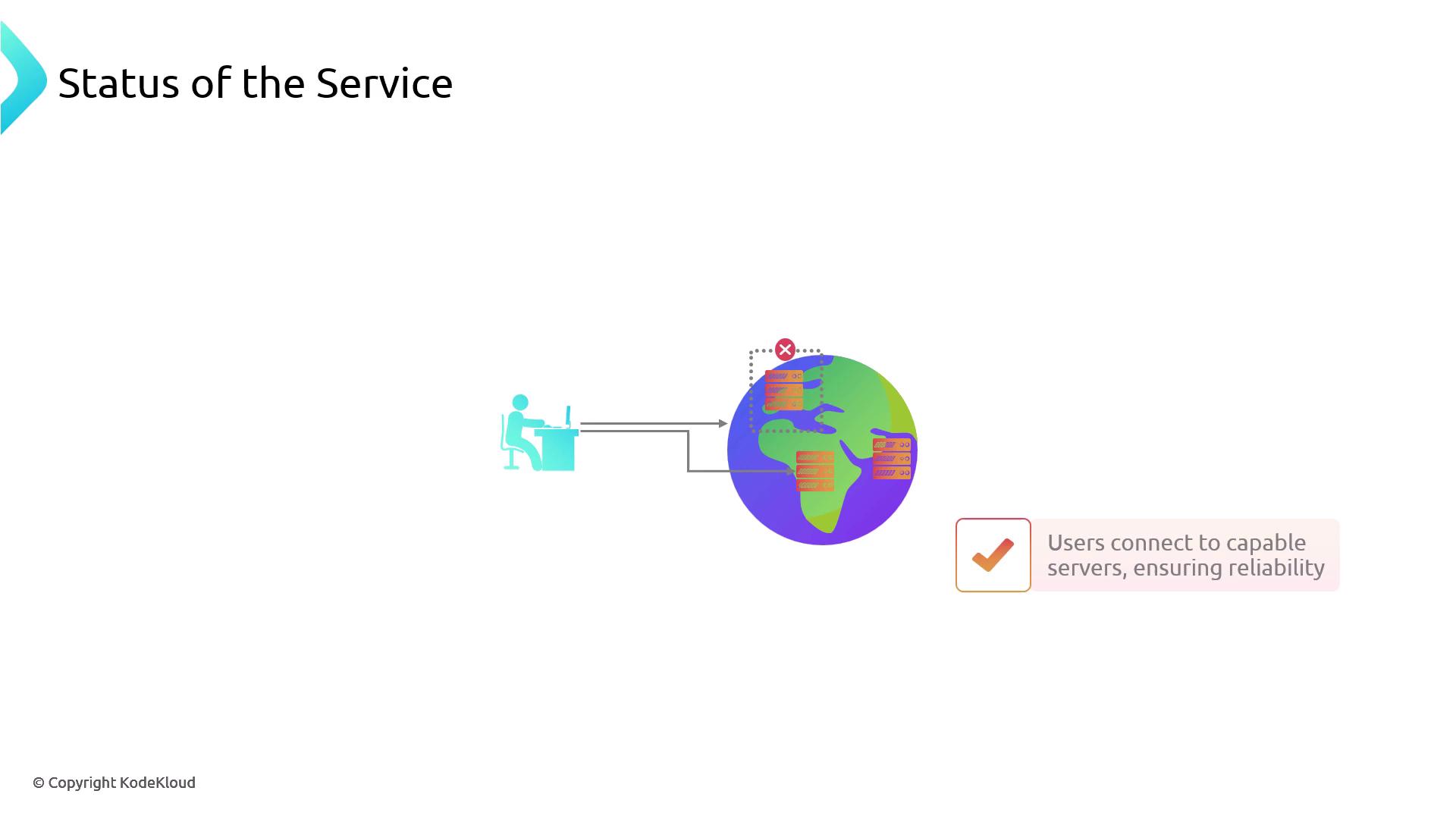
GeoDNS is not solely about geography; it also factors in the health and capacity of servers. When a user visits a website, such as KodeKloud.com, GeoDNS checks all available servers. If the nearest server is experiencing issues or is overloaded, the system seamlessly routes the request to the next best available option.How It Works This process is analogous to choosing an alternative McDonald’s restaurant when your nearest outlet is closed for maintenance. GeoDNS ensures that users are always connected to a reliable server.
DNS Requests, EDNS, and the Client Subnet
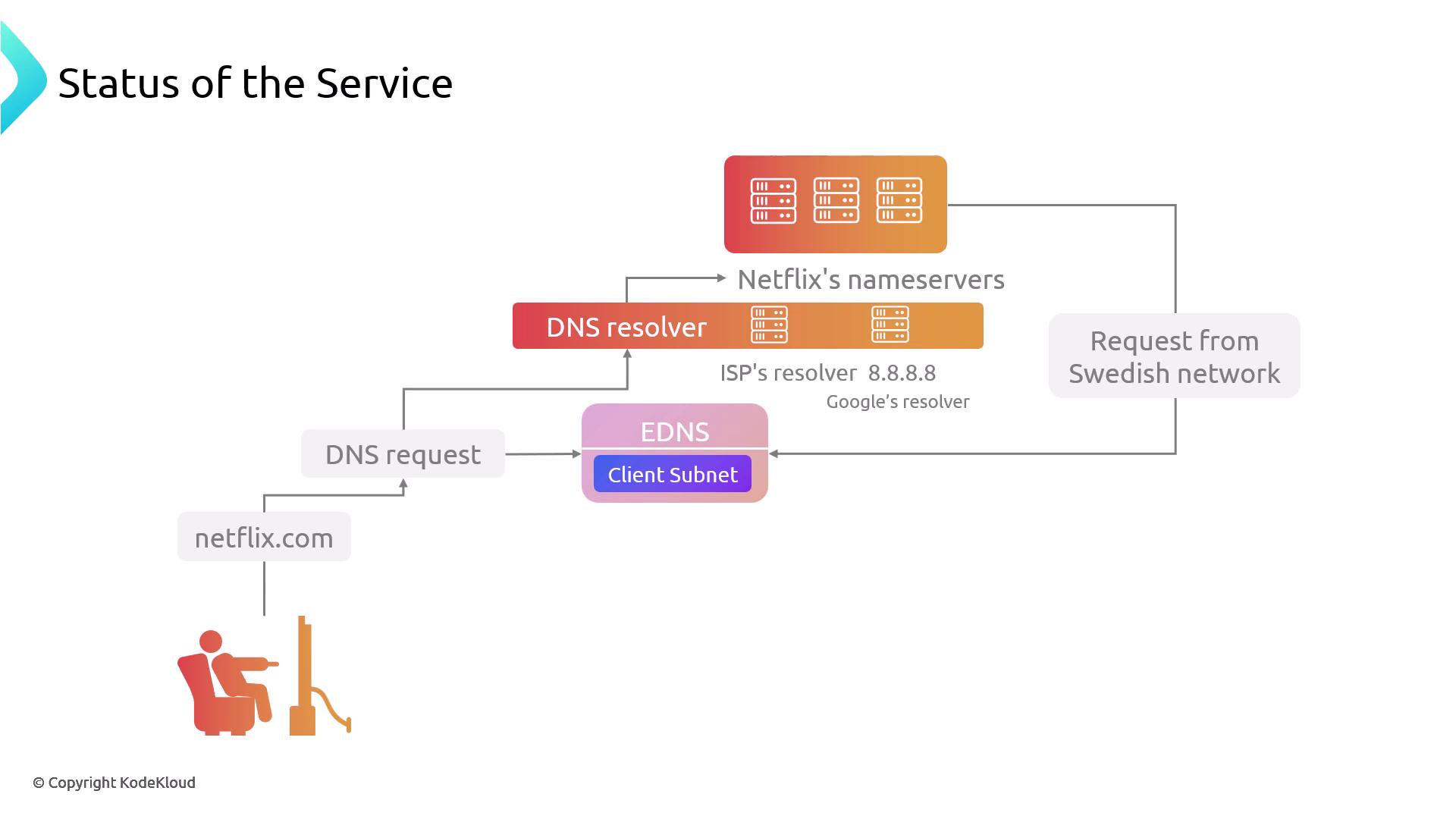
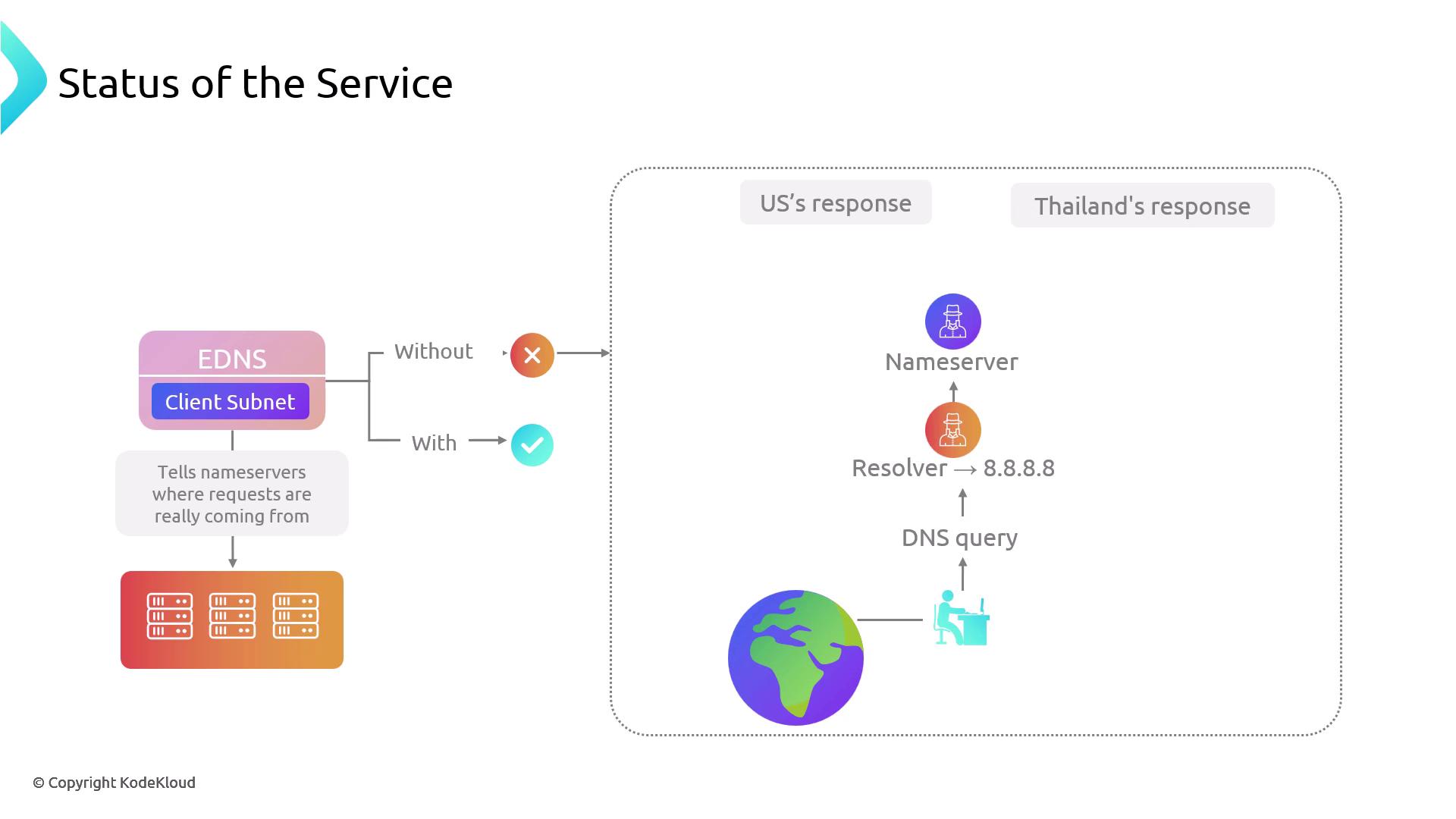
DNS functions as both a protocol and a distributed system. Recognizing future needs, the original DNS protocol designers included unused bits in the request-response structure. These gaps later paved the way for Extensions for DNS (EDNS), which introduced the client subnet field. This field provides critical location data to nameservers, enabling GeoDNS to direct traffic more accurately. Without EDNS client subnet information, a request from a user in Thailand might be served by a distant resolver in the United States, leading to suboptimal performance.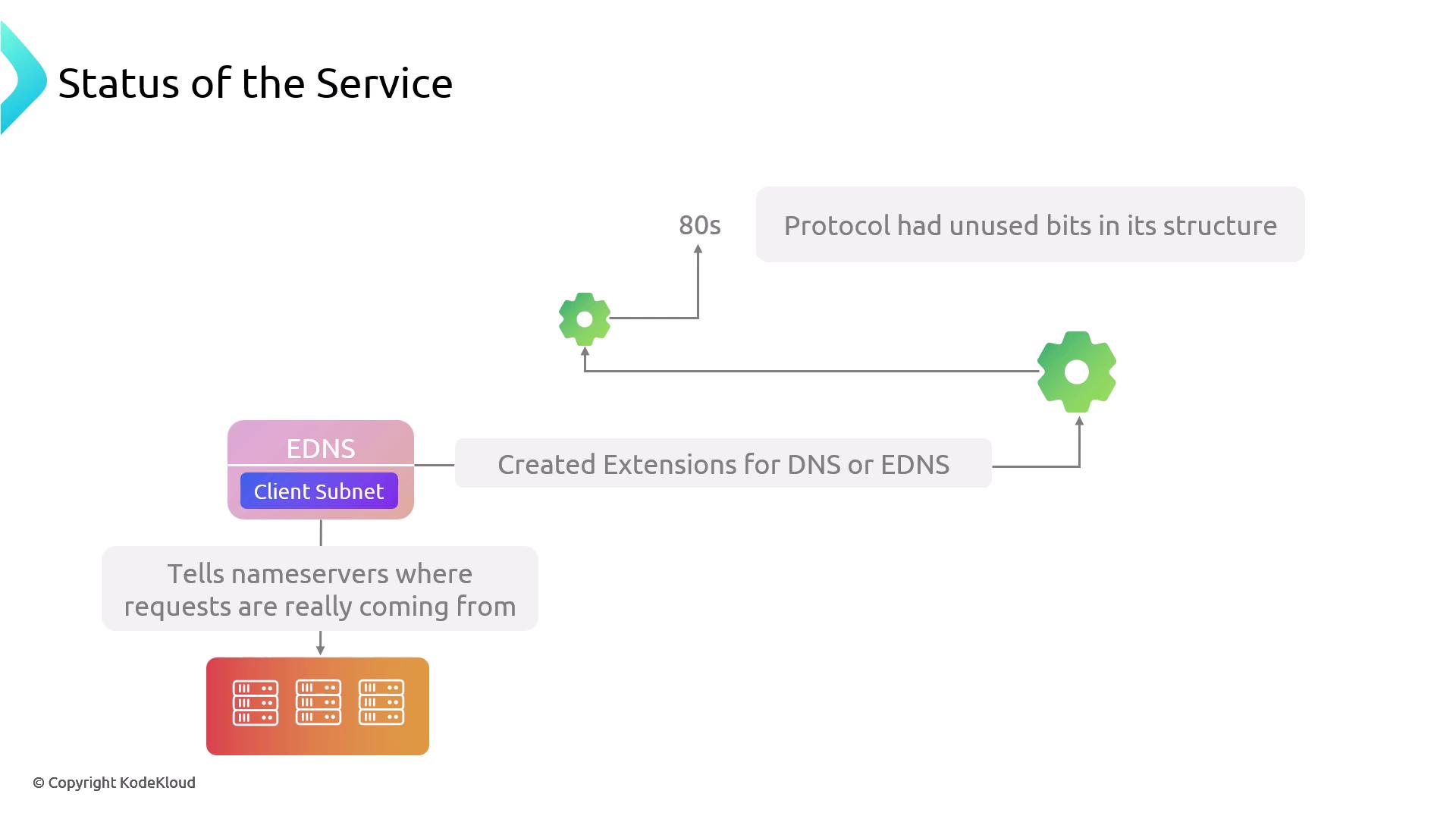
A Practical Example: Streaming with Netflix
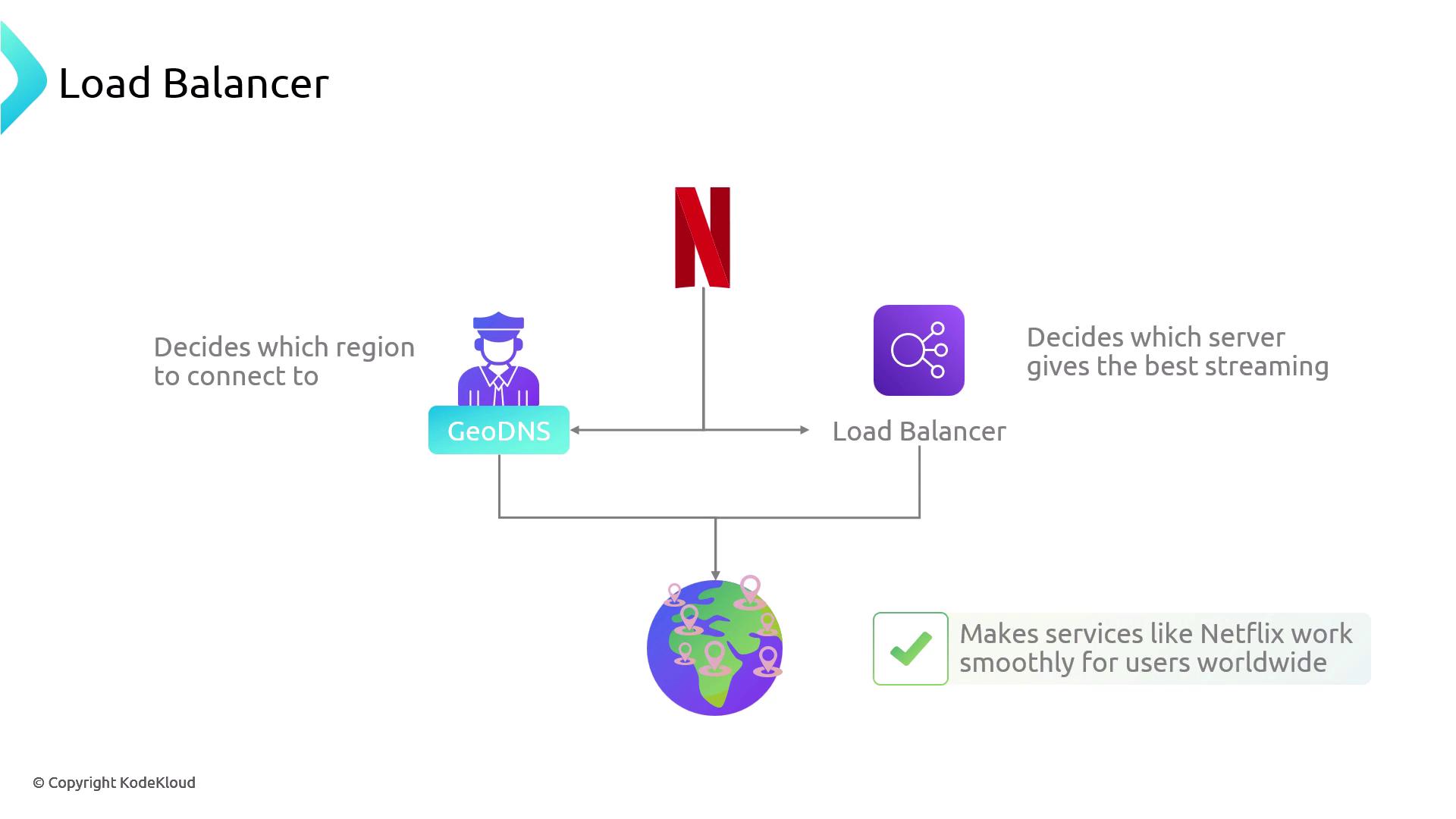
Consider a user in Sweden who wants to watch Netflix. When the user types “netflix.com”, the DNS request first reaches a resolver provided by their ISP or a public service like Google’s 8.8.8.8. Utilizing the client subnet information, Netflix’s nameservers can immediately determine the request’s origin. Netflix operates multiple servers across Europe, including locations in Stockholm, Amsterdam, and Frankfurt. GeoDNS evaluates various factors:- Current server capacity
- Network conditions (such as congestion in a particular data center)
- Cache status of country-specific content