

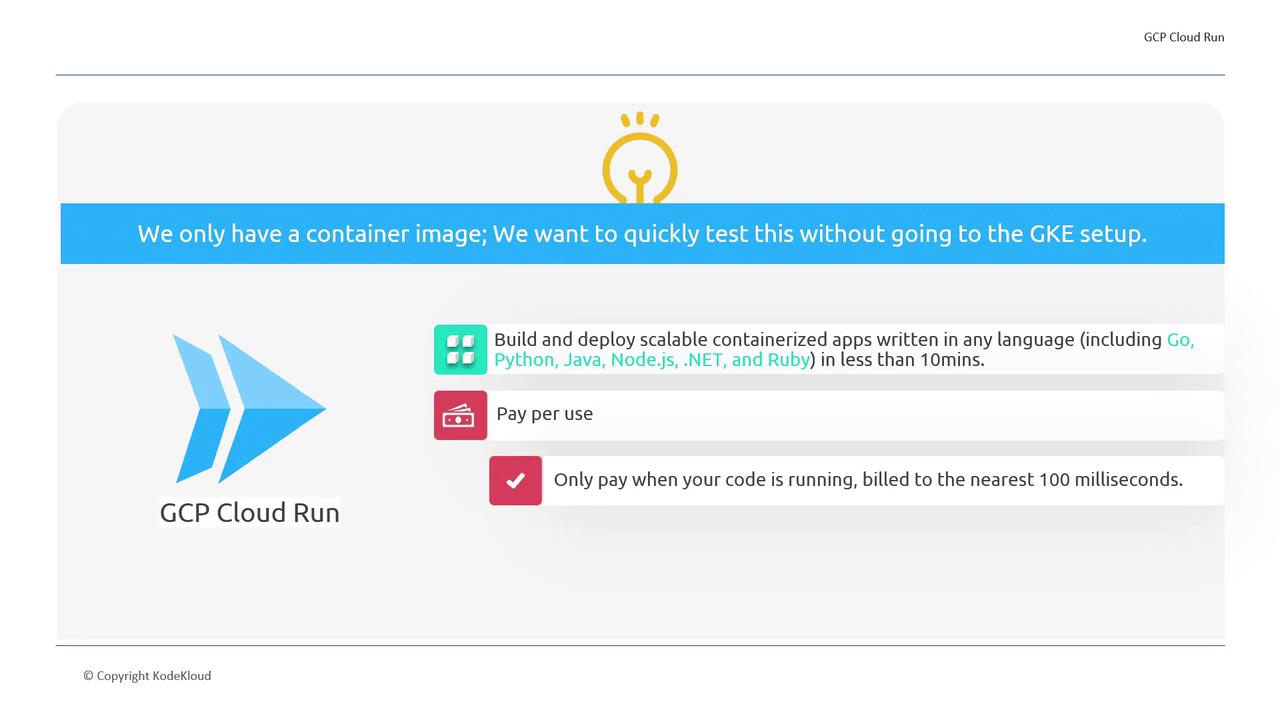
- Quick deployment of containerized applications built using various programming languages.
- A pay-as-you-go billing model where charges apply only during active request handling.
- Elimination of infrastructure management, as the underlying resources are fully abstracted.
- Easy integration with other Google Cloud services such as load balancing and logging.
Cloud Run is especially useful for evaluating application performance without incurring the costs of running idle resources, which is often a risk with GKE clusters.
How Does Cloud Run Work?
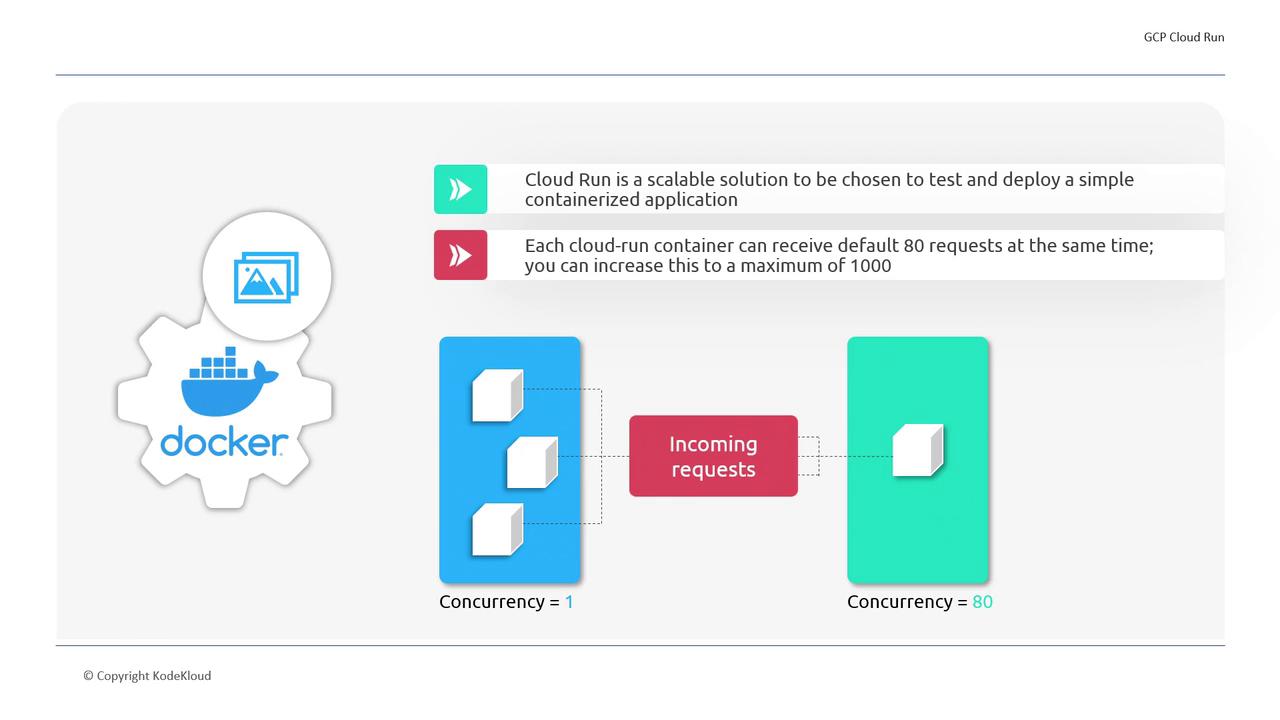
Cloud Run functions as a scalable, serverless platform that dynamically provisions container instances in response to incoming requests. While its user interface may resemble that of GKE, its internal architecture simplifies operations by automatically handling scalability and resource allocation. When a request arrives, Cloud Run promptly spins up the required container instances. For instance, if you set a container’s concurrency parameter to 1, each container processes one request at a time. Conversely, increasing the concurrency value to 80 allows a single container to process up to 80 simultaneous requests. If the volume of incoming requests exceeds the established limit per container, additional instances are automatically created to manage the load.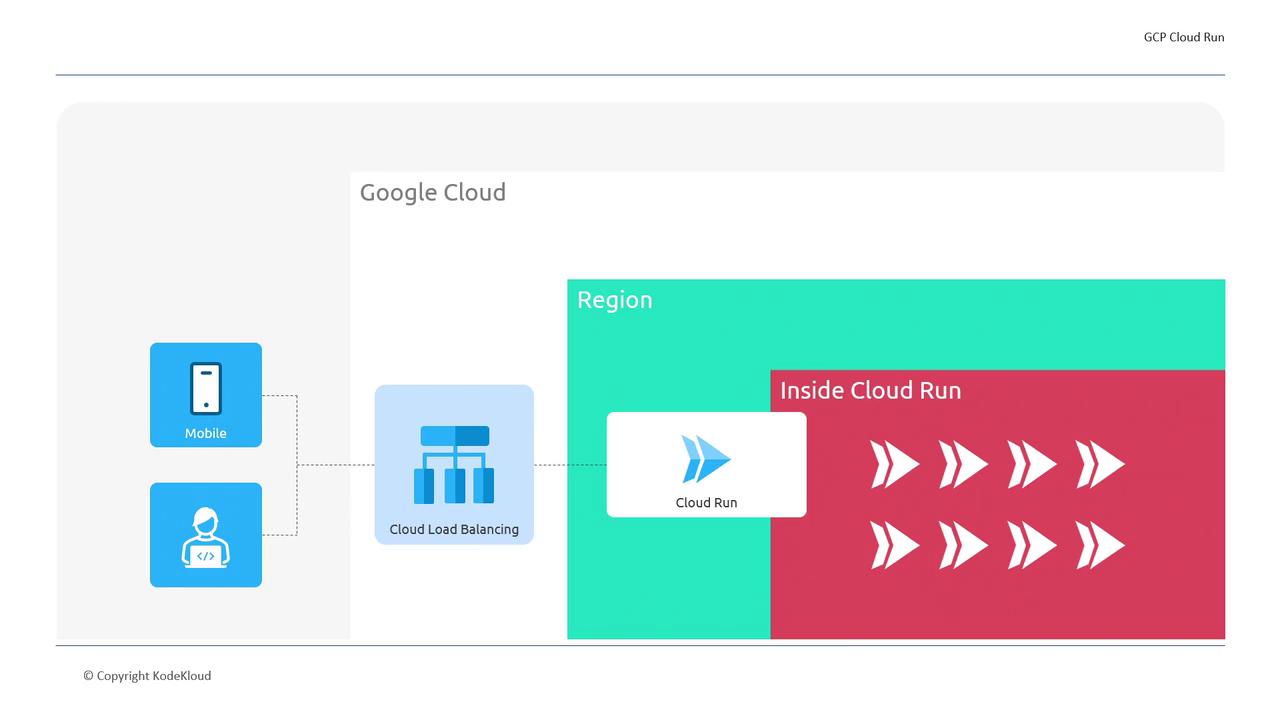
Before migrating to Cloud Run for production workloads, ensure that the serverless model fits your application’s performance requirements, as the abstraction could limit certain advanced configuration options available in GKE.