

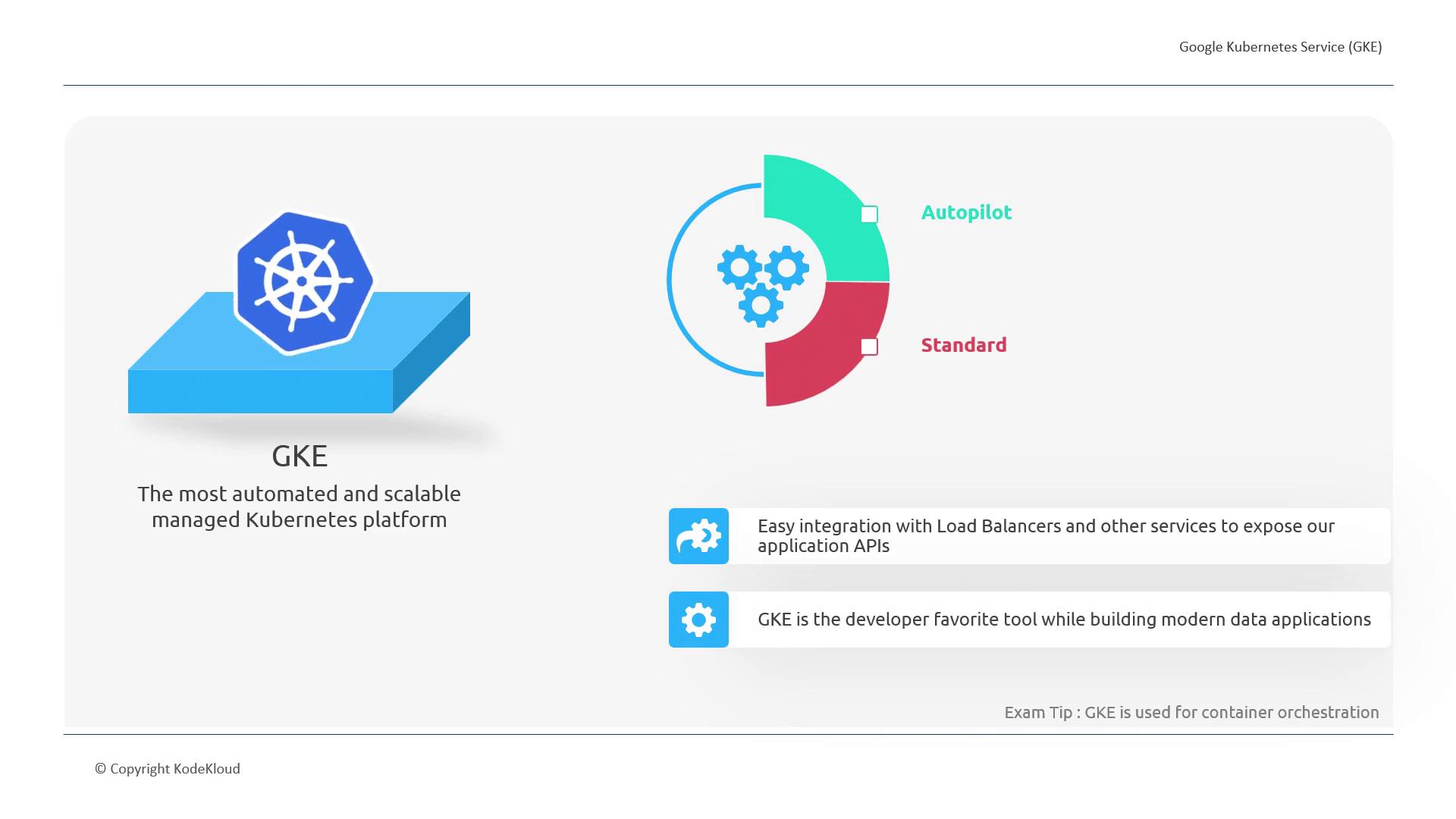
GKE supports two primary modes:
- Autopilot Mode: Ideal for developers who want to focus solely on deploying applications. Google manages underlying tasks like scaling, updates, patches, and bug fixes.
- Standard Mode: Offers full control over the Kubernetes cluster for those who wish to customize configurations to meet specific requirements.
GKE Architecture Overview
Understanding the architecture of GKE is essential for leveraging its full potential. Within a GKE cluster, the smallest deployable unit is called a pod. A pod contains one or more containers that execute your application processes. When configured in Autopilot mode, GKE automatically handles key cluster management tasks—such as scaling, updates, minor upgrades, patches, and bug fixes. This automation ensures that as your application scales, the system seamlessly adapts by managing additional pods and containers without manual intervention.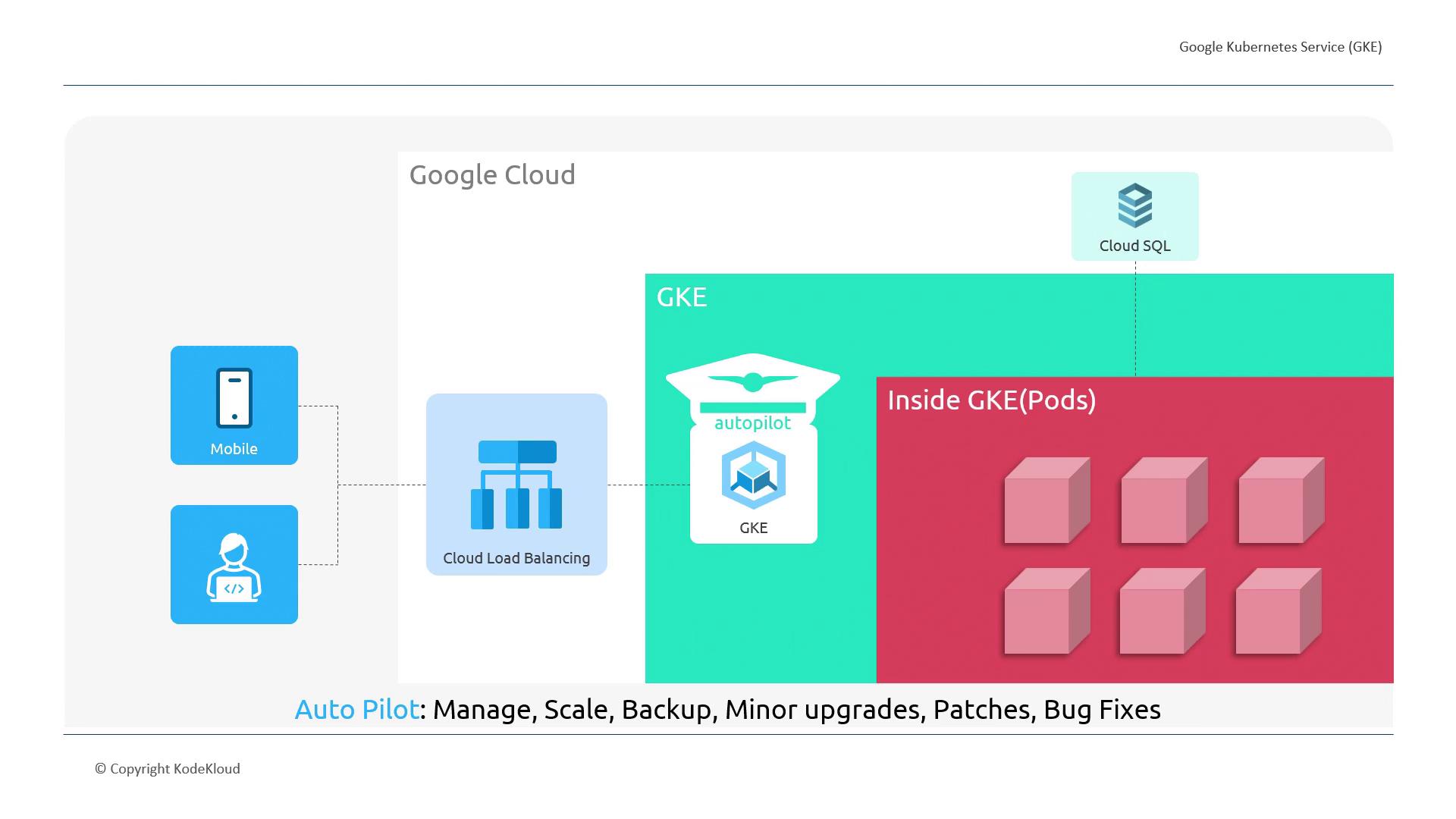
Key Takeaways
- GKE is a managed Kubernetes service on Google Cloud Platform that simplifies containerized application deployment.
- Autopilot mode automates cluster management, making it ideal for rapid deployment with minimal operational overhead.
- Standard mode provides users with granular control over their Kubernetes clusters for custom configurations.
- GKE’s tight integration with other GCP services and Kubernetes’ inherent scalability make it a top choice for modern cloud-native applications.
In summary, Google Kubernetes Engine provides a robust, automated platform for container orchestration. Whether using Autopilot for ease of management or Standard mode for granular control, GKE leverages Kubernetes to meet diverse deployment needs.