

Hierarchical Structure Overview
GCP organizes resources into a tiered hierarchy consisting of three primary levels: organizations, folders, and projects.-
Organization:
The organization resource is at the top of the hierarchy and represents an entire company or legal entity. It serves as the root node for all subsequent resources. -
Folders:
Folders provide an optional layer of grouping below the organization level. They can be used to separate different legal entities, departments, or teams, thus establishing clear isolation boundaries. -
Projects:
Projects are the foundational level where you deploy your resources, including Kubernetes clusters, virtual machines (VMs), SQL databases, and more. Each project represents a unique workspace for your cloud workloads.
Each level of the hierarchy serves a specific purpose, helping organizations manage permissions, resource usage, and billing effectively.
Real-World Example: Pharmaceutical Company
Let’s apply the resource hierarchy model to a pharmaceutical company use case. This example illustrates how an organization can be structured to support diverse departments while maintaining accountability and ease of management. On the left side of the diagram below, you see a visual representation of an organization’s structure using the resource hierarchy model. On the right side, the same hierarchy starts with the organization as the root node. This pharmaceutical company serves as the central node in our GCP setup.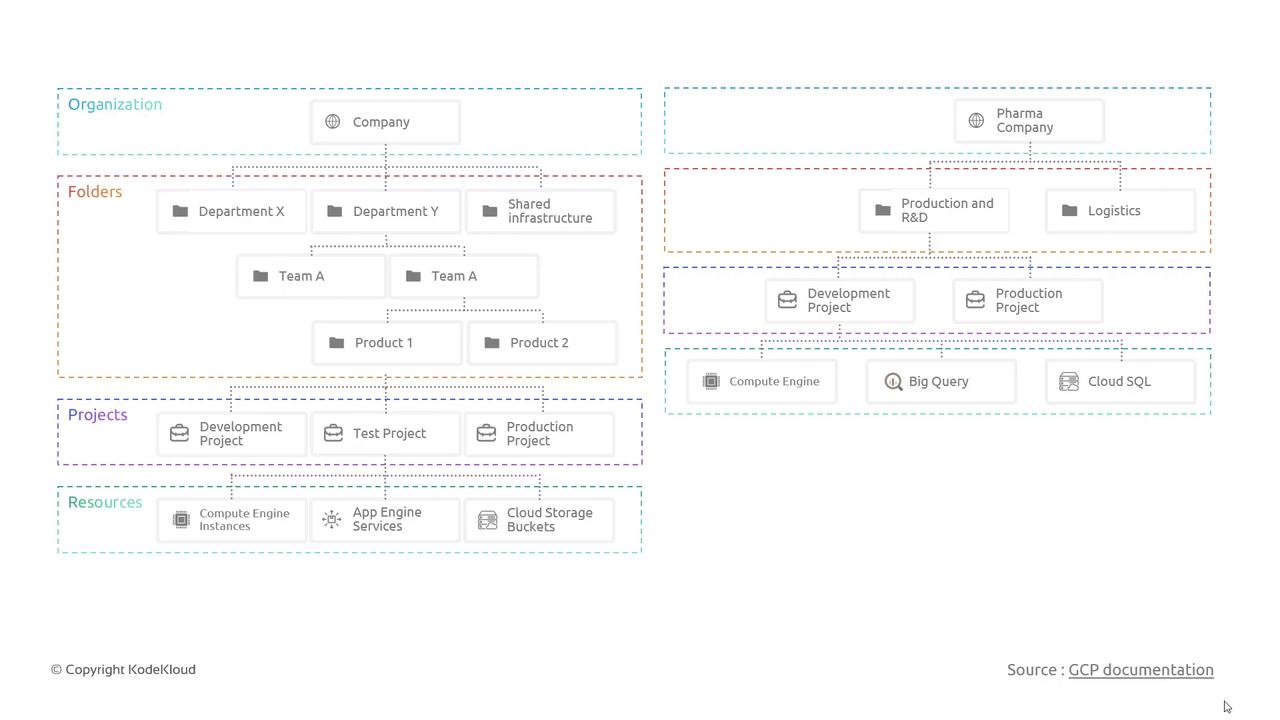
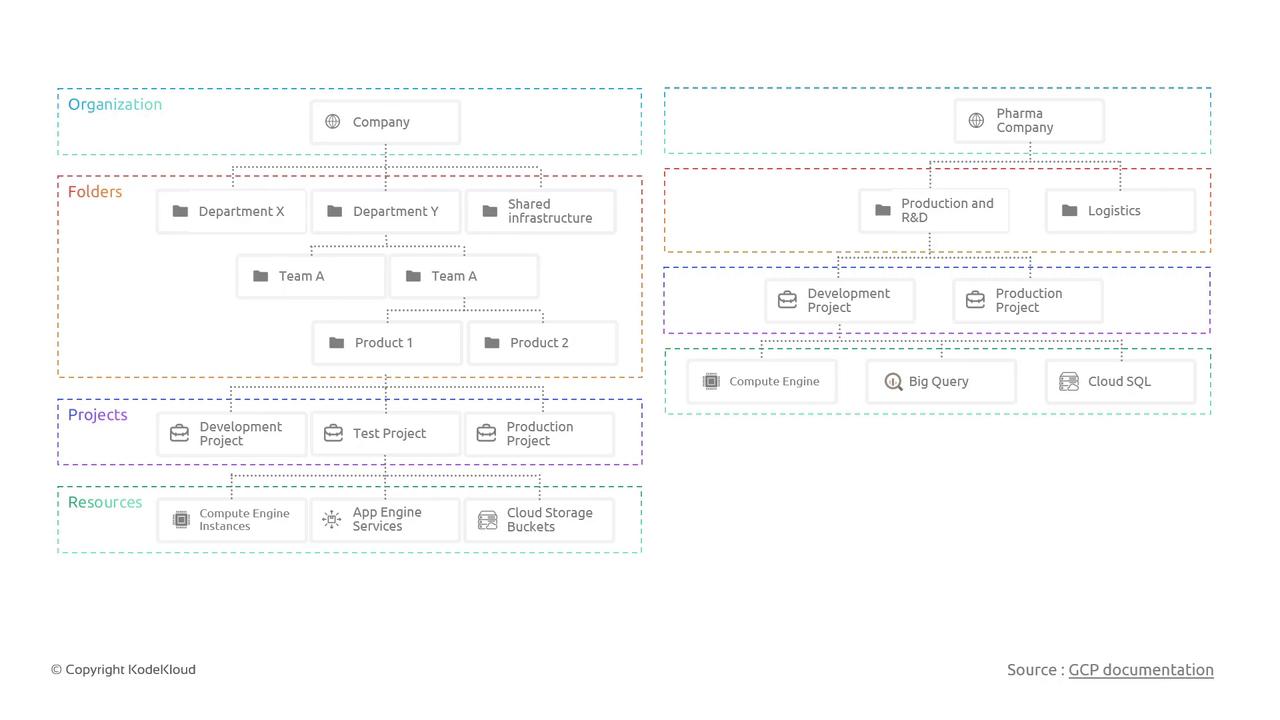
Utilizing GCP’s resource hierarchy model not only streamlines resource management but also enhances security and billing transparency.