

Routing Traffic Between Instance Groups
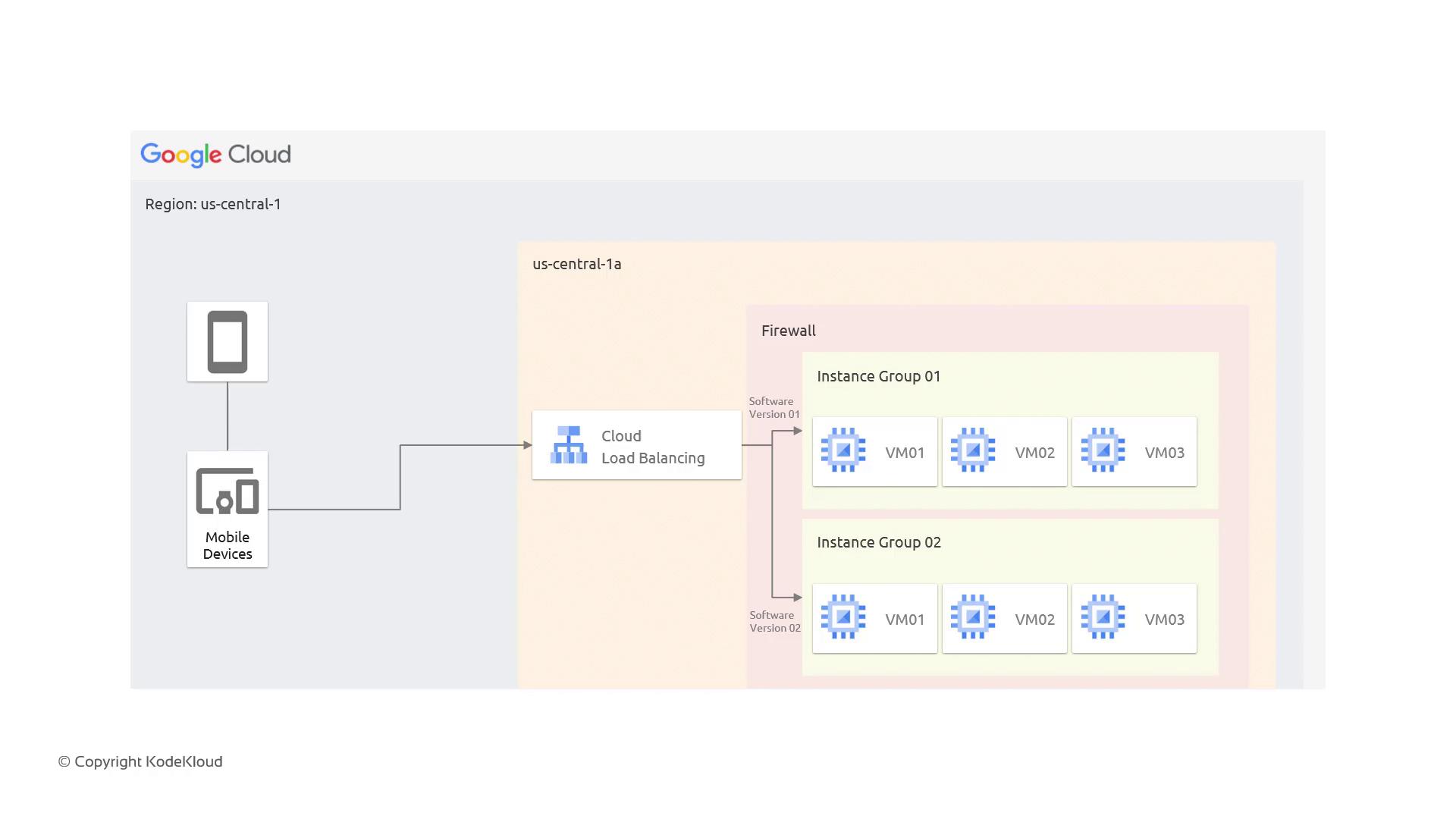
Imagine a scenario where you manage two instance groups—one running software version 01 and the other running version 02. Initially, you might direct all incoming traffic exclusively to the instance group running version 01. Later, as you update your infrastructure or roll out new features, you can gradually shift traffic to the instance group running version 02. This strategy allows you to control traffic routing based on software versions or specific deployment requirements.This routing approach is applicable not just for managed instance groups but can also be adapted for unmanaged instance groups. You can effectively route traffic between individual compute instances, regardless of group management.
The Role of Load Balancing
Load balancing is the process of distributing incoming network traffic across multiple backend instances. This is essential for:- Optimizing resource utilization
- Maximizing throughput
- Minimizing response times
- Preventing any single server from being overwhelmed
Next Steps
In the following sections, you will learn more about:- The intricacies of TCP protocols and their relevance to load balancing
- Various load balancing strategies available in GCP
- How to implement these concepts within your own cloud environment
Keep an eye out for upcoming articles where we delve deeper into TCP protocols, load balancing strategies, and practical implementation tips.