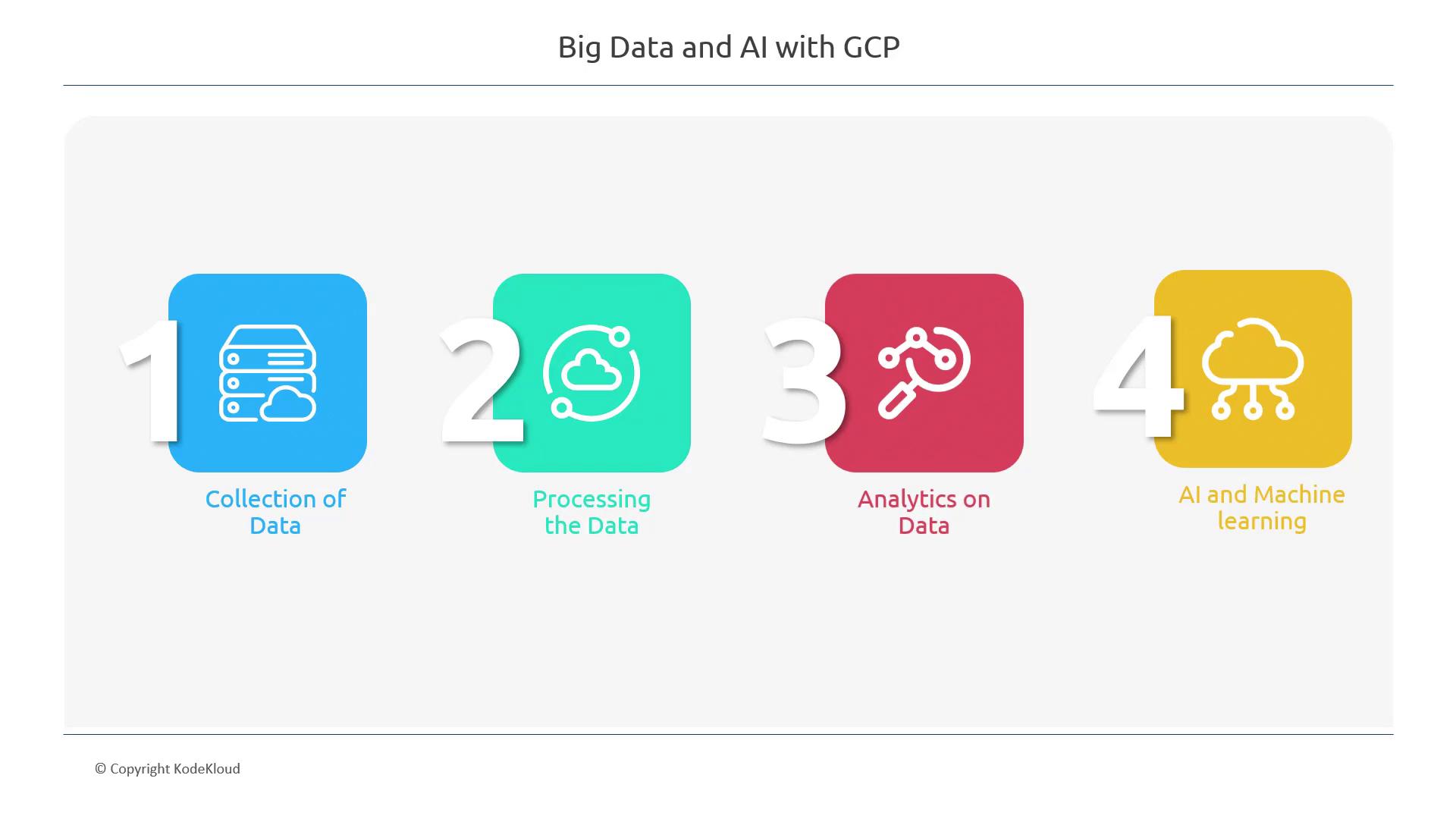
1. Data Collection
Data collection is the foundation of any Big Data strategy. There are two main approaches:- Batch Processing: Data is collected and sent periodically—such as monthly or daily with a 24-hour delay.
- Real-Time Processing: Also known as near real-time, where the data is collected with minimal delay (a few milliseconds to seconds).
2. Data Processing
Once data is collected, the next step is to store and transform the information. Given the high volume and variety of data, relying on specialized processing tools like Apache Spark is crucial. These tools efficiently handle large datasets, ensuring that data is properly cleaned and formatted for further analysis.3. Data Analysis
After processing, data analysis comes into play. This step involves extracting valuable insights from the processed data to drive informed decision-making. Effective analysis leads to better business strategies and allows organizations to uncover patterns and trends that might otherwise go unnoticed.4. AI and Machine Learning
The final step is to integrate AI and machine learning into the workflow. These advanced technologies can further refine insights by:- Analyzing past data to predict future trends.
- Optimizing marketing strategies based on previous campaign performance.
- Customizing ad targeting across different social media platforms to reach the right audience.
Incorporating AI and machine learning not only enhances your analytical capabilities but also transforms data into actionable business intelligence.