

- A Python project-structure generator that scaffolds basic HTML and Vue projects into
dist/. - A Go CLI that converts
data/contacts.csvto JSON and supports a--limitflag. - A C++ password generator that compiles on macOS via a Makefile.
- Python: quick scripting for scaffolding and automation.
- Go: compact, statically compiled utilities for file processing.
- C++: high-performance or system-level binaries for sensitive tasks (e.g., cryptographic-grade password generation).
When running Python scripts locally, consider using a virtual environment (
python3 -m venv .venv and source .venv/bin/activate) to avoid polluting system packages.- Goal: scaffold a small project into
dist/— either a minimal HTML site or a tiny Vue app. - Output: a folder such as
dist/my-html-sitecontainingindex.html,style.css, andscripts.js(or a minimal set for Vue).
project_generator.py):
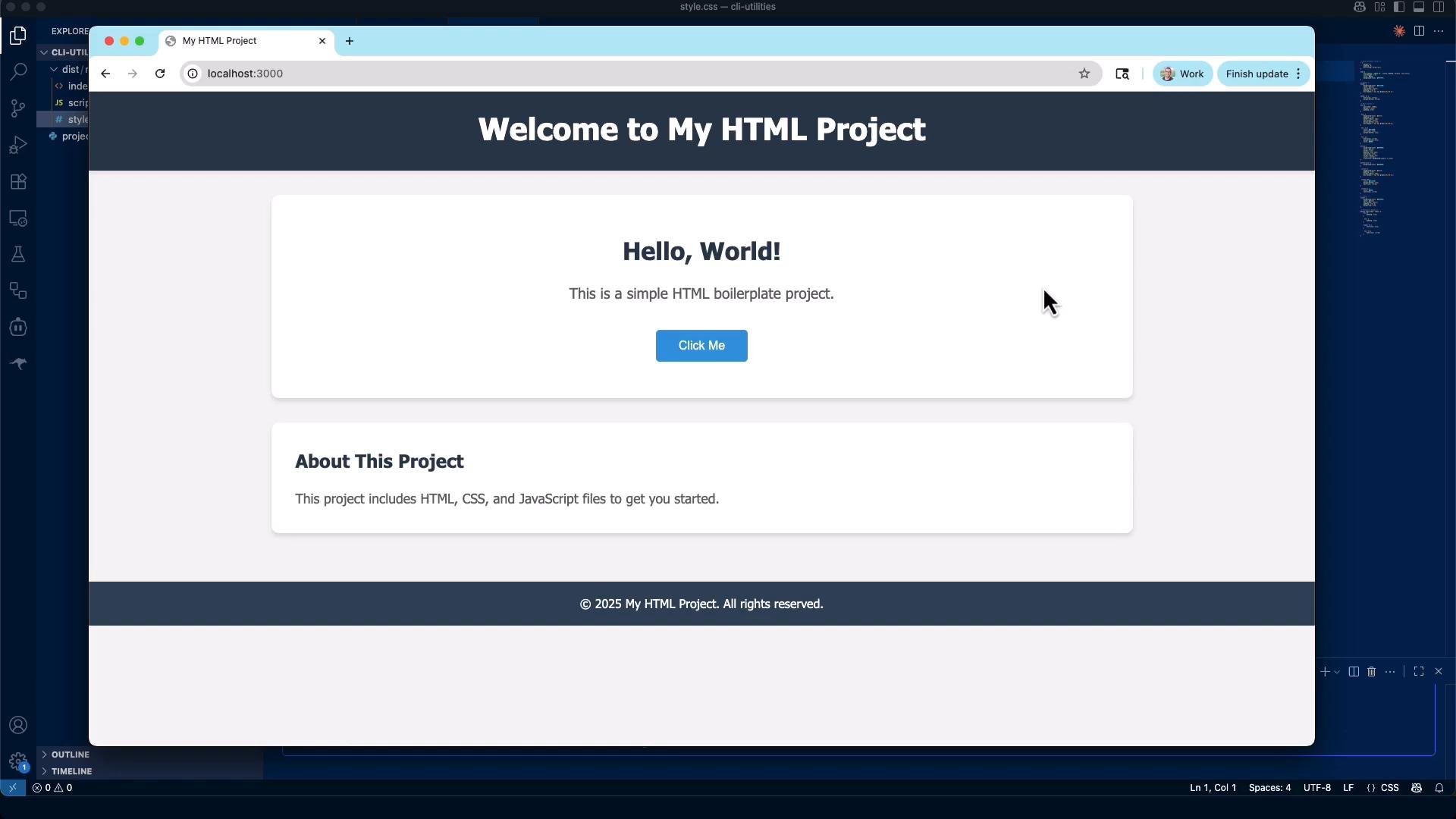
- The generated HTML boilerplate can be opened in a browser. The page includes a hero/title and a button wired via
scripts.jsto demonstrate a tiny interactive feature.
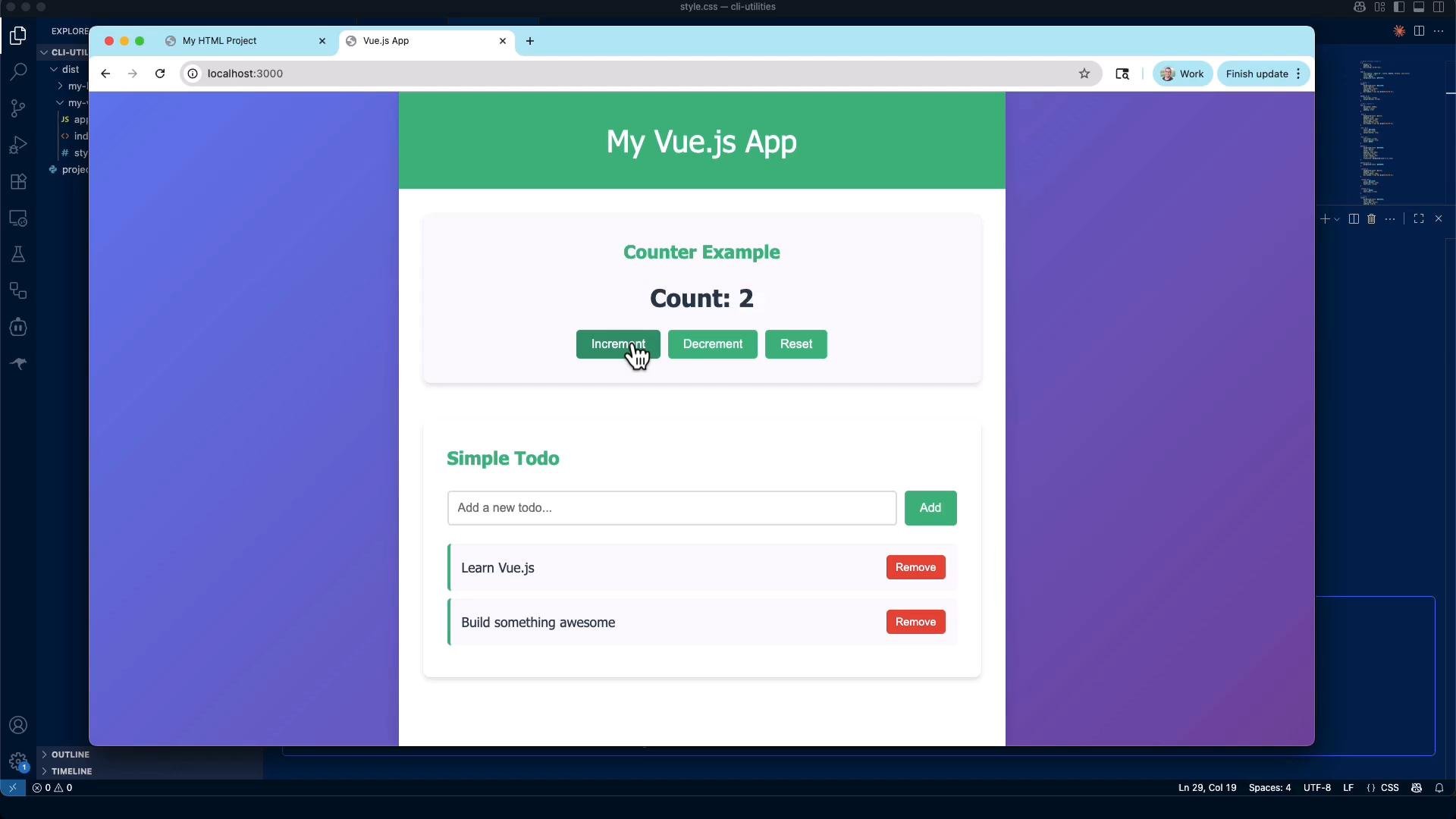
- The same generator can scaffold a minimal Vue app (files like
index.html,style.css,app.js). - The sample Vue output demonstrates reactive state: a counter and a simple todo list to illustrate how the scaffold can help you start a small SPA quickly.
- Purpose: convert
data/contacts.csvto JSON and optionally limit the number of output records with--limit(or-limit). - Design: robust error handling, sensible defaults, and a small data model (
Contact) to shape JSON output.
This example assumes the first CSV row is a header:
id,first_name,last_name,job_title,email. If your CSV differs, adjust the parsing logic accordingly.main.go (concise and robust):
go.mod:
- Purpose: generate cryptographically strong passwords with flags for length, count, and whether to include symbols.
- Approach: use
std::random_deviceandstd::mt19937for secure seeding and a uniform distribution over the chosen character set.
passgen.cpp (excerpt):
- CLI tools accelerate local automation: file conversion, data processing, and scripted maintenance tasks.
- They integrate well into CI/CD for repeatable tasks like formatters, validators, and transforms.
- Quick-tier summary:
Further reading and references
- Kubernetes Basics (example resource)
- Go documentation — packages, tooling, and best practices
- C++ reference — standard library and random utilities
- Python virtual environments — isolate dependencies