

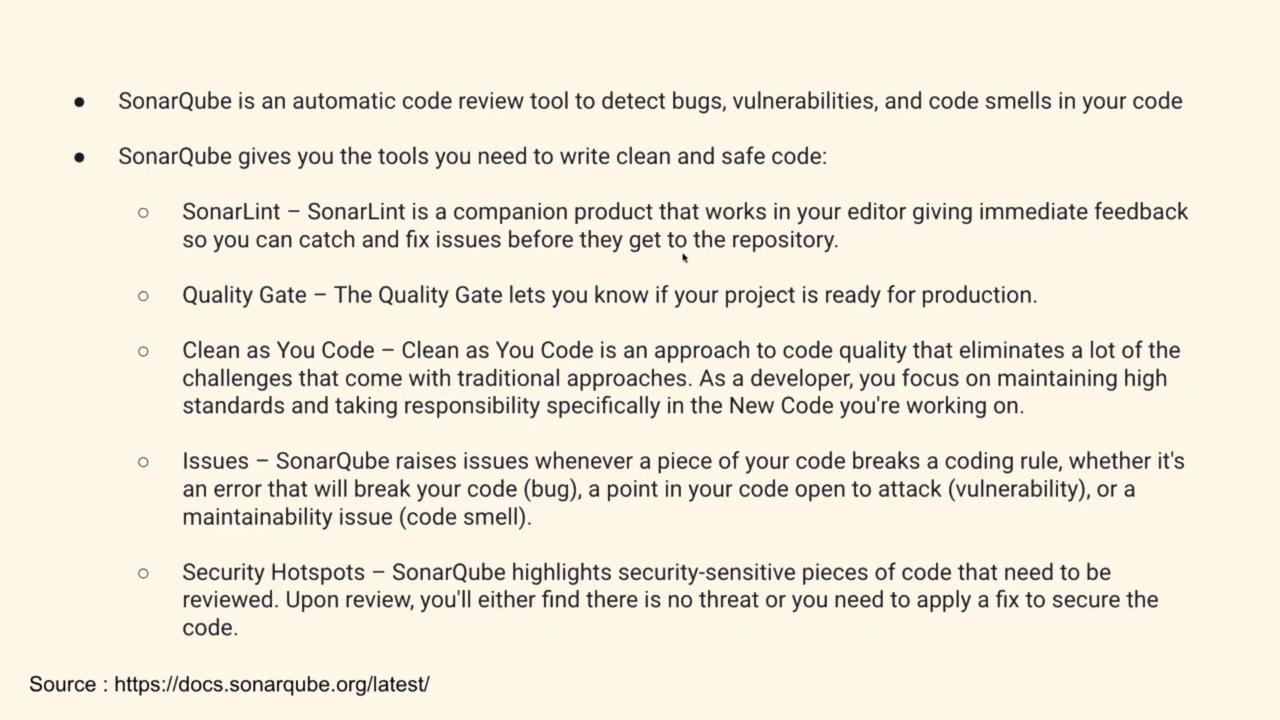
- SonarLint: Automatically checks your code for linting issues.
- Code Quality Analysis: Evaluates whether your code meets production standards.
- Clean as You Go: Encourages adherence to best practices in class design, packaging, and naming conventions.
- Automated Issue Detection: Identifies problematic code segments, highlighting potential security vulnerabilities.
- Security Hotspots Detection: Flags risky code areas that might need manual review.
Workflow Integration
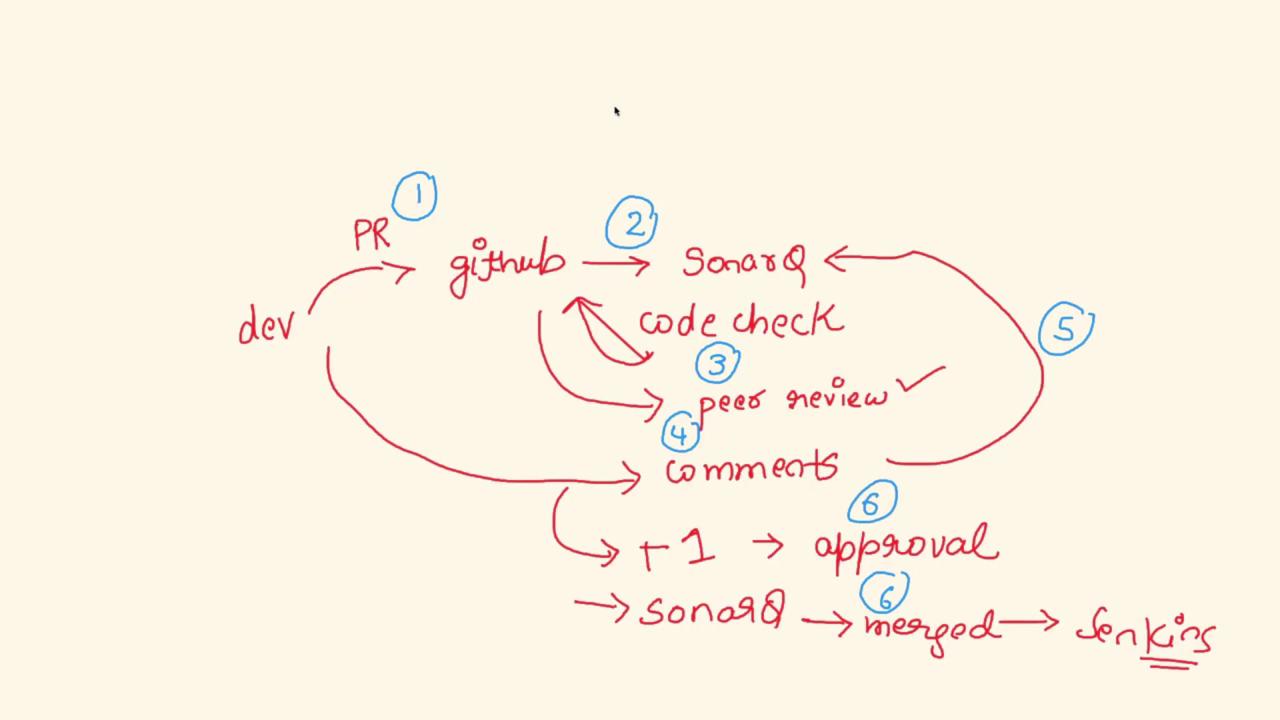
A typical development workflow with SonarQube might look like this:- Initial Submission: A developer creates a pull request (PR) in GitHub containing code changes.
- SonarQube Analysis: SonarQube automatically analyzes the code, checking for adherence to coding standards, potential security vulnerabilities, and other quality metrics.
- Peer Review: A colleague evaluates the PR, often cross-checking SonarQube’s findings and providing additional suggestions.
- Revisions: The developer makes the necessary changes based on peer feedback.
- Re-evaluation: SonarQube rechecks the updated code to ensure that all issues have been resolved.
- Approval: Once the code passes all checks, the PR receives the green light (commonly referred to as a “plus one” approval).
- Merge and Build: The code is merged into the main branch, triggering the build process via Jenkins or a similar CI/CD tool.
Discussing SonarQube in Interviews
When talking about SonarQube during an interview, consider the following approaches:- If you have used SonarQube: Describe your direct experience and explain how the tool assisted in your code review process, emphasizing how it automated code quality checks and security reviews.
- If you haven’t used SonarQube: You can mention that while you have not implemented SonarQube directly, you understand its importance in automating quality assurance processes and ensuring that only well-tested, secure code is merged into production.
SonarQube automates critical aspects of code review, ensuring robust code quality and security throughout the development lifecycle. This automation streamlines the peer review process and minimizes the risk of introducing vulnerabilities into production.