Understanding Helm
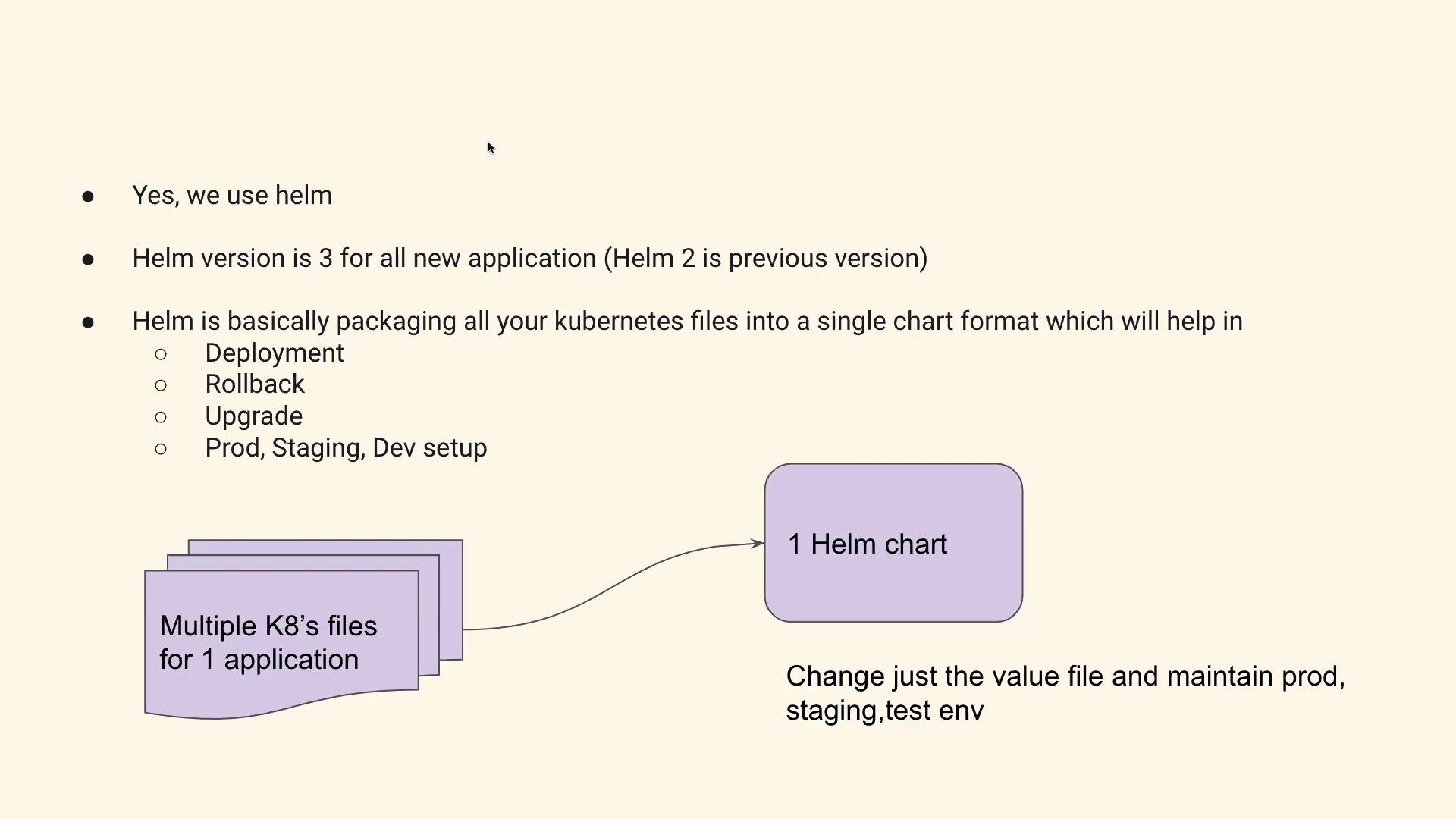
Helm is a package manager for Kubernetes that simplifies application deployment. If you have already implemented Helm in your organization, you can confidently state that you use it. The current recommended version is Helm 3, though some organizations may still be using Helm 2. If you are new to Helm or have limited exposure, it is advisable to mention that you are working with Helm 3.The Challenge in Kubernetes Deployments
In Kubernetes, deploying a single application typically involves creating multiple configuration files—such as Deployments, ReplicaSets, Services, and Service Accounts. When you need to manage many applications (for example, 20 or more) using only these individual YAML files, the maintenance task becomes extremely challenging.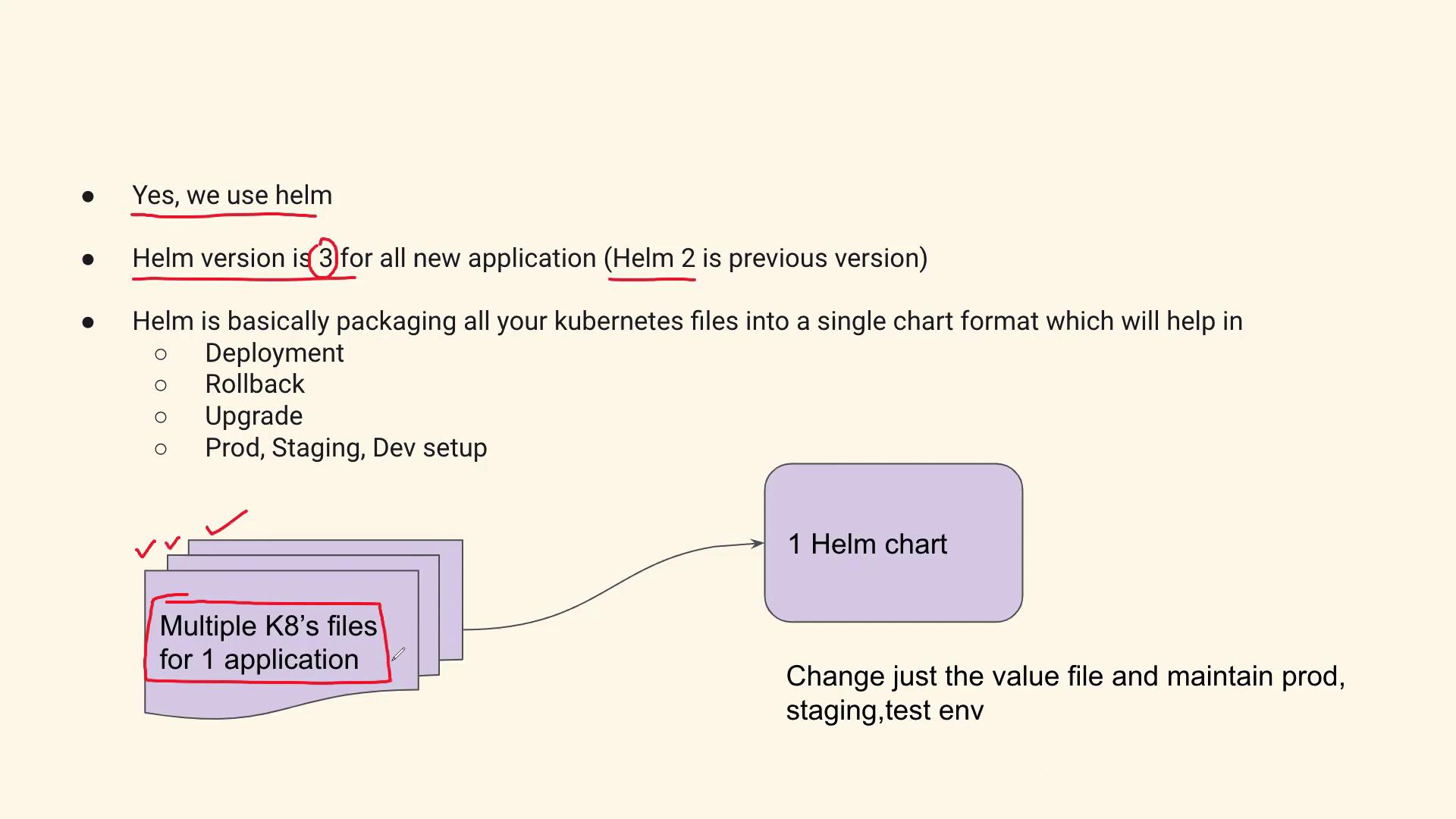
How Helm Charts Simplify Deployments
Helm addresses the complexity of managing numerous configuration files by allowing you to consolidate them into a single package, known as a Helm chart. Using a templating system, a Helm chart aggregates all the necessary Kubernetes files into one package, making it easier to manage deployments. By simply modifying a values file, you can seamlessly manage different environments such as production, staging, or testing.Helm charts simplify deployment, streamline rollback and upgrade operations, and facilitate efficient management of multiple environments.
Sample Interview Response
When answering the Helm question in an interview, you could say: