This lesson explores Python packages, their structure, and functionality, aimed at beginners and interviewees for better understanding.
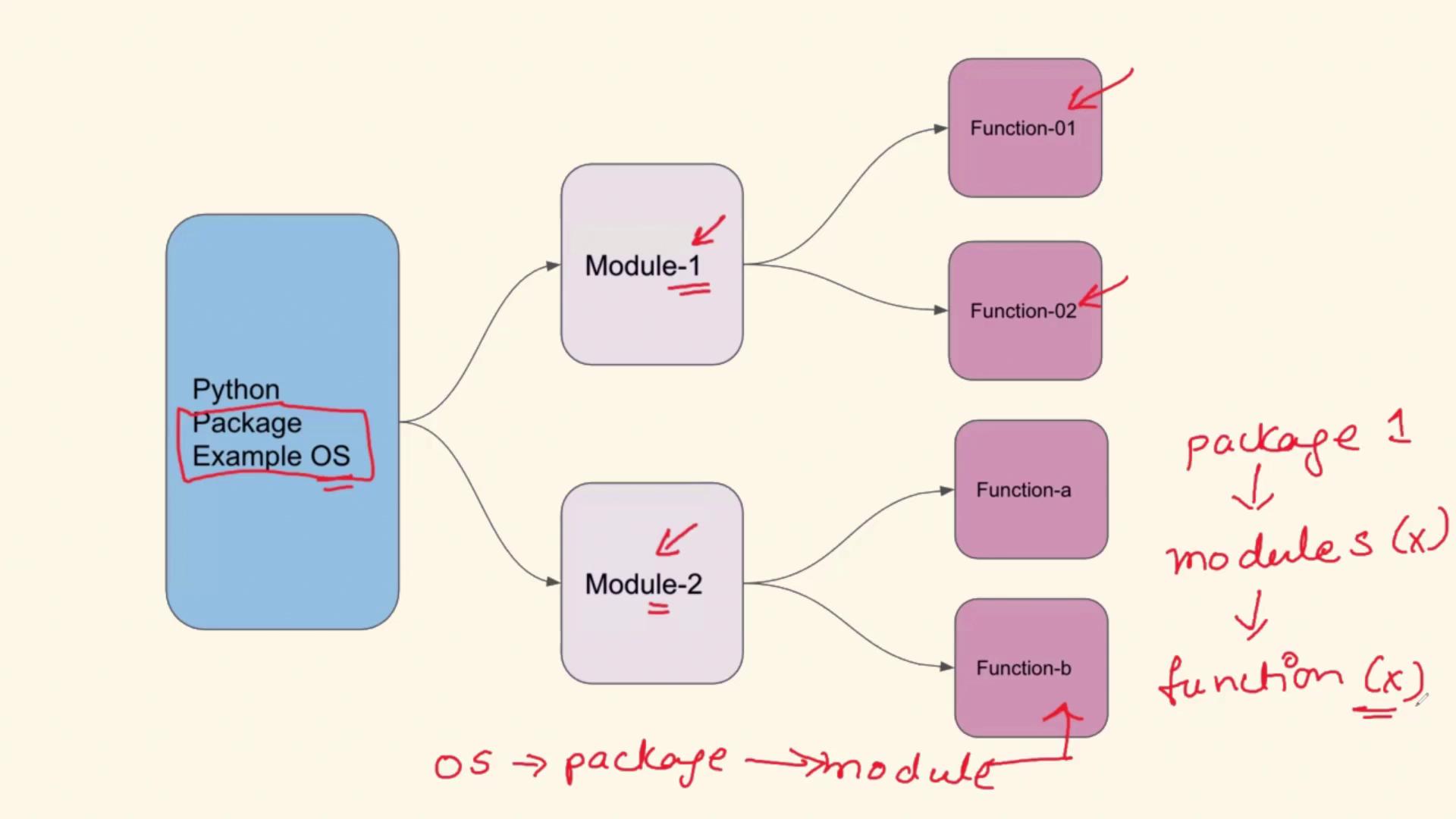
In this lesson, we’ll explore the concept of a package in Python. This explanation is designed to help beginners and interviewees alike better understand how Python packages are structured and how they work.A module in Python is a file containing Python code, which may include functions, classes, or variables. When several modules are grouped together, they form a package. For example, consider the OS module: this module allows Python to interact with your operating system. Many such modules are organized into packages, which provide structure and facilitate code reuse.
At the highest level, Python’s organization of code follows this hierarchy:
Package (e.g., OS)
Modules within a package
Functions defined within each module
This structure ensures that code is organized efficiently and is easy to manage and scale.
When asked about Python packages in an interview, remember to emphasize that a package is a collection of modules. You can illustrate the structure by explaining that packages contain modules, and modules, in turn, house functions that accomplish tasks.
When discussing Python packages during an interview, consider these points:
Definition: Explain that a package is a collection of modules, each carrying out specific tasks via their functions.
Example: Use the OS package as an example. Highlight that it is a standard part of every Python installation and contains various modules, each with functions tailored for particular operations.
Hierarchy Clarification: Emphasize the hierarchical nature—packages contain modules, and these modules encapsulate functions.
If you have programming experience, you can further elaborate on how this structure aids in organizing code efficiently, enhancing maintainability, and promoting reusability.
A Python package is a top-level organizational unit that groups multiple modules. Each module is a file that contains reusable code components such as functions, classes, or variables. This layered architecture is key in managing large codebases and is an important concept to master for both practical programming and technical interviews.Thanks for reading this article, and best of luck in your coding and interview endeavors!Happy coding!