

This curated list supports continued learning of DevOps soft skills, stakeholder communication, and influence. Treat it as a starting point and adapt it to your goals.
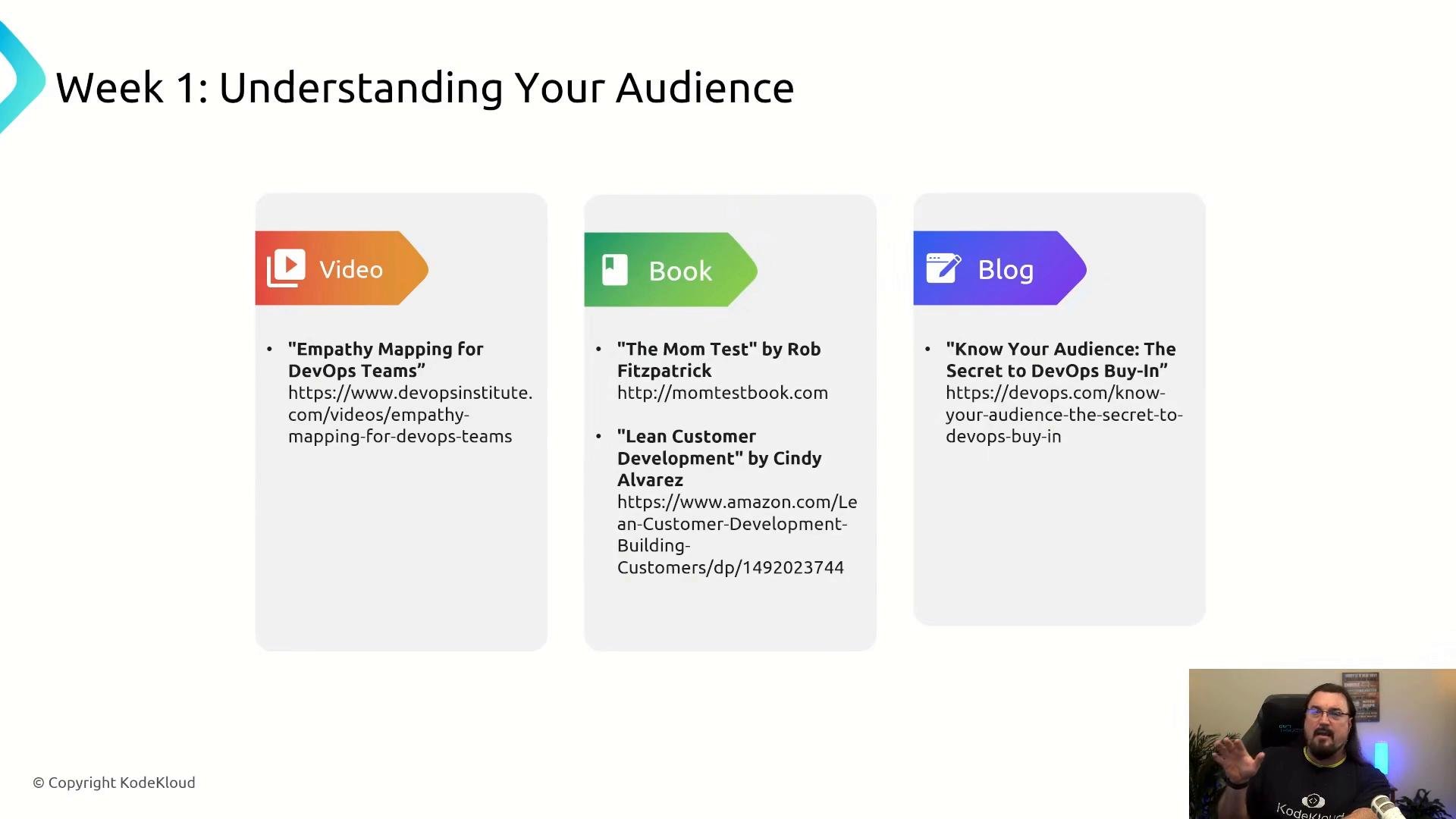
Week 1 — Understanding Your Audience
Focus: discover and validate what stakeholders care about. Learn lean customer development, stakeholder interviewing, and empathy mapping so you can align technical work with business outcomes.- What to learn: stakeholder interviews, hypothesis-driven discovery, prioritization of pain points.
- Formats: interview technique videos, practical blog posts, and foundational books on customer conversations.
- Recommended starting points: The Mom Test (customer conversations), practical empathy mapping resources for engineering teams.
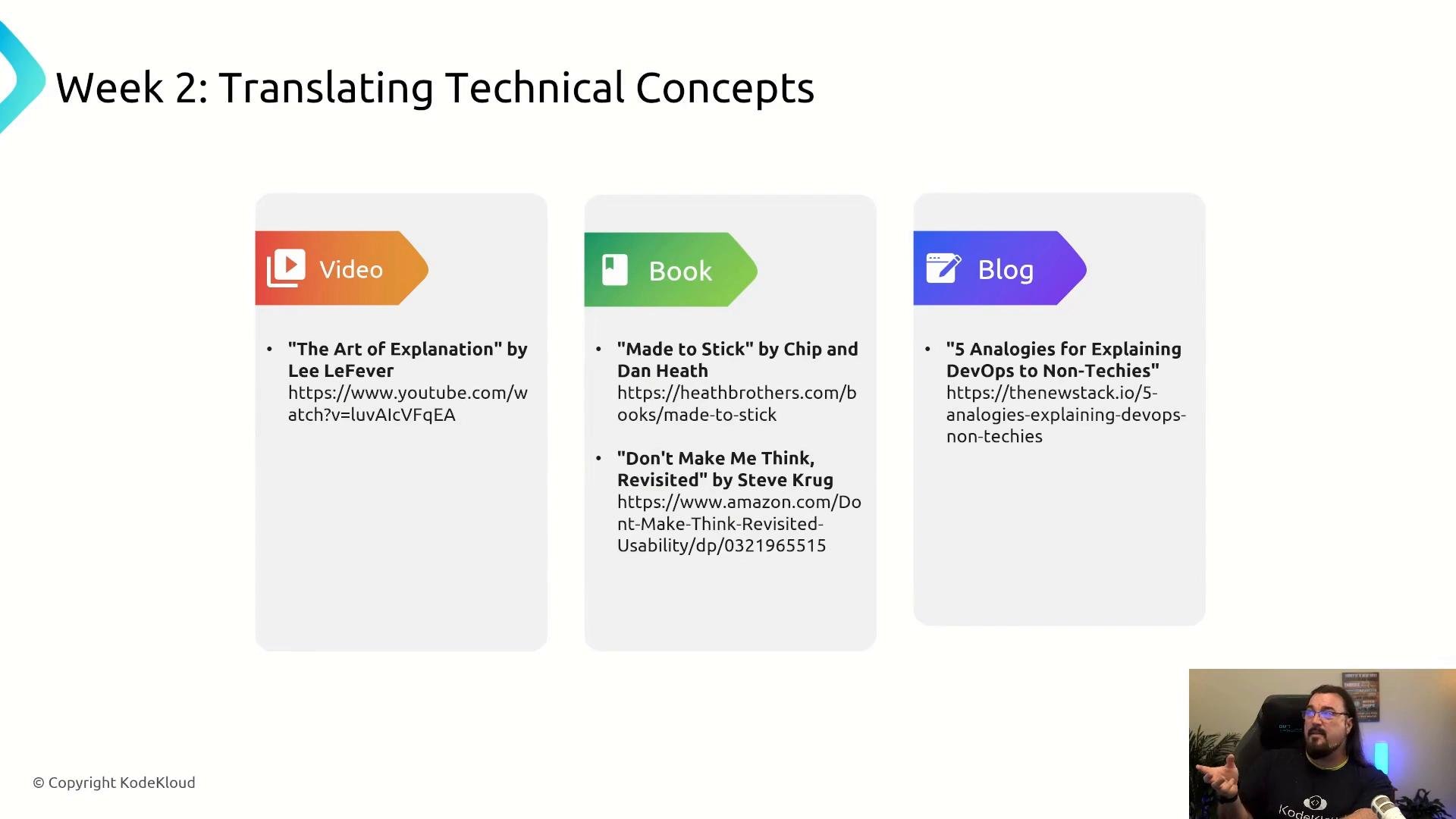
Week 2 — Translating Technical Concepts
Focus: make technical ideas clear, concise, and relevant to non-technical audiences. Practice plain-language summaries, useful analogies, and focused takeaways.- What to learn: clarity techniques, metaphors and analogies, presentation structure.
- Formats: short explainers, usability-guided books, and practical blog posts with analogies.
- Recommended starting points: Don’t Make Me Think (usability and clarity); “Five Analogies for Explaining DevOps to Non-Techies” on The New Stack.
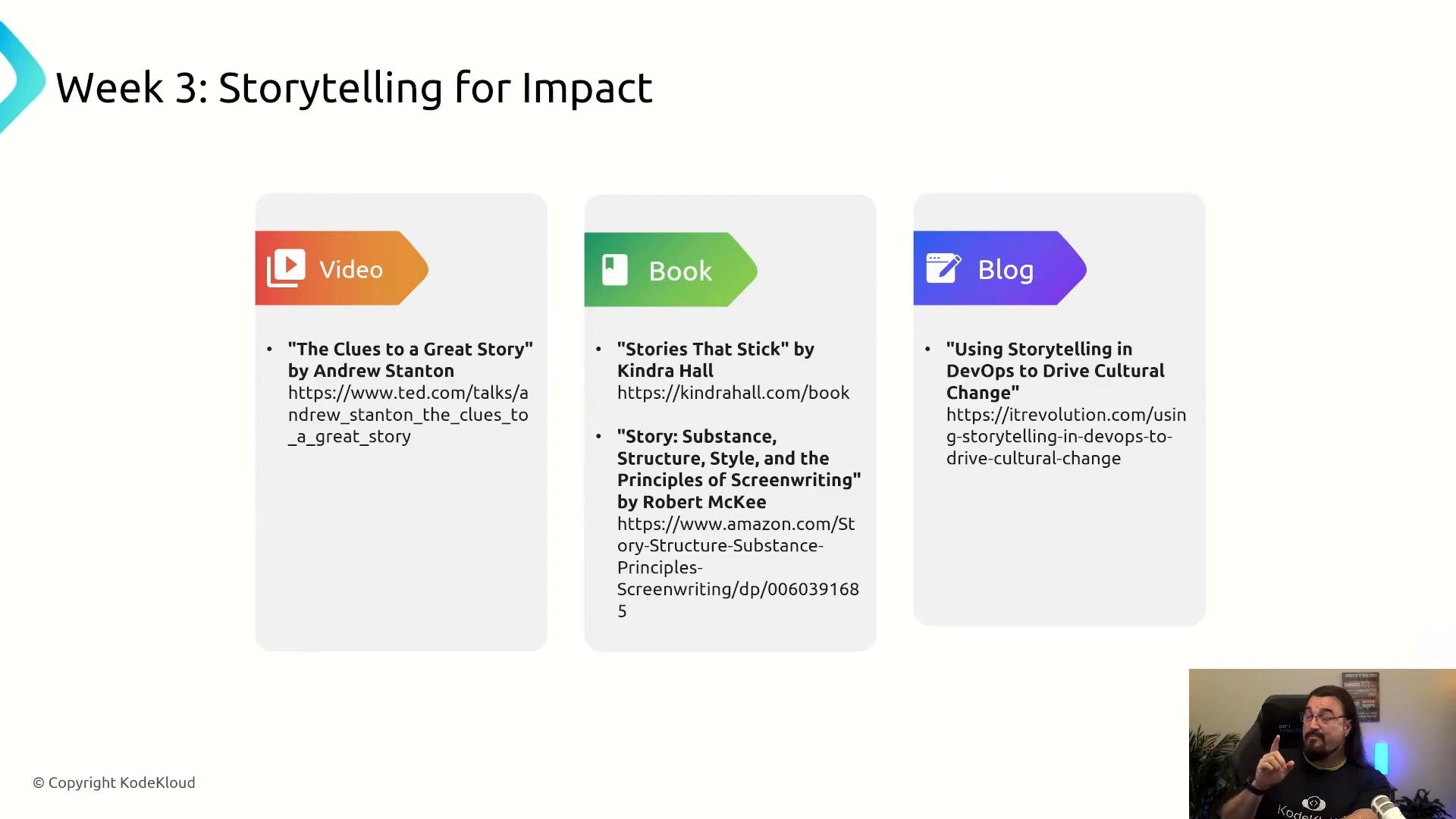
Week 3 — Storytelling for Impact
Focus: use narrative to make data and proposals memorable. Learn narrative structure, emotional hooks, and how to tie technical choices to outcomes people care about.- What to learn: story arc, case studies, using anecdotes to demonstrate value.
- Formats: talks, narrative-focused books, and practical guides for cultural change.
- Recommended starting points: How to Tell a Great Story; Stories That Stick; resources from IT Revolution for DevOps-related storytelling.
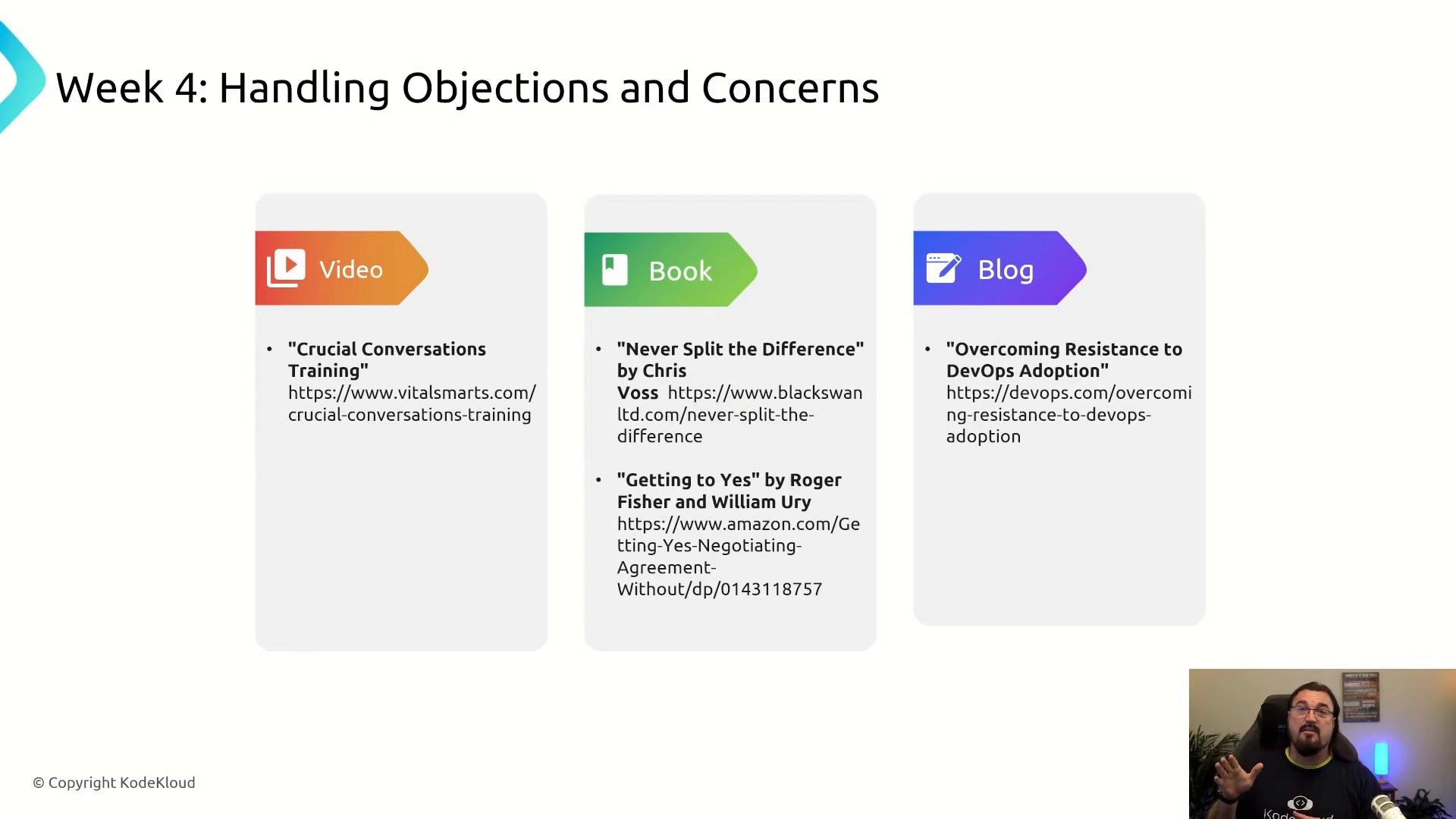
Week 4 — Handling Objections and Difficult Conversations
Focus: negotiation, persuasion, and conflict navigation. Develop frameworks to respond to resistance and find collaborative solutions.- What to learn: negotiation tactics, de-escalation, interest-based problem solving.
- Formats: books with proven frameworks, negotiation workshops, role-play exercises.
- Recommended starting points: Never Split the Difference (Chris Voss); Getting to Yes (Fisher & Ury).
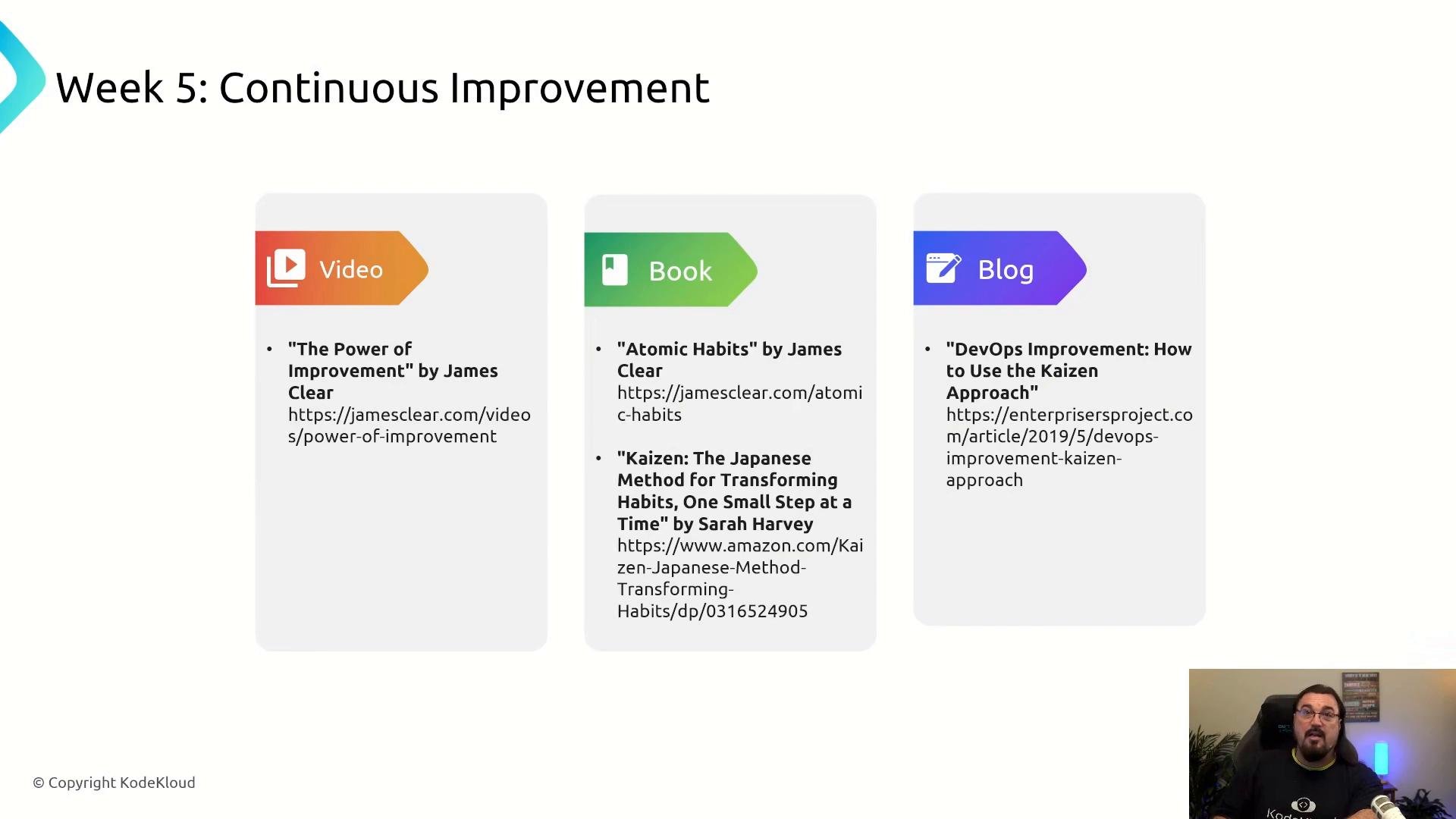
Week 5 — Continuous Improvement
Focus: embed habits that sustain progress — iterate on skills, solicit feedback, and apply Kaizen-style small improvements.- What to learn: habit formation, incremental process improvements, feedback loops.
- Formats: habit-building books, Kaizen guides, and short practical articles.
- Recommended starting points: Atomic Habits (James Clear); classic Kaizen writings by Masaaki Imai.
Applying Your Learning — Personal Development and Practice
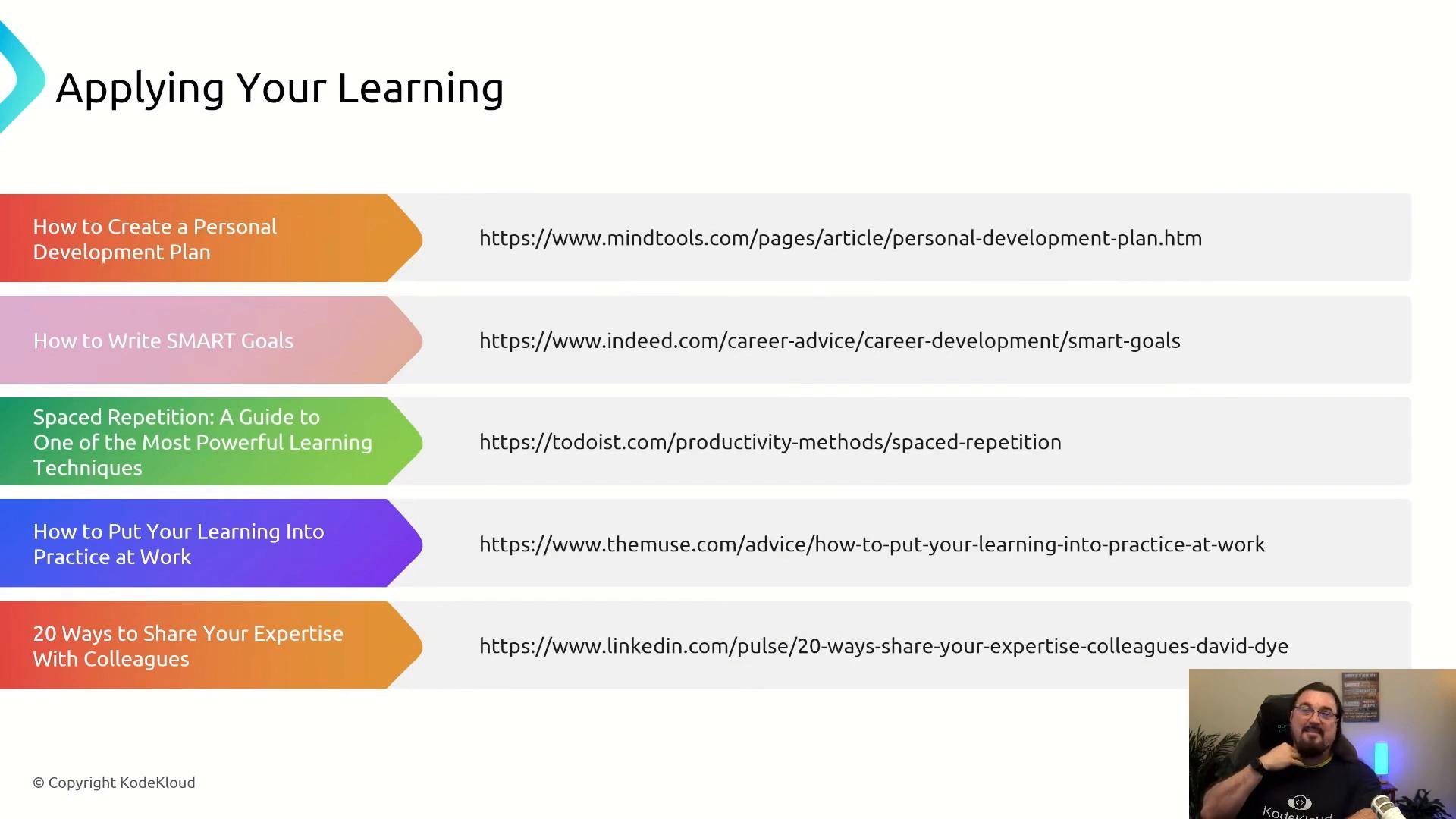
Turn learning into measurable progress with concrete practices you can apply at work.- Practical actions:
- Write a Personal Development Plan with 3-month goals.
- Set SMART goals to measure progress.
- Use spaced repetition and active recall for retention.
- Teach or present short lessons to peers (lunch-and-learns or documentation).
- Collect feedback and iterate weekly or biweekly.
- Templates and methods to explore: SMART goals, spaced repetition systems, example learning plans and feedback templates.
Tip: Start small. Choose one behavior (for example: one 15-minute stakeholder interview per week or one 10-minute team story per sprint) and track it. Small, consistent actions compound into noticeable influence over time.
Quick Reference: Key Reads and Why They Matter
Links and References
- The Mom Test — https://momtestbook.com
- Don’t Make Me Think — https://en.wikipedia.org/wiki/Don’t_Make_Me_Think
- Five Analogies for Explaining DevOps to Non-Techies — https://thenewstack.io
- Never Split the Difference — https://en.wikipedia.org/wiki/Never_Split_the_Difference_(book)
- Getting to Yes — https://en.wikipedia.org/wiki/Getting_to_Yes
- Atomic Habits — https://en.wikipedia.org/wiki/Atomic_Habits
- Masaaki Imai (Kaizen) — https://en.wikipedia.org/wiki/Masaaki_Imai
- IT Revolution — https://itrevolution.com
- SMART criteria — https://en.wikipedia.org/wiki/SMART_criteria
- Spaced repetition — https://en.wikipedia.org/wiki/Spaced_repetition
This resource pack is yours to download, adapt, and use as the foundation for an ongoing learning plan. I highlighted items I consider especially useful, but tailor the list to your role and objectives. It’s been a pleasure to teach this lesson. Please connect with me at michael.kodekloud.com or on LinkedIn if you’d like to continue the conversation.