

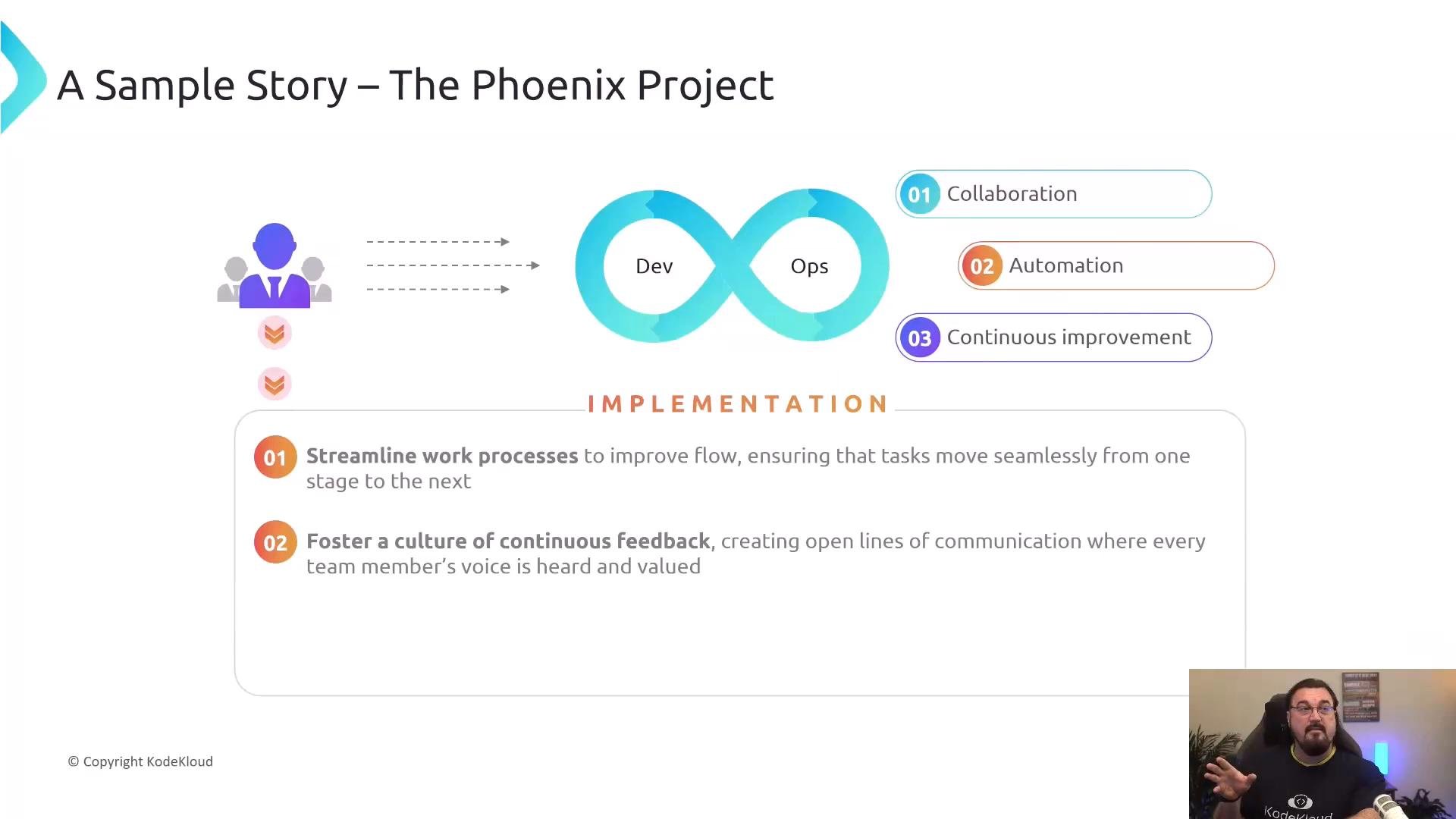
This is Michael Forrester. In this lesson we examine the elements that make a story compelling—especially when explaining technical ideas to non-technical audiences. We use The Phoenix Project as a running example to show how character, conflict, resolution, and theme make technical change feel human and actionable. The Phoenix Project follows Bill Palmer, an IT manager at Parts Unlimited, who is asked to rescue a critical initiative called The Phoenix Project. The project is behind schedule and over budget, the environment is unstable, and organizational communication is poor. Bill applies a DevOps-inspired approach—emphasizing collaboration, automation, and continuous improvement—to restore flow and accelerate delivery. The story demonstrates how cultural and technical changes combine to produce measurable business benefits, making it a useful model for technical storytelling.
- They make complex, cross-functional change relatable by centering on people and decisions rather than abstractions.
- A clear narrative arc improves attention, retention, and recall.
- Showing concrete outcomes helps listeners imagine how a similar transformation could apply in their organization.
- Character: a relatable protagonist with a role and constraints.
- Conflict: a clear challenge or problem to be solved.
- Resolution: the path or solution taken to resolve the conflict.
- Theme: the lesson or value that emerges from the journey.
Frame your story around measurable outcomes and stakeholders. Start with the pain point, explain who is impacted, and quantify the expected improvement (time saved, error rates reduced, revenue impact). This helps non-technical audiences evaluate trade-offs and priorities.
- Use analogies and comparisons to give numbers meaning (for example, “This saves the equivalent of X person-hours per month”).
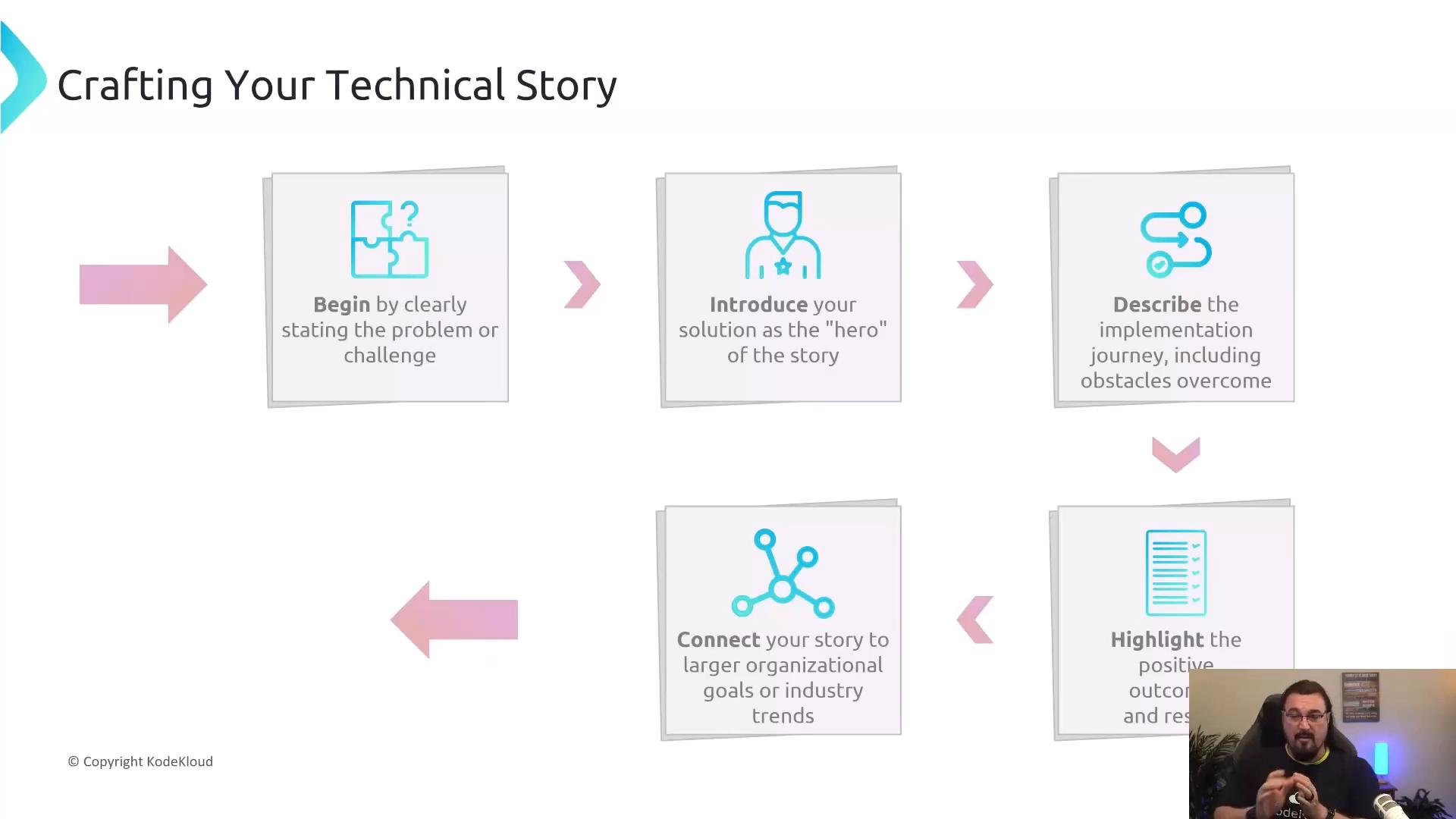
- Prefer simple visualizations that map directly to business outcomes—before/after charts, clear icons, or customer logos that the audience recognizes.
- For technical audiences, familiar platform icons (e.g., AWS, Kubernetes) provide context; for non-technical audiences, use metaphors that reduce jargon.
Avoid burying your message in dense dashboards or raw metrics. Numbers without context can confuse or mislead. Always show the business implication (time saved, cost avoided, revenue enabled) alongside the metric.
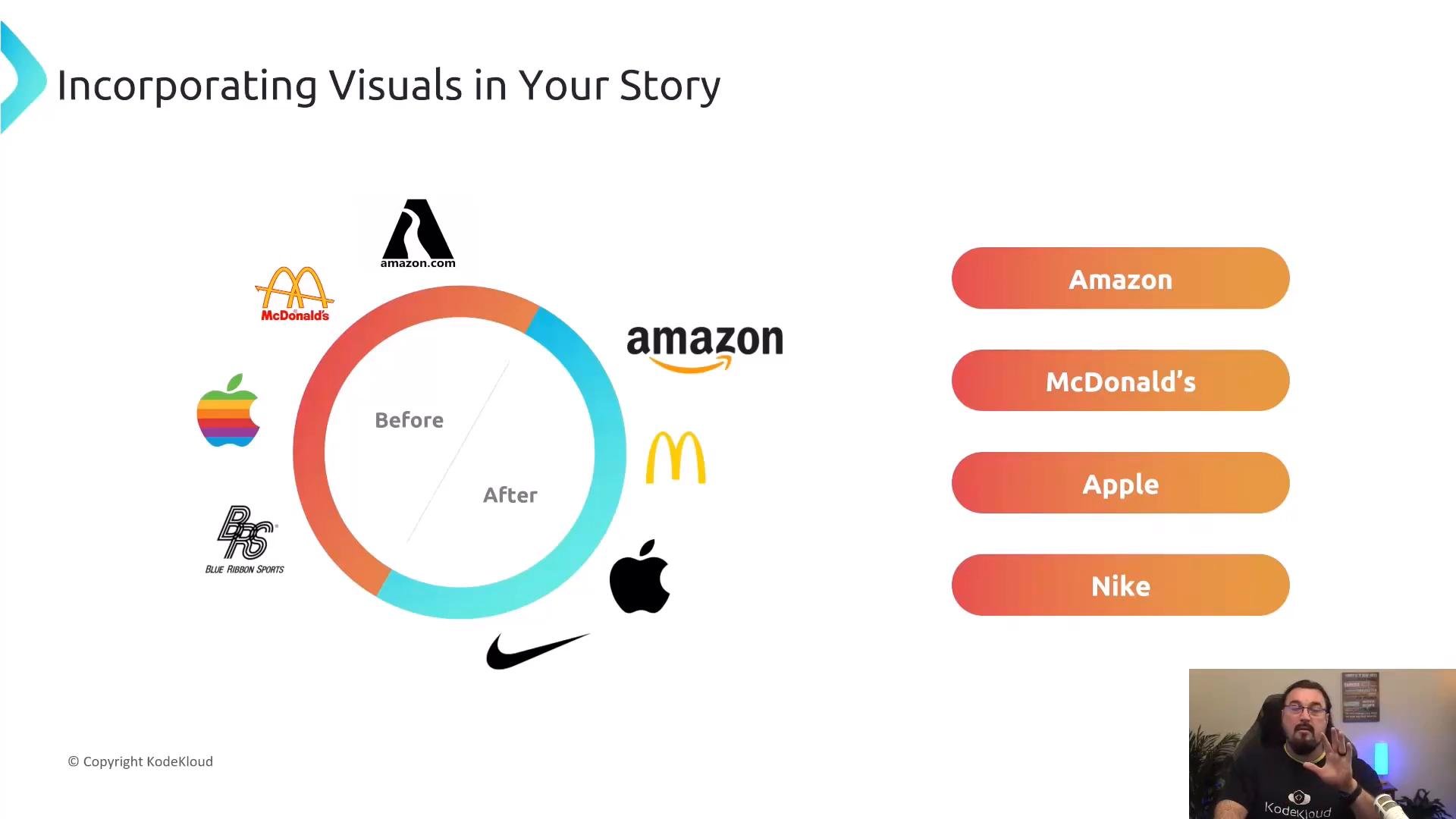
- Use vocal contrast—softer for reflection, stronger for breakthrough moments—to signal emotional and logical shifts.
- Pause to let important points sink in.
- Make eye contact and scan the room or the camera in remote presentations.
- Use natural gestures and purposeful movement to reinforce emphasis.
- Faster, more efficient analysis.
- More accessible, actionable presentations for customers.
- Improved customer support and higher-quality outcomes.
- Alex’s skills are amplified—AI augments creativity and problem-solving rather than replacing him.
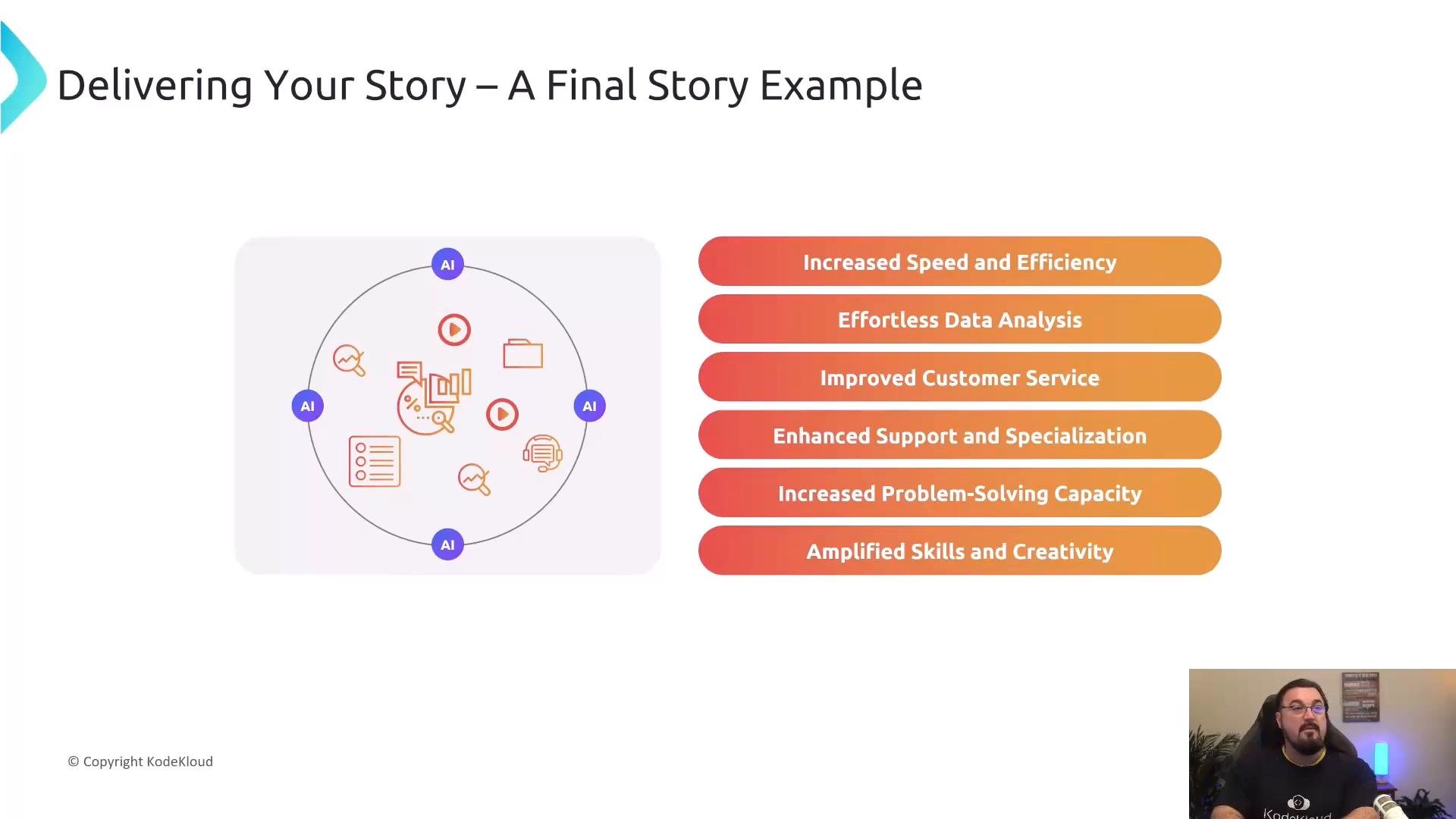
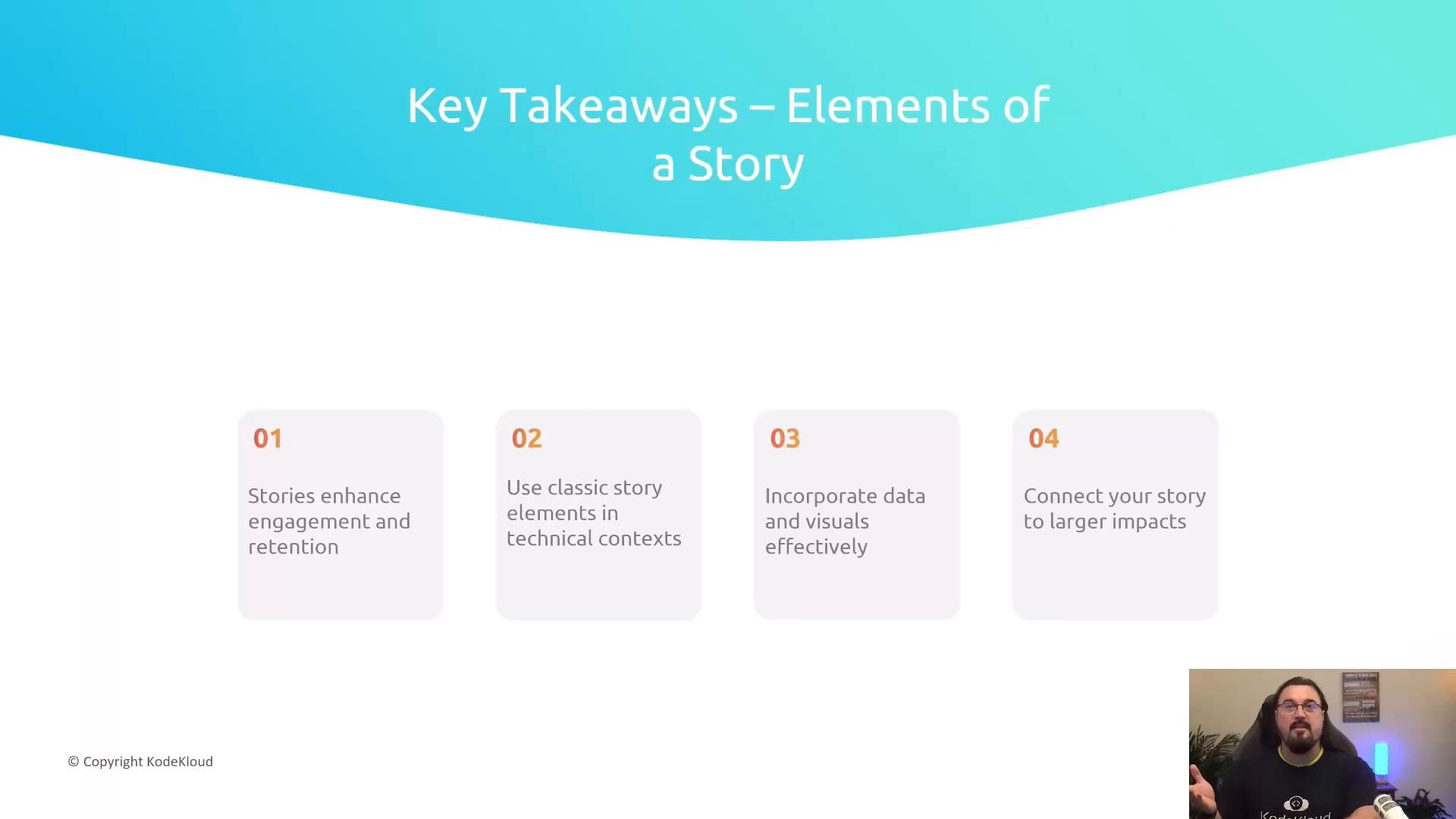
- Stories increase engagement and retention, making technical change easier to adopt.
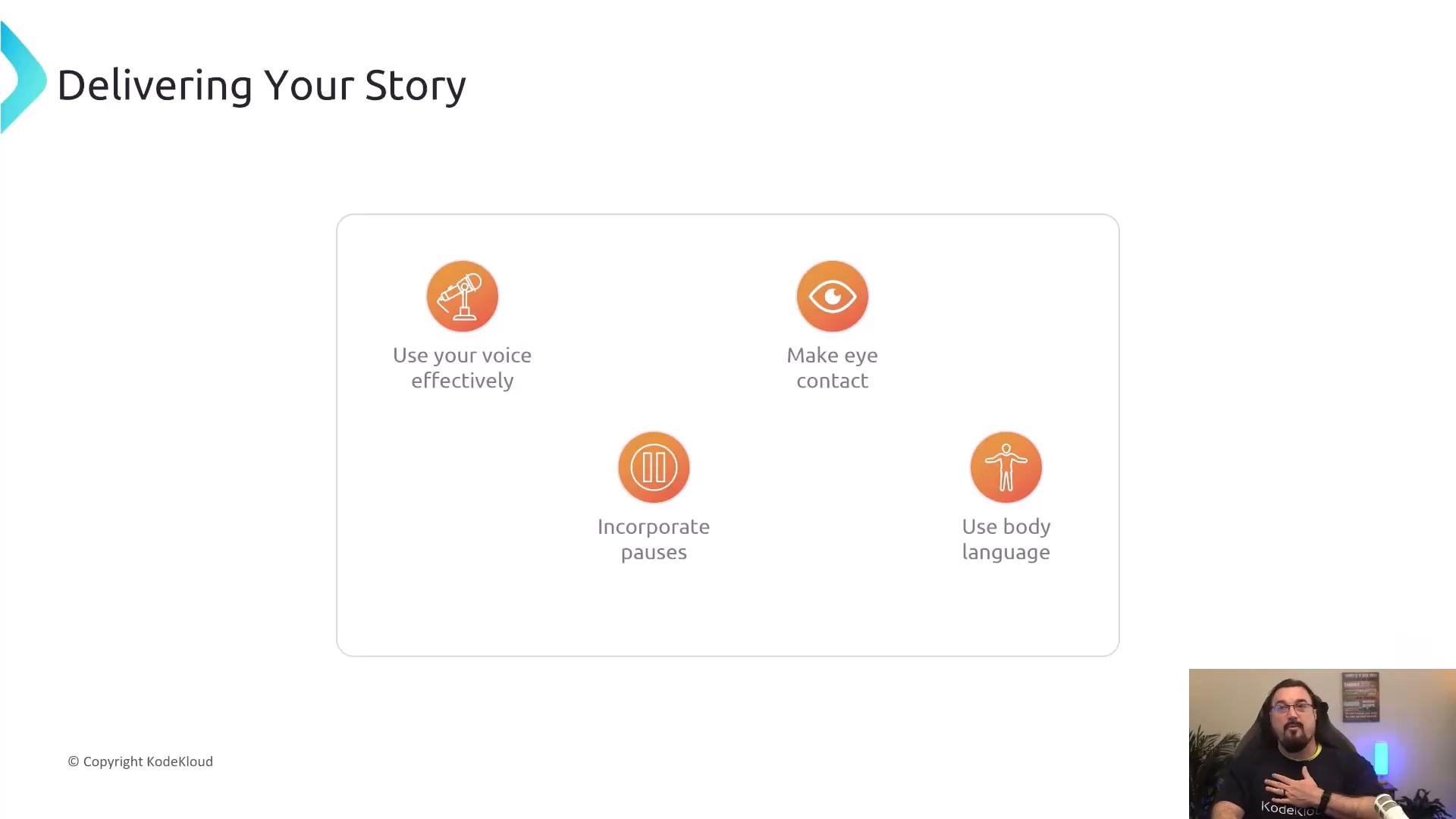
- Use classic story elements—character, conflict, resolution, and theme—to frame technical initiatives.
- Incorporate data and visuals, but keep them simple and tied directly to business impact.
- Connect your story to organizational goals so listeners understand strategic relevance.
Links and references
- The Phoenix Project (Wikipedia)
- The Hero with a Thousand Faces (Wikipedia)
- AWS
- Kubernetes
- Further reading: storytelling for product and technical teams, change management, and presenting metrics to non-technical stakeholders.