

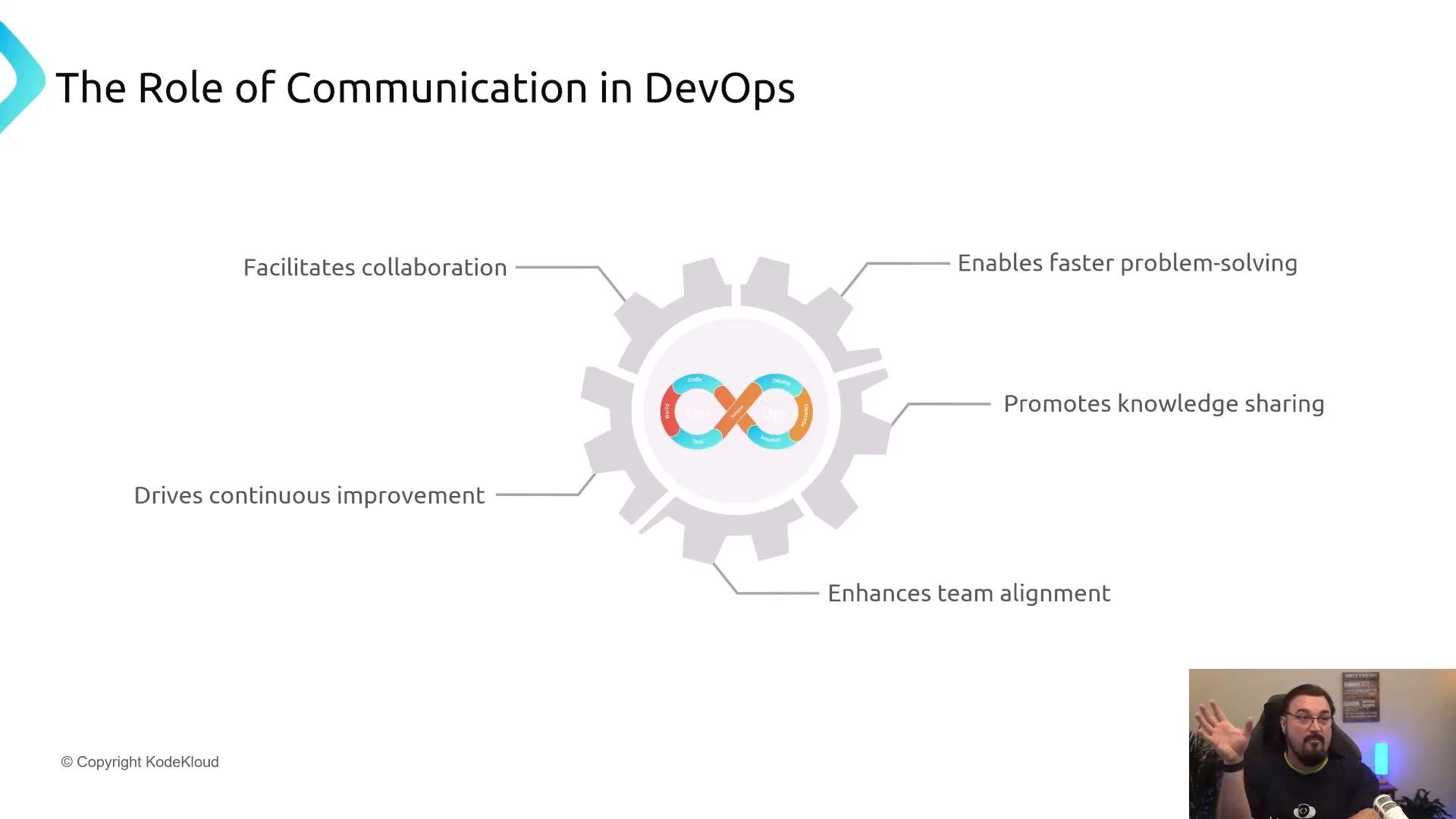
Measuring communication is about combining quantitative signals (message frequency, response times) with qualitative context (surveys, interviews). Both are necessary to understand how communication affects DevOps metrics like deployment frequency and MTTR.
Why measure communication in DevOps?
Measurement helps you:- Identify bottlenecks during incident response and deployment.
- Validate improvements (for example, protocol changes or tool integrations).
- Make decisions based on evidence instead of anecdotes.
- Align engineering practices with business outcomes (faster recovery, more frequent releases, better customer experience).
Core DevOps success metrics (the targets)
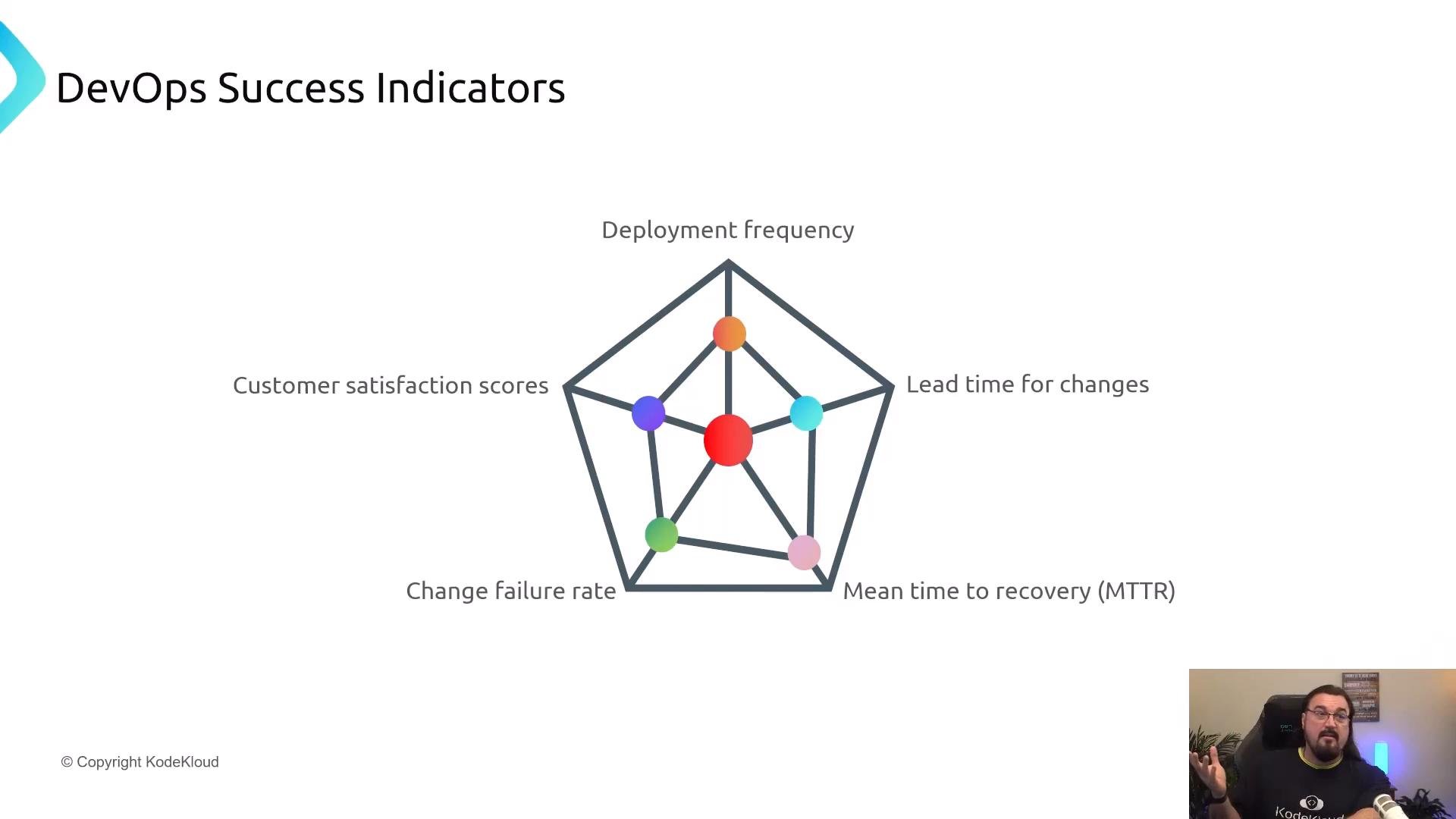
When measuring communication impact, correlate communication signals with established DevOps indicators, commonly referred to as DORA metrics:- Deployment frequency
- Lead time for changes
- Mean time to recovery (MTTR)
- Change failure rate
What communication signals to measure
Common, actionable signals:- Interaction frequency: meetings, standups, Slack/Teams channels activity, PR review throughput.
- Response times: how quickly questions or incident messages get answered.
- Documentation quality: README completeness, on-call playbook coverage, code comments.
- Cross-team handoffs: number and timeliness of dependency-related interactions.
- Knowledge sharing: internal workshops, onboarding materials, repository of runbooks.
Correlation analysis: linking signals to outcomes
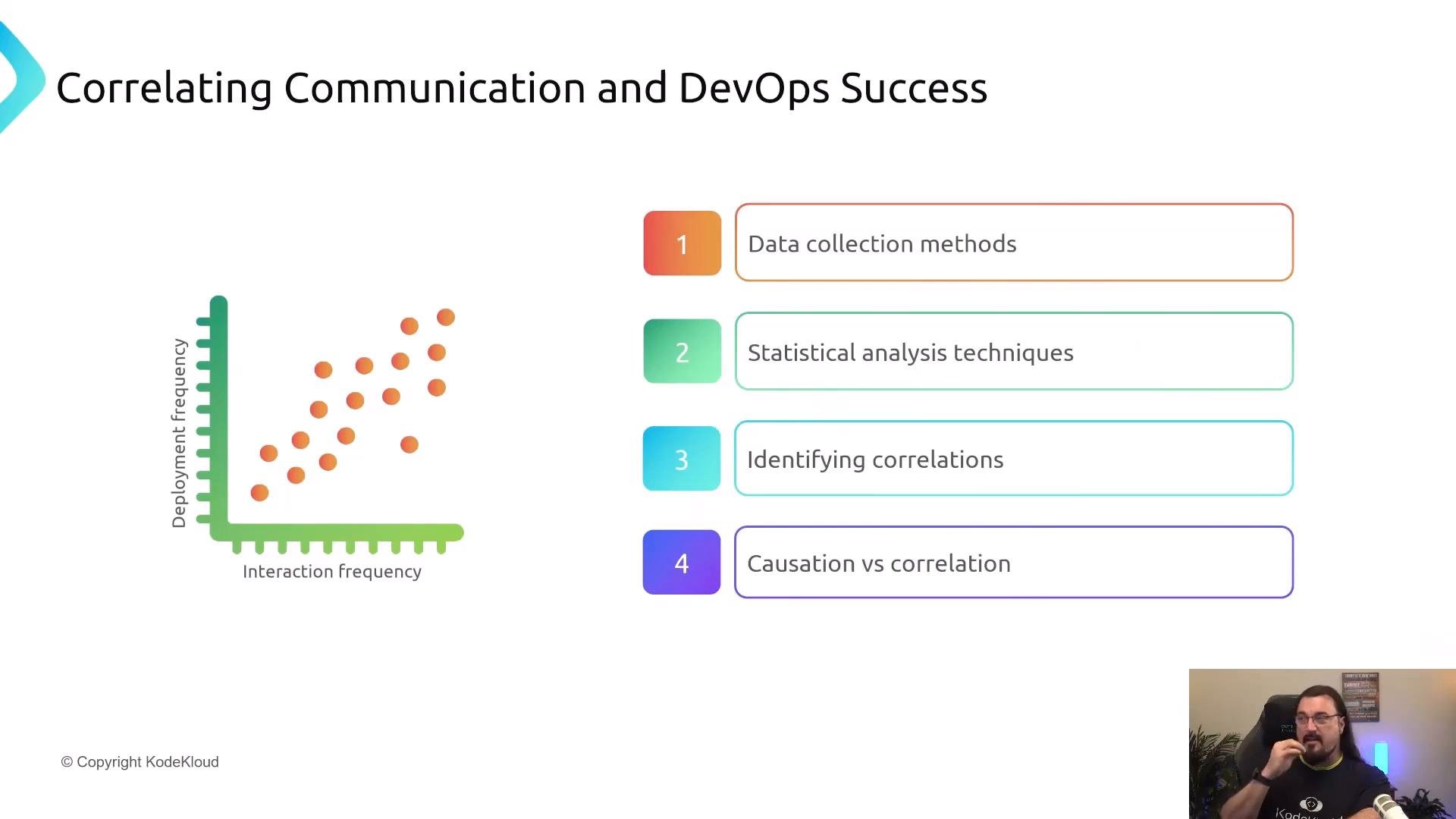
Correlation analysis helps reveal relationships between communication signals and DevOps metrics:- Start with well-defined hypotheses (e.g., “higher PR review frequency correlates with faster lead time for changes”).
- Use basic statistical tools (Pearson/Spearman correlations, simple regressions) to quantify relationships.
- Always consider confounders: team size, tooling changes, or releases may affect both communication and outcomes.
- Distinguish correlation from causation: use experiments or phased roll-outs to test causality where possible.
Data sources for communication signals
Use a mix of system telemetry and human feedback. Typical sources:
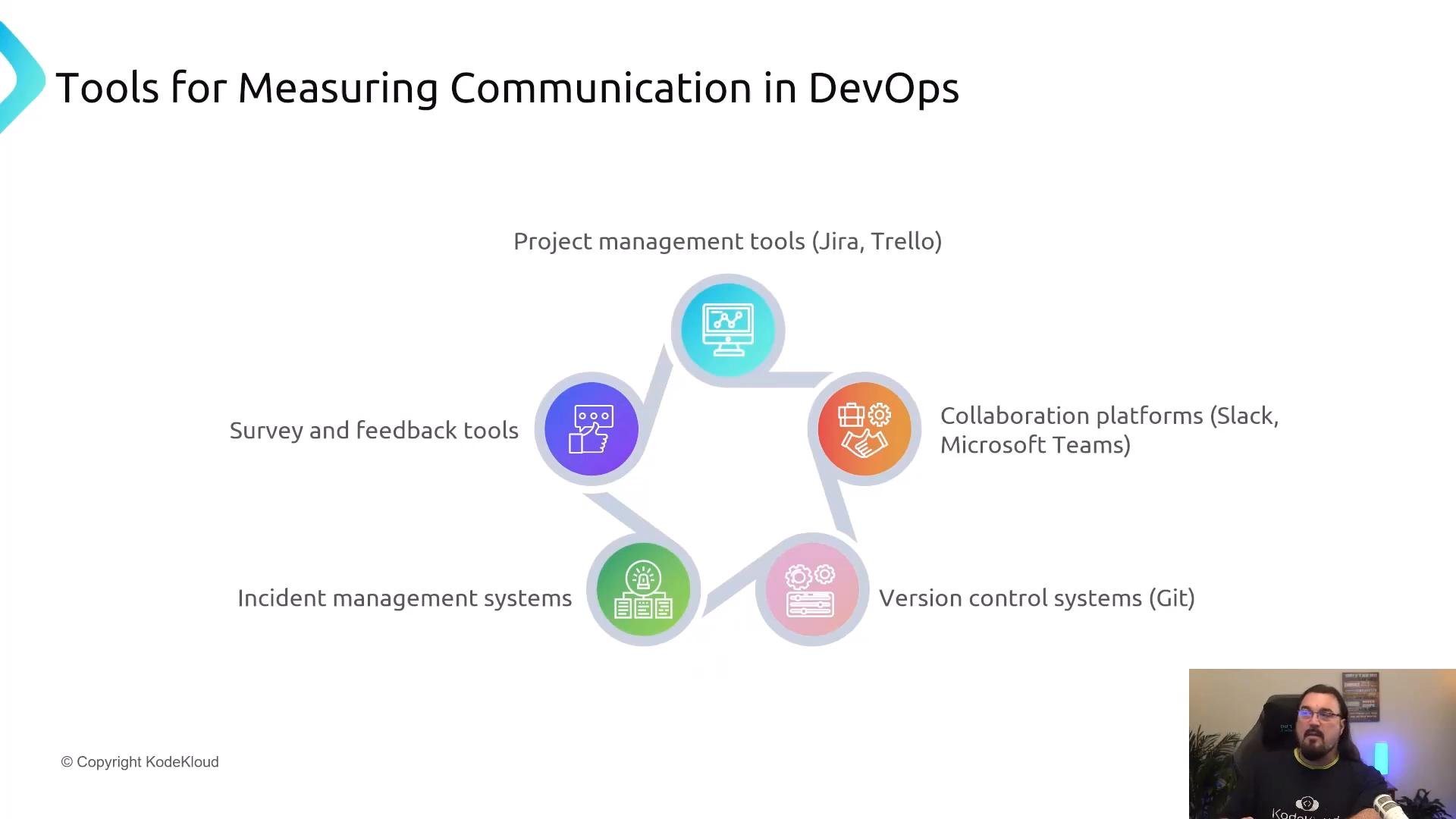
Relevant tools: Jira, Trello, Slack, Microsoft Teams, Git, incident monitoring platforms, and survey tools.
Running a communication health check (practical steps)
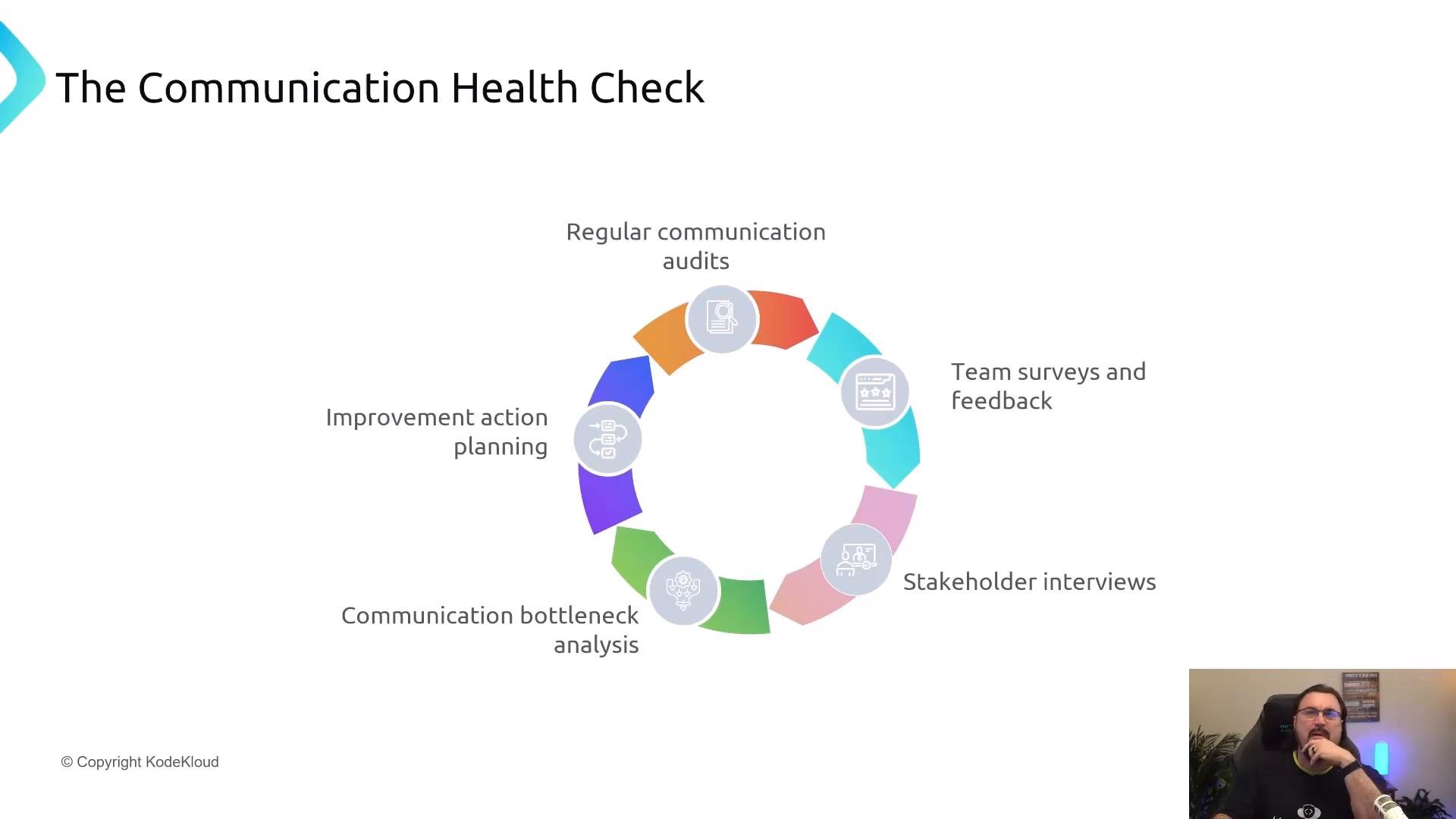
A communication health check is an iterative program you run, typically quarterly or aligned to major releases:- Audit current state
- Inventory channels, documented processes, and on-call rotations.
- Collect quantitative data
- Export message metadata, PR timings, ticket cycle times.
- Gather qualitative context
- Run short surveys and stakeholder interviews to surface pain points.
- Analyze bottlenecks
- Look for zones with long handoff delays or frequent escalations.
- Plan improvements
- Prioritize fixes that have the highest expected impact on DORA metrics.
- Measure effect
- Re-run the same measurements after implementing changes to validate impact.
Case study: reducing MTTR with targeted communication changes
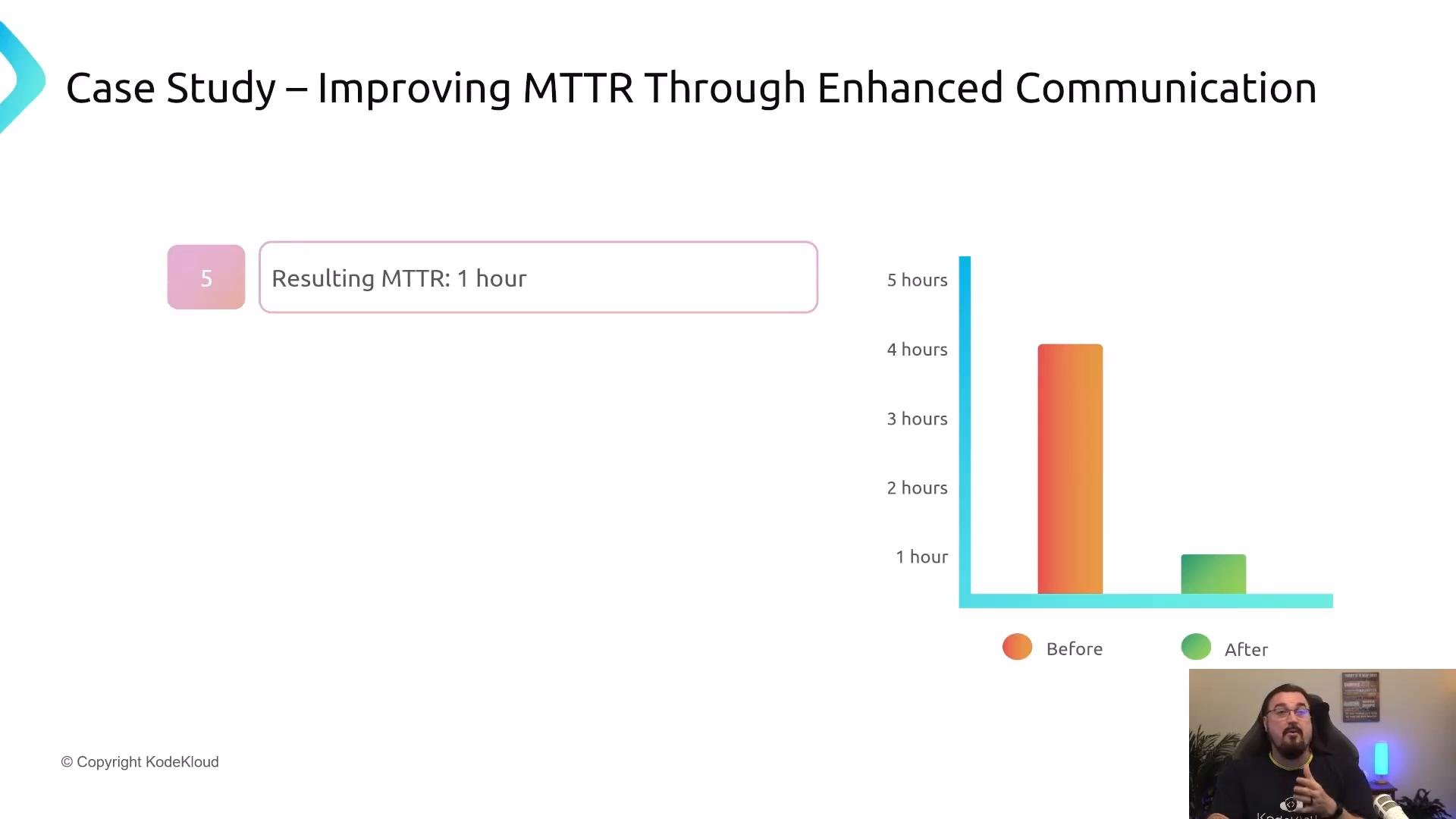
Example summary:- Problem: Average MTTR ≈ 4 hours with recurring delays caused by unclear escalation paths and slow notification.
- Intervention: Integrated monitoring alerts with the team’s chat platform, introduced standardized incident templates, and formalized a single incident commander role.
- Result: MTTR reduced from ~4 hours to ~1 hour after rollout — demonstrating a measurable improvement tied to communication fixes.
Common challenges and how to address them
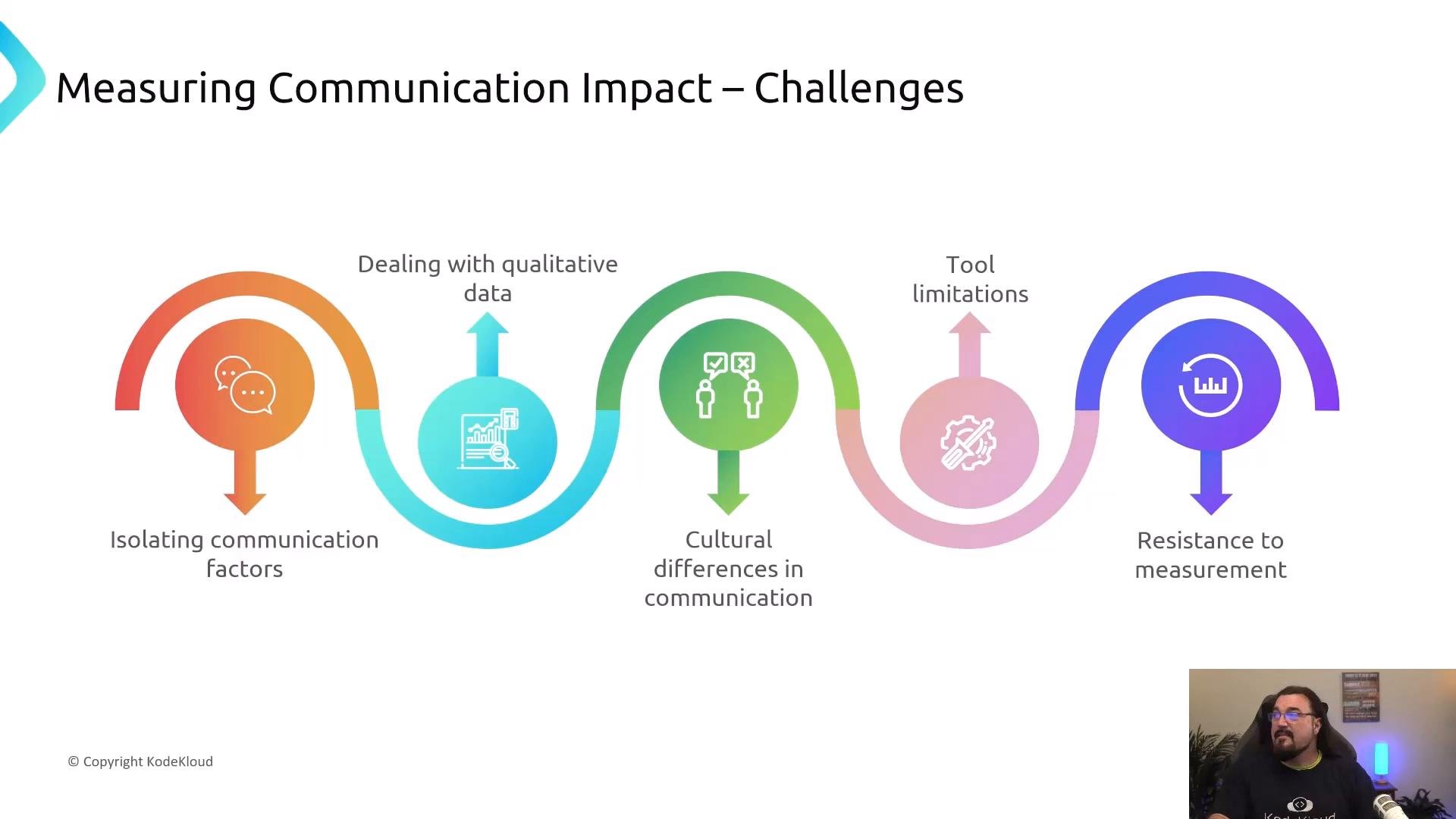
Challenges:- Many communication attributes are qualitative and resist simple numeric metrics.
- Cultural and regional communication differences affect baseline behavior.
- Tooling limits: some platforms require paid plans to export telemetry.
- Privacy and trust: excessive measurement can erode morale and trust.
- Attribution: isolating communication effects from code, process, or infra changes is hard.
- Use aggregated, anonymized metrics where possible.
- Complement quantitative signals with interviews and surveys.
- Start small with clearly scoped experiments to test causality.
- Be transparent about measurement goals and how data will be used.
When collecting communication data, be transparent with teams about what you measure and why. Prioritize privacy and use aggregated, anonymized metrics whenever possible to maintain trust.
Key takeaways
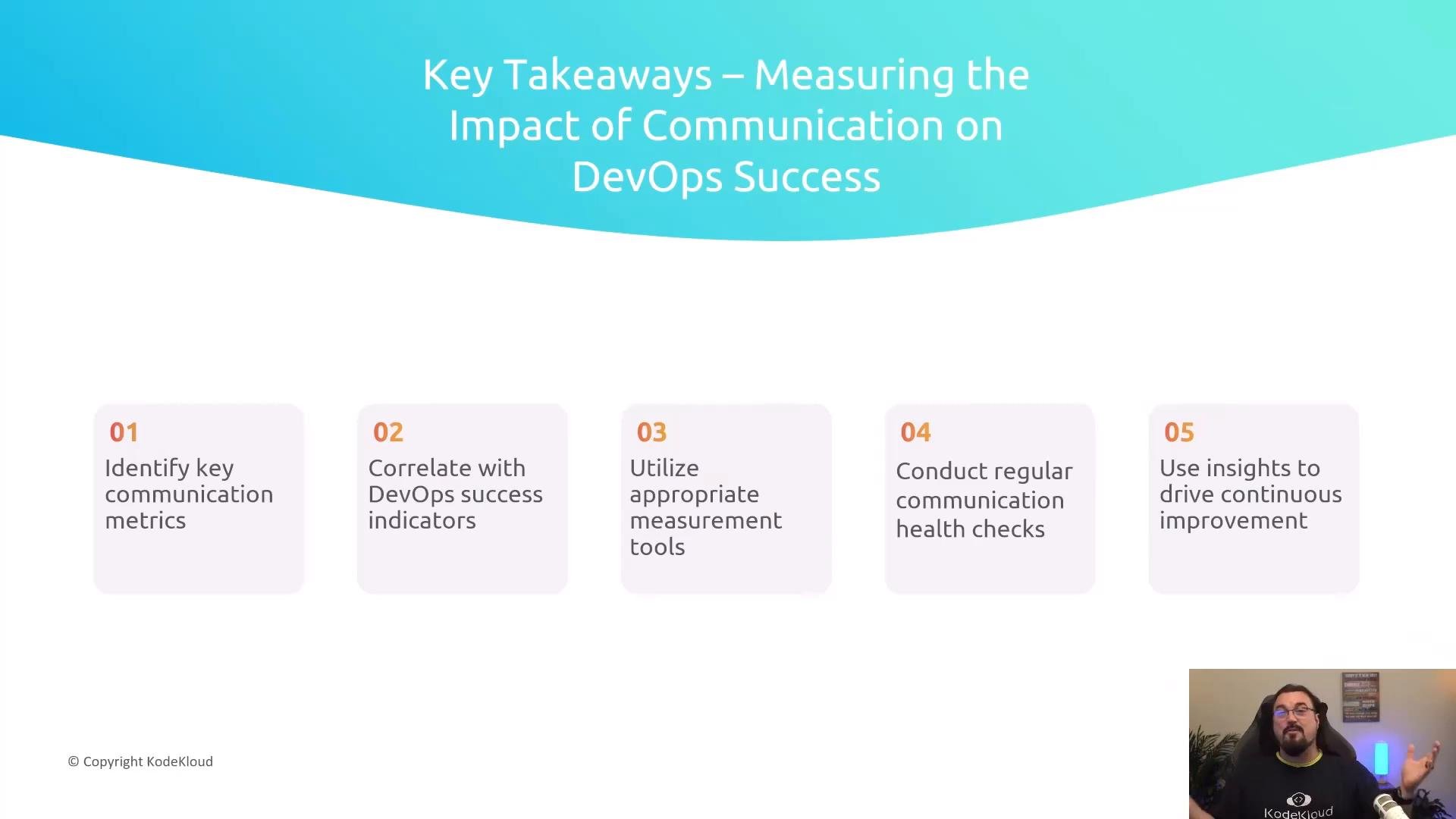
- Choose relevant communication metrics for your organization: interaction frequency, response times, documentation quality, cross-team handoffs, and knowledge sharing.
- Correlate communication metrics with DevOps outcomes (DORA metrics and customer satisfaction) but avoid over-interpreting correlation as causation.
- Use reliable tools and data sources—don’t guess when data is available.
- Conduct regular communication health checks to find patterns and bottlenecks.
- Iterate: apply targeted changes (e.g., alert integrations, incident templates), measure the effect, and repeat.
- DORA research and metrics: https://devops-research.com/research.html
- Jira: https://www.atlassian.com/software/jira
- Slack: https://slack.com
- Microsoft Teams: https://www.microsoft.com/en/microsoft-teams/group-chat-software
- Git documentation: https://git-scm.com