- Instead of listing “advanced AI algorithms,” explain how those algorithms improve prediction accuracy and enable automation that reduces manual effort and cost.
- Instead of “optimize data processing,” show how faster processing shortens time-to-insight, enabling quicker business decisions.
- Instead of technical jargon about parallel processing or multi-threading, describe benefits such as improved performance, higher reliability, and easier integration with existing systems.
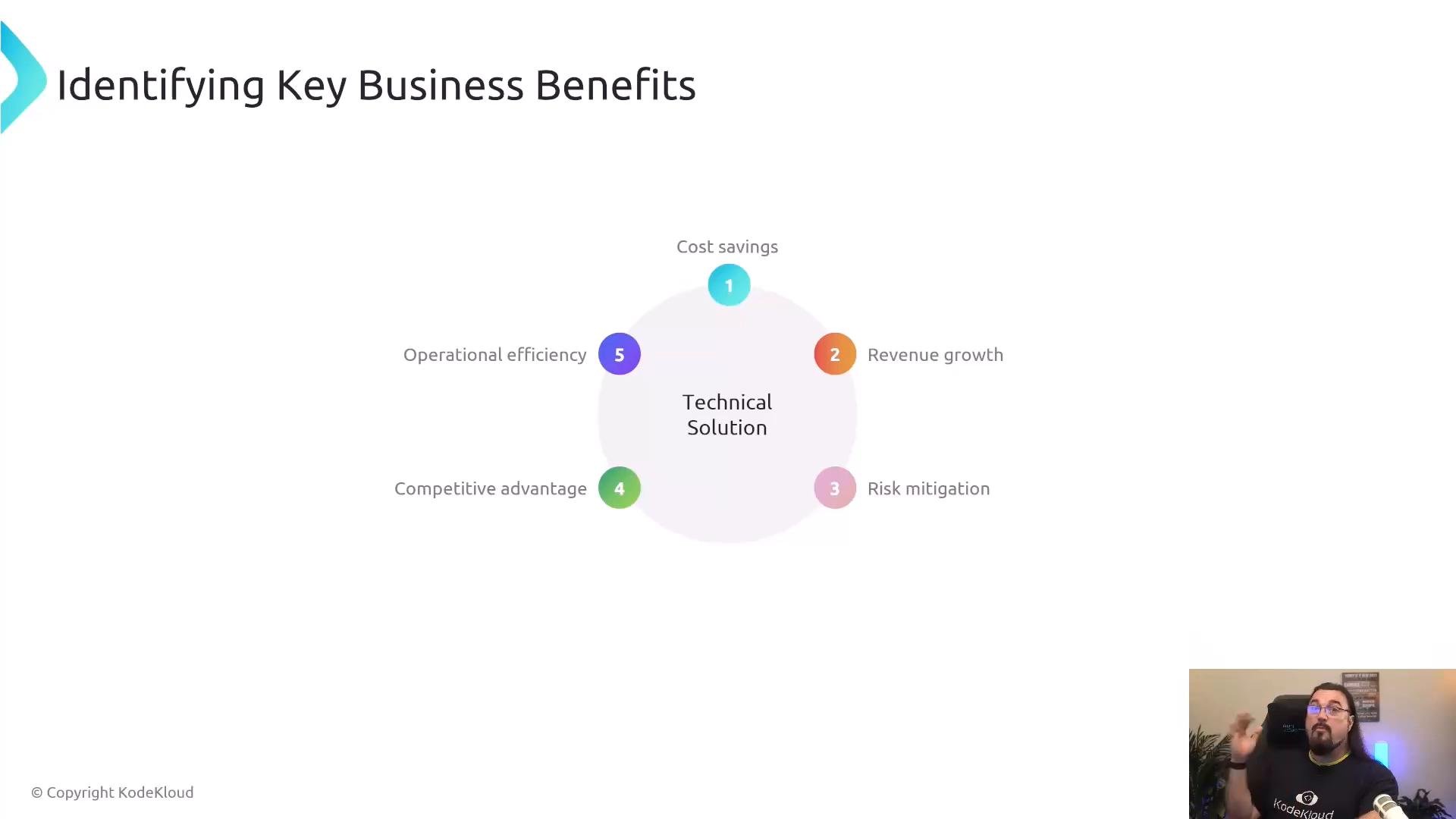
- Cost savings
- Revenue growth
- Risk mitigation (security, compliance, reputation)
- Competitive differentiation or market positioning
- Increased operational efficiency
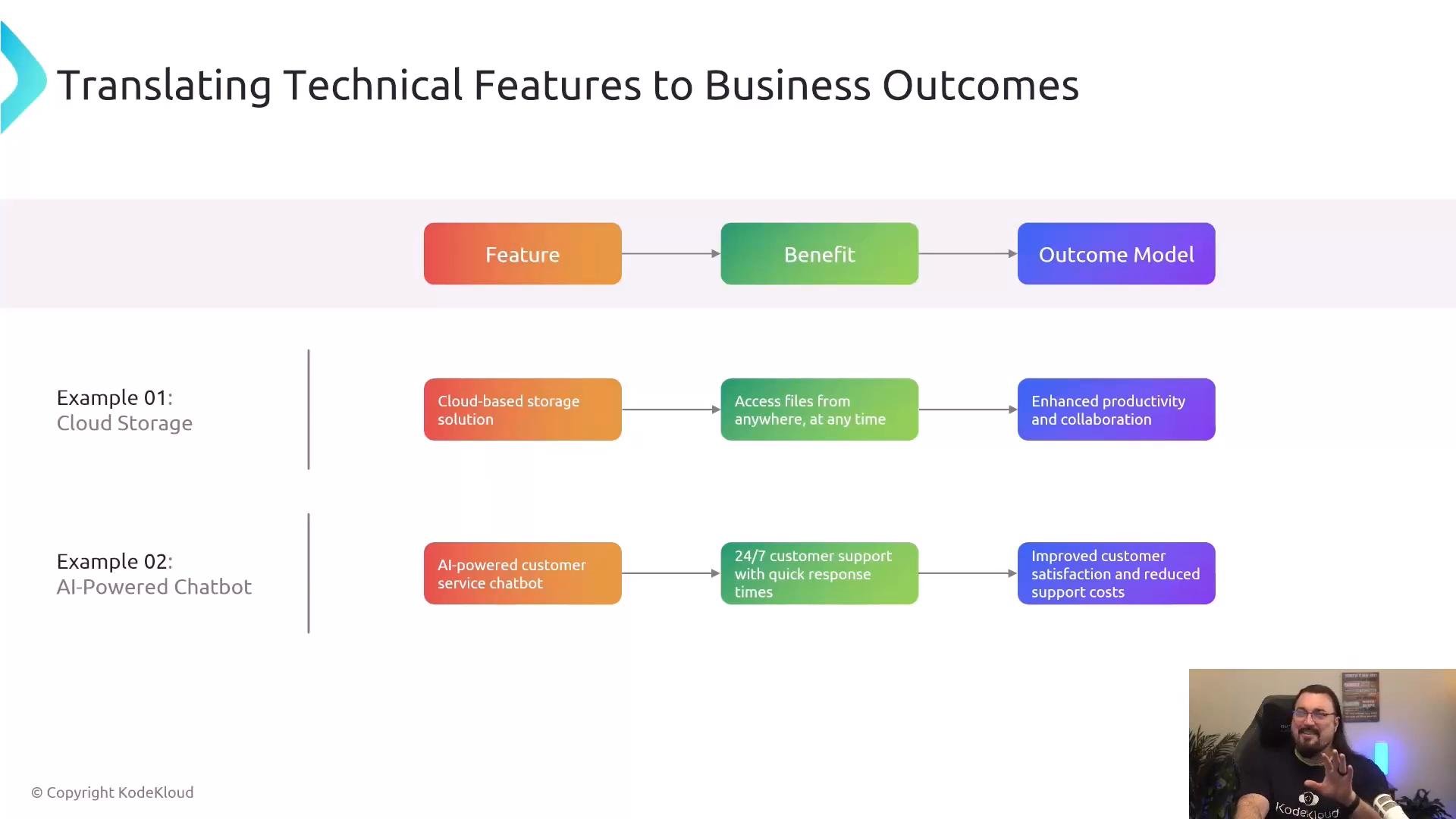
- Feature: Cloud-based storage — Benefit: Access files anywhere — Outcome: Improved productivity and better collaboration.
- Feature: AI-powered chatbot — Benefit: 24/7 quick responses — Outcome: Higher customer satisfaction and lower support costs.
- Feature: End-to-end data encryption — Benefit: Stronger data security — Outcome: Increased customer trust and easier support for regulatory compliance.
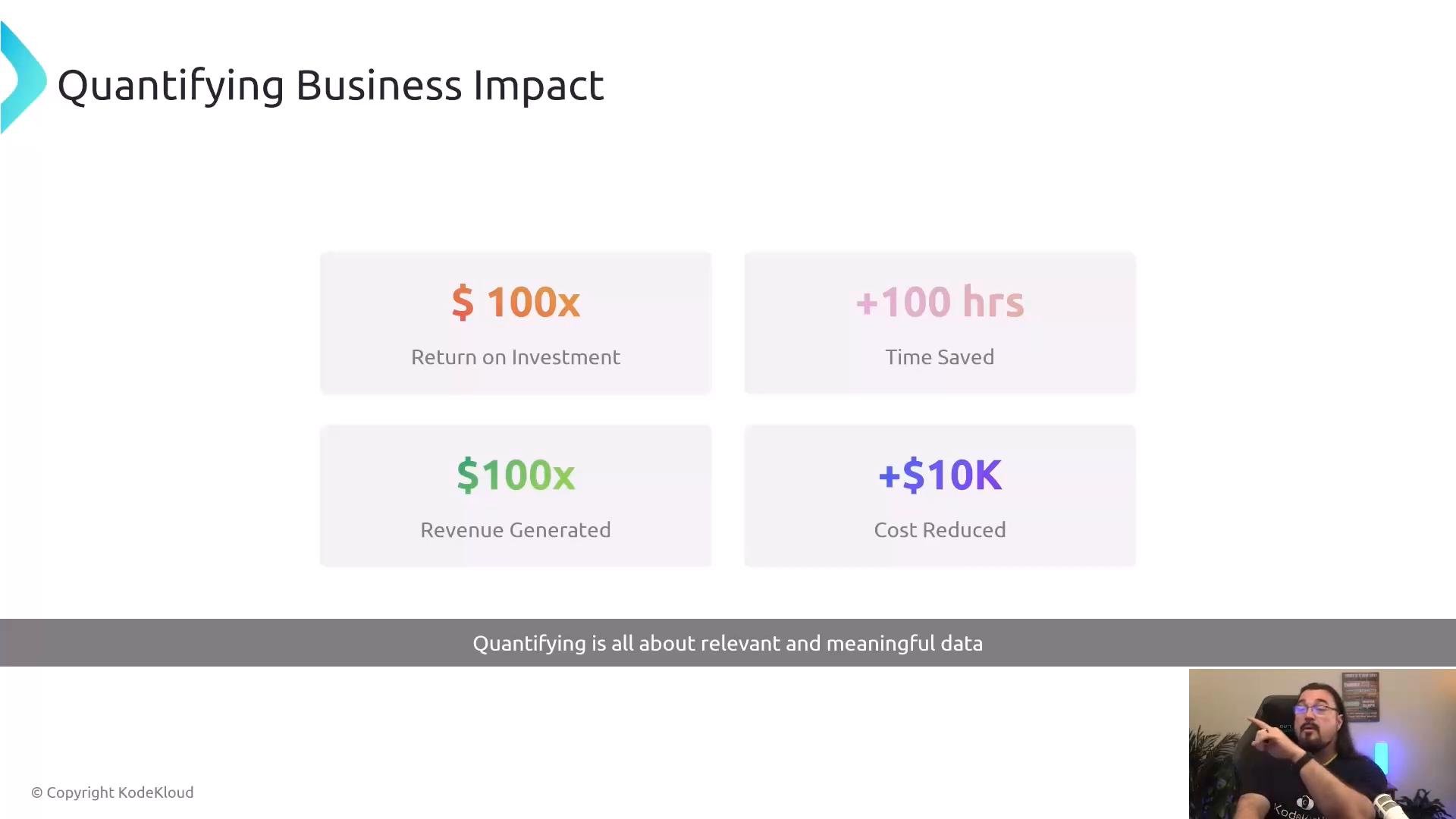
Quantifying business impact
Whenever possible, quantify impact with meaningful metrics: ROI, time saved, cost reductions, revenue impact, risk reduction, or customer satisfaction improvements. Use conservative, supportable estimates and show the assumptions and calculations so stakeholders can validate them.
When presenting numbers, be conservative and transparent. Provide the math, define assumptions, and be ready to explain how you arrived at your estimates.
- Start with the business problem (impact, pain, or opportunity).
- Introduce the solution briefly — focus on the difference it will make.
- Emphasize outcomes and benefits (use metrics and examples).
- Support claims with minimal technical details; place deep technical content in an appendix or offer a follow-up.
- Conclude with clear next steps and required decisions to realize the benefits.
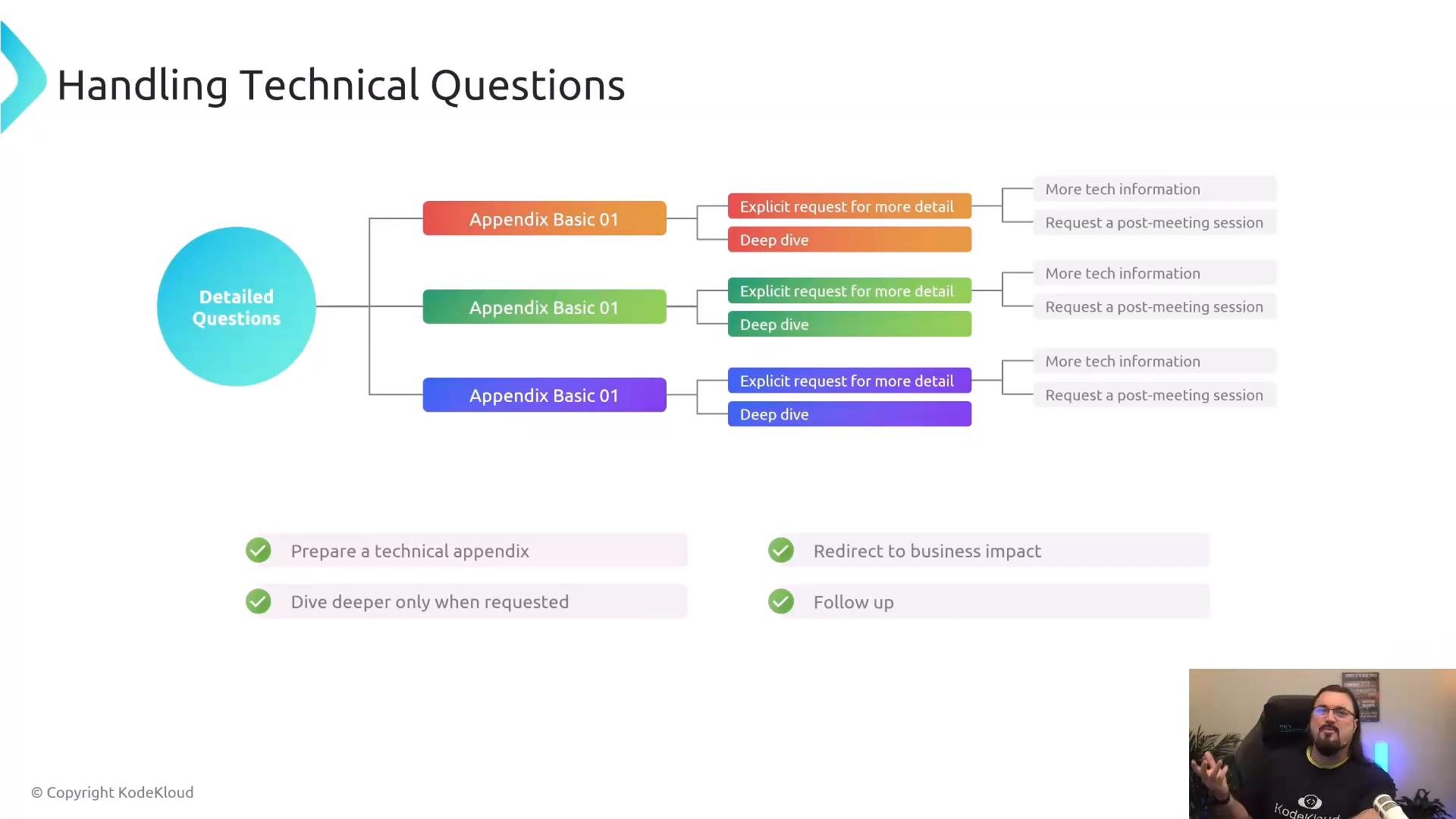
- Prepare a technical appendix (detailed slides or a separate document) for those wanting a deep dive.
- Redirect the question briefly to business impact and explain why the detail matters for outcomes.
- Offer a follow-up technical session or office hours for those who want more depth.
- Provide detailed information after the meeting if an immediate deep technical discussion would derail the session.
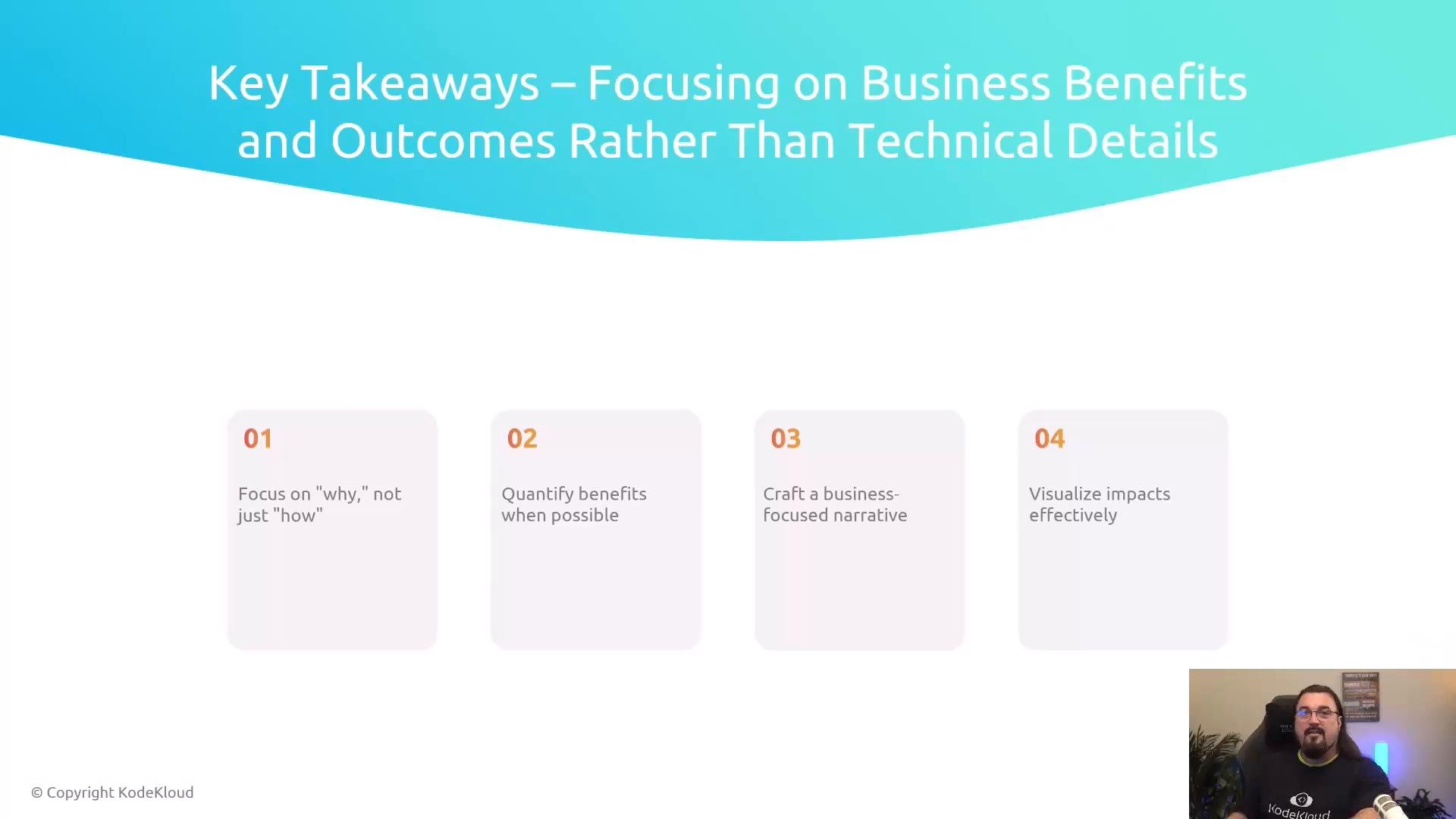
- Focus on “why” (business outcomes), not only “how” (technical details).
- Translate features into benefits and outcomes that stakeholders care about.
- Quantify impact when possible and be transparent about assumptions.
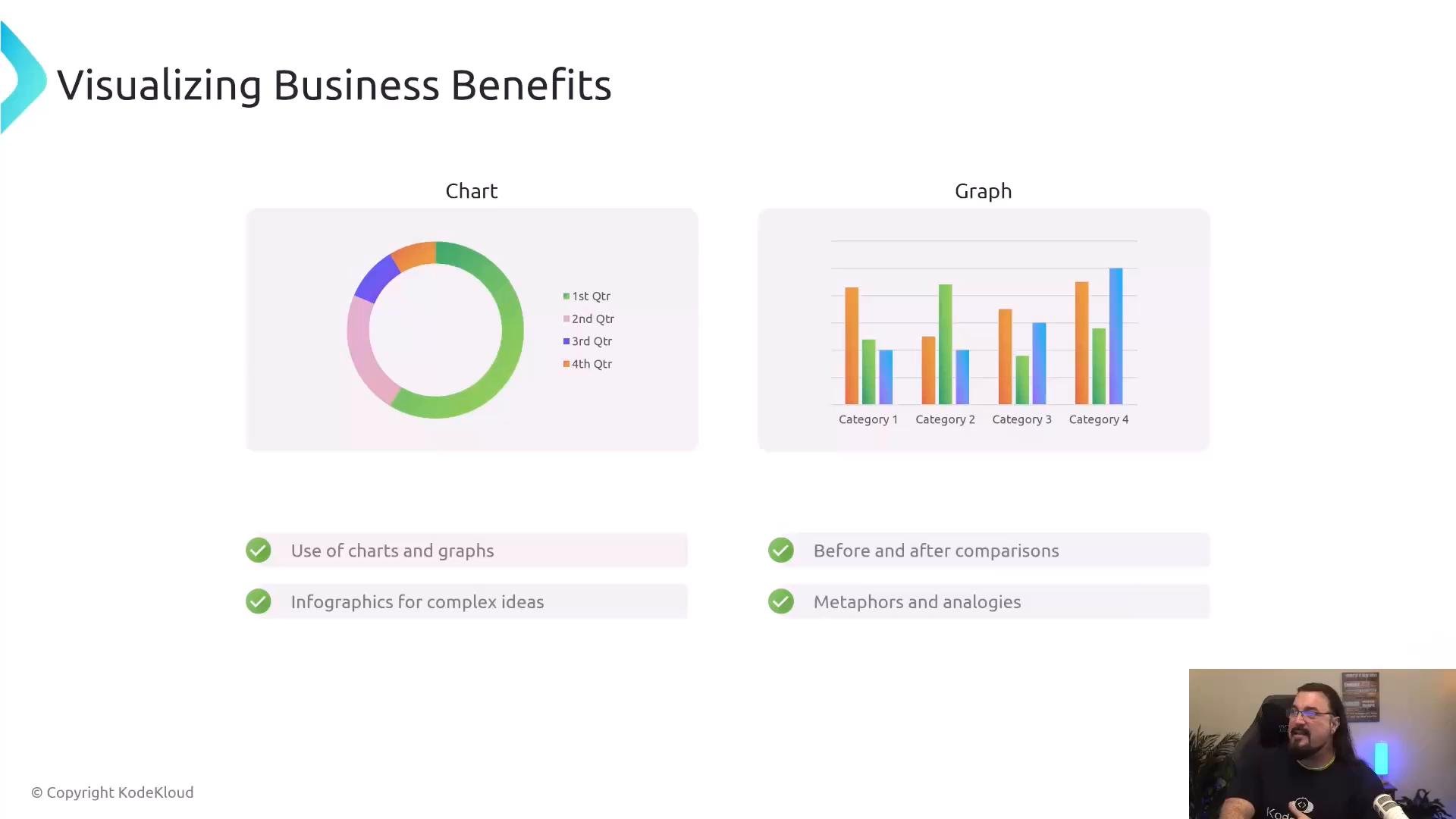
- Use visuals to make impact obvious and memorable.
- Prepare technical appendices and follow-up options for deeper questions.