

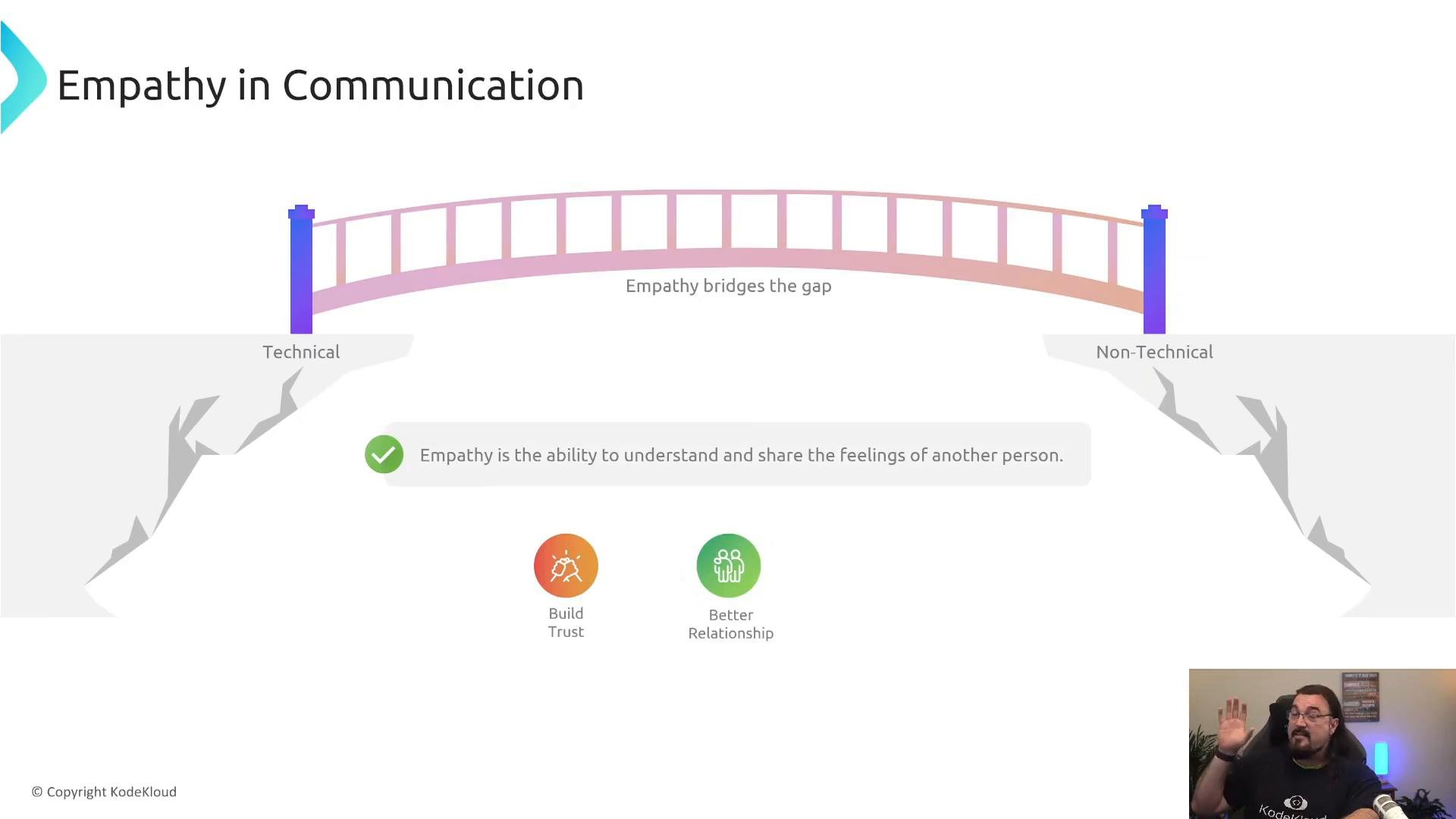
What is empathy and why it matters
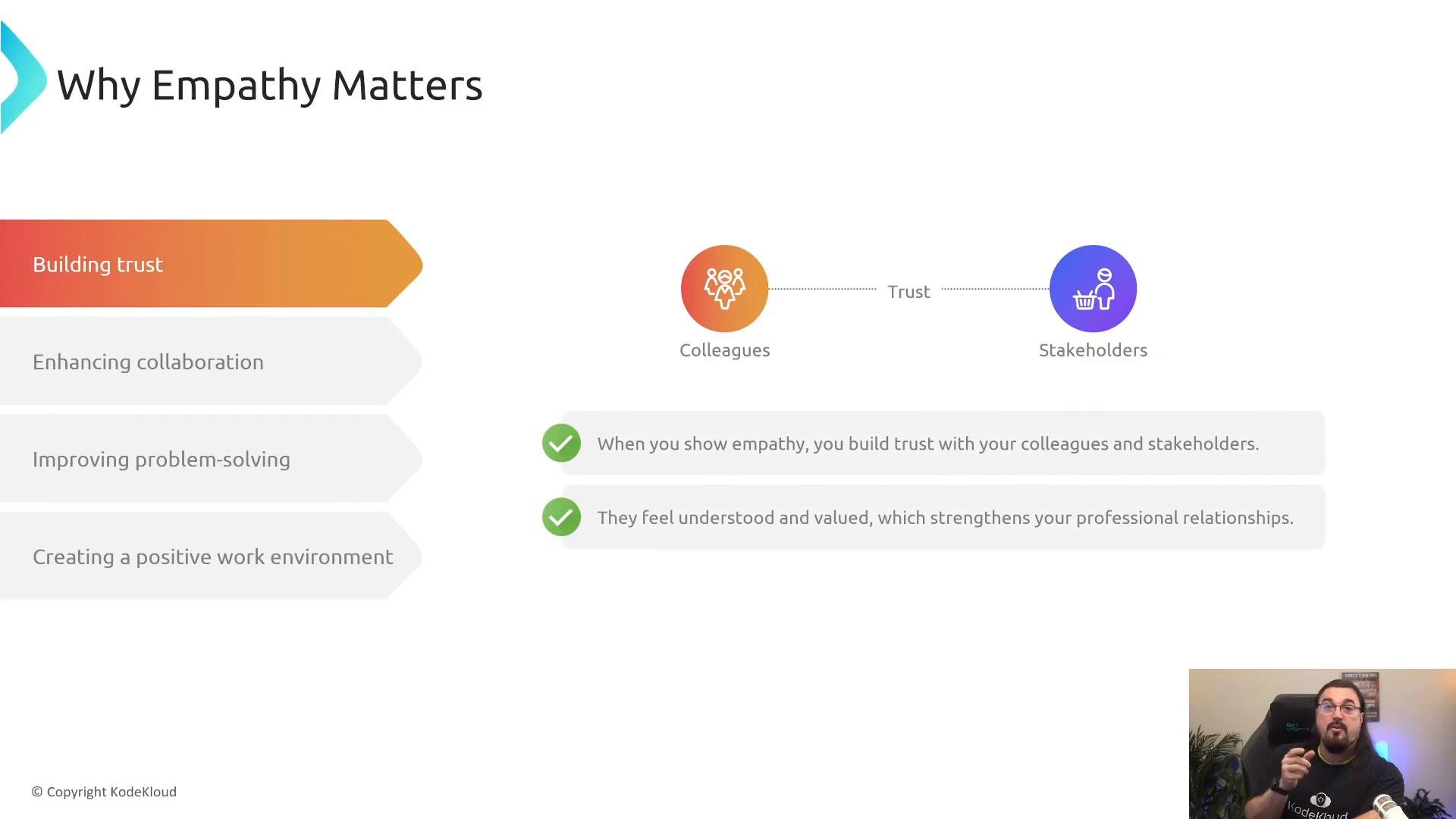
Empathy is the ability to understand and share another person’s feelings and perspective. In professional settings, practicing empathy builds trust, strengthens relationships, and enables better collaboration and decision-making. When you show empathy you:- Build trust with colleagues and stakeholders
- Improve teamwork and cross-functional collaboration
- Encourage diverse perspectives that improve problem solving
- Create a safer, more positive work environment that increases engagement and productivity
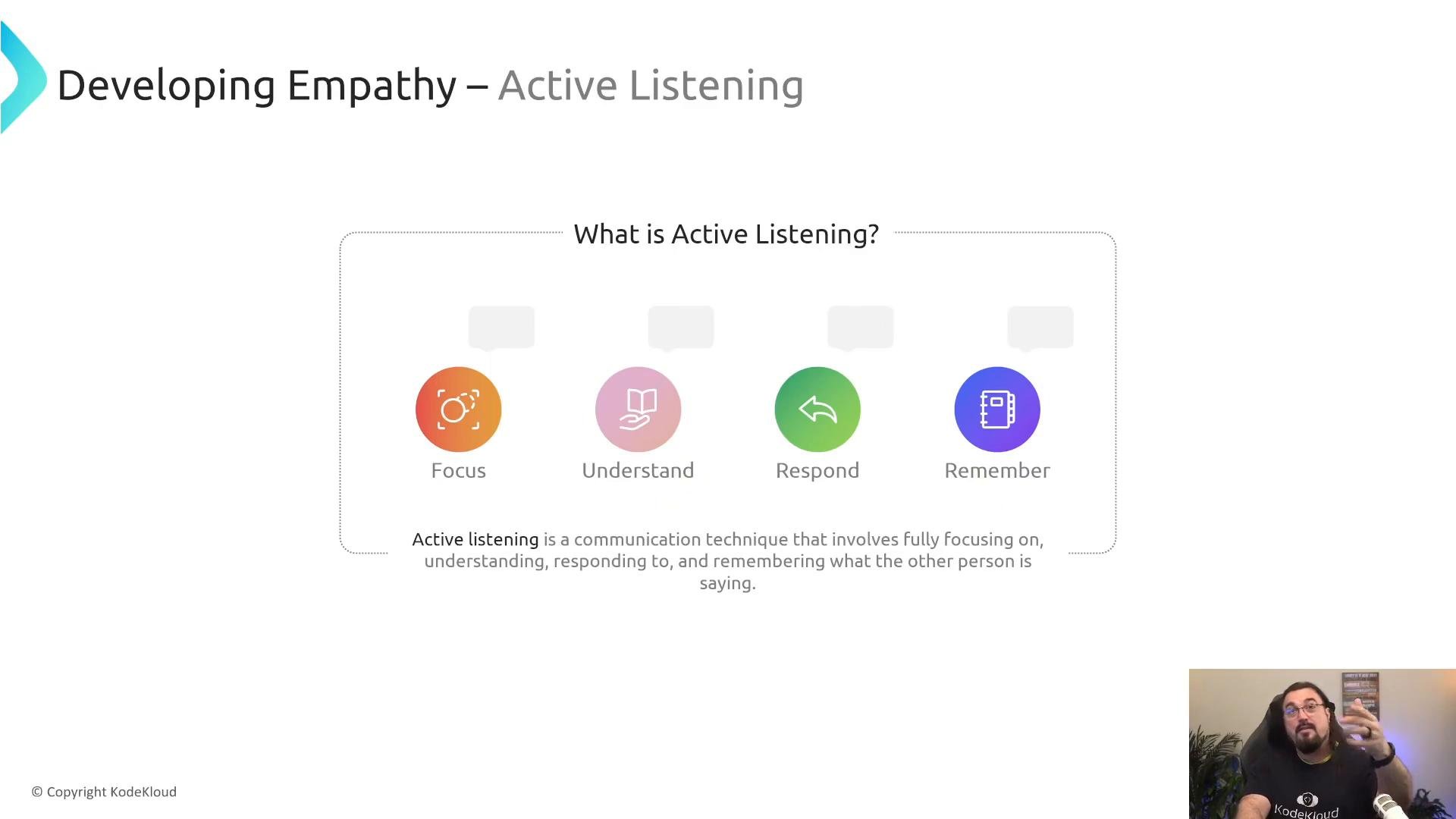
Active listening: definition and core actions
Active listening is a communication skill where you fully focus on, understand, respond to, and remember what the speaker says. It goes beyond hearing words — it signals engagement and understanding. The four core actions of active listening are:- Focus — give your full attention to the speaker
- Understand — reflect and clarify to ensure you grasp their meaning
- Respond — provide feedback that demonstrates comprehension
- Remember — retain key points and summarize them for confirmation
Putting active listening into practice
Use these practical behaviors while someone is speaking to show genuine attention and to improve mutual understanding:- Focus on the person: maintain natural eye contact ~60–70% of the time, nod occasionally, and avoid appearing distracted.
- Reflect and paraphrase: restate what you heard in your own words. Example: “So what I hear you saying is that this spreadsheet will be important for the next phase of development.”
- Clarify: ask targeted questions when something is unclear. Example: “When you say we’re not active in that area, do you mean we’ve never worked there or that it’s deprioritized?”
- Summarize: recap the speaker’s main points to confirm understanding: “To summarize, you want to use this as an infographic to categorize strategy.”
- Use nonverbal signals: facial expressions, posture, tone of voice, and small gestures like thumbs-up in remote meetings reinforce engagement.
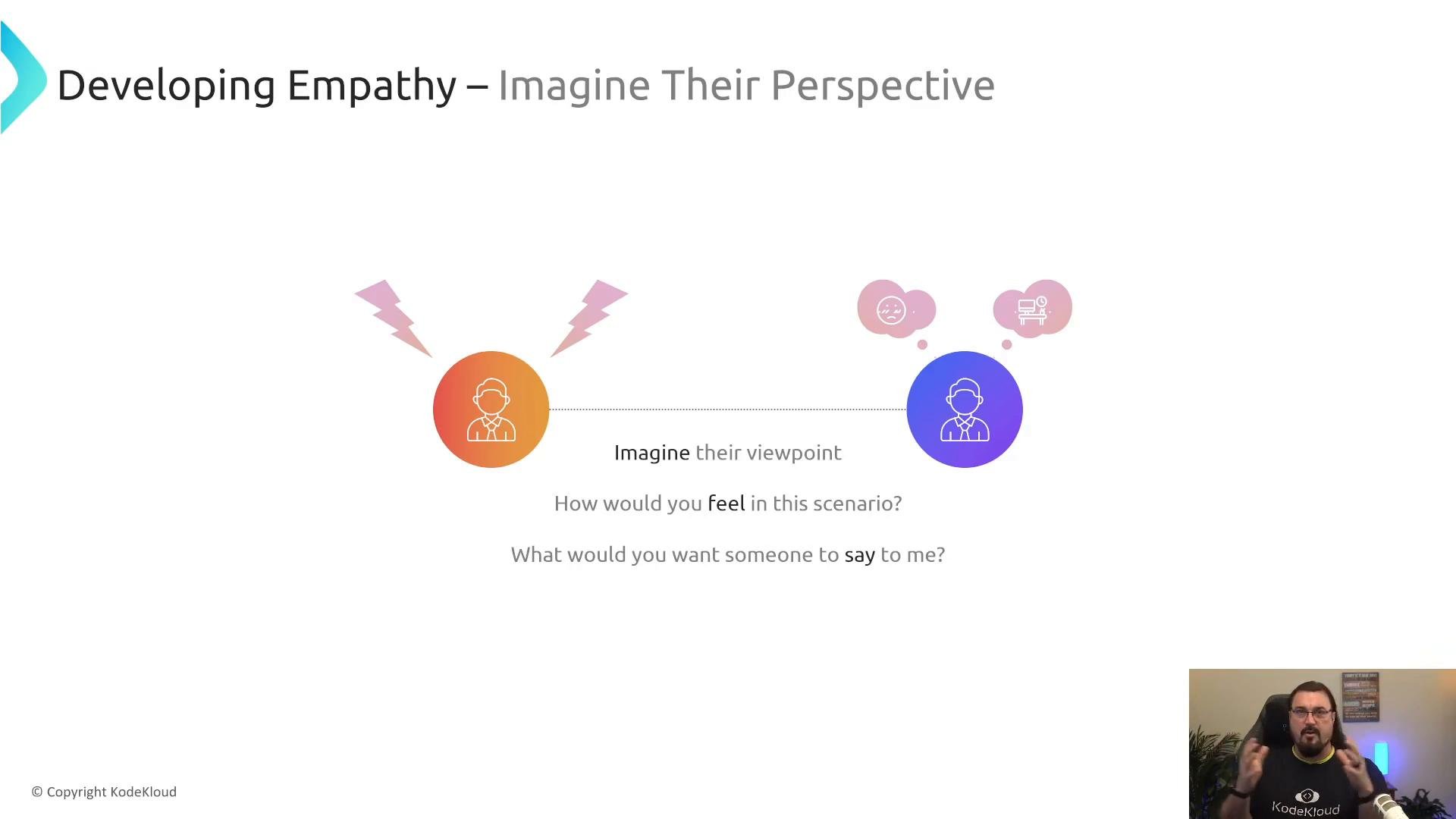
Put yourself in their shoes
Imagining the other person’s perspective helps you ask questions that align with their priorities. Before or during a conversation, consider:- Who is this person and what is their role?
- What outcomes matter most to them?
- How would I feel in their situation?
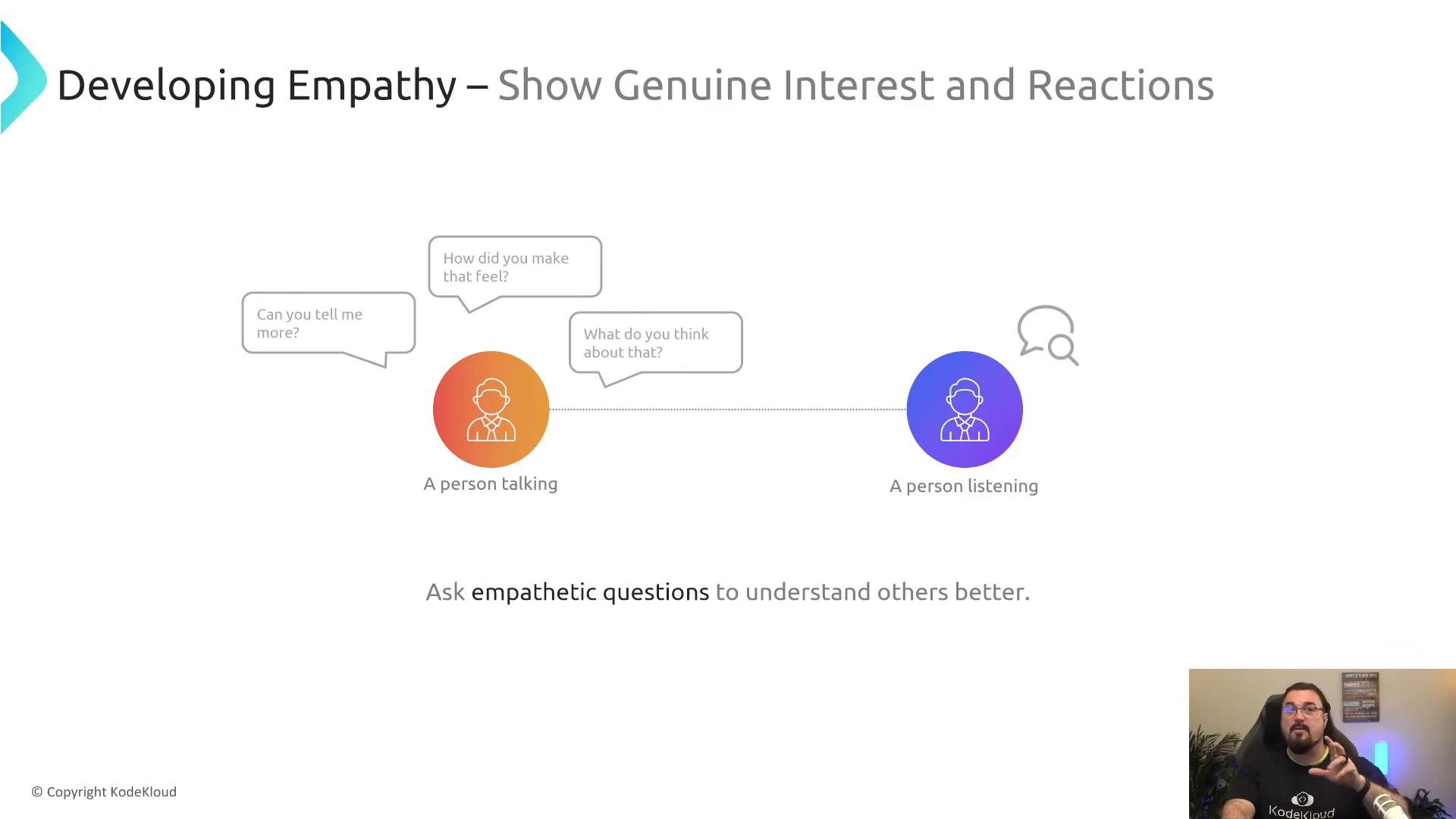
Be genuine
Only use empathetic techniques when you truly care about the conversation. If you are engaged, ask open-ended questions such as “Can you tell me more?” or “What do you think about that?” If you cannot engage authentically, it’s better to be honest or respectfully excuse yourself than to feign interest.Do not fake interest. If you cannot engage genuinely, be honest about it or excuse yourself rather than using empathetic techniques insincerely.
Where to apply empathy and active listening
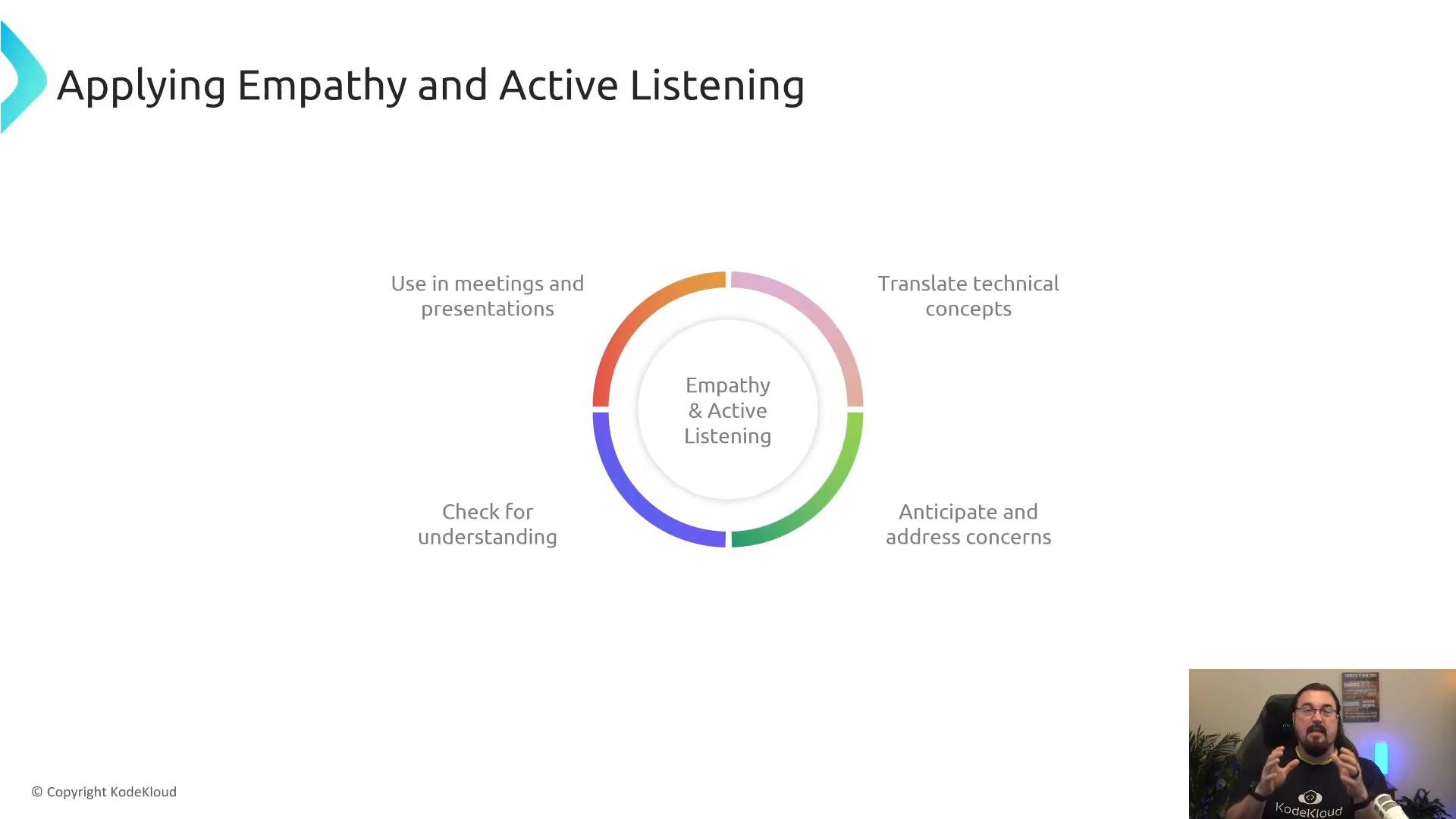
Apply these skills across everyday professional contexts:
Active engagement is a two-way process: express yourself clearly and receive information actively.
Be aware of bias
Biases can disrupt empathy. Watch for cultural bias, groupthink, interpersonal conflicts, and snap judgments. Practice patience, avoid assuming motives, and solicit feedback frequently. If you have unresolved conflict with someone, address it privately and respectfully rather than letting it undermine listening. Judgment and dismissiveness block empathy. If you catch yourself thinking someone is “stupid” or “wrong,” acknowledge that reaction and intentionally refocus on understanding their viewpoint.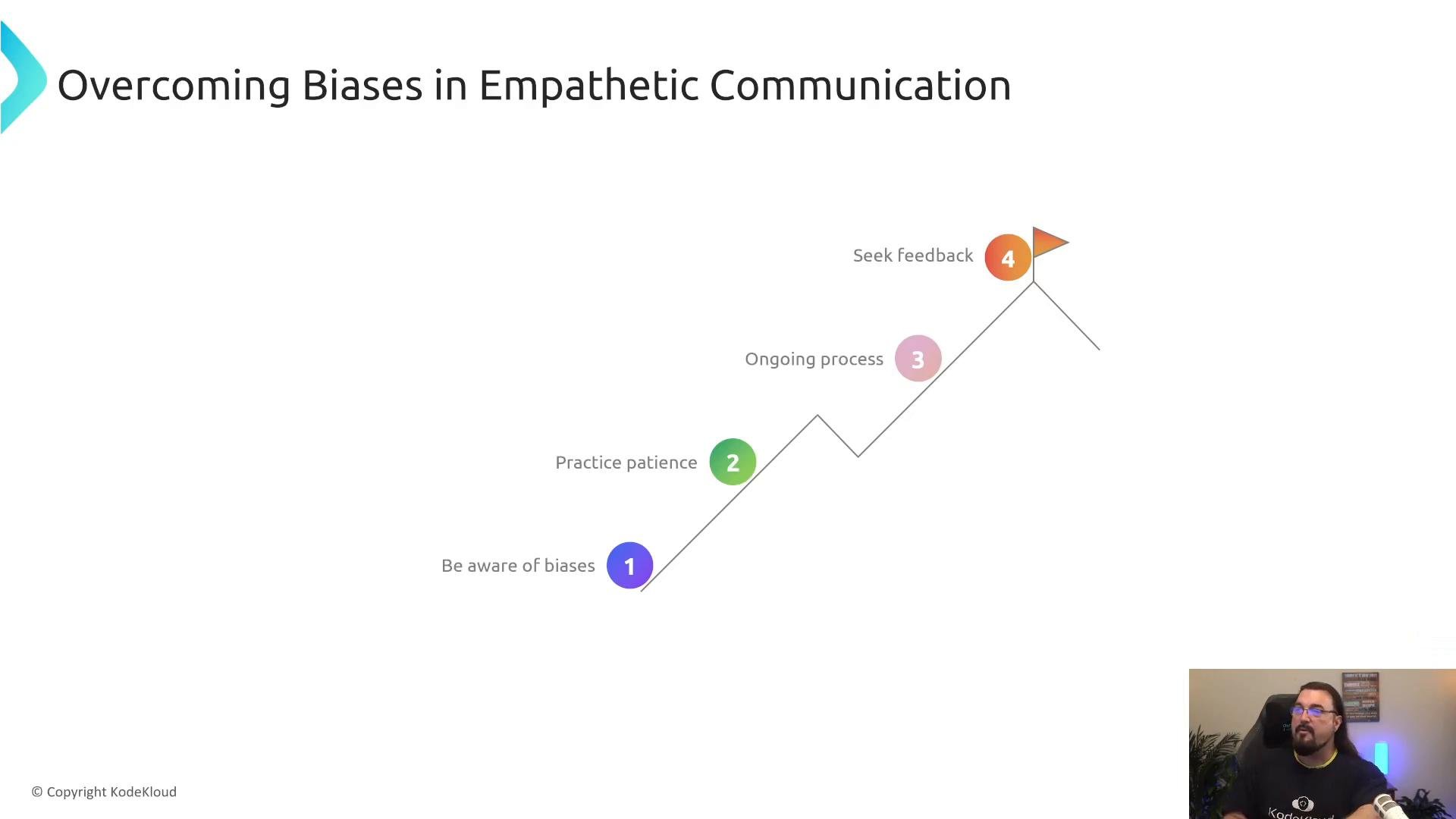
Quick checklist: Practice empathy and active listening
- Reflect and paraphrase what you hear
- Ask open-ended, clarifying questions
- Use nonverbal signals to show engagement
- Imagine the other person’s mindset and priorities
- Listen to understand, not to respond
- Nonviolent Communication — principles for empathetic dialogue
- Active Listening Techniques (MindTools) — practical listening strategies
- [How to Win Friends and Influence People](https://www.dale Carnegie.com/) — classic resource on interpersonal influence