

- Maintaining composure preserves credibility, reduces escalation, and enables problem-solving.
- These skills connect to emotional intelligence, active listening, and conflict management—skills valued across technical and non‑technical roles.
- If you want further reading, see: Emotional intelligence (Wikipedia) and Active listening (Wikipedia).
- Recognize both personal and common triggers (words, situations, or actions that provoke strong reactions).
- Watch for physiological cues: shallow breathing, sighing, flushed face, fidgeting, or withdrawal—these are early indicators of stress.
- Reflect on cognitive biases and personality tendencies that shape reactions (for example: fear of conflict, tendency to shut down, or defensiveness).
- Build self-awareness and practice emotional intelligence so you can anticipate and adjust to triggers in real time.
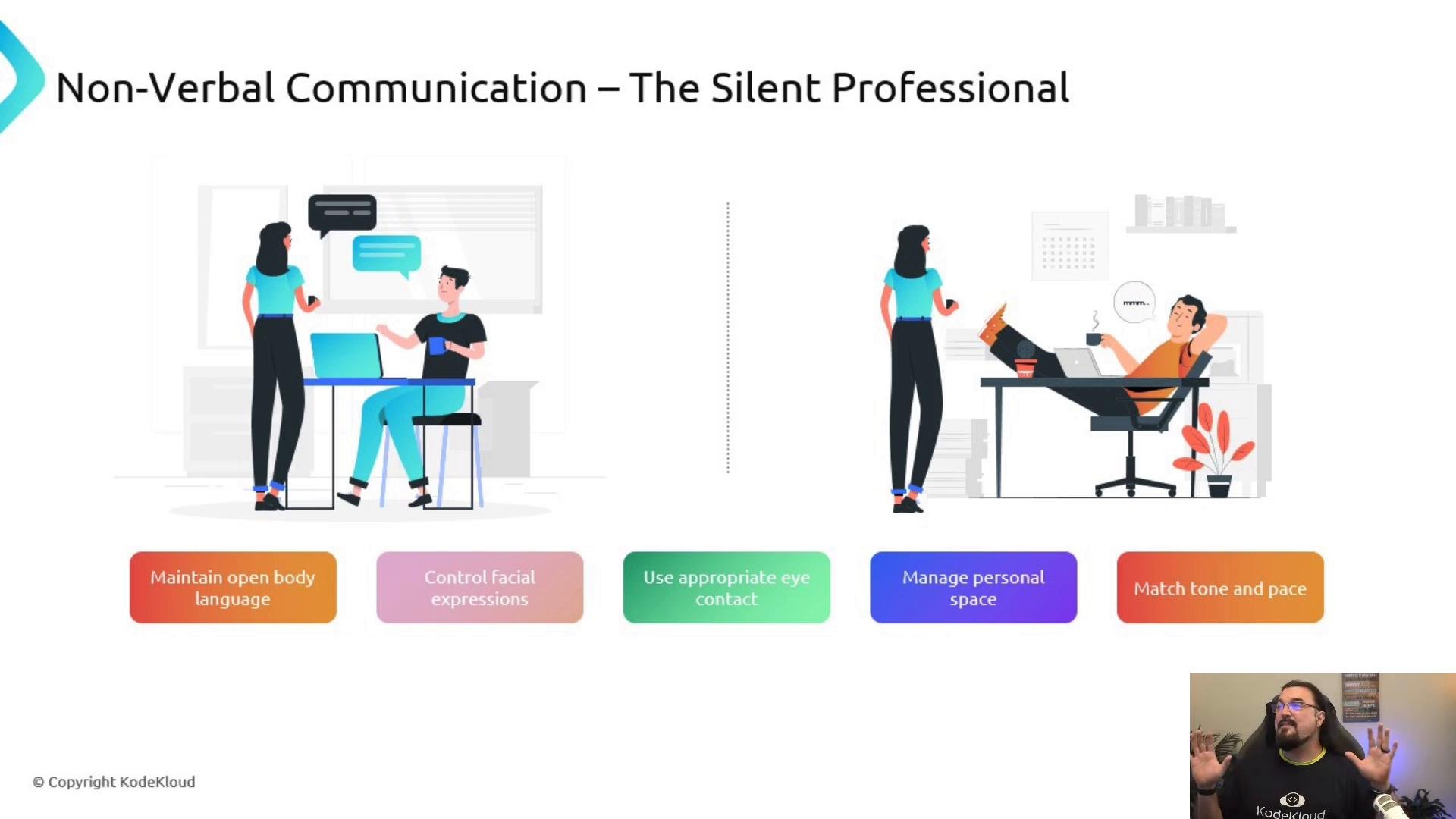
- Short, repeatable practices help you reset when tension rises.
- Controlled breathing: try patterns like 4-4-4-4 (inhale 4s, hold 4s, exhale 4s, hold 4s) or inhale 4s / exhale 5s to slow heart rate and lower stress.
- Mindfulness and grounding: name three things you see, feel, or hear to re-center attention.
- Cognitive reframing: reinterpret a statement as a data point rather than a personal attack.
- Positive self-talk: replace catastrophizing with factual, calming statements.
- Time-outs: request a short break when you need to recover composure.
If you sense your emotions escalating, a short, intentional break (even a few deep breaths outside the room or a two-minute pause) is often more effective than trying to push through while reactive.
Nonverbal communication
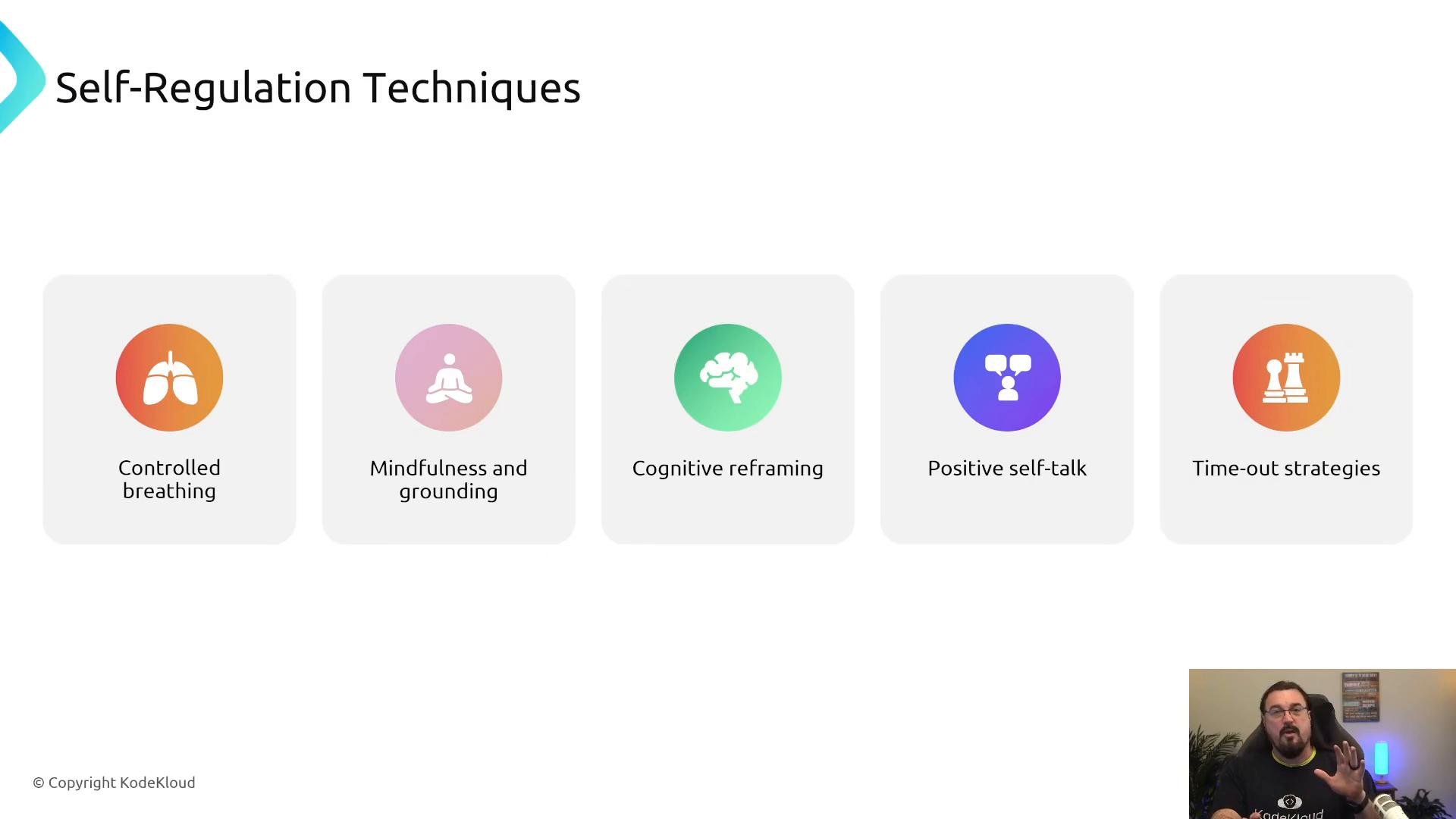
- Nonverbal cues often communicate more than words. Prioritize:
- Open body language to show engagement and approachability.
- Appropriate eye contact—adjust for cultural norms.
- Respecting personal space; avoid gestures that feel invasive.
- A steady, calm vocal tone and moderate pace to de-escalate agitation.
- Interpret posture and facial expressions in context. For example, a casual posture could mean relaxation, confidence, or disengagement depending on the setting and culture.
- Maintain a steady, calm voice when others grow agitated.
- Use reflective language and “I” statements to lower defensiveness:
- Reflective phrases: “I hear you,” “It sounds like you’re concerned about X,” “It seems like you’re upset.”
- Label emotions without defining identity: “It seems like you’re frustrated” instead of “You are frustrated.”
- Redirect toward problem-solving: “Can we focus on the immediate issue so I can address this after the meeting?” or “Would a five‑minute break help us regroup?”
- Keep the conversation solution-oriented—redirecting emotion to facts and next steps helps preserve professionalism.
LEAP technique
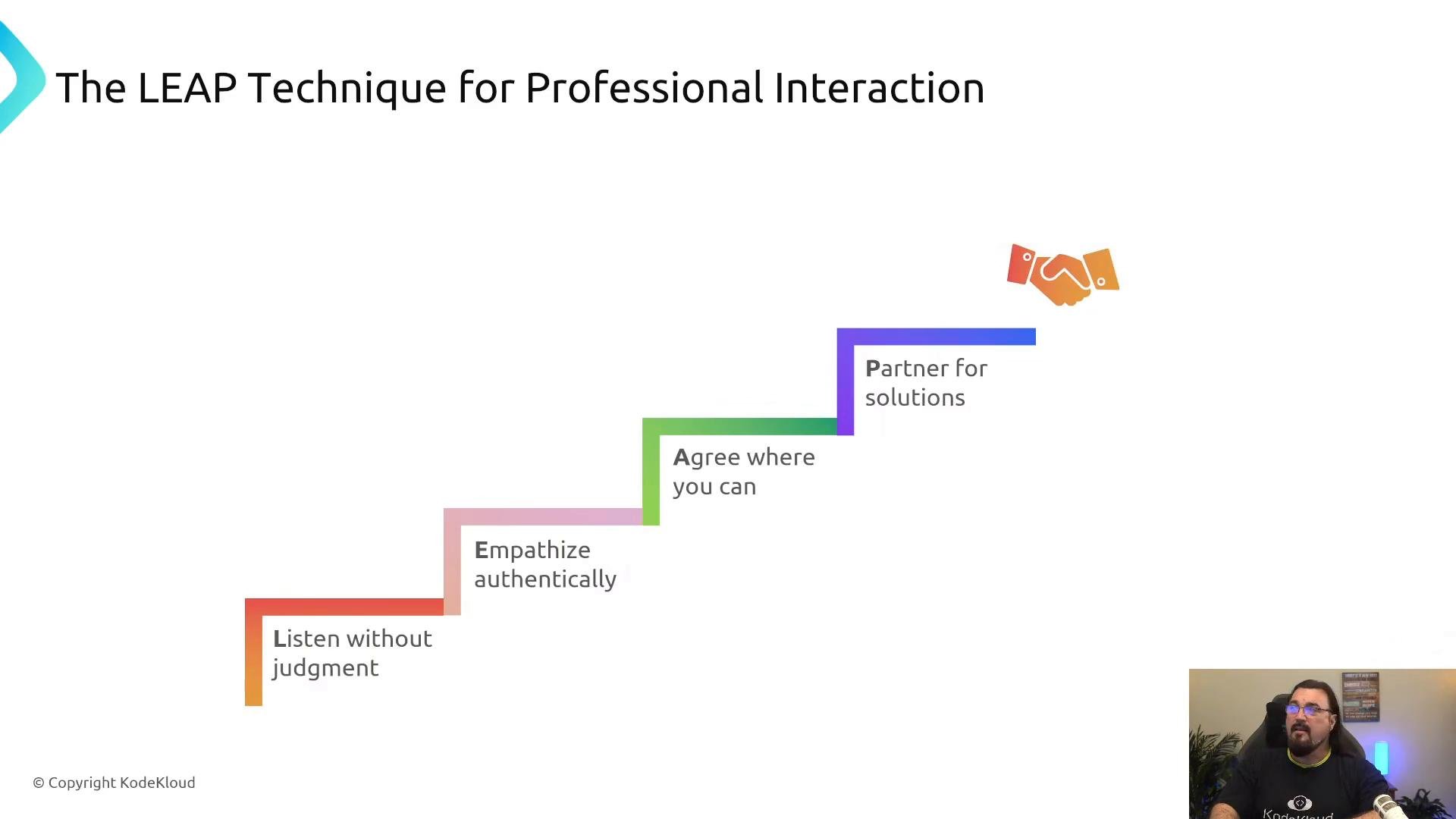
- LEAP is a simple, memorable framework to restore collaboration and reduce defensiveness:
- Listen without judgment.
- Empathize authentically.
- Agree where you can—find common ground.
- Partner for solutions—collaborate on next steps.
- Use LEAP to shift the dynamic from conflict to problem‑solving.
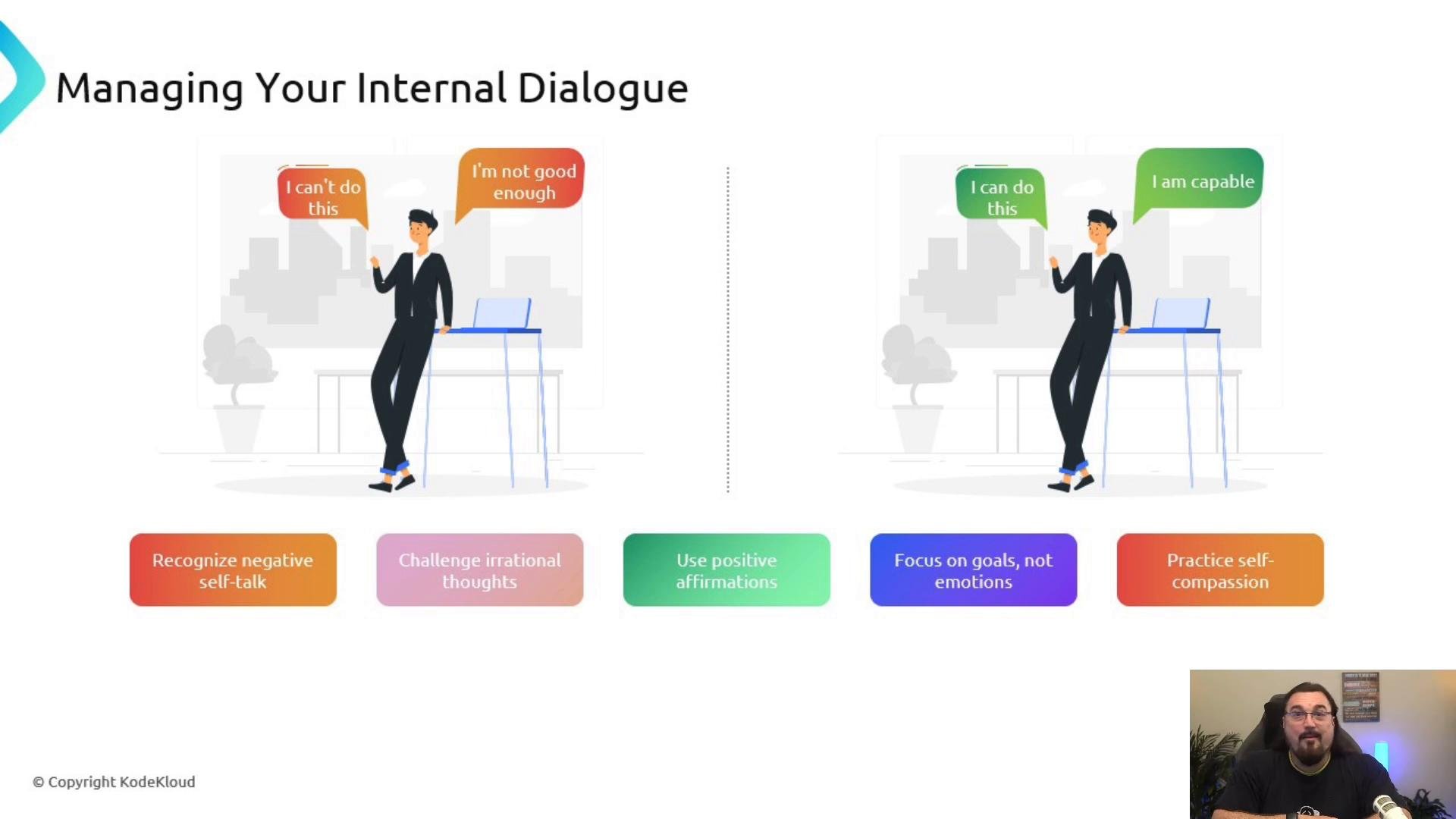
- Notice the “voices” you carry—internal self-talk can stabilize or undermine you.
- Common unhelpful patterns: catastrophizing, all-or-nothing thinking, and taking criticism personally.
- Steps to counter negative self-talk:
- Recognize and name the thought.
- Test the thought with evidence: “What is the data for/against this belief?”
- Replace it with a short, factual affirmation (e.g., “I can handle this; I’ve done this before”).
- Refocus on the next action or goal instead of dwelling on emotion.
- Practice self-compassion after difficult conversations—treat yourself as you would a colleague who made an honest mistake.
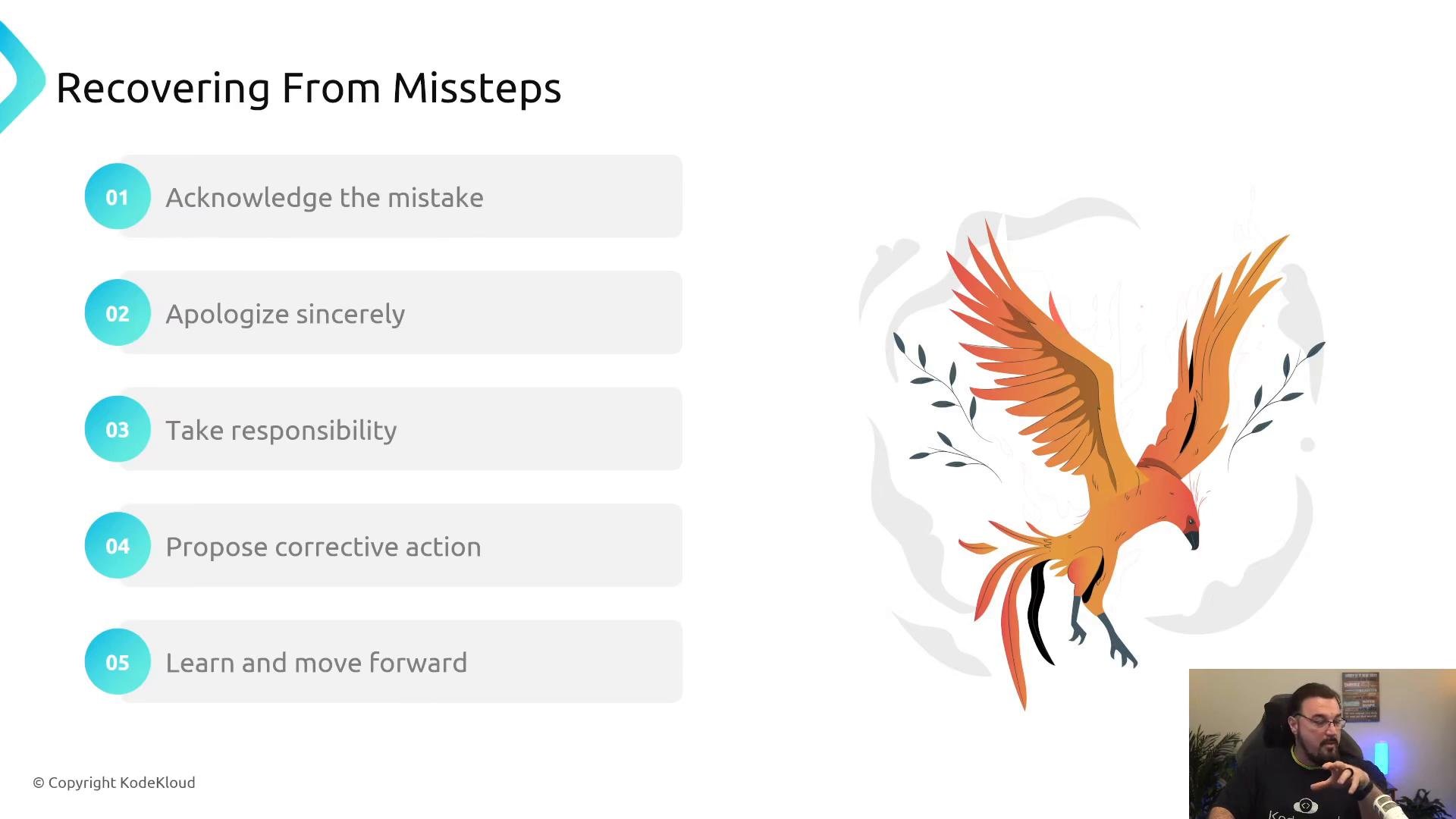
- Everyone makes mistakes. A clear recovery sequence preserves trust and professionalism:
- Acknowledge the mistake promptly.
- Apologize sincerely where appropriate.
- Take responsibility—avoid excuses.
- Propose corrective actions and timelines.
- Learn from the experience and move forward.
- Follow-through often matters more than the apology. Demonstrate what you’ll change to prevent recurrence.
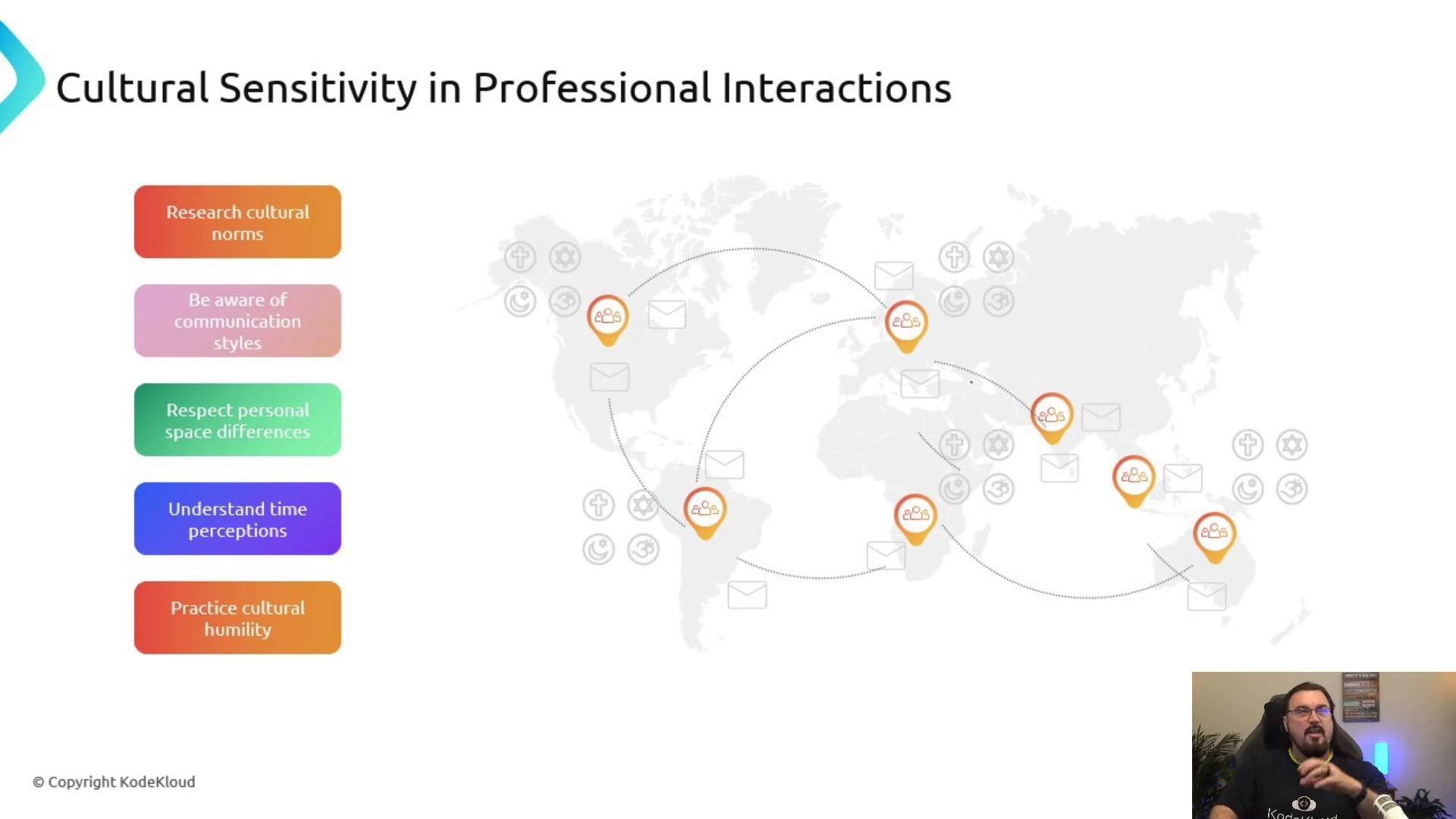
- Norms for body language, personal space, eye contact, communication style, and time vary by culture and organization.
- Practice cultural humility rather than assuming expertise:
- Ask respectful, open questions when unsure.
- Be open to feedback and correct your approach.
- Adapt your behavior to the norms of the people you’re interacting with.
- Aim to create psychological safety so diverse colleagues feel respected and able to speak up.
- Recognize and manage your triggers; observe others’ physiological and behavioral cues.
- Use self-regulation (breathing, grounding, reframing, time-outs) to prevent escalation.
- Control nonverbal signals and match tone/pace to de-escalate situations.
- Apply verbal de-escalation: reflective listening, emotion labeling, and redirecting to solutions.
- Use LEAP (Listen, Empathize, Agree, Partner) to restore collaboration quickly.
- Monitor and shape your internal dialogue with compassion and evidence-based reframing.
- Recover from mistakes quickly with responsibility and corrective action.
- Be culturally flexible, open to feedback, and practice humility.