

- Conflicting priorities (speed vs. stability, cost vs. quality)
- Fast-changing technical landscapes
- Short decision windows and limited access to leaders
- Coordination overhead across large groups
Identifying stakeholders — practical techniques
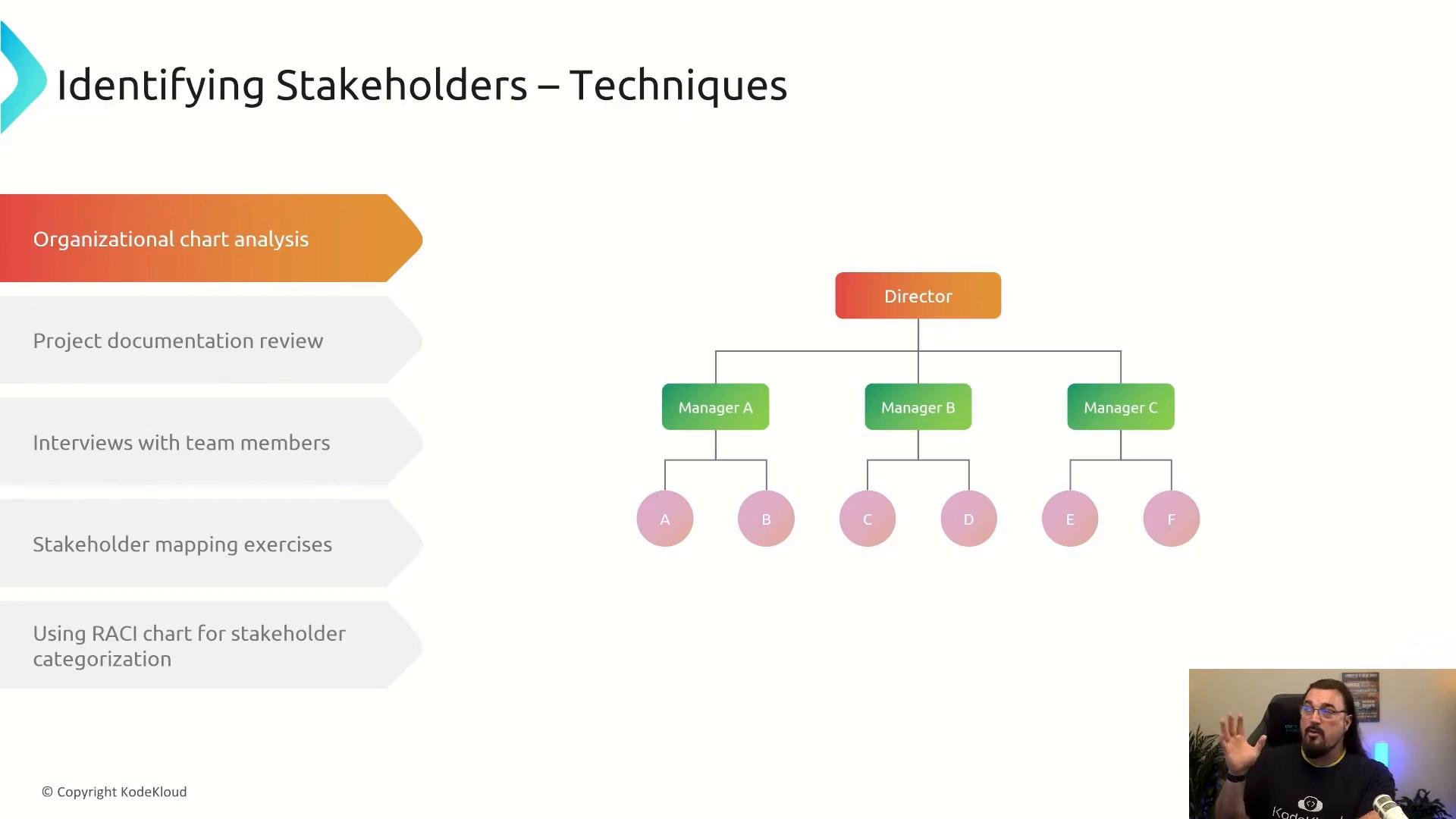
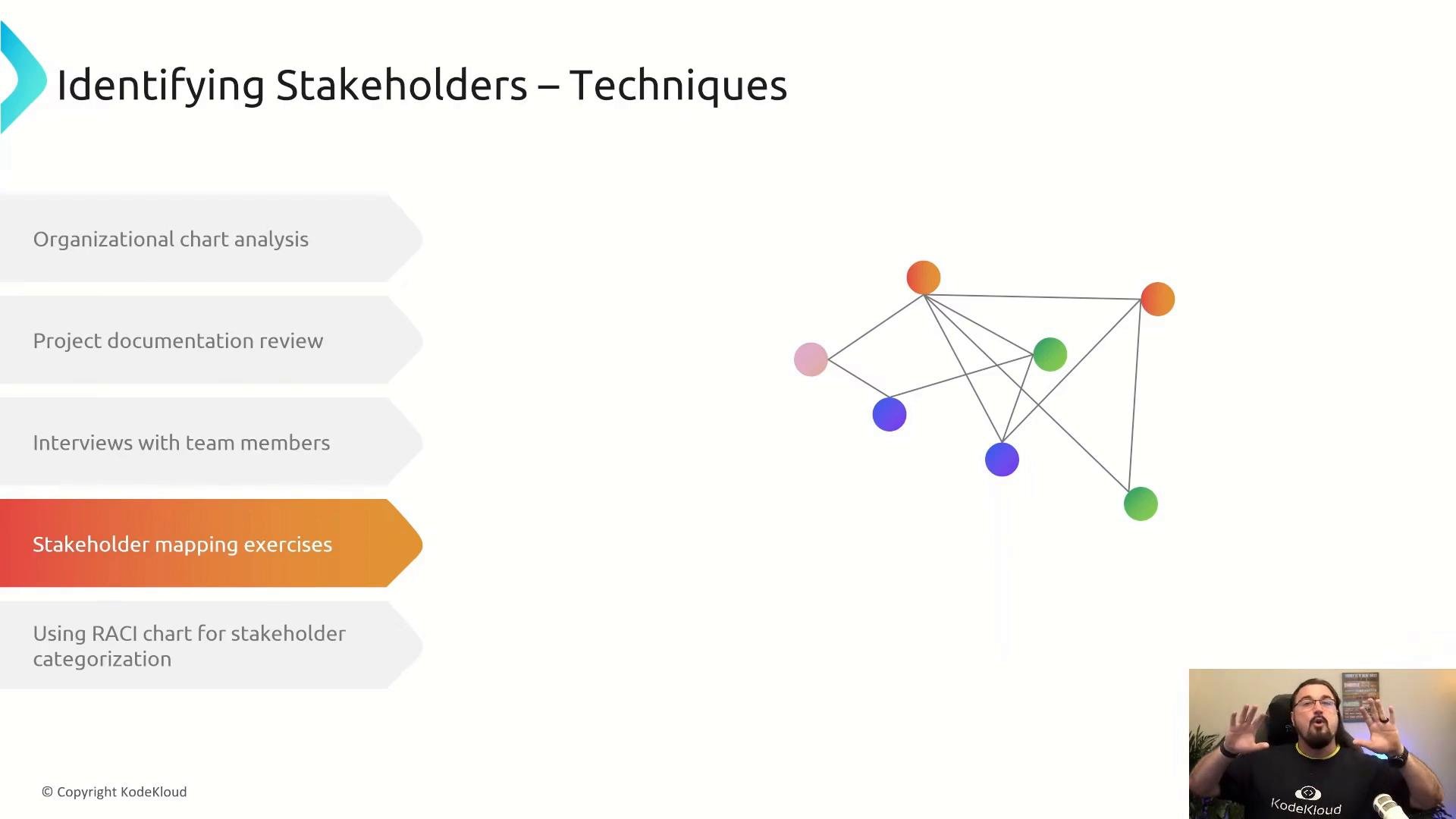
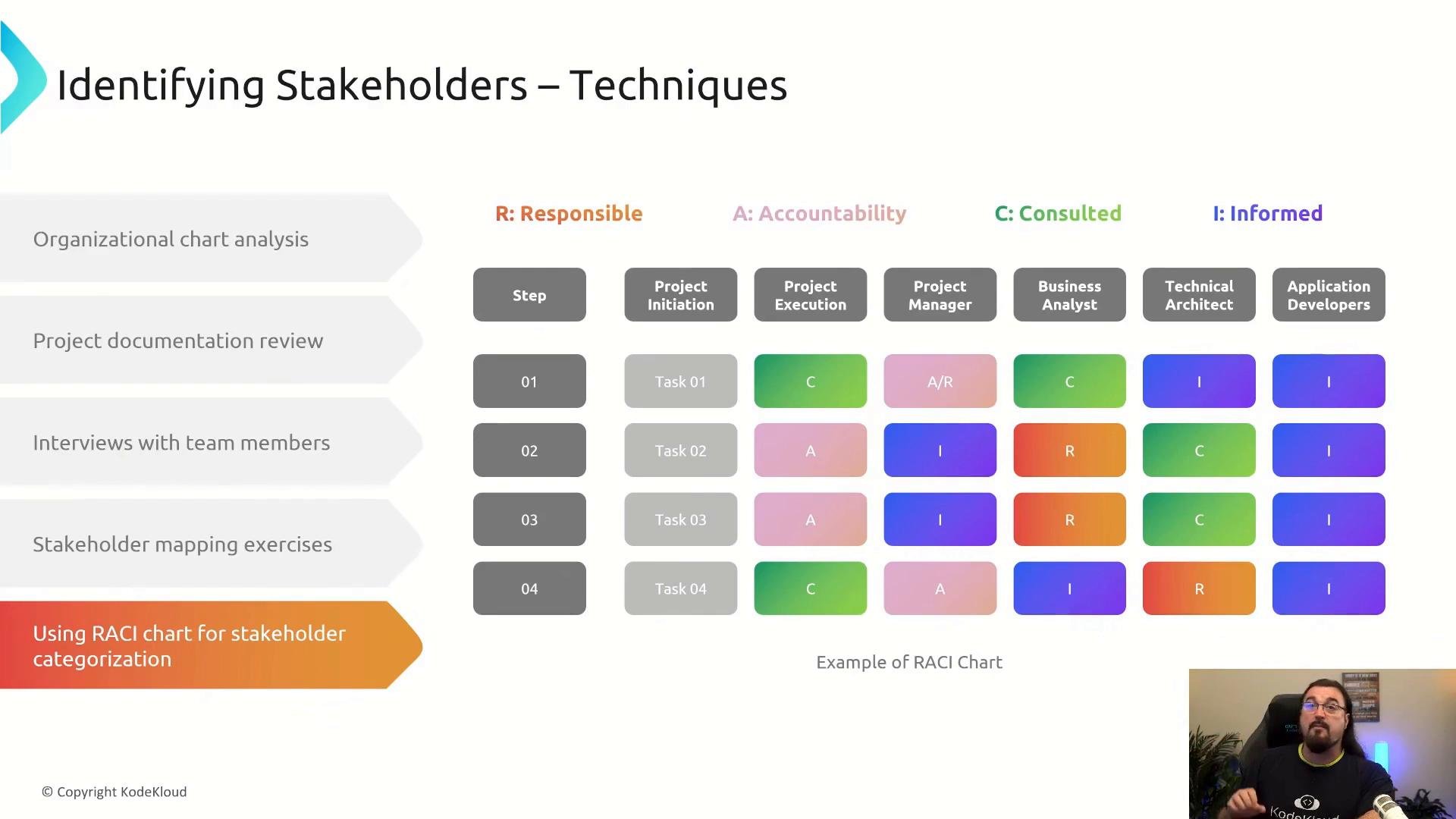
Start by asking: who will be directly or indirectly affected by this change? Useful techniques include org‑chart analysis, project-document reviews, interviews, and stakeholder mapping exercises.
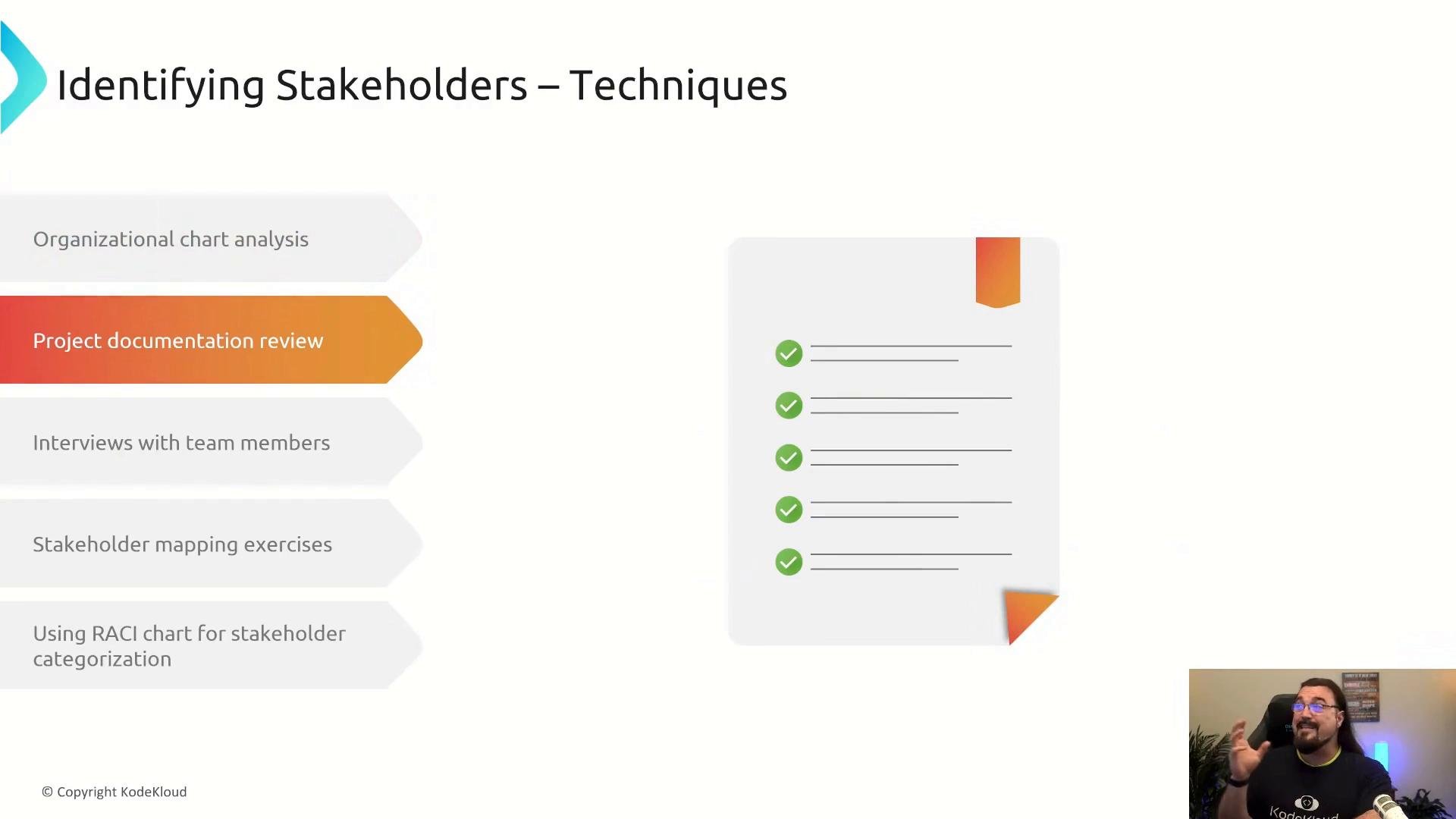
- Review project documentation and contracts to locate named stakeholders.
- Use org charts to identify decision-makers and functional owners.
- Conduct short interviews with team leads to uncover hidden stakeholders.
- Create a visual stakeholder map to show relationships and impact.
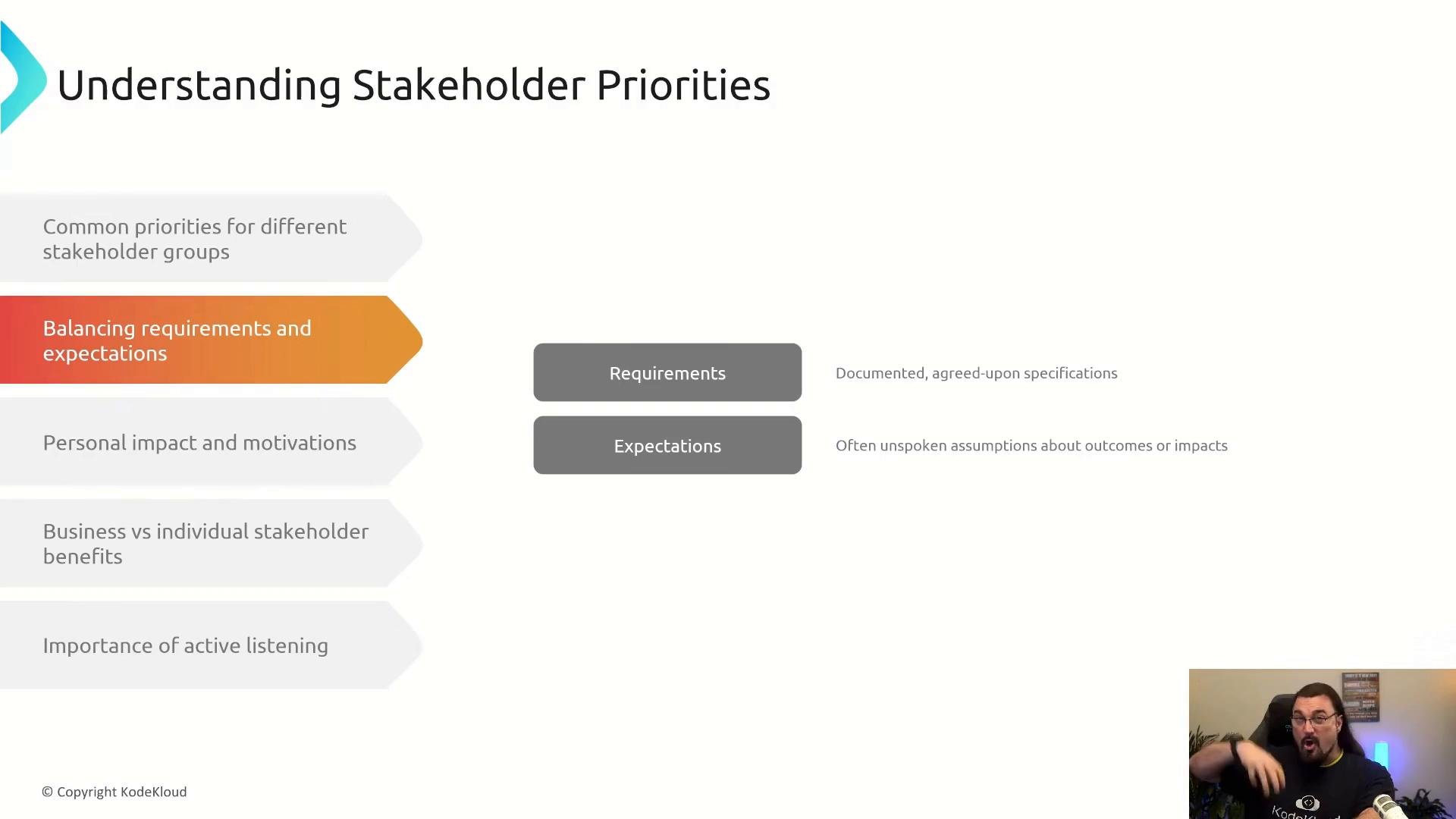
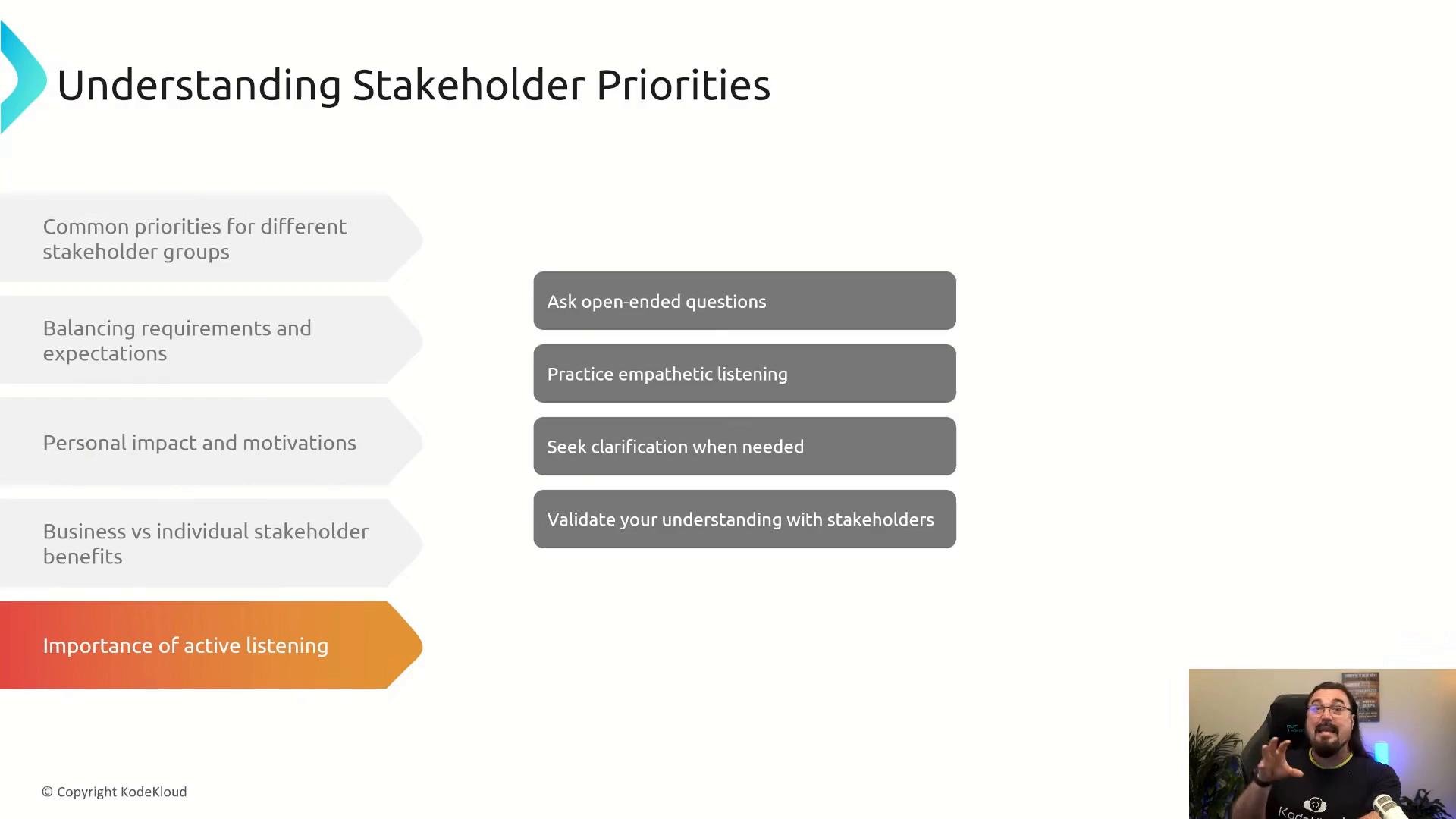
- Executives: ROI, market differentiation, and risk control
- Project managers: delivery dates, scope, and measurable KPIs
- Developers: clean code, predictable builds, and efficient tooling
- Operations: reliability, monitoring, and safe rollbacks
- QA: testability, coverage, and UX consistency
- Security: threat mitigation, auditability, and compliance
- Customers: usability, performance, and support SLAs
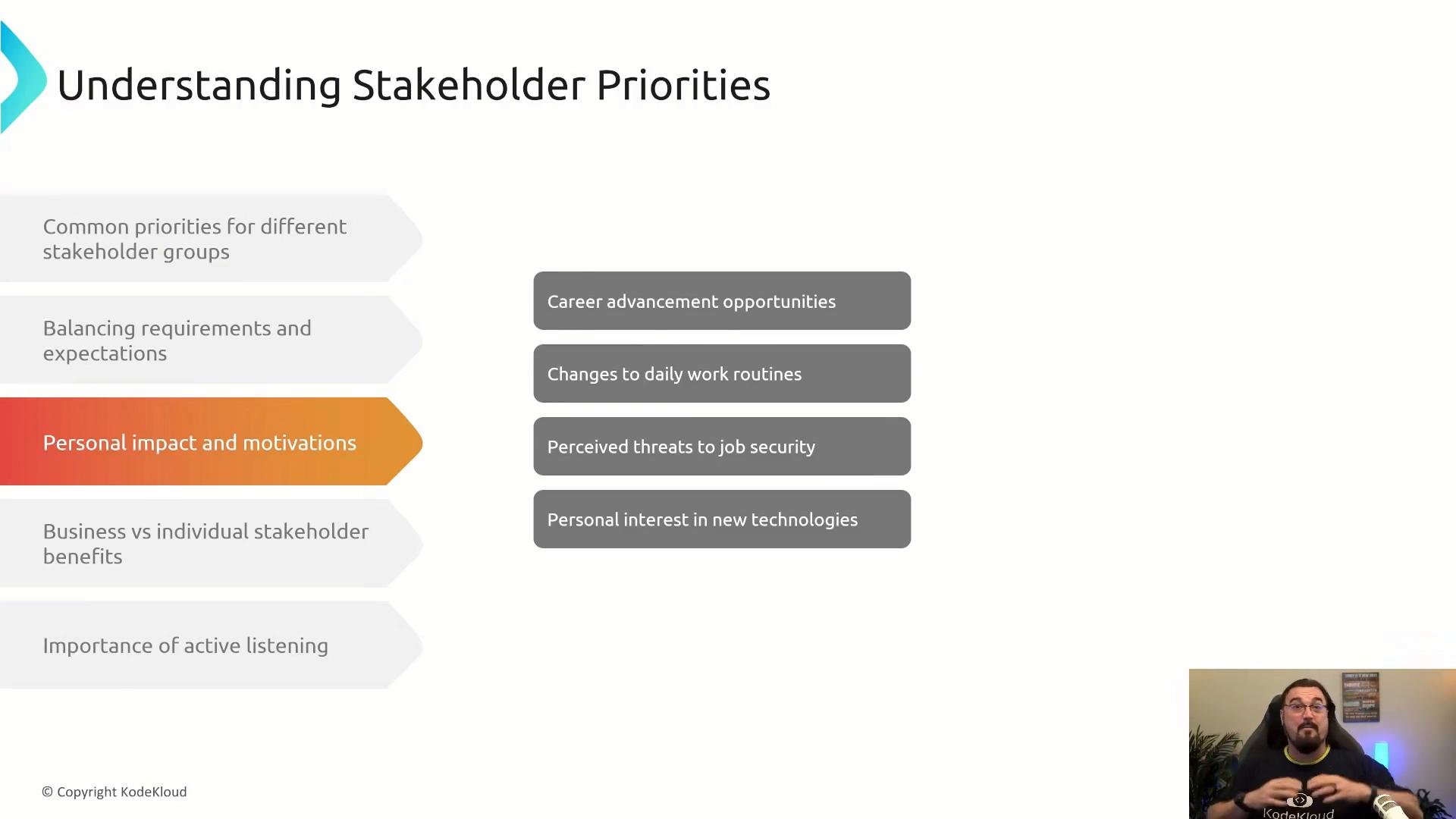
- Consider aligning developer incentives with organizational outcomes (e.g., sponsored certifications such as Certified Kubernetes Administrator (CKA) to increase both individual capability and system reliability: https://learn.kodekloud.com/user/courses/cka-certification-course-certified-kubernetes-administrator).
- Power–Interest Grid: Classify stakeholders by influence and interest to decide who to manage closely, keep satisfied, keep informed, or monitor.
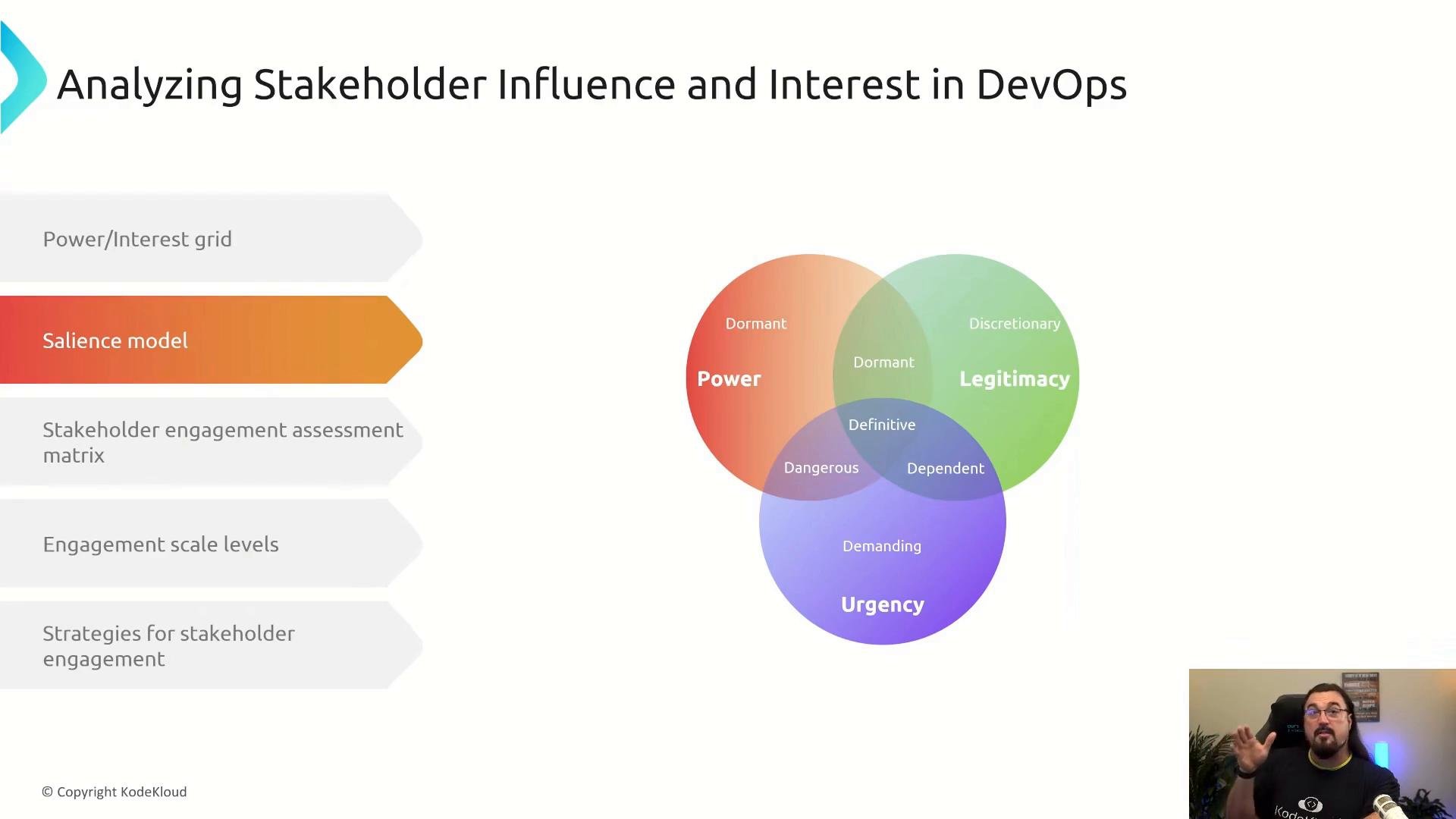
- Salience Model: Use power, legitimacy, and urgency to identify priority stakeholders.
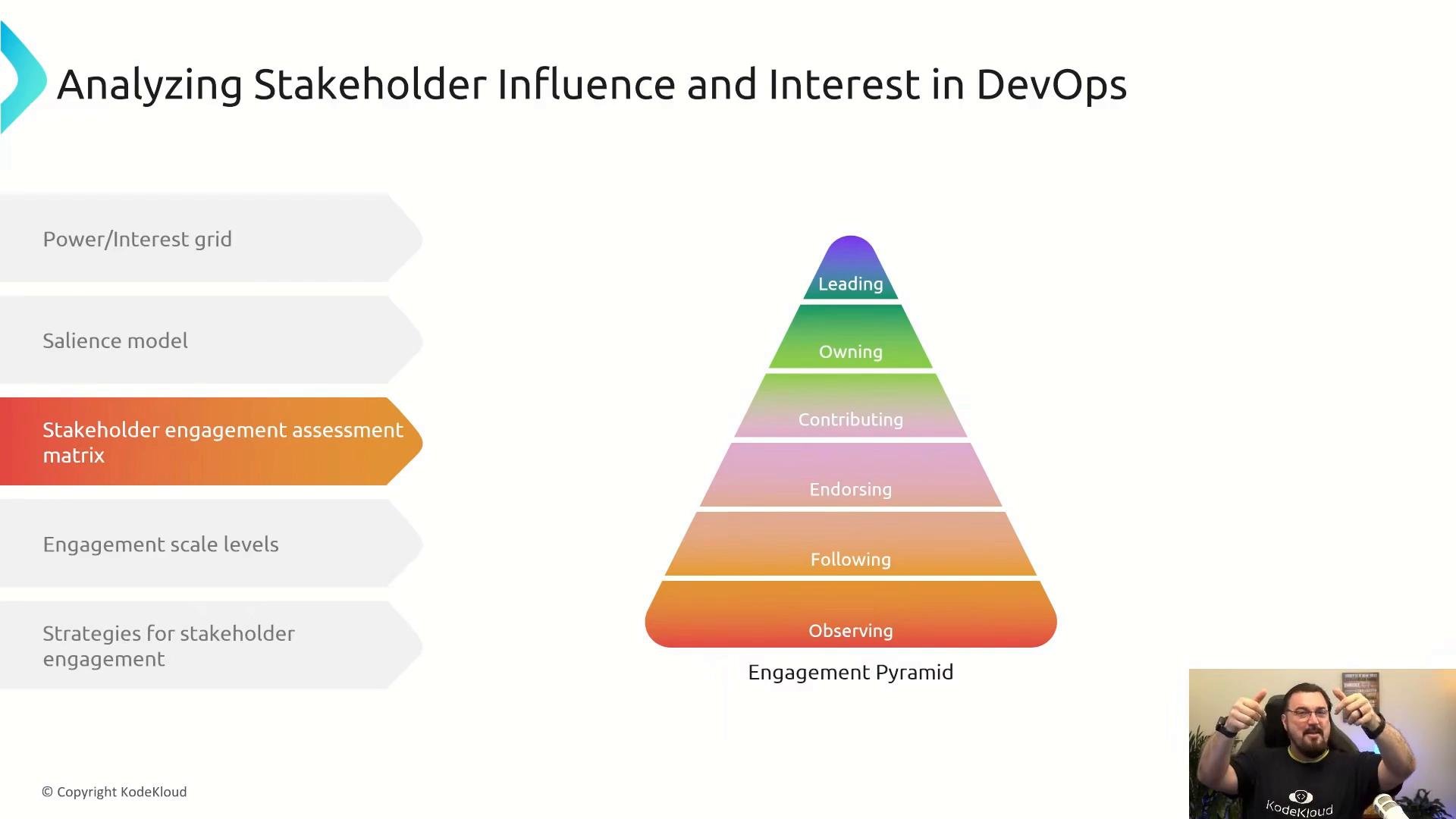
- Engagement Pyramid: Rate stakeholders from leading/owning to contributing, endorsing, following, and observing.
- Manage closely: high power, high interest — frequent two‑way communication.
- Keep satisfied: high power, low interest — periodic strategic updates.
- Keep informed: low power, high interest — regular reports and demos.
- Monitor: low power, low interest — occasional check-ins as needed.
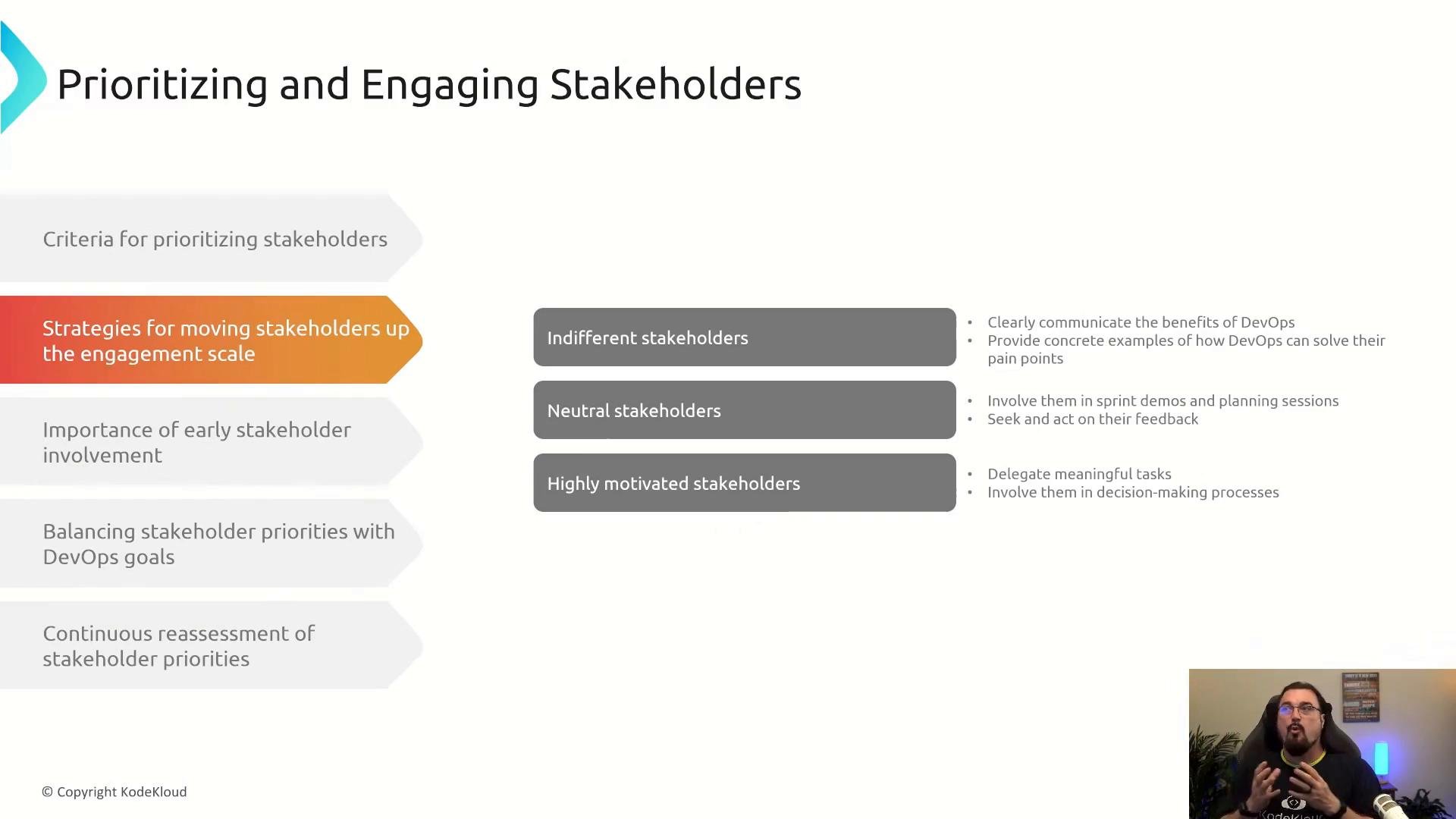
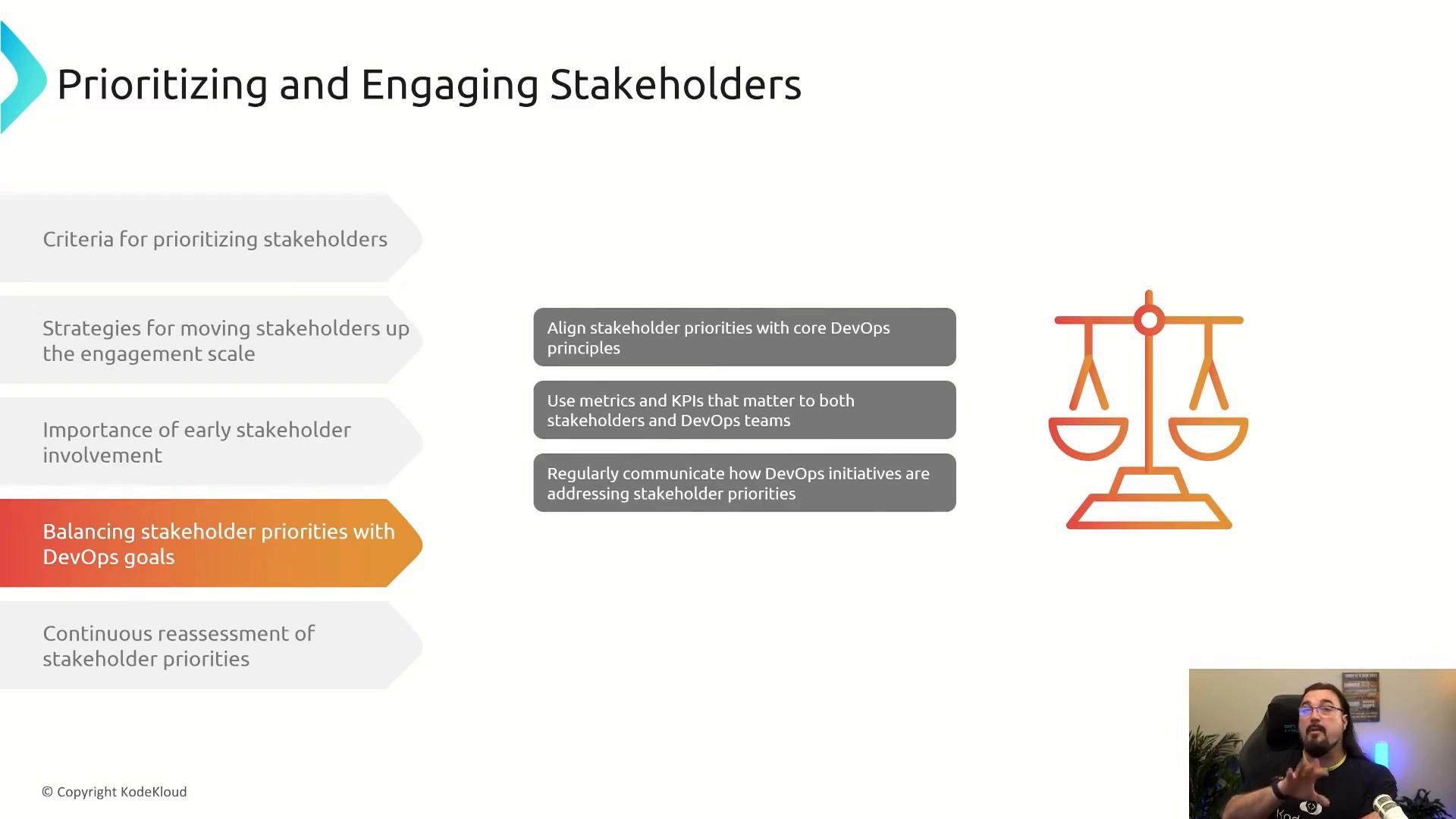
- Schedule short check‑ins focused on questions and decisions (avoid status dumps).
- Share impacts and changes proactively.
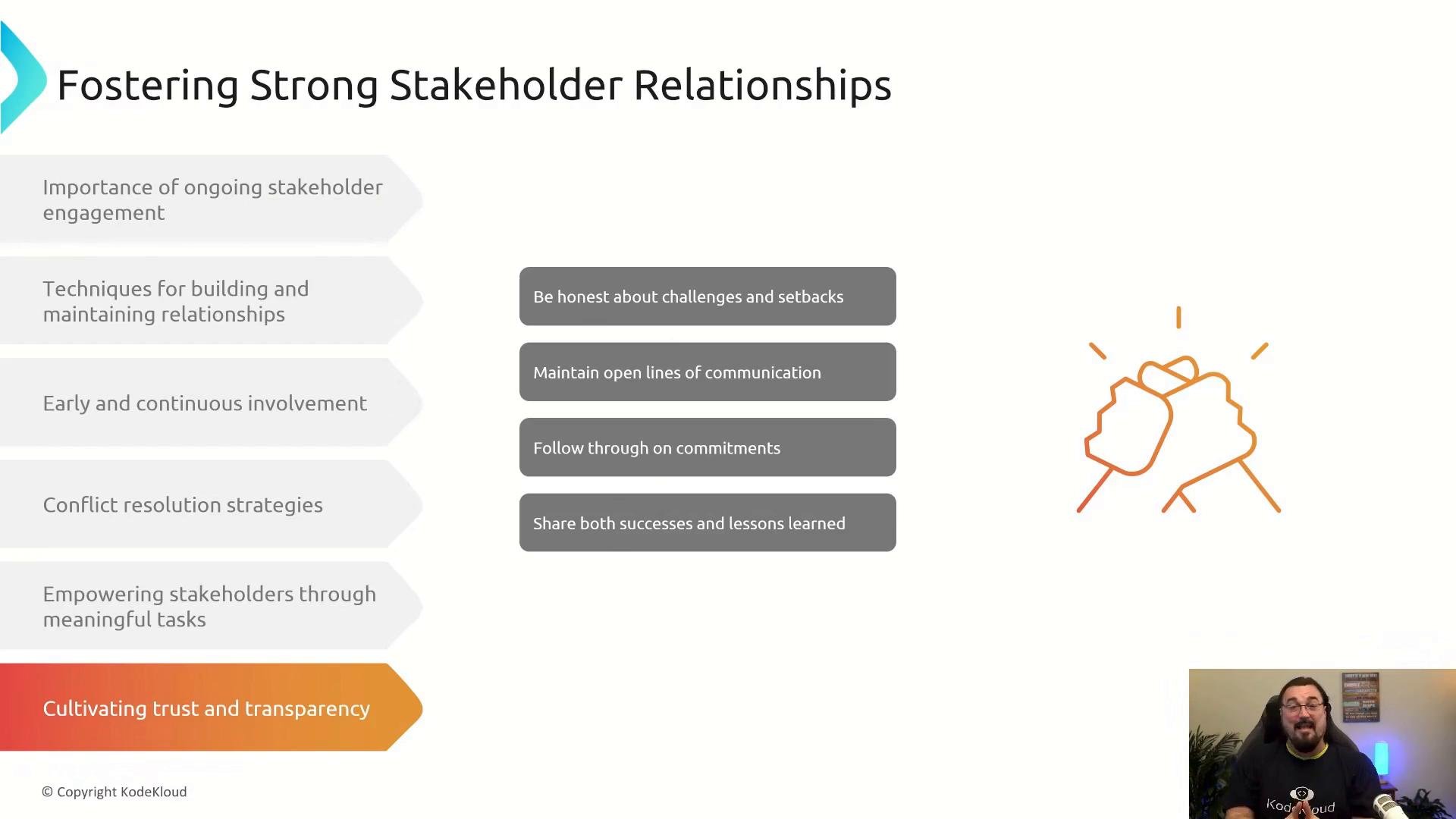
- Actively listen, validate concerns, and follow through.
- Celebrate milestones and recognize contributors publicly.
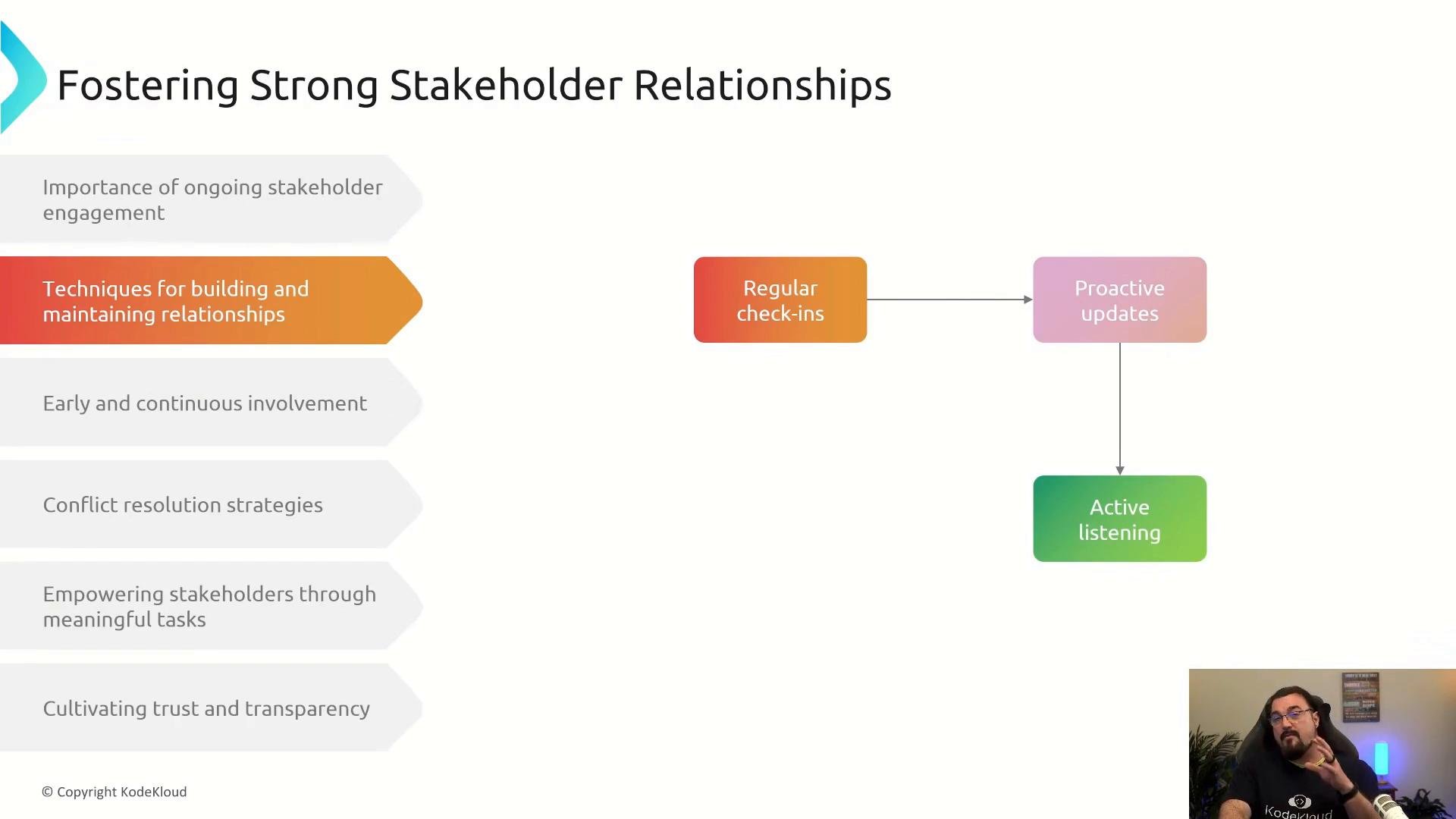
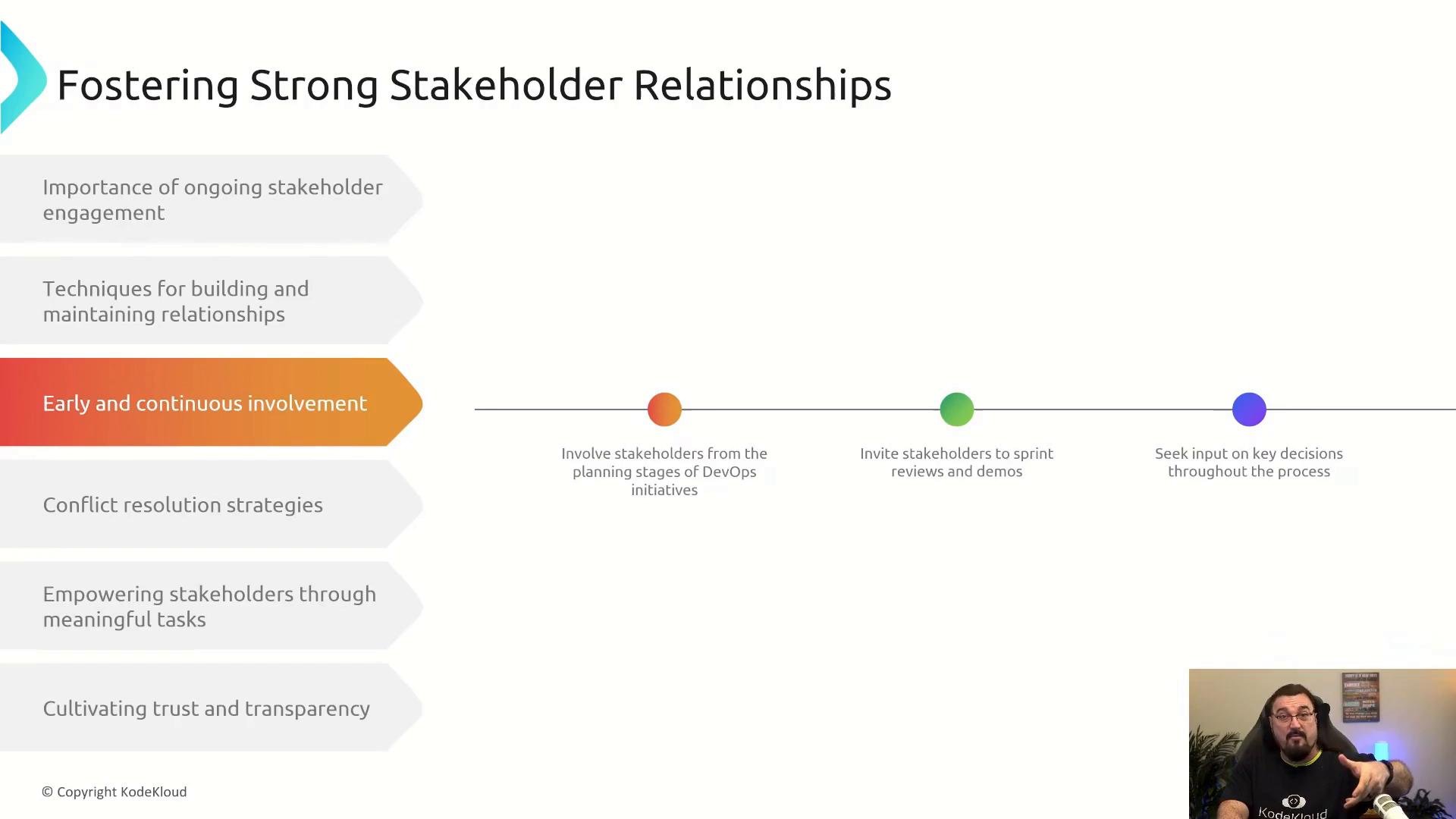
- Invite stakeholders into demos, reviews, and critical decisions where appropriate.
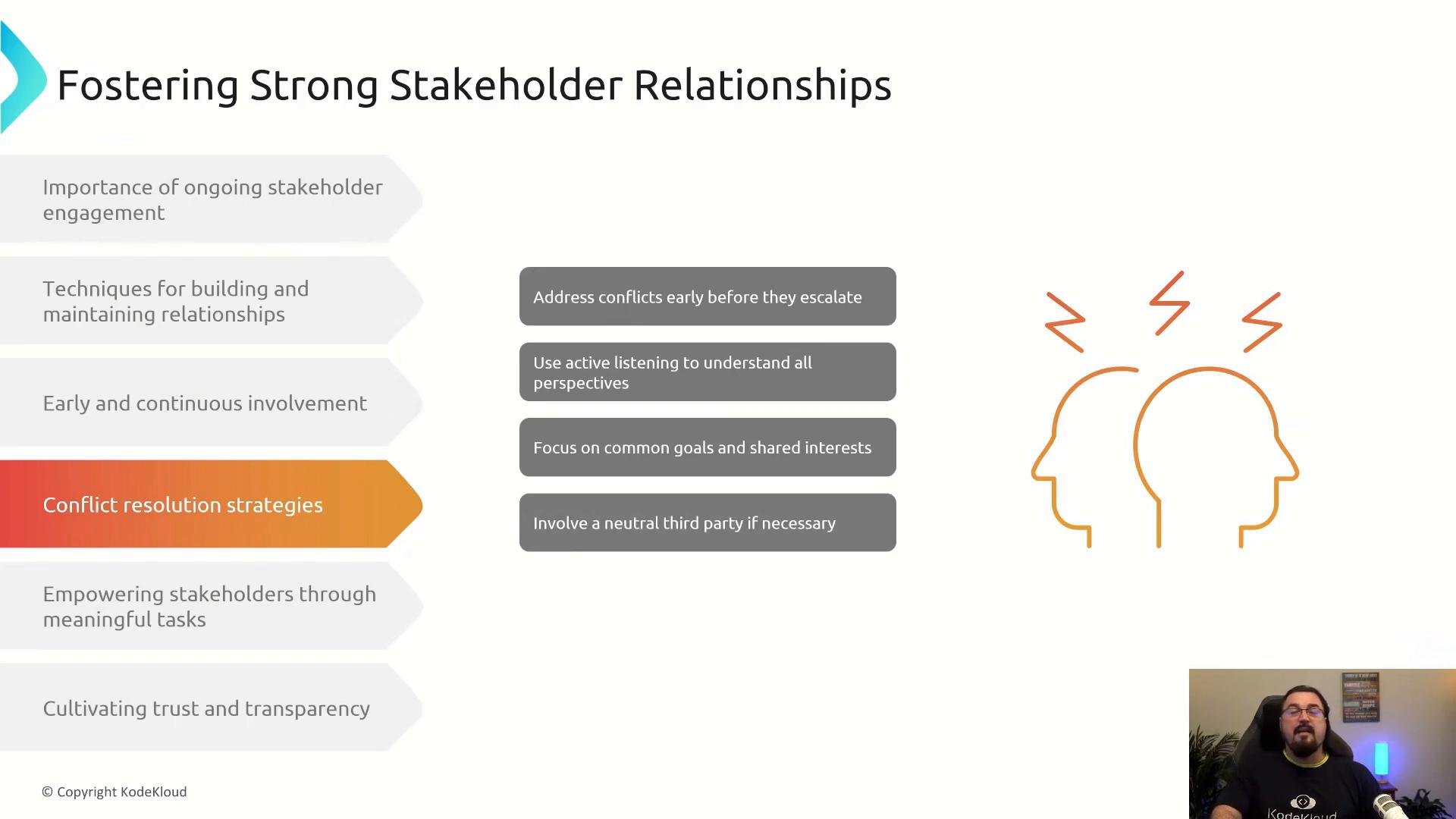
- Conflicting priorities — surface shared objectives, use data, and facilitate structured discussions.
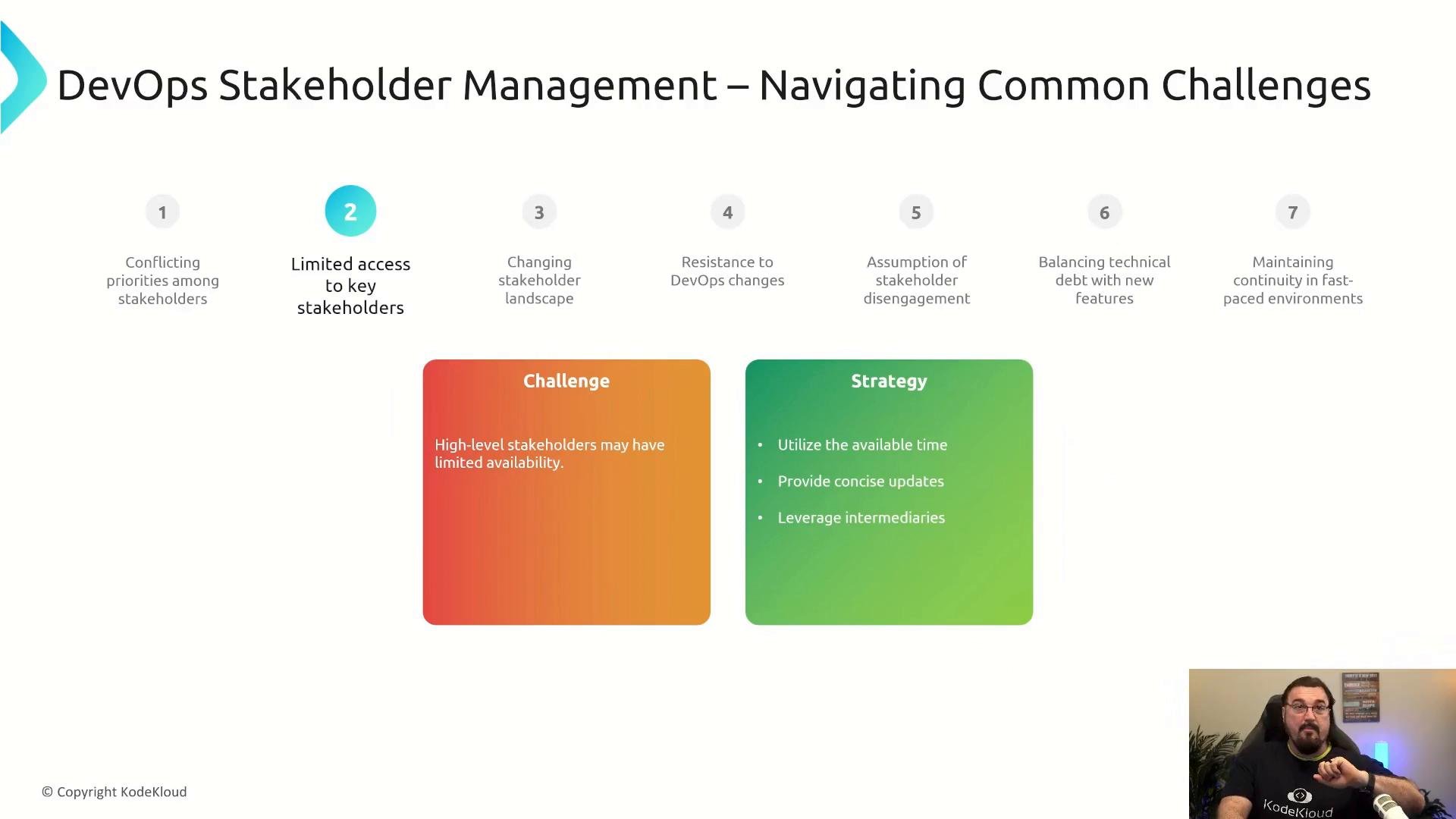
- Limited access to decision-makers — use concise summaries, dashboards, and asynchronous updates.
- Changing stakeholder landscape — keep documentation current and onboard new stakeholders quickly.
- Resistance to change — demonstrate early wins and include resistors in discovery.
- Assuming disengagement — proactively offer lightweight engagement options and demonstrate impact.
- Balancing technical debt vs. features — quantify maintenance impact and reserve time for debt.
- Maintaining continuity in fast environments — document decisions, hold short feedback loops, and keep regular check‑ins.
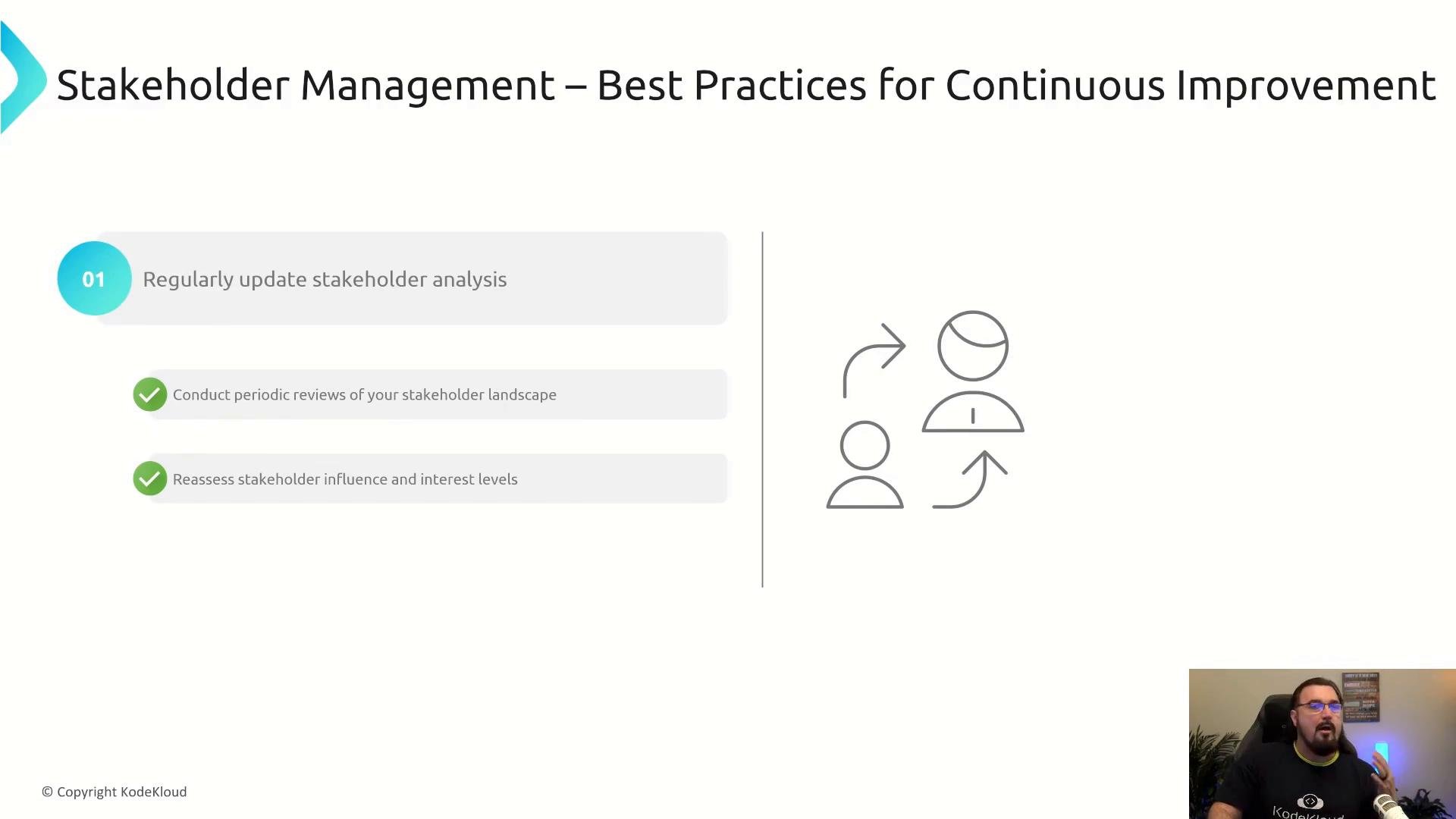
- Regularly update stakeholder analysis and reassess influence and interest as the organization or project changes.
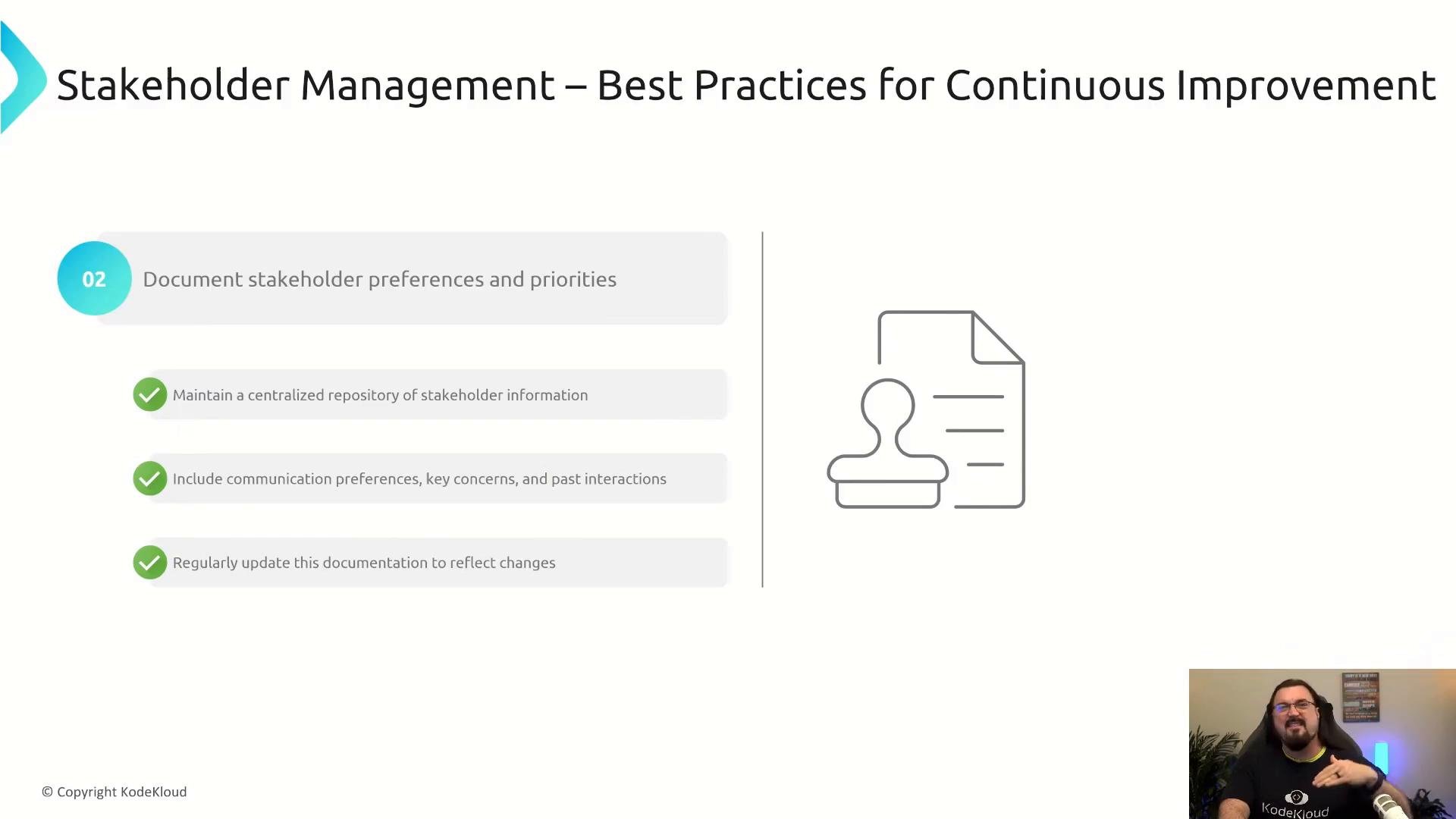
- Document stakeholder preferences and priorities (preferred channels, key concerns, past interactions) so outreach is targeted and effective.
- Involve stakeholders in decisions where it matters. Use prioritization techniques (e.g., Weighted Shortest Job First) to target high-value, low-effort work.
- Measure and communicate the impact of engagement. Track how feedback changed priorities or outcomes and use that data to refine cadence.
- Maintain a visible roadmap of priorities and initiatives. Update it frequently (every 1–3 weeks depending on cadence) so stakeholders can see trade-offs and reprioritize.
- Be transparent about work and timelines. Use visual reporting (dashboards, Gantt charts, or feature boards) and send concise post‑meeting summaries with action items and owners.
- Solicit feedback on communication effectiveness and adapt. Demonstrate how stakeholder input has been acted upon.
- Cultivate a continuous-learning culture. Run retrospectives, share lessons learned openly, and create a safe space to admit and learn from mistakes.
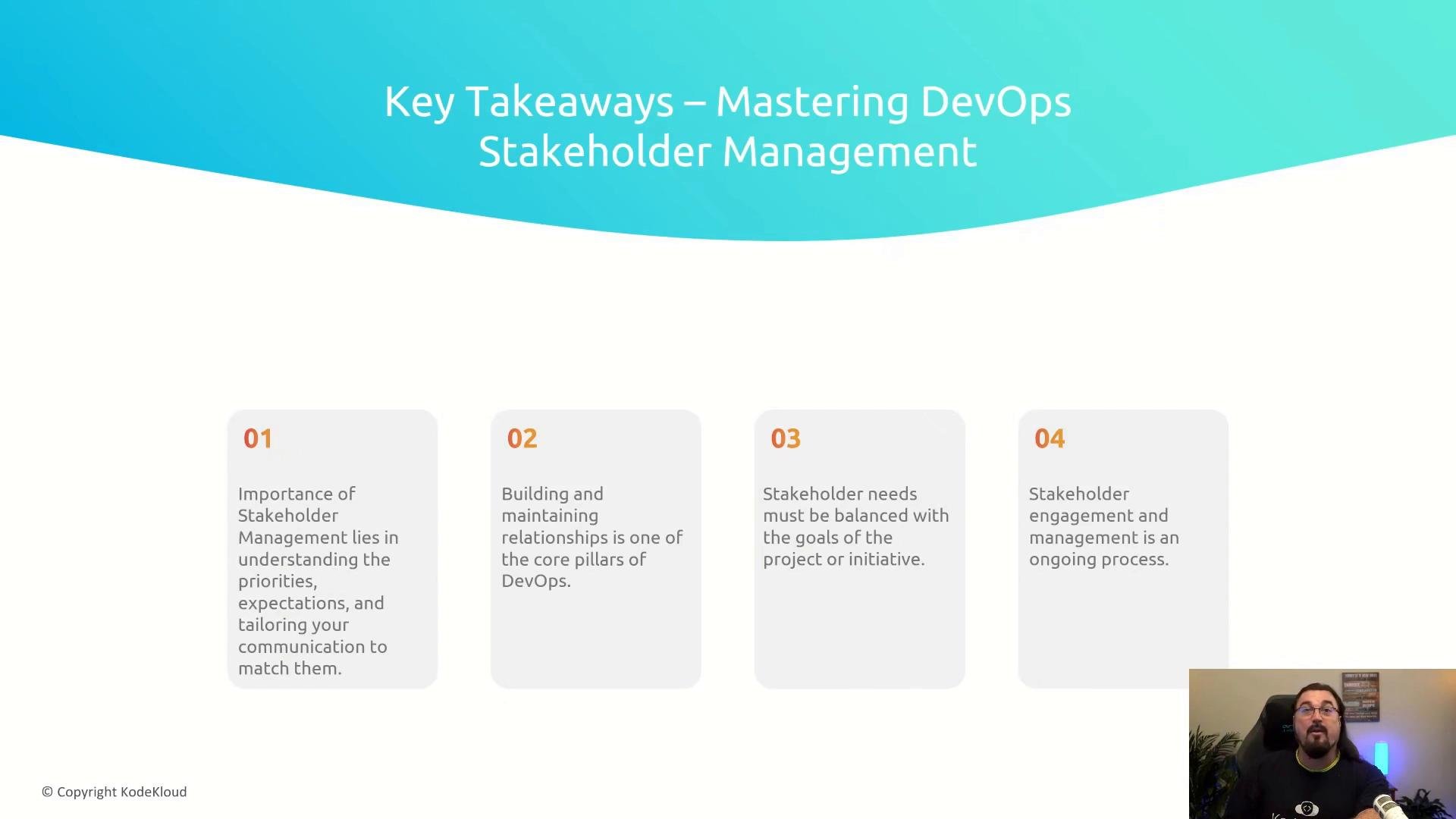
- Stakeholder management is essential: identify priorities, expectations, and communication needs early.
- Build and maintain relationships across people, process, technology, and culture.
- Balance stakeholder needs with business and project goals through transparency and prioritization.
- Engagement is ongoing: reassess, align, and adapt as the project evolves.
Start early with stakeholder identification and keep records of preferences and priorities — it saves time and reduces surprises later.