

Five ways communication creates value in DevOps
-
Effective communication increases productivity
DevOps teams coordinate across many roles. When information is clear and shared at the right time, teams avoid duplicated work, reduce handoff delays, and minimize rework — all increasing throughput and predictable delivery. -
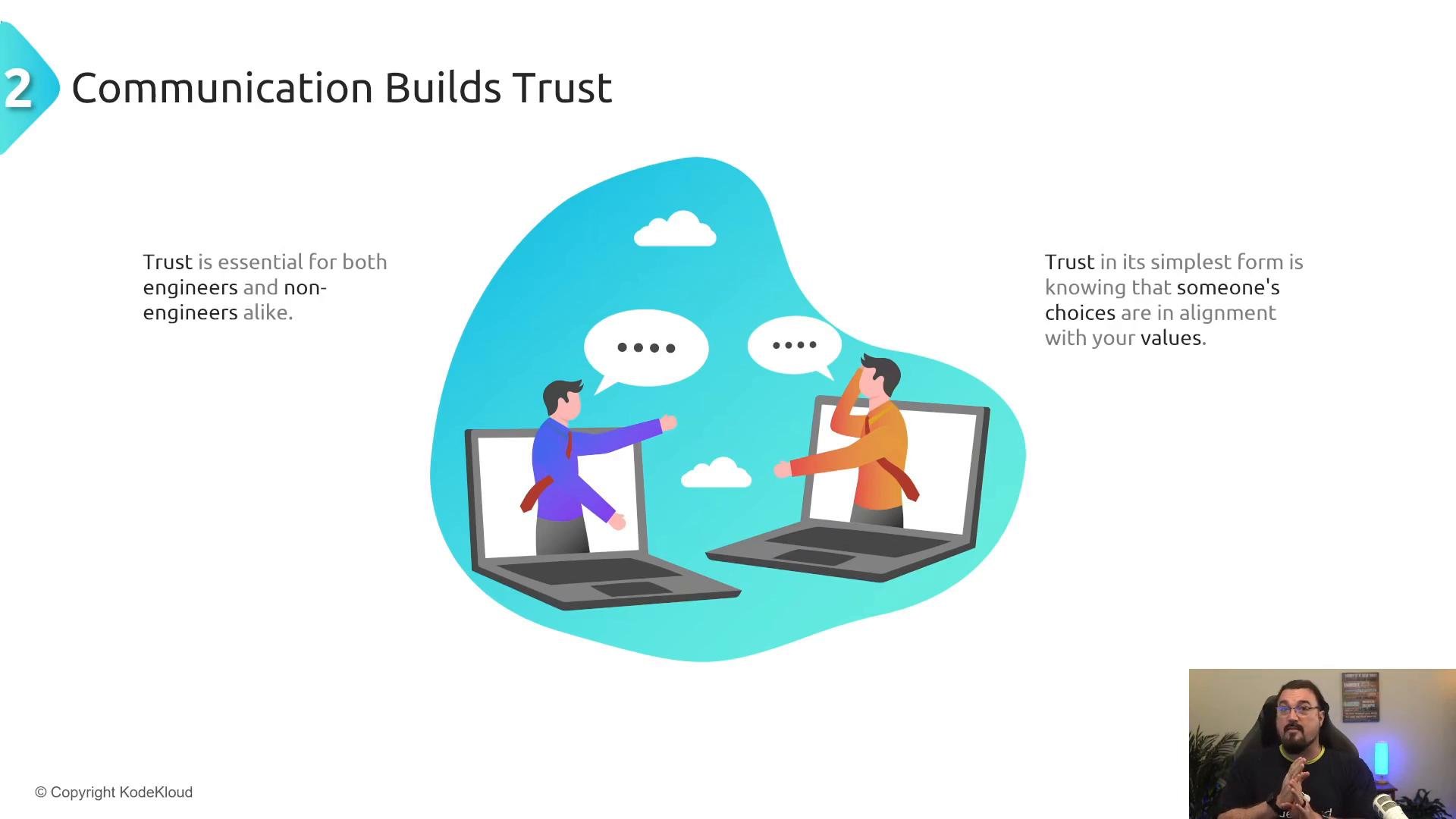
Communication builds trust
Trust comes from consistent actions and transparent information. Regular updates, honest progress reports, and visible decision-making create confidence among both technical and non-technical stakeholders. -
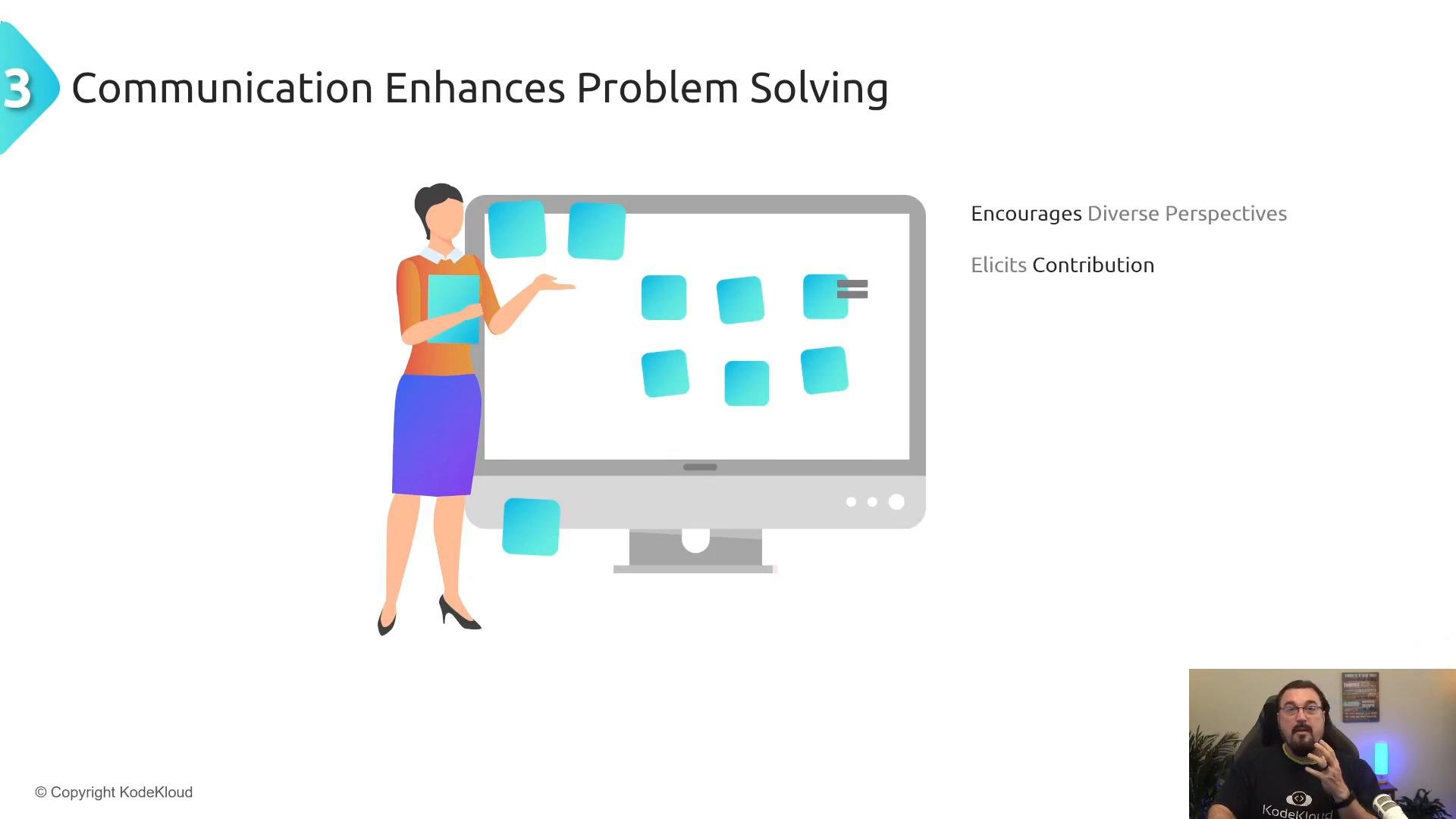
Communication enhances problem-solving
Complex systems require diverse perspectives. Inclusive communication invites ideas from all contributors, surfaces hidden constraints, and uncovers simpler solutions faster.
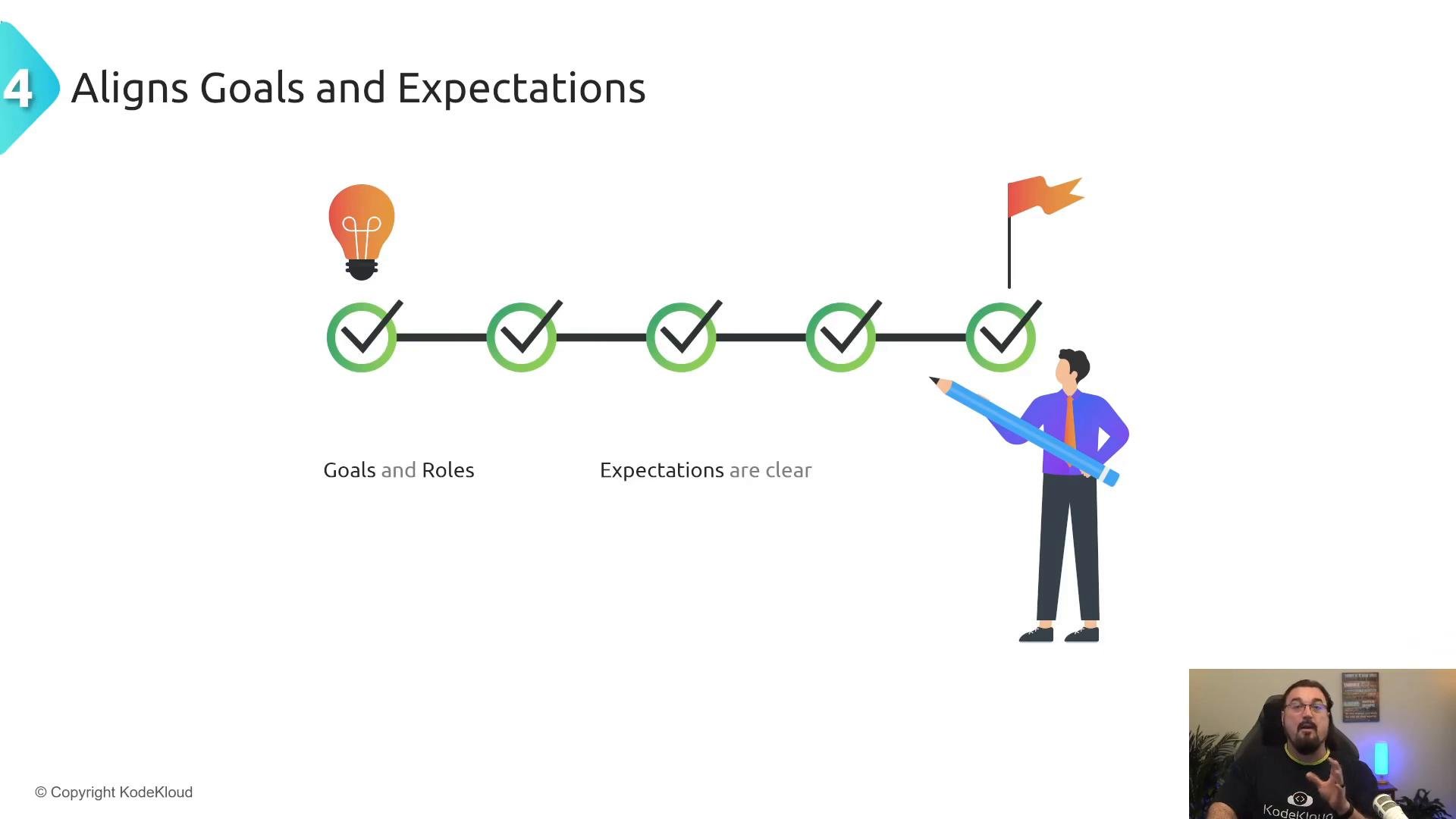
- Communication aligns goals and expectations
Different roles often prioritize different outcomes. Clear communication defines responsibilities, success criteria, and acceptable trade-offs so decisions happen quickly and with less ambiguity.
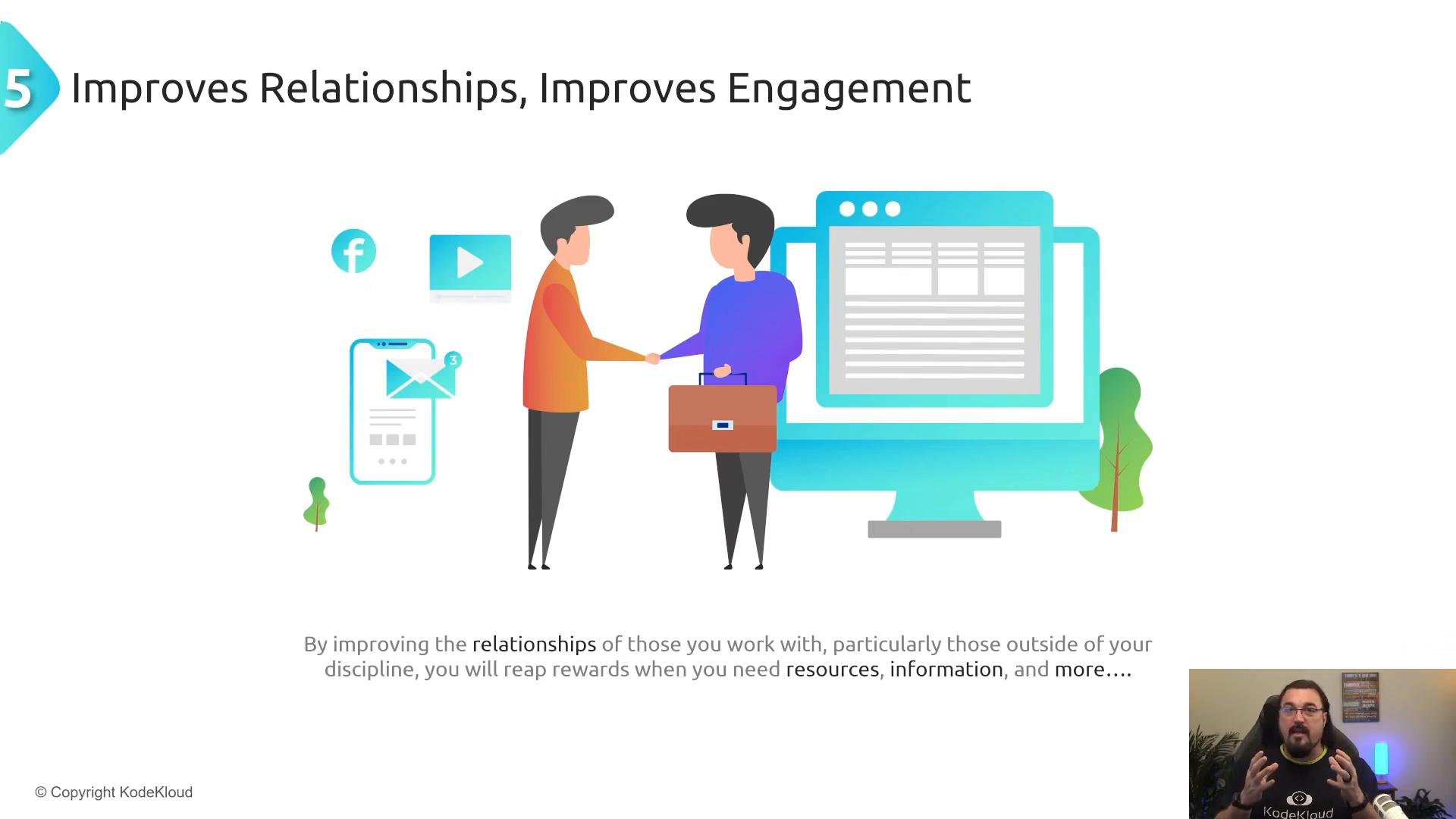
- Communication improves relationships and engagement
Simple, human interactions — timely updates, listening, and personal rapport — build confidence and long-term engagement. Strong relationships make it easier to negotiate scope, get fast approvals, and sustain cross-team collaboration.
Practical tips for speaking with non-technical audiences
When presenting technical topics to non-technical stakeholders: lead with outcomes, translate risks and trade-offs into business impact, and use visuals to reduce cognitive load. Keep jargon to a minimum and offer a single clear recommendation when possible.
- Start with the business outcome: Frame the problem or solution by its impact on users, revenue, risk, or schedule.
- Use analogies and visuals: Diagrams, timelines, and simple metaphors help non-technical listeners form a mental model quickly.
- State trade-offs clearly: Say what you’re prioritizing (speed, cost, reliability) and why.
- Offer next steps: Close with specific asks or decisions needed to move forward.
Avoid overwhelming non-technical audiences with low-level details. If deep technical discussion is required, provide it as an appendix or follow-up session tailored to the technical stakeholders.
Quick summary — key takeaways
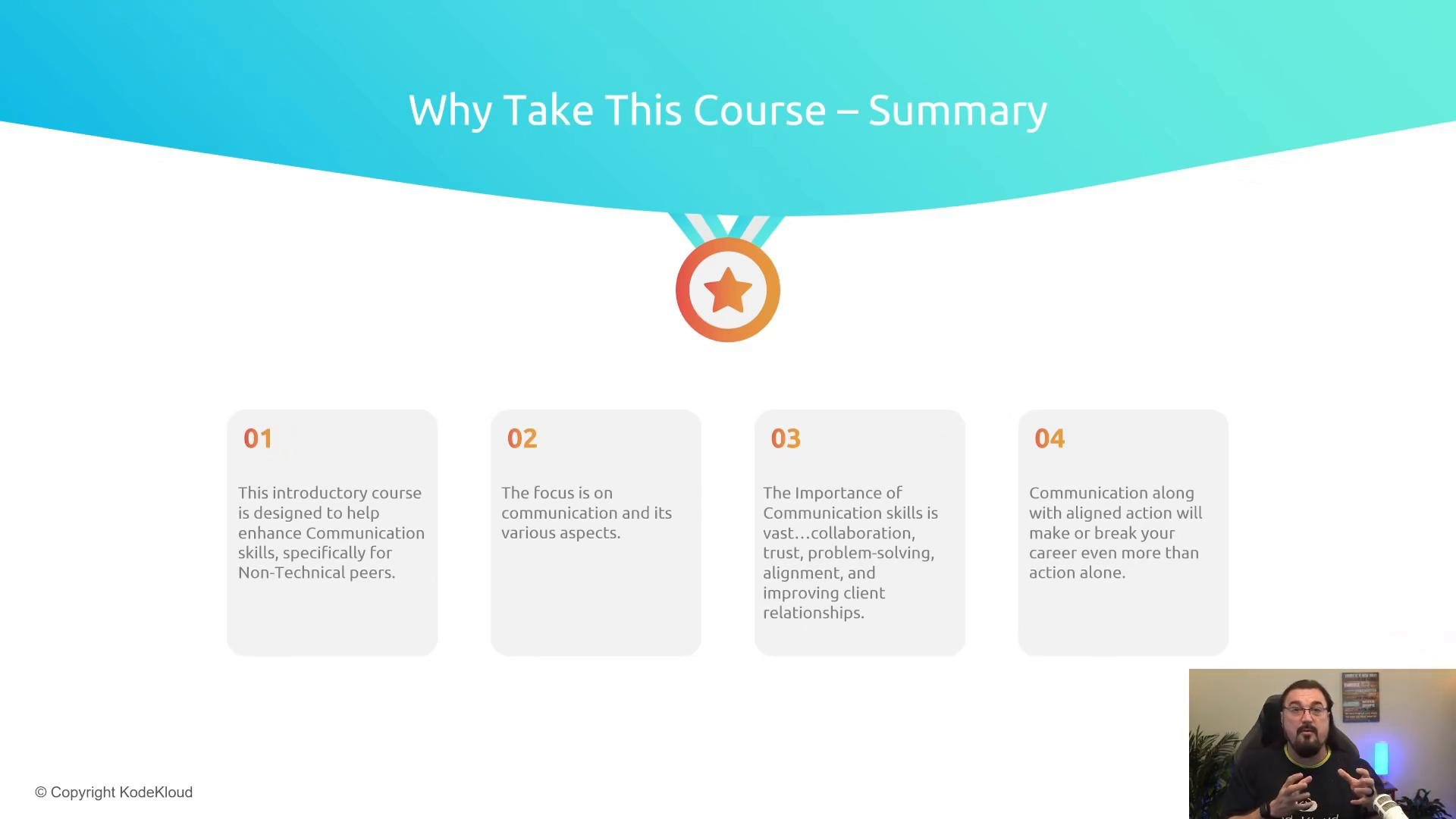
- Communication increases productivity, improves problem-solving, builds trust, and strengthens stakeholder relationships.
- Focus on outcomes, clarity, and alignment — not only on technical correctness.
- Consistent communication plus consistent delivery (doing the work you communicate about) is a core ingredient of career growth in DevOps.
- DevOps culture and practices — continuous delivery and collaboration
- Effective communication strategies for technical teams