

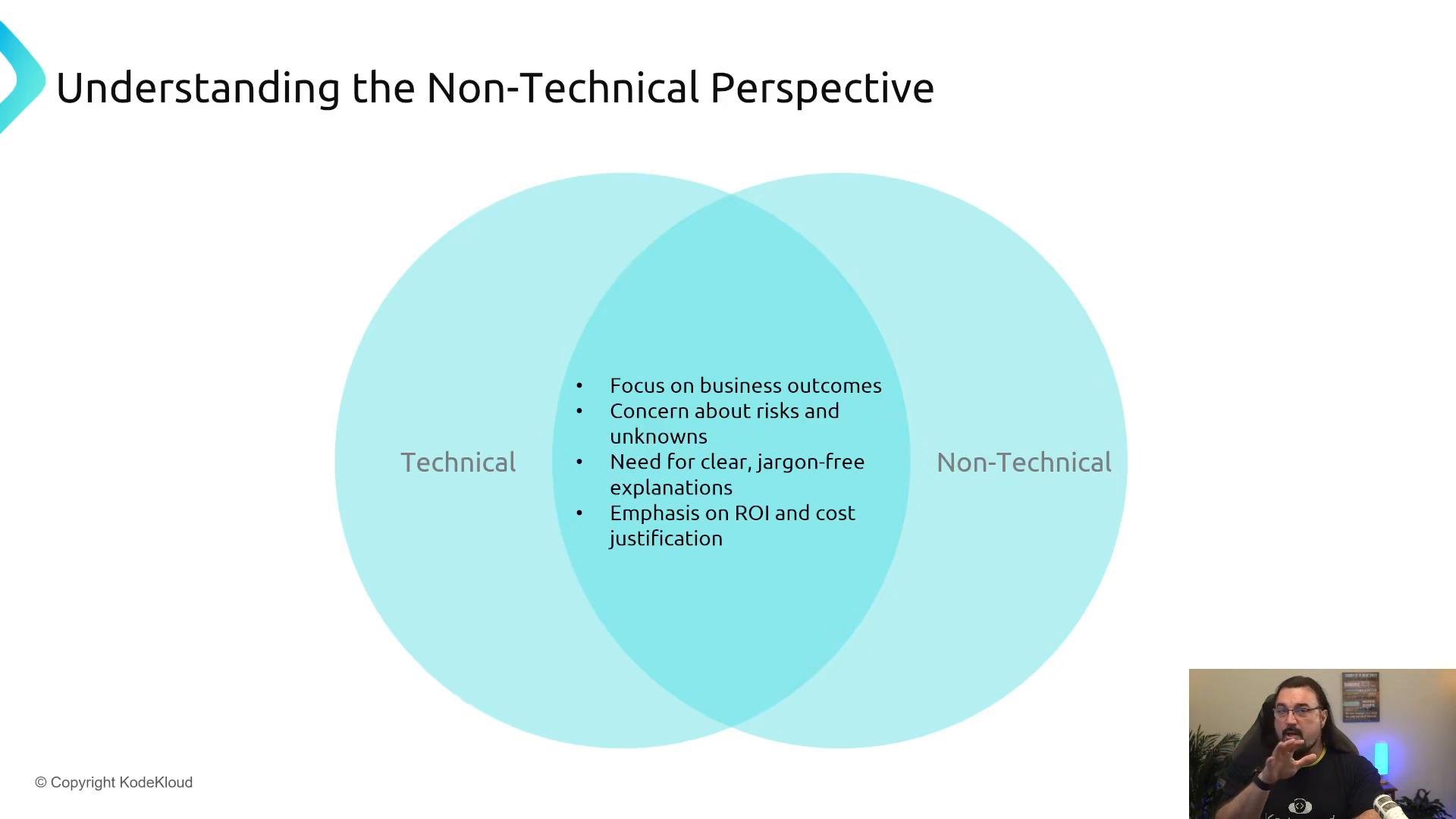
Non-technical stakeholders typically focus on business outcomes and risks rather than implementation details. When you prepare, translate technical benefits into measurable business outcomes.
- Cost / Value: “This is too expensive.”
- What they really mean: What return will we get for this spend? Is the spend justified vs. other priorities?
- How to respond: Provide a clear cost breakdown and, crucially, the expected benefits—time saved, revenue uplift, reduced incident costs, or operational efficiency gains. Where possible, include estimated payback time and sensitivity ranges.
- Evidence to bring: case studies, before/after metrics, and one or two clear success metrics (e.g., reduce downtime by X% or save Y engineering hours per week).
- Unclear benefits: “What tangible benefits does this deliver?”
- What they really mean: How does this improve the bottom line, customer experience, or competitive position?
- How to respond: Translate technical improvements into measurable business outcomes. Offer acceptance criteria and specific success metrics (e.g., faster feature delivery, lower infrastructure costs, higher user retention).
- Evidence to bring: examples of improved conversion, cycle time reduction, or customer satisfaction scores.
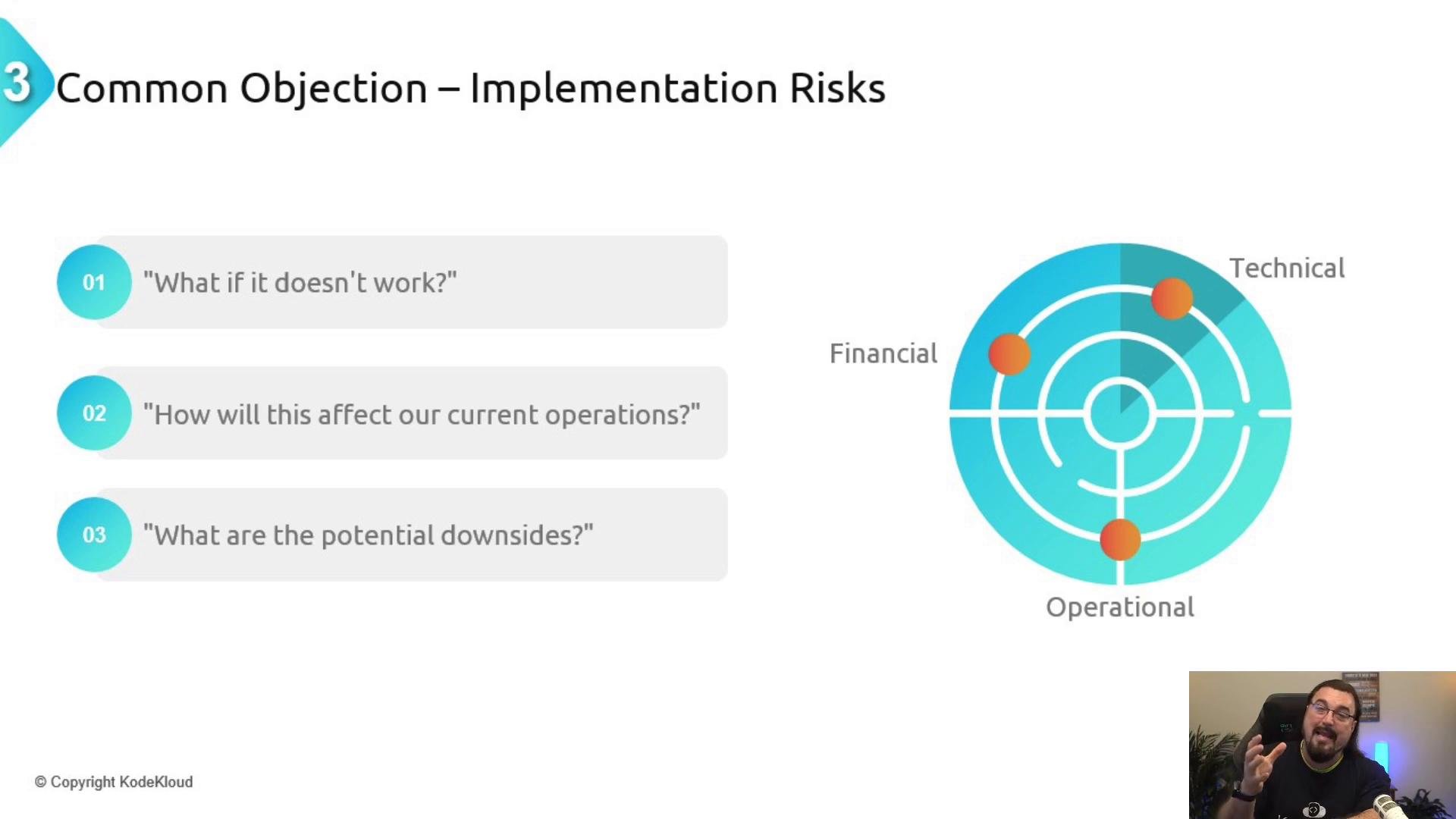
- Risk and failure modes: “What if it doesn’t work?”
- What they really mean: How will this affect day-to-day operations and what are the downside scenarios?
- How to respond: Present a risk register and mitigation plan. Explain testing, QA, rollout strategy, monitoring, and rollback procedures. Show likelihood and impact assessments and how each risk will be minimized.
- Evidence to bring: test results, staging/production canary plans, monitoring dashboards, and rollback playbooks.
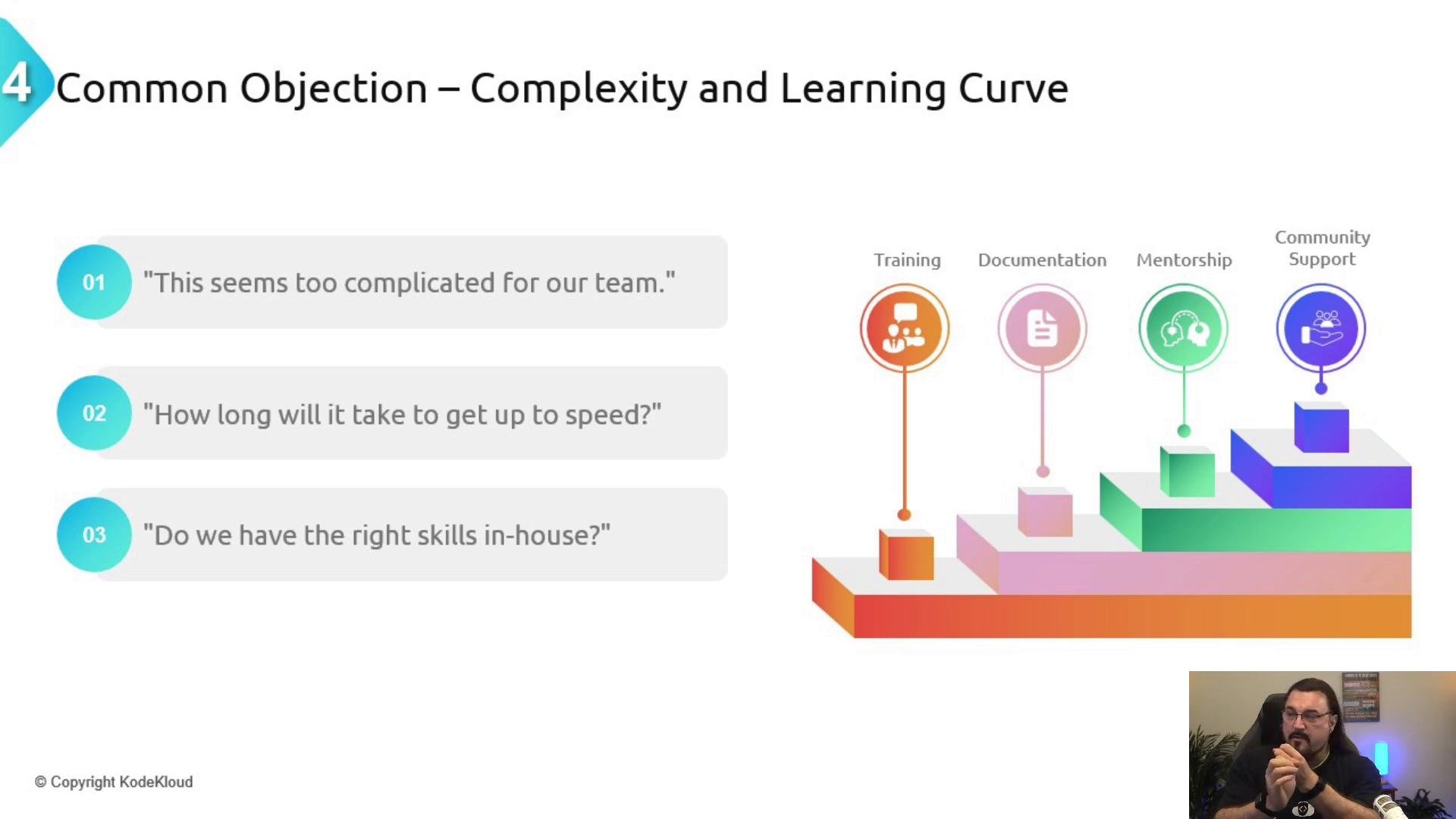
- Complexity and learning curve: “This seems too complicated.”
- What they really mean: Can our team adopt and maintain this? How long will ramp-up take and what are hidden operational costs?
- How to respond: Provide an adoption plan with training, documentation, mentorship, and staged automation. Break the project into smaller milestones and quick wins so stakeholders see value early.
- Evidence to bring: a training calendar, documentation ownership plan, mentorship pairings, and automation roadmaps. Use realistic timelines—e.g., planned sprints or phased rollouts—and compare to similar enterprise migrations if helpful.
- Integration with existing systems: “Will this fit with our systems and data?”
- What they really mean: Will introducing this solution disrupt current workflows or require a full replacement?
- How to respond: Present a clear integration and migration plan that preserves existing workflows and data. Emphasize backward compatibility, data migration strategies, and how the solution will interoperate with current systems. Explain sequencing and minimal-disruption patterns (e.g., canary releases, dual-running, adapters).
- Evidence to bring: interface maps, data migration runbooks, API compatibility matrices, and a phased cutover plan.
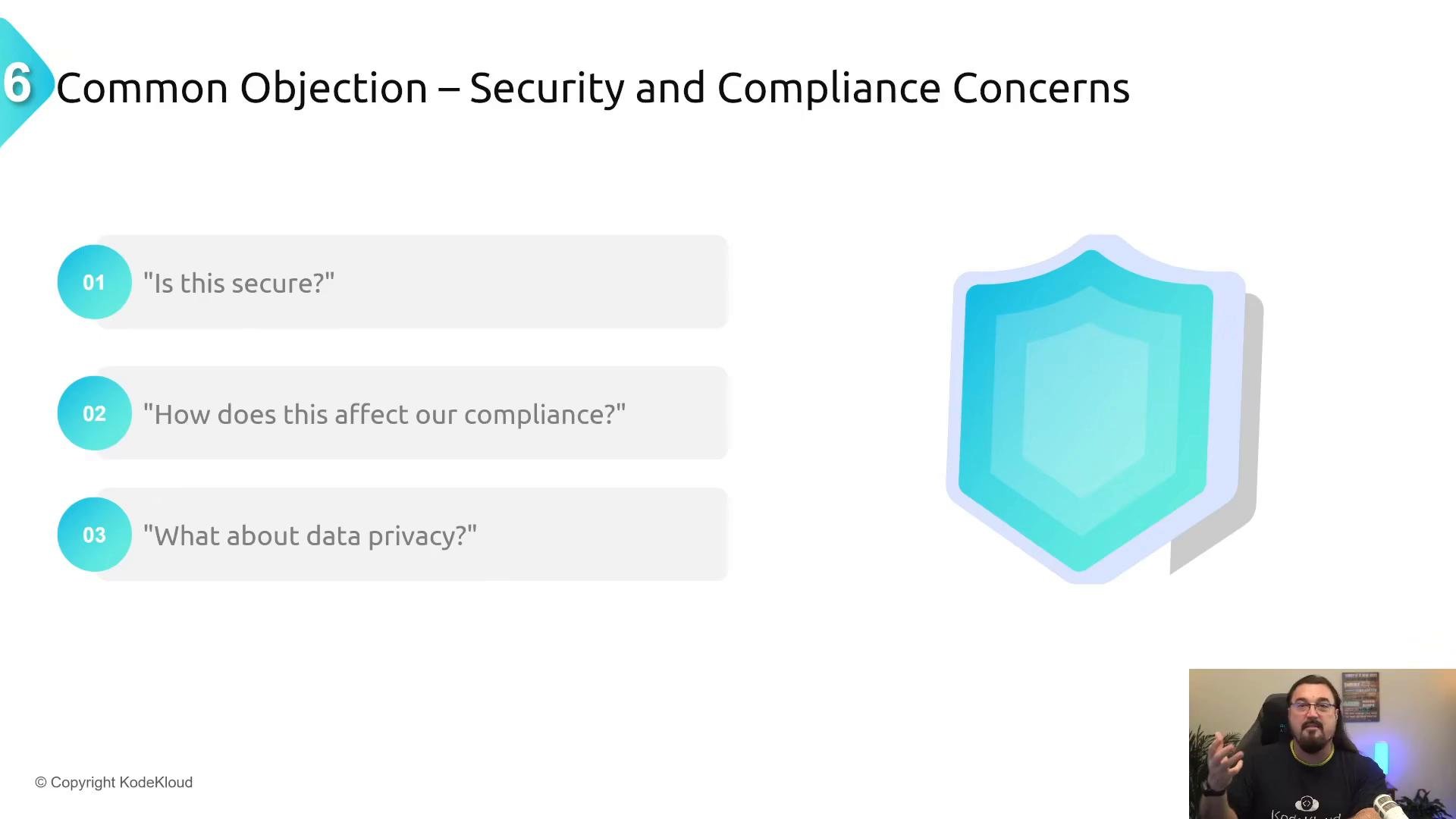
- Security and compliance: “Is this secure and compliant?”
- What they really mean: How will this change affect our security posture and regulatory obligations?
- How to respond: Provide security controls, threat-modeling outcomes, encryption practices (in transit and at rest), access control and least-privilege design, audit trails, and mappings to relevant regulations. Share penetration-test or audit results and outline ongoing monitoring and incident response.
- Evidence to bring: security assessment reports, compliance checklists (e.g., SOC 2, GDPR mappings), and monitoring/alerting examples.
Practical preparation checklist
- Map each stakeholder to their primary concern (cost, risk, compliance, ops).
- Prepare 2–3 business-focused talking points for each stakeholder.
- Produce lightweight artifacts: one-page ROI, a one-paragraph risk summary, and a 1–2 week phased rollout plan.
- Highlight first milestones and quick wins so stakeholders see early value.
- Keep monitoring and rollback plans visible and rehearsed.
- Expect the same six themes: cost/value, unclear benefits, risk, complexity, integration, and security/compliance.
- Always translate technical work to business outcomes and measurable success criteria.
- Bring concrete artifacts: cost/benefit analyses, risk/mitigation plans, integration/migration steps, training and adoption plans, and security/compliance evidence.
- Address these concerns proactively to build trust, reduce friction, and speed decision-making.
- Canary releases and progressive delivery overview
- Threat modeling fundamentals
- Measuring ROI for engineering initiatives (guidance)