In this lesson, you’ll explore the end-to-end process of compiling C/C++ and Rust applications into WebAssembly (WASM). We start with an overview of the major compilers and build tools, then dive into hands-on demos and advanced techniques:
  • Overview of the WASM toolchain & compiler internals
  • Hands-on C/C++ to WASM with Emscripten
  • Building and packaging Rust modules via wasm-pack
  • Optimizing WASM output for size and speed
  • Debugging strategies for tracing and profiling WASM modules
  • Secure coding best practices for sandboxed WebAssembly
Throughout this lesson, focus on both development efficiency and runtime performance to deliver high-quality WebAssembly binaries.
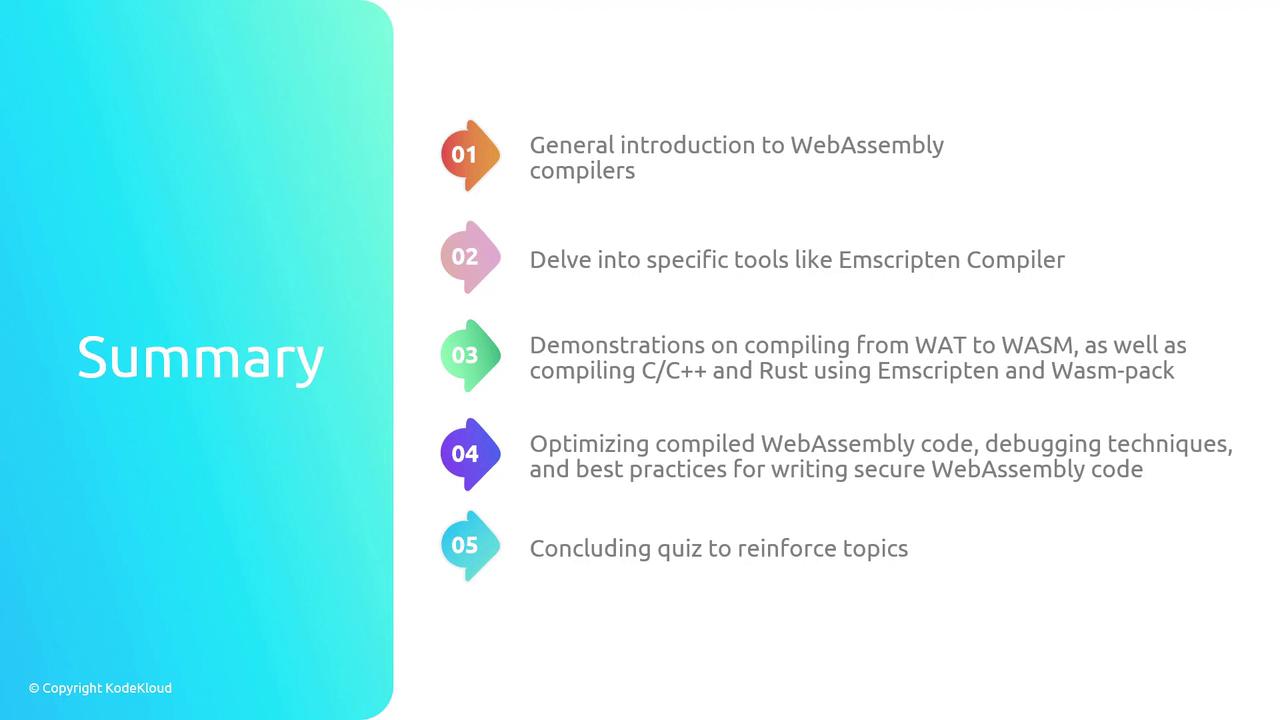
The image is a summary slide outlining topics related to WebAssembly compilers, including introductions, tools, demonstrations, optimizations, and a concluding quiz.

Learning Objectives

By the end of this section, you will be able to:
TaskDescription
Compile source codeTranslate C/C++ and Rust projects into optimized WASM binaries
Use EmscriptenSet up and run Emscripten for browser and Node.js targets
Leverage wasm-packBuild, test, and publish Rust-based WASM packages
Analyze performanceEmploy profiling tools and code tuning for faster WASM
Debug modulesApply source-map debugging and stack inspection techniques
Secure your modulesImplement sandboxing and input validation for safe execution
Always audit third-party modules and enforce Content Security Policy (CSP) to mitigate potential WebAssembly security risks.
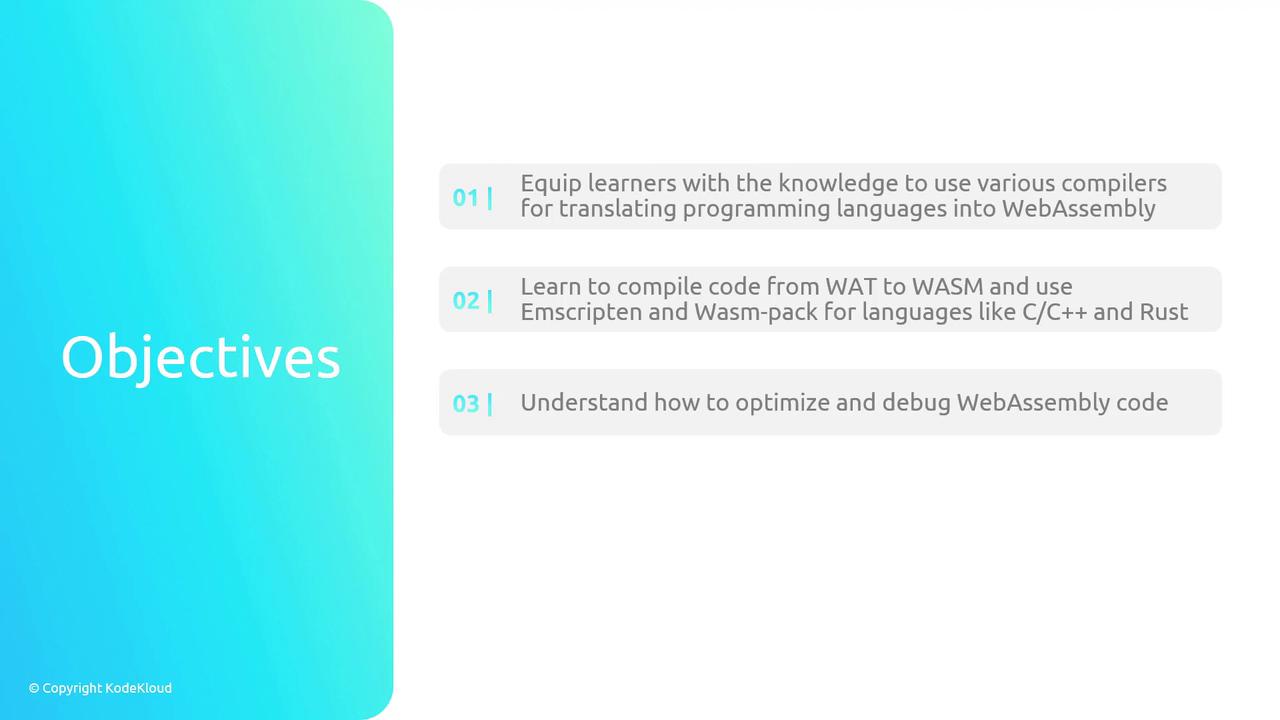
The image lists objectives related to WebAssembly, including using compilers, compiling code, and optimizing/debugging. It features a gradient background with the word "Objectives" prominently displayed.