

When to choose a workflow
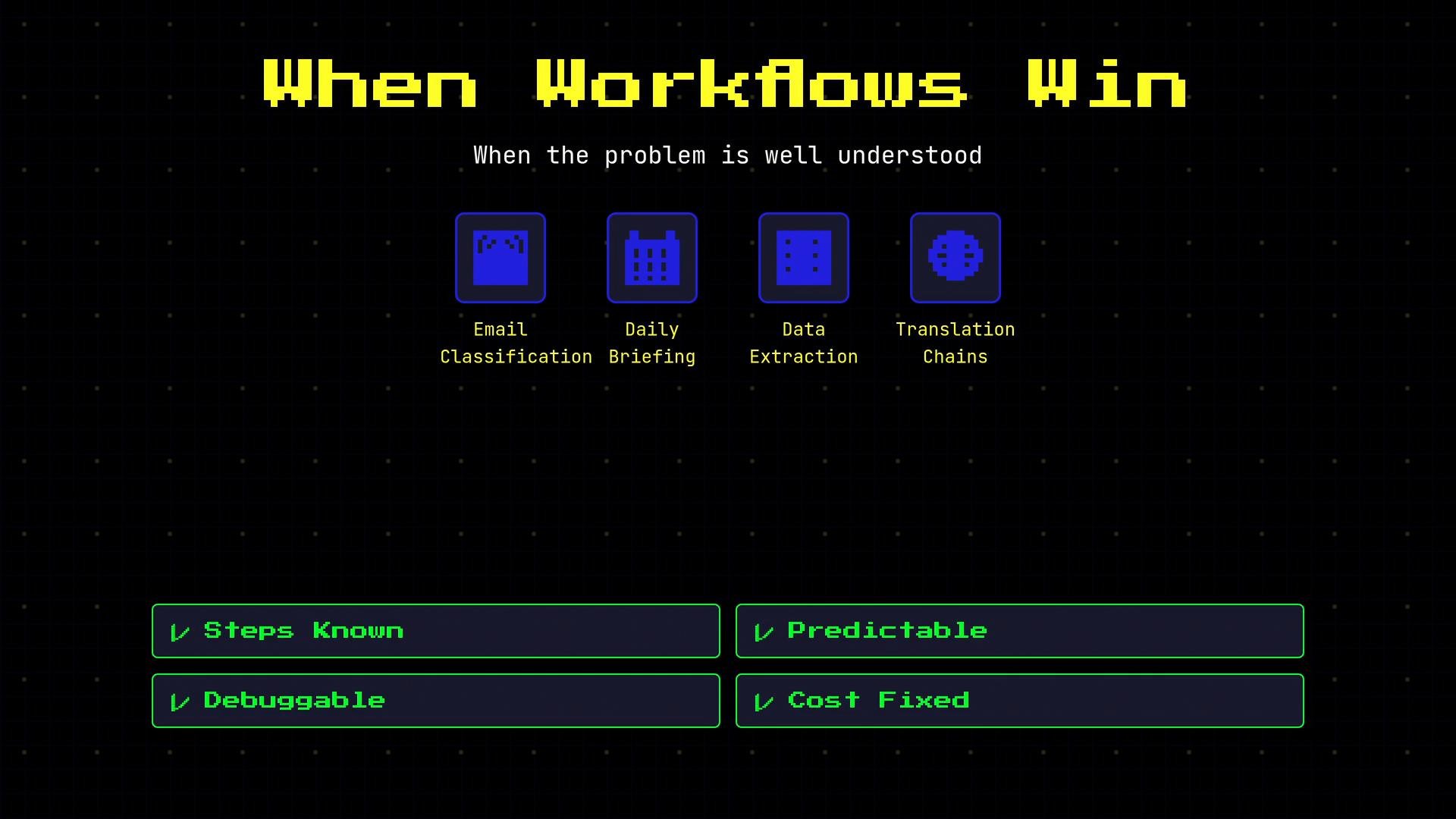
Workflows are best when the problem is well understood and the sequence of steps can be defined up front. They are predictable, easy to debug, and cost is easier to control. Common workflow use cases include:- Email classification and templated responses
- Daily briefing or report generation
- Structured data extraction pipelines
- Translation chains or other deterministic processing chains
When to choose an agent
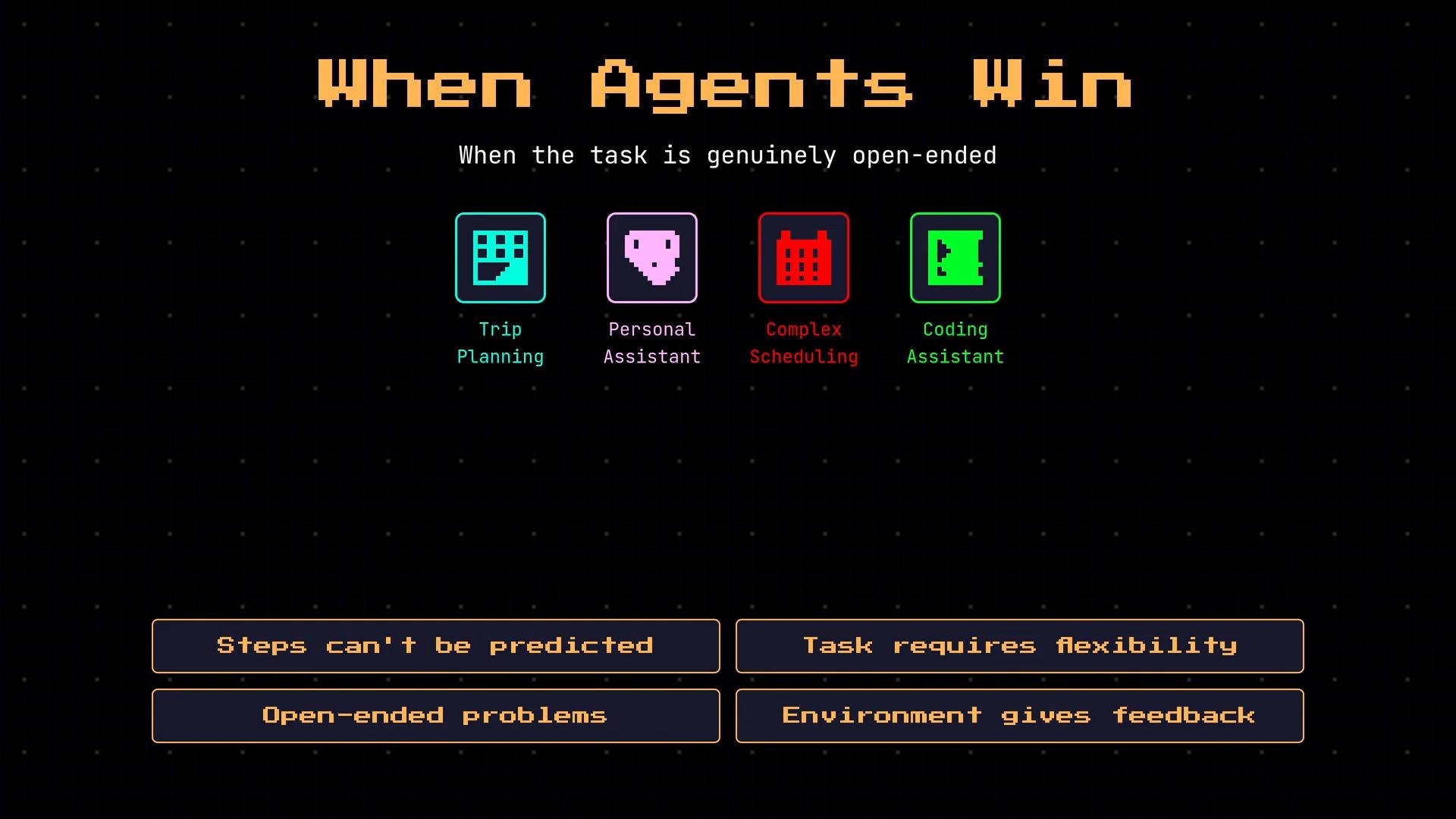
Use an agent when the correct path cannot be determined ahead of time and the LLM must adapt or explore at runtime. Agents provide flexible orchestration: they decide which tools or steps to use based on what they discover. Typical agent scenarios:- Trip planning that requires multi-step research and trade-offs
- Personal assistants coordinating dynamic tasks and contexts
- Complex scheduling where constraints emerge during the interaction
- Coding assistants that iteratively inspect, edit, and rerun code
Trade-offs and costs
Agents introduce additional operational complexity:- Higher per-request compute costs
- Increased latency due to multiple LLM calls and tool invocations
- Greater surface area for bugs and unexpected behavior
- More effort required to test and debug decision logic
Agents add flexibility at the cost of predictability and price. If strict cost or latency constraints exist, prefer workflows or enforce strong guardrails on agents.
Decision checklist — quick diagnostic
Run through these four questions to guide the choice. Answering “Yes” or “No” points you toward the simpler, more robust option when possible.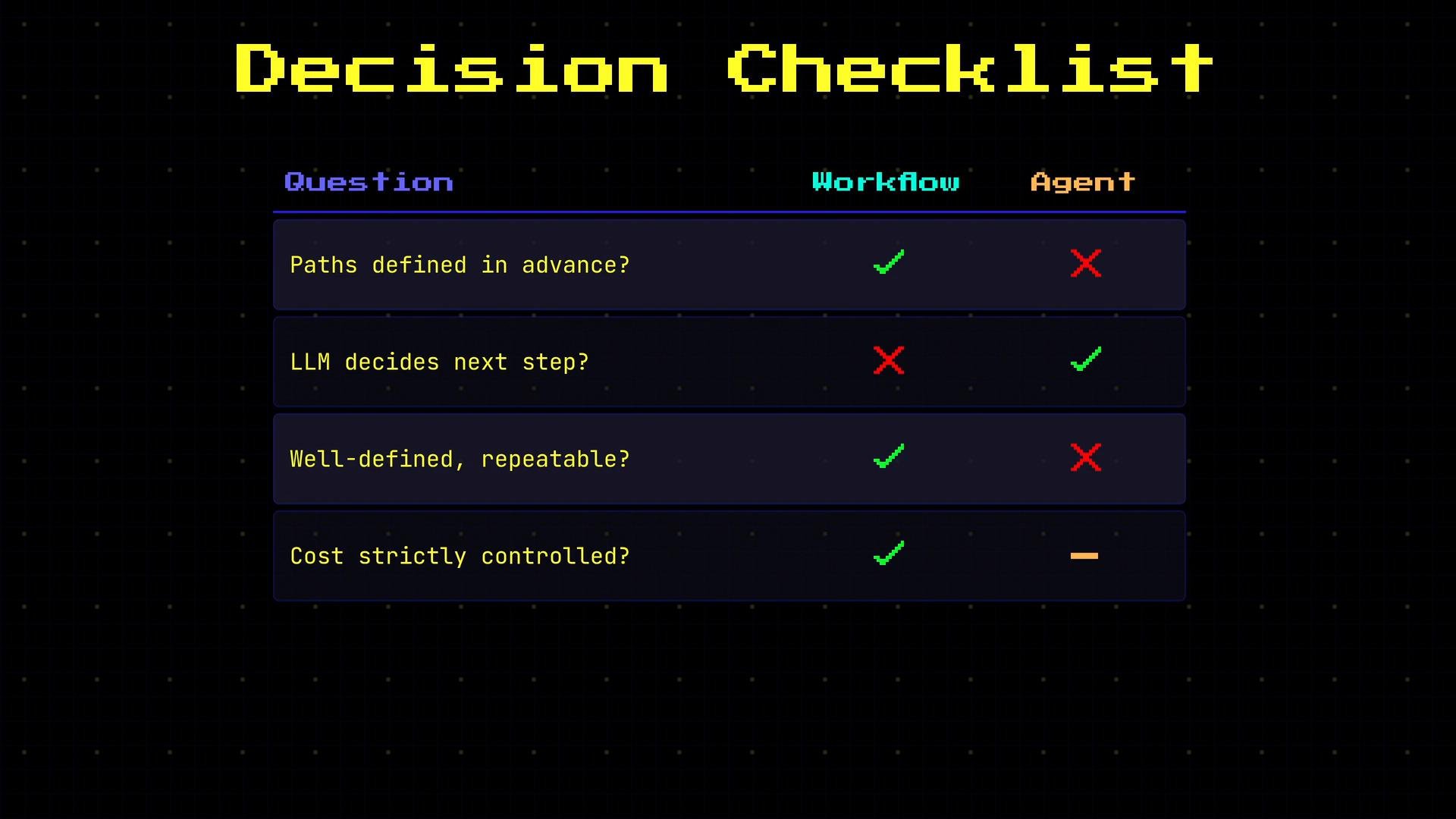
Use the checklist above: if most answers point to a workflow, start there. If answers lean toward openness and runtime decision-making, design an agent — and add guardrails to control cost and behavior.
Combining workflows and agents
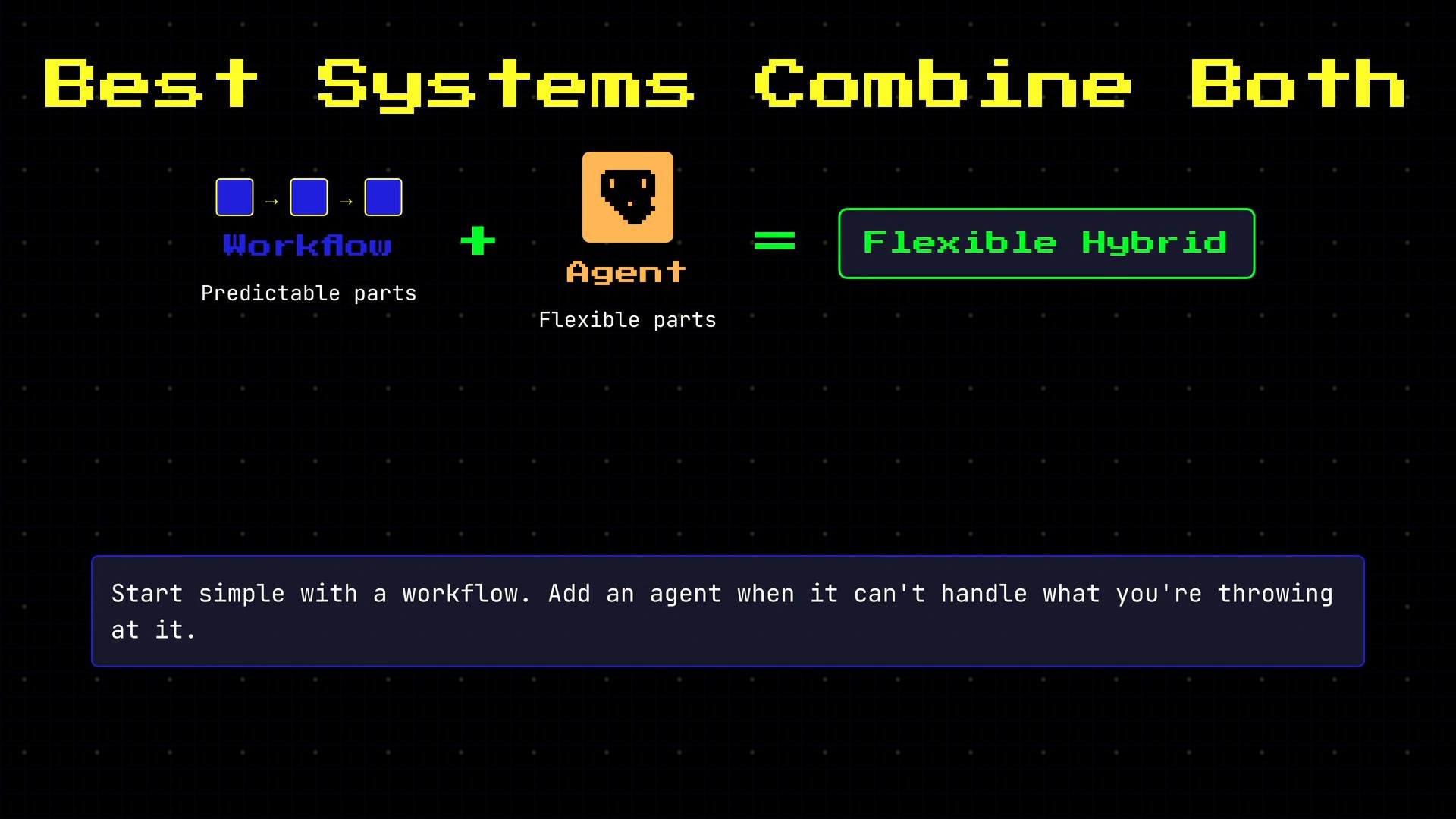
Production systems often need both. A common pattern is a hybrid design:- Use a workflow to orchestrate predictable, repeatable parts (validation, batching, fixed transforms).
- Insert an agent for sub-tasks that require exploration, adaptive decision-making, or tool usage.
- Start with a workflow; if it hits a limitation, extract the decision-heavy portion into an agent with clear interfaces and safety checks.
Summary
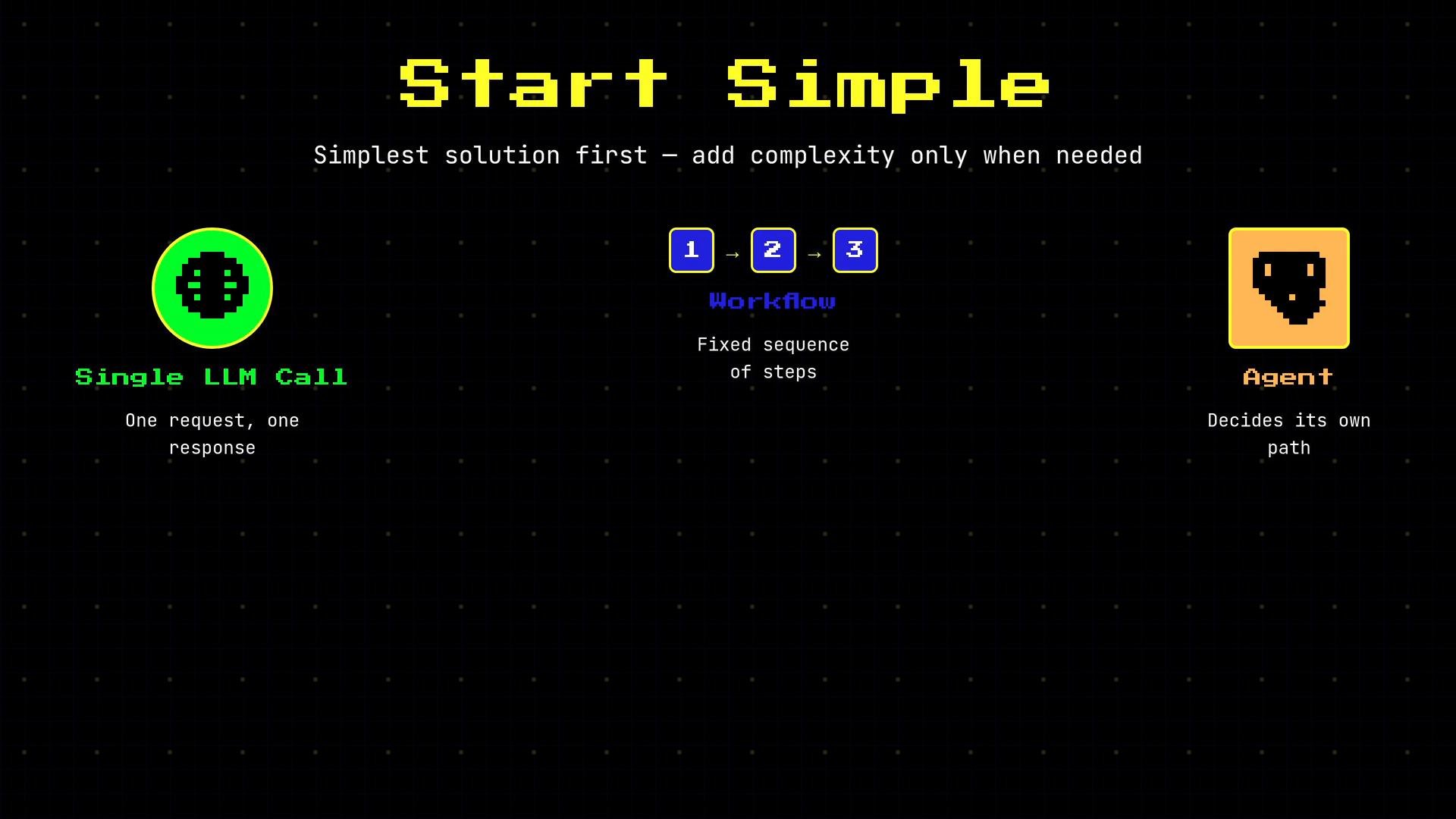
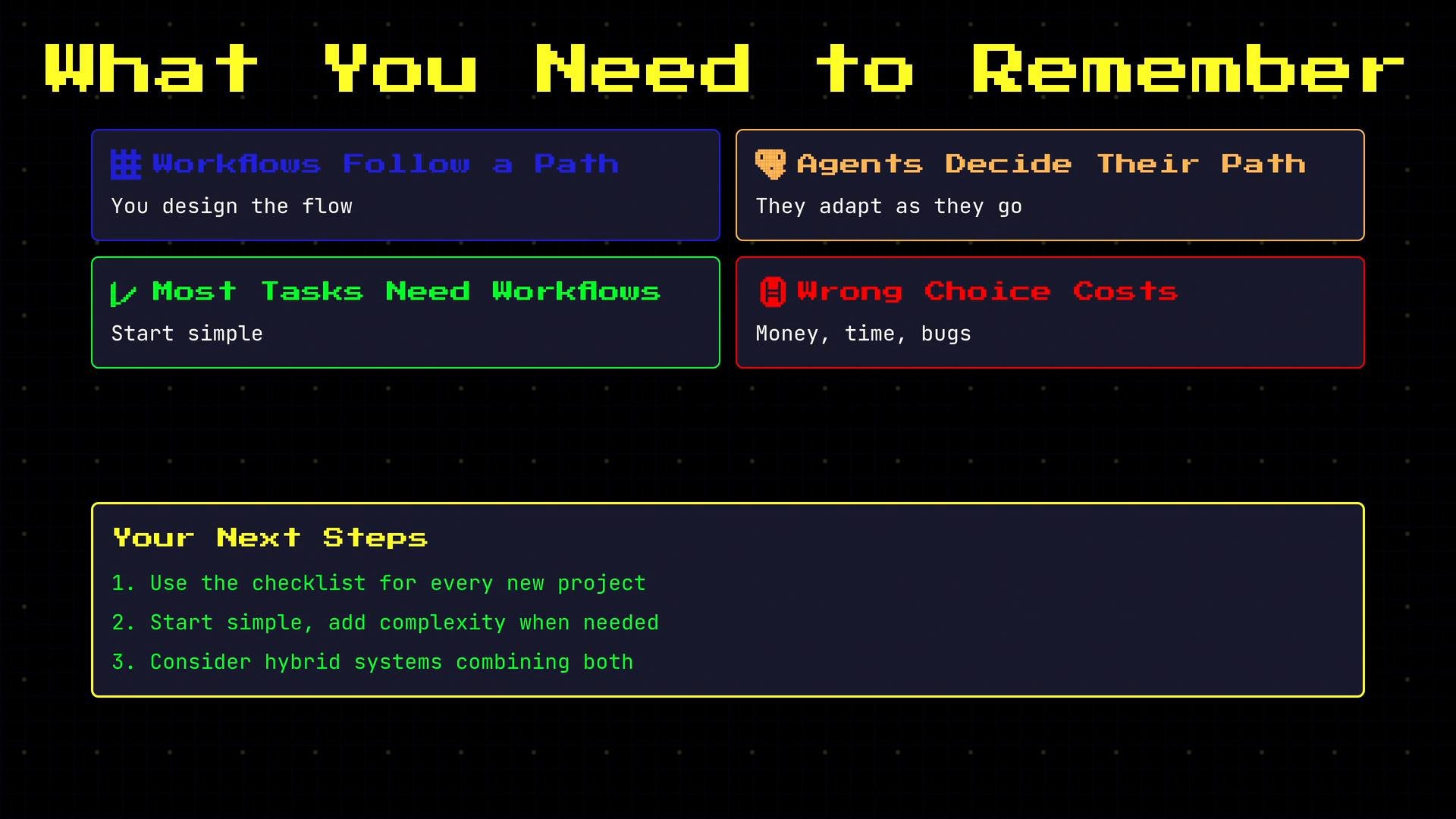
- Workflows follow a path you design; agents decide their own path.
- Most tasks are best handled by a single LLM call or a workflow.
- Use an agent only when runtime adaptability, exploration, or tool orchestration is required.
- The wrong choice increases cost, latency, and debugging burden.
- Start simple; add complexity only where it provides clear value.
- OpenAI: Guides — Agents
- LangChain: Agents
- Patterns for designing workflows and guards: consider search-based agents, function calling, and strict rate/cost controls when moving from workflows to agents.