

Private Cloud
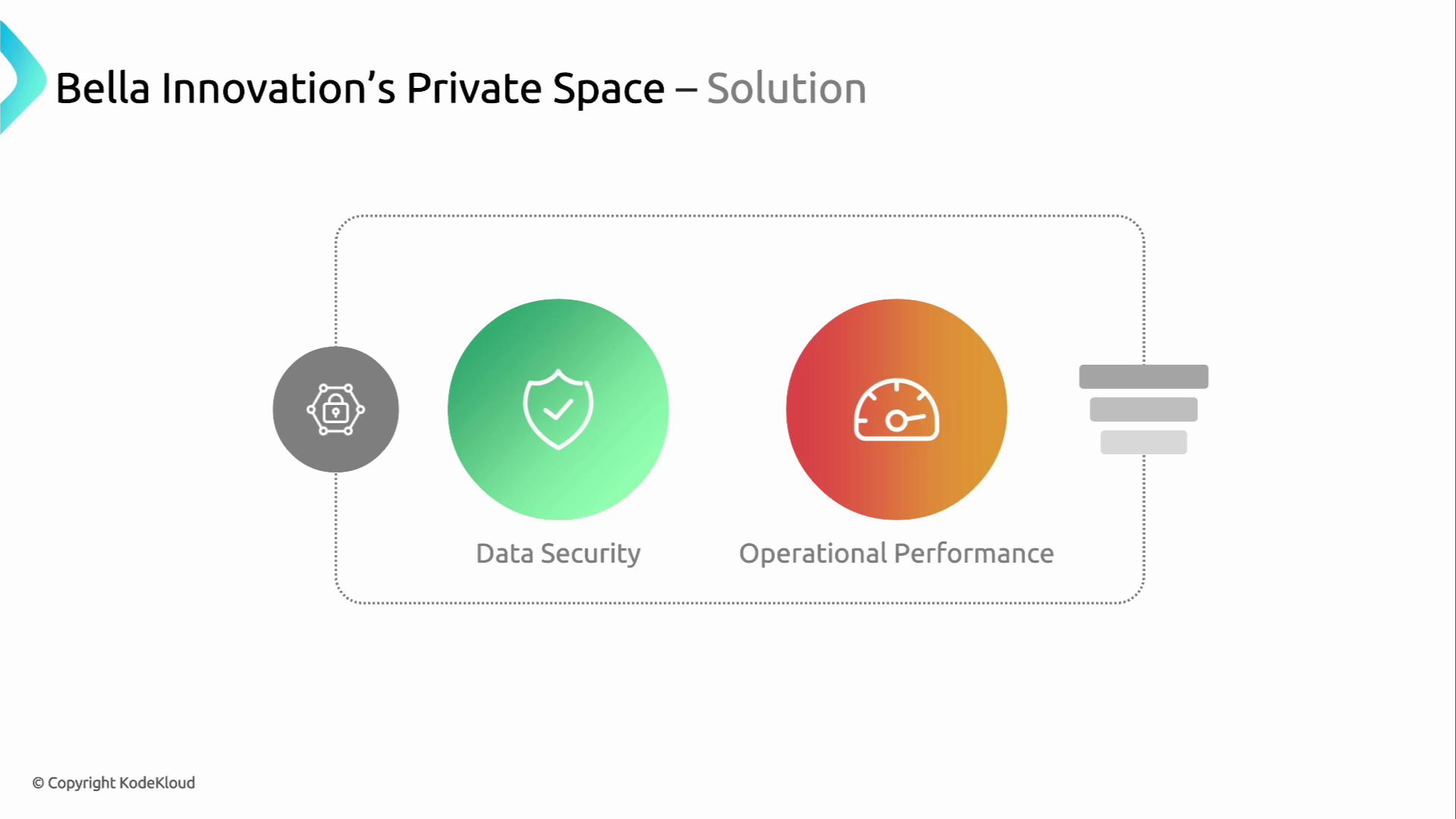
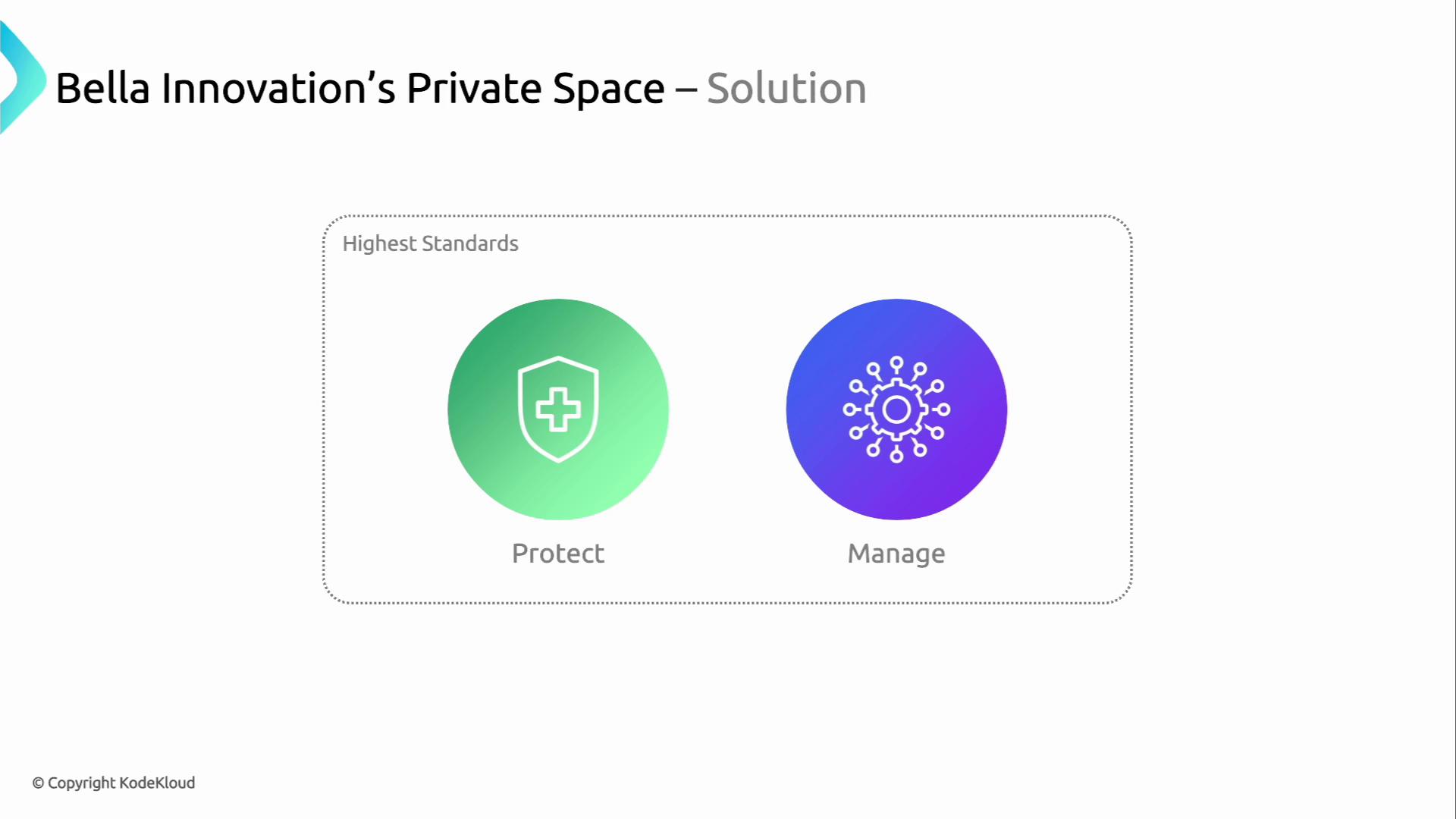
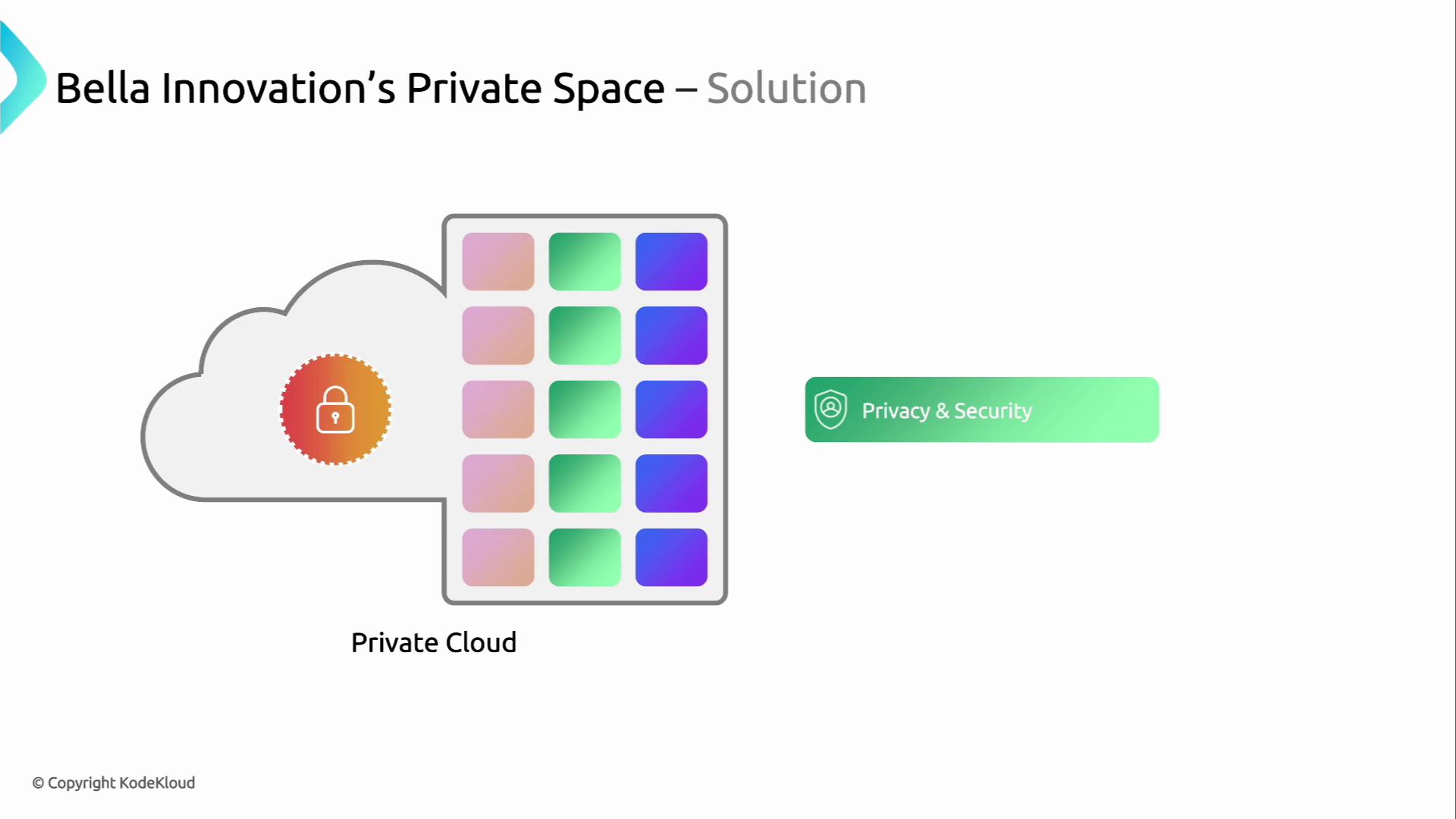
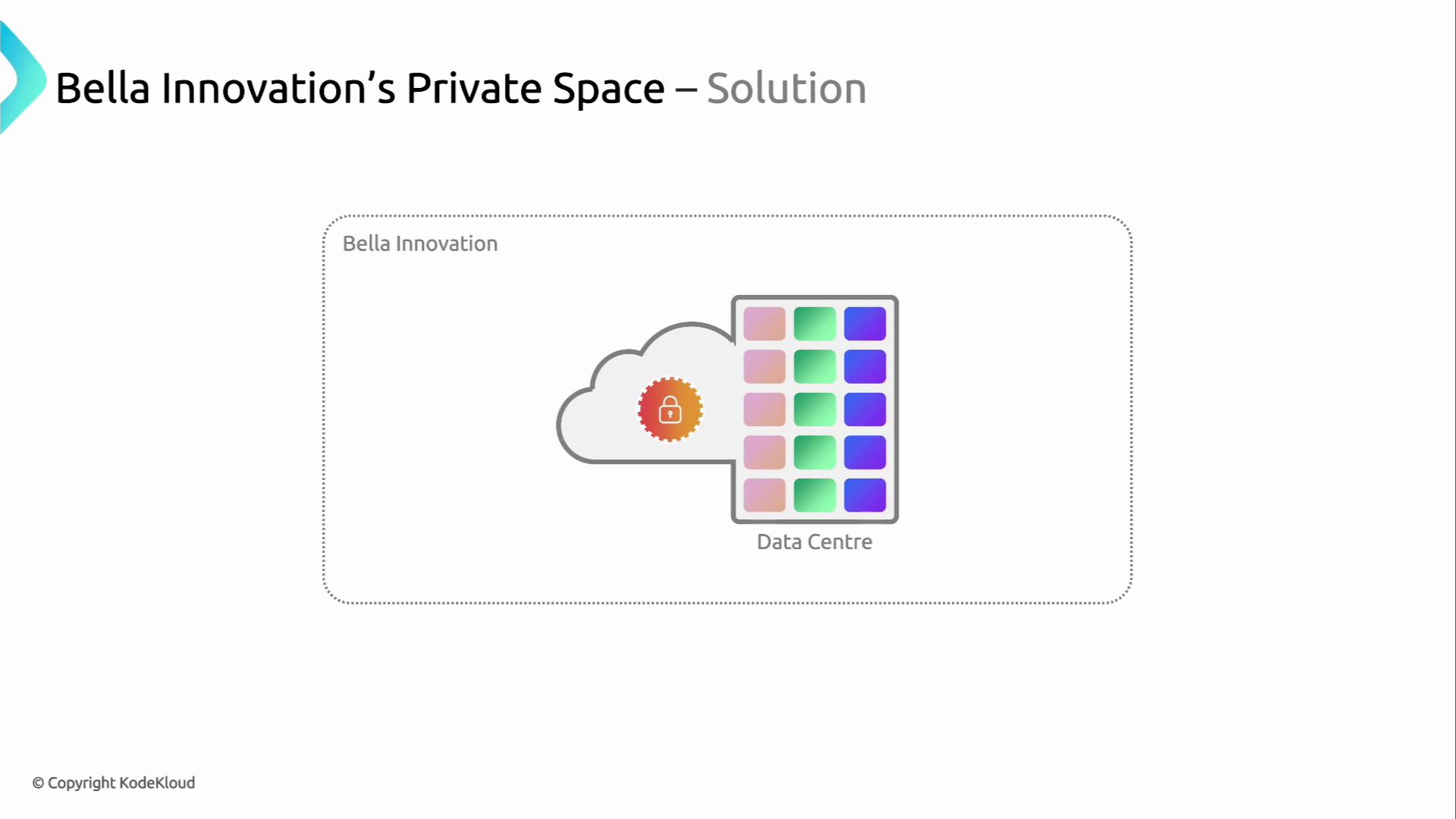
Bella Innovation handles valuable confidential data that must remain secure at all costs. To meet stringent security requirements, they are evaluating a private cloud solution—a dedicated, secure environment hosted inside their own data center. This model offers complete infrastructure control, allowing customization to meet both operational and security needs. In a private cloud, Bella Innovation is responsible for managing and securing every layer of the infrastructure, including hardware, software, and platform services. This approach eliminates reliance on external providers, ensuring that sensitive data is isolated from vulnerabilities inherent in shared resources.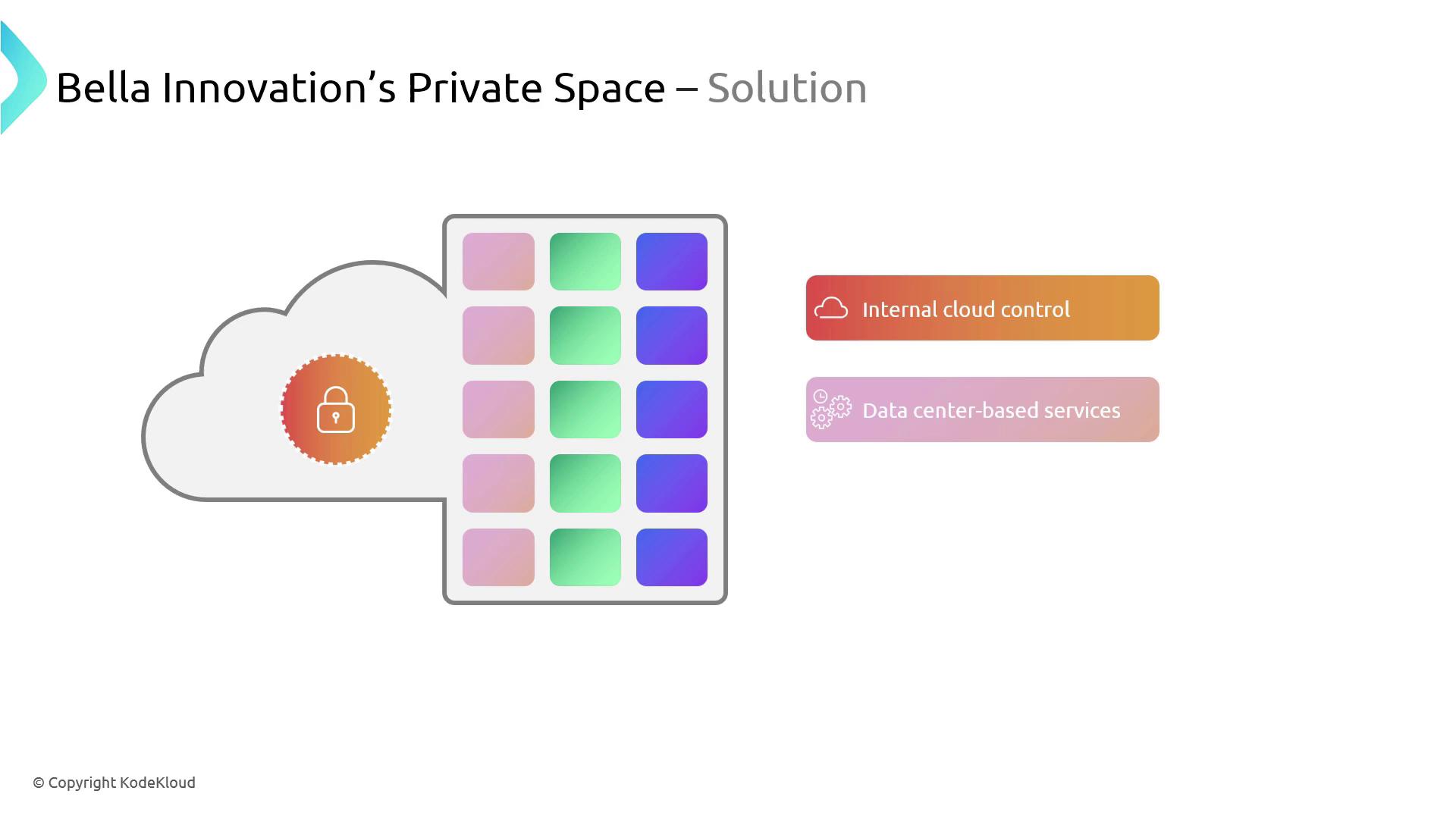
Public Cloud
As Bella Innovation prepares to launch a groundbreaking product, they need to scale resources quickly and manage unpredictable traffic spikes. Public cloud services provide a robust solution by offering virtually limitless resources that can be scaled up or down with just a few clicks. Unlike the private cloud—where Bella Innovation owns and operates infrastructure—the public cloud is managed by third-party providers such as Microsoft Azure, Amazon Web Services, or Google Cloud Platform. In this multi-tenant model, data is securely isolated even while utilizing shared hardware resources. Users access these services through secure internet interfaces like the Azure Portal, which facilitates rapid deployment and dynamic scaling. Key benefits of the public cloud include:- No upfront capital investment.
- Rapid provisioning and scalability.
- A pay-as-you-go pricing model for cost-efficiency.
Hybrid Cloud
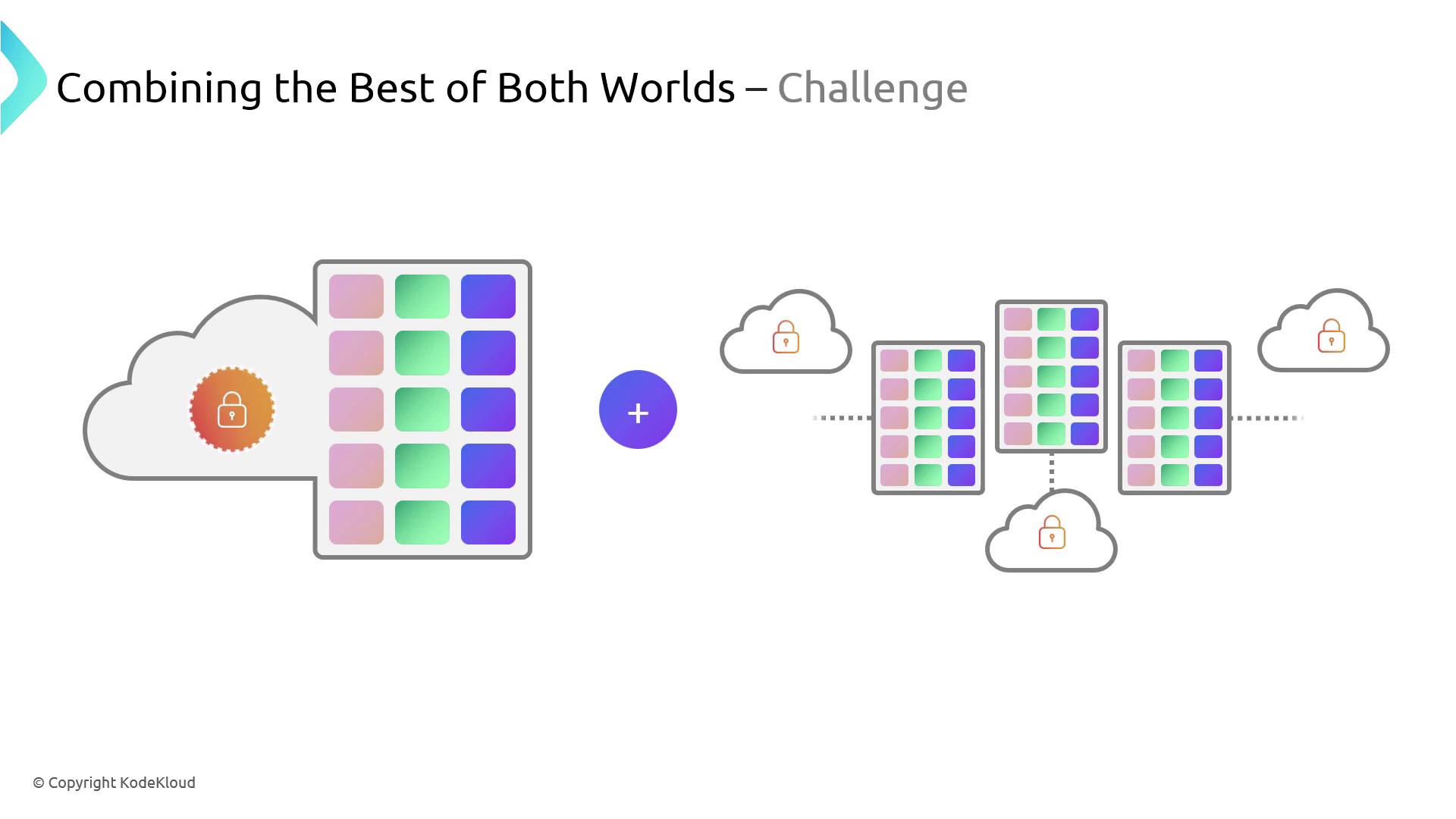
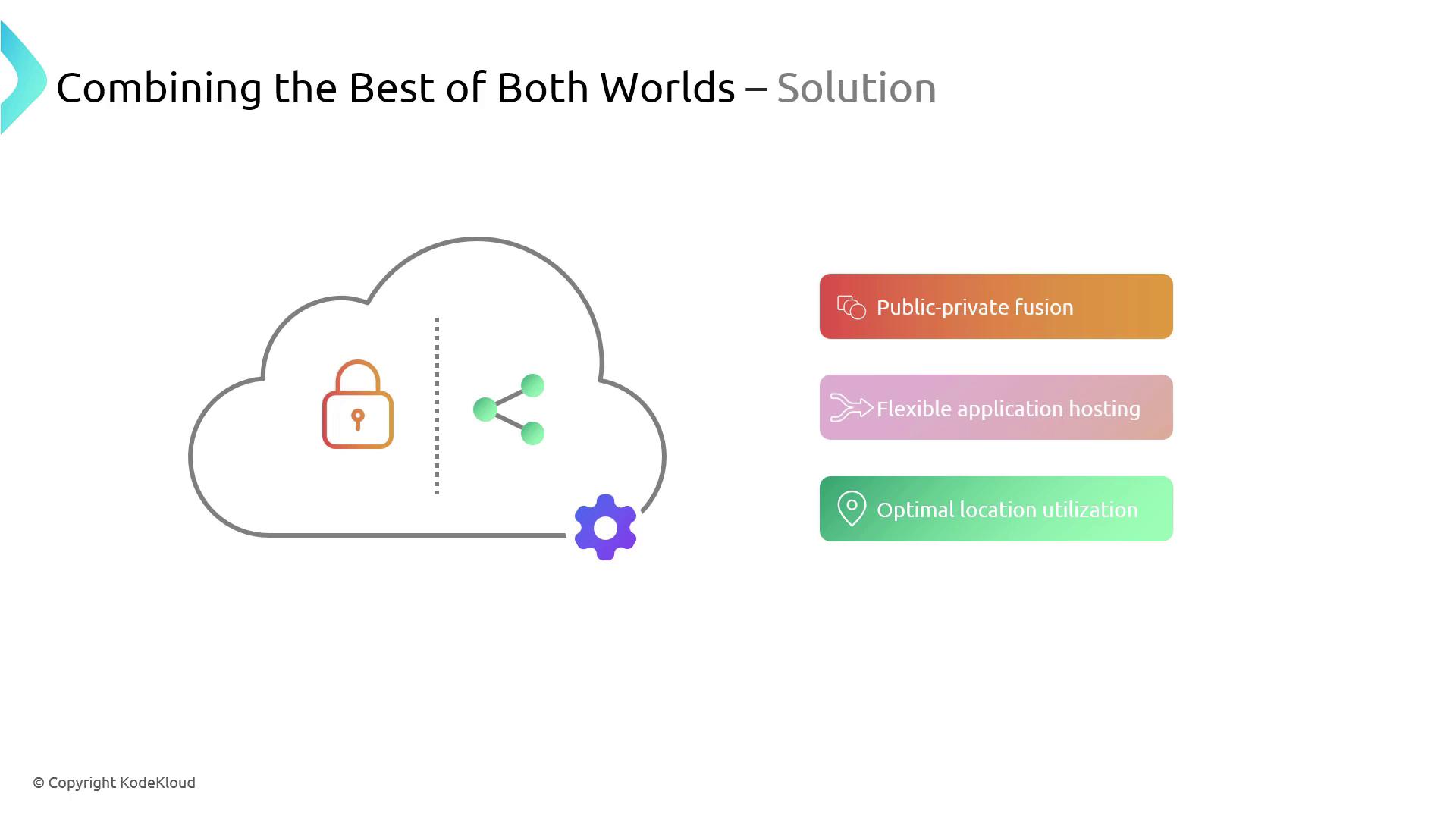
Despite the advantages of both private and public clouds, Bella Innovation faces a dual challenge: protecting sensitive data and achieving scalable, flexible operations for customer-facing services. The hybrid cloud addresses this by merging the benefits of both environments. The hybrid cloud enables Bella Innovation to:- Keep sensitive data secure within a private cloud.
- Leverage the scalability of a public cloud for applications that experience variable demand.
- Seamlessly migrate applications and workloads between environments based on specific operational needs.
Comparing Cloud Models
Below is a comparison of the three cloud models—public, private, and hybrid—to help determine which fits various business requirements.Public Cloud
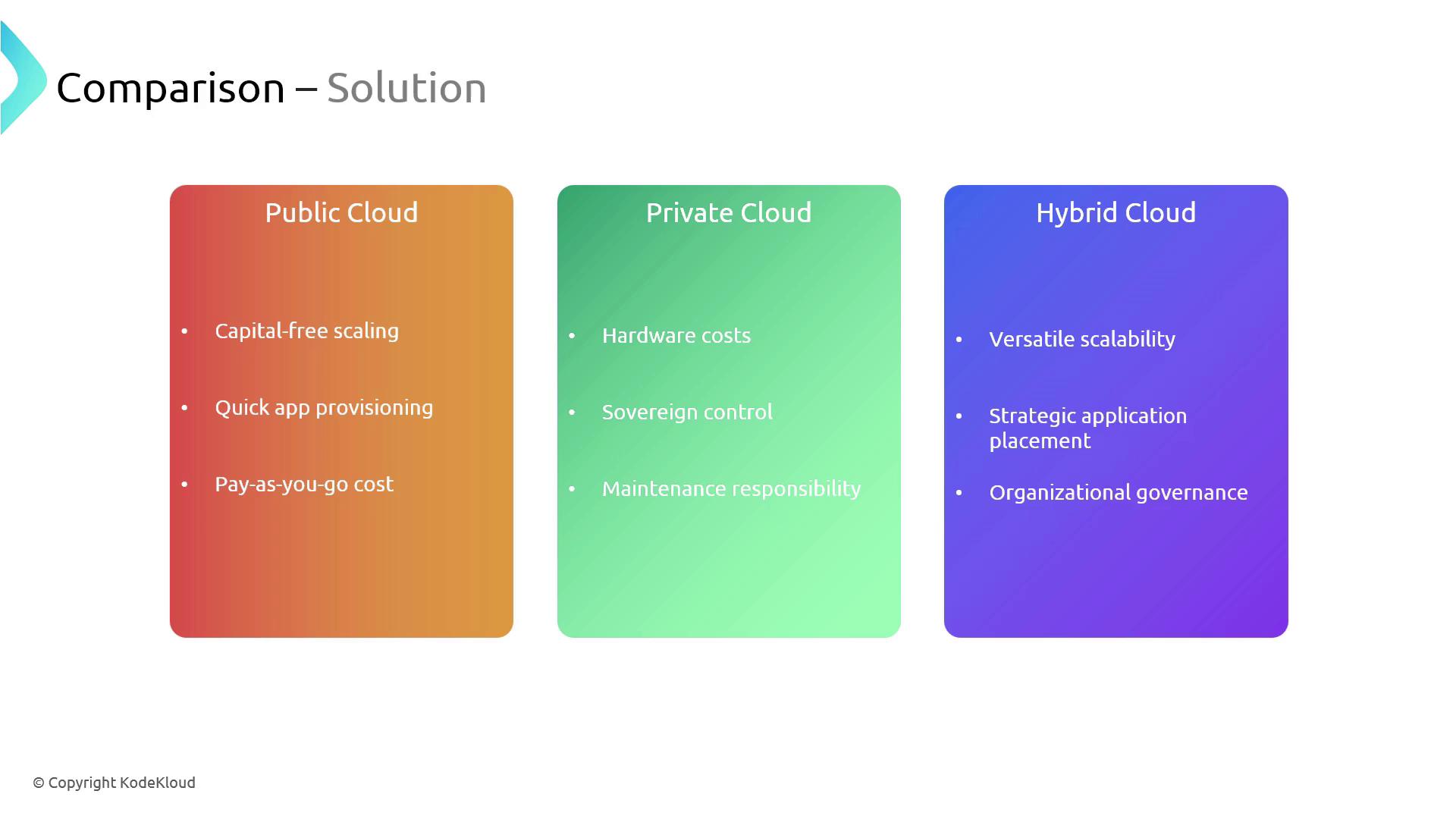
- Cost Efficiency: Eliminates capital expenditures with a pay-for-what-you-use model.
- Rapid Provisioning: Enables quick deployment and scaling.
- Accessibility: Easy access via any internet-connected device.
Private Cloud
- Dedicated Infrastructure: Resources are exclusively allocated to the organization.
- Enhanced Security: Sensitive data is managed internally with tailored security measures.
- Full Control: The organization is fully responsible for hardware maintenance and updates.
Hybrid Cloud
- Versatility: Combines the benefits of public and private clouds.
- Strategic Placement: Sensitive data remains secure on-premises while scalable applications use the public cloud.
- Organizational Governance: Balances stringent security with operational flexibility.
Setup Complexity
The setup complexity of each cloud model varies:- Public Cloud: Simple and cost-effective setup with minimal hardware requirements. A laptop and an internet connection are all it takes.
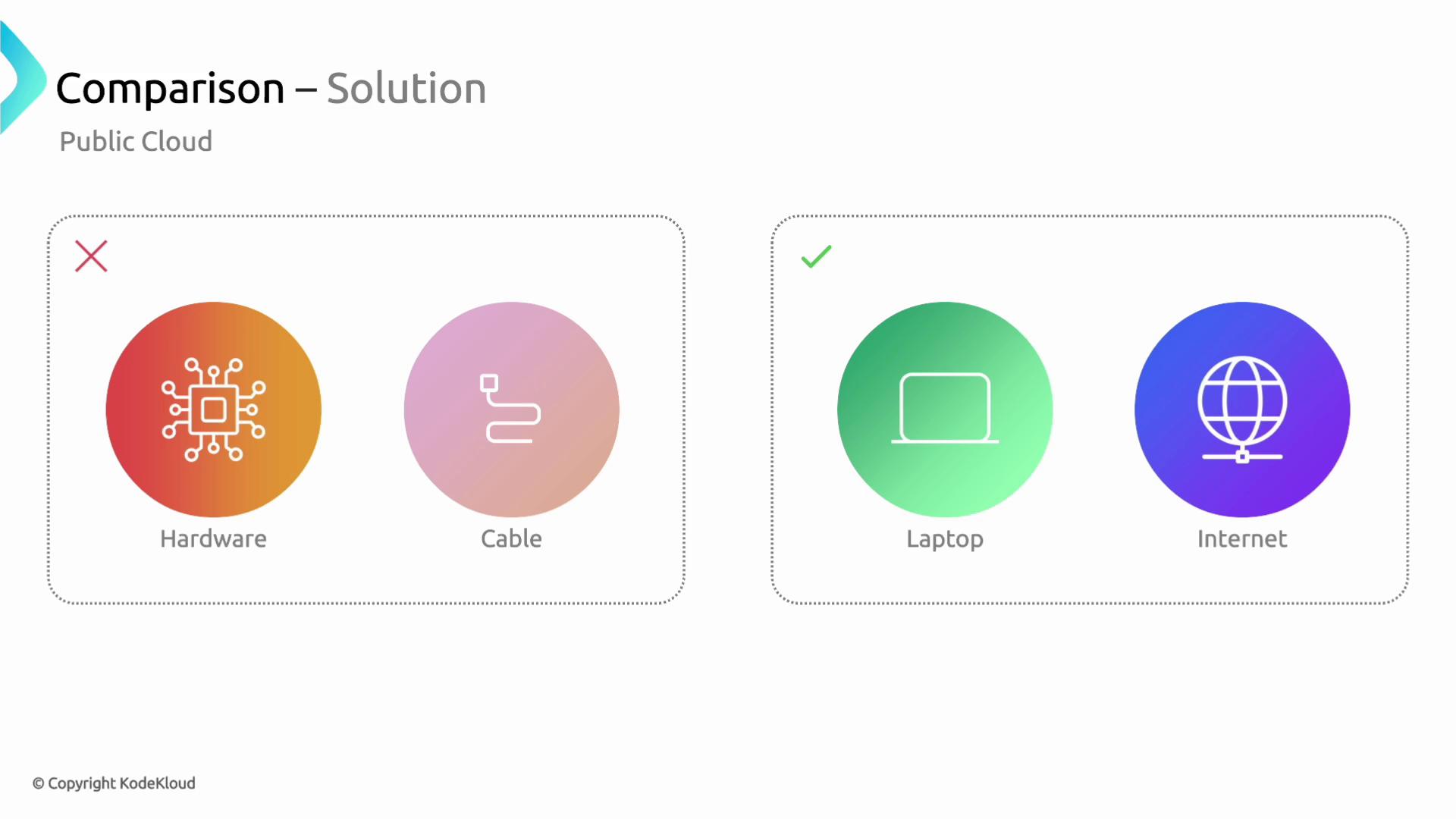
- Private Cloud: Involves significant infrastructure investments, including hardware, networking, cabling, and cooling systems, resulting in a more complex setup.
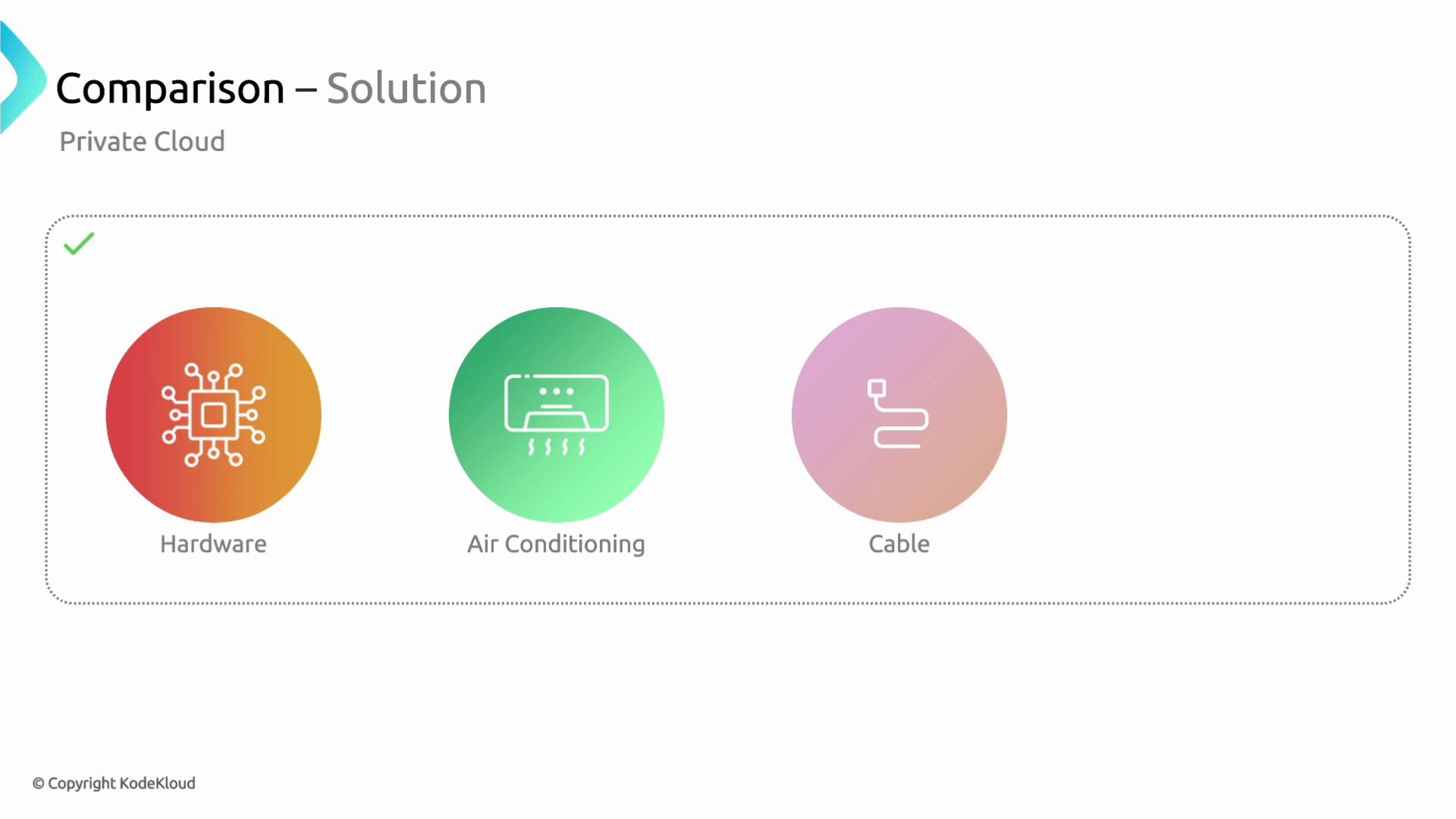
- Hybrid Cloud: Combines elements of both public and private clouds. While it leverages the scalability of the public cloud, it also inherits some of the setup complexities of a private cloud. Integration requires thoughtful planning and management.
When deciding among cloud models, factors such as security requirements, scalability needs, and budget constraints play a critical role. Evaluate each model carefully to align with your business objectives.
Conclusion
Bella Innovation’s evaluation of cloud models reveals that:- A private cloud is ideal for safeguarding sensitive, proprietary data.
- A public cloud provides the scalability and cost benefits required for dynamic, customer-facing applications.
- A hybrid cloud offers the best of both worlds—ensuring robust data security while accommodating growth and flexibility.