Role-based access control (RBAC) is an essential security mechanism that governs authorization within the Azure ecosystem. While Microsoft Entra ID (formerly known as Azure Active Directory) handles authentication, RBAC focuses on controlling who can perform specific actions on your Azure resources. Within Microsoft Entra ID, you manage various objects such as users, service principals, and groups. Service principals, which operate similarly to service accounts, enable automated tasks without requiring user intervention and authenticate through Microsoft Entra ID. Your Azure environment is organized with a subscription residing within your tenant’s Entra ID (or directory). This subscription contains multiple resource groups and various resources, all of which can be logically organized under management groups. With RBAC, you can assign permissions to users, service principals, and groups, ensuring precise control over access at different levels. RBAC addresses authorization by focusing on three core components:Documentation Index
Fetch the complete documentation index at: https://notes.kodekloud.com/llms.txt
Use this file to discover all available pages before exploring further.
- Who: The identity (user, group, or service principal) attempting to access a resource.
- Where: The specific resource or resource group in question.
- What: The action being performed, such as creating a database or deleting a Virtual Machine.
- Predefined roles: Roles like owner, contributor, and reader provide a broad range of permissions.
- Custom roles: Tailor roles to meet specific requirements unique to your organization.
- Flexible scope: Assign roles at the management group, subscription, resource group, or individual resource level.
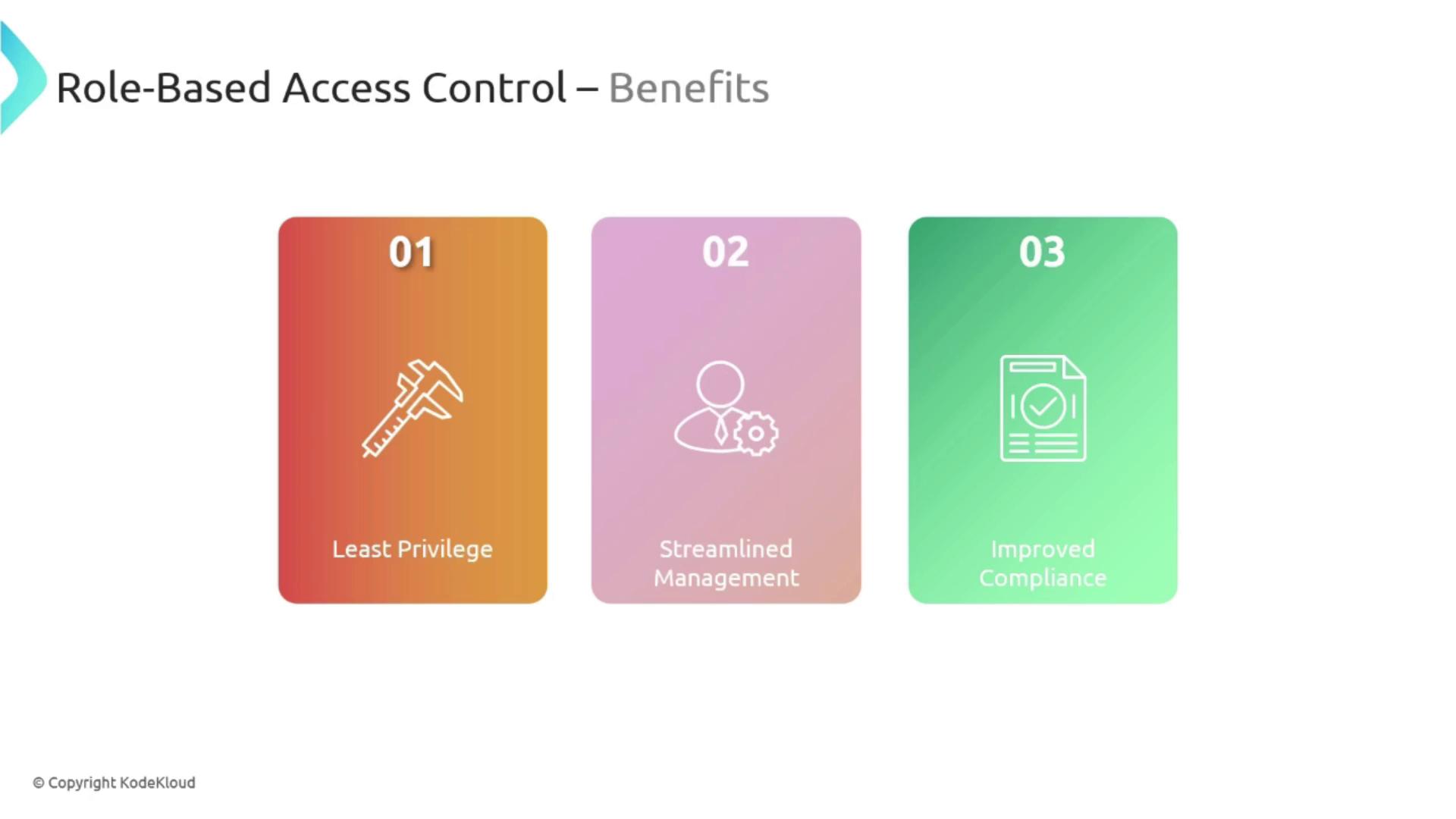
- Least privilege: Users receive only the access necessary to perform their tasks, reducing overall risk.
- Streamlined management: Simplifies permission handling in complex environments.
- Enhanced compliance: Ensures that access controls conform to industry and organizational standards.