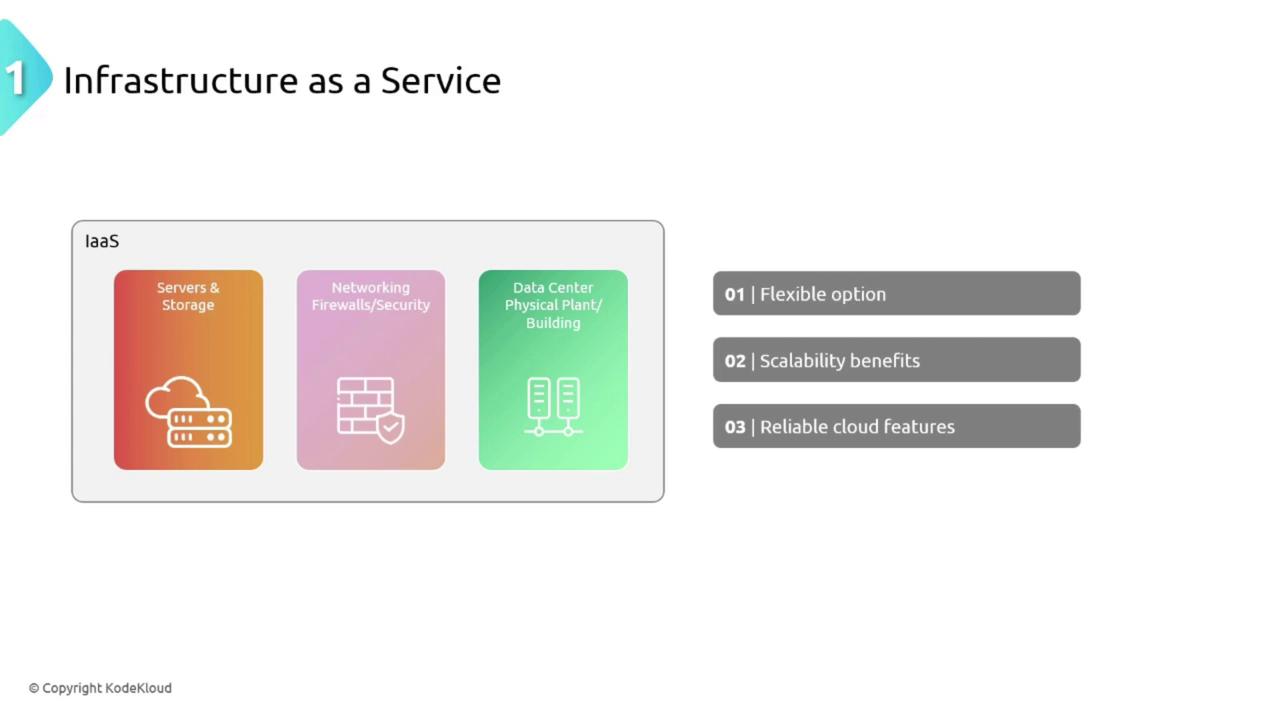
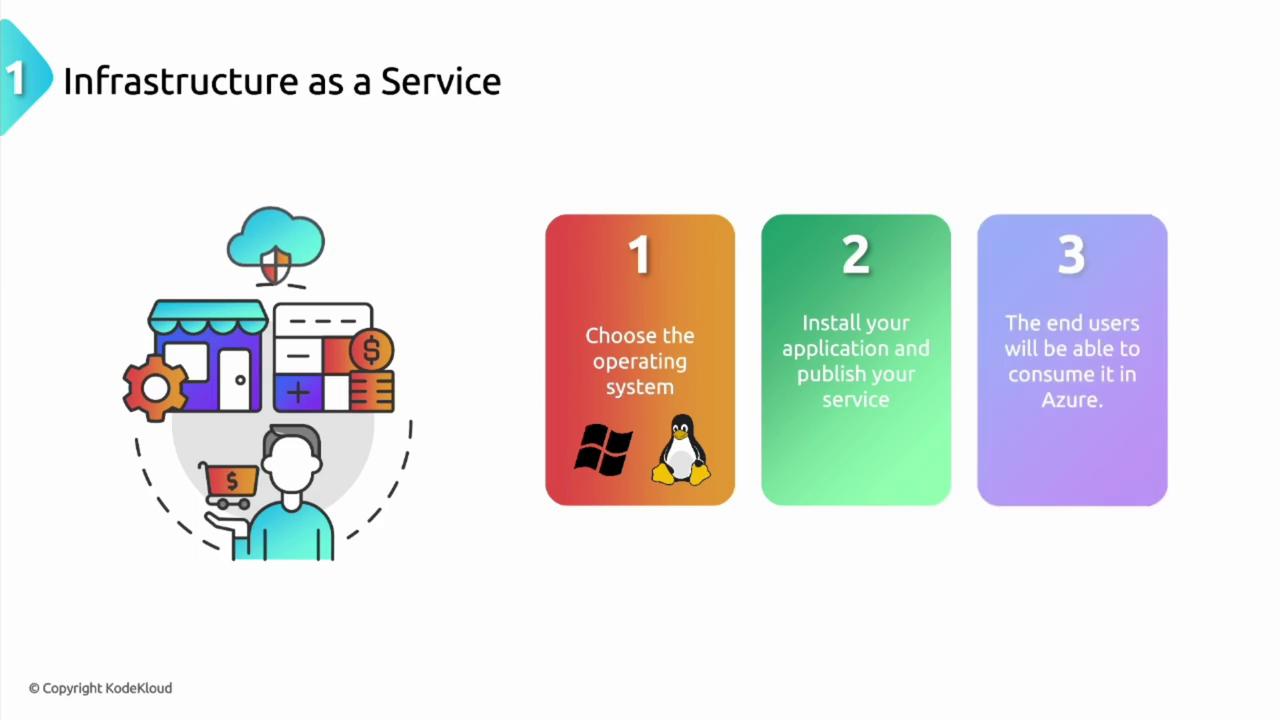
Infrastructure as a Service (IaaS) provides a flexible, pay-as-you-go model where you rent the digital equivalent of a plot of land. Instead of purchasing and maintaining physical servers, storage, and networking hardware, the cloud provider supplies these raw resources. This allows you, for example, to run applications like Bella Innovations’ invoicing system while managing everything from the operating system onward. Consider the scenario where you move your on-premises servers to the cloud. You migrate your data and configurations to a rented server in the cloud—a process that mirrors transferring your physical infrastructure. The cloud provider takes care of the physical aspects such as data center maintenance, networking, firewalls, and overall security. Providers like Microsoft run multiple data centers in regions such as East US, South India, and West Europe to ensure high availability and regional flexibility. They invest in the state-of-the-art hardware, including servers and storage devices, and lease these resources as a service. This model removes the complexities and costs associated with owning and managing physical infrastructure.Documentation Index
Fetch the complete documentation index at: https://notes.kodekloud.com/llms.txt
Use this file to discover all available pages before exploring further.
- Cost Efficiency: Avoid large capital expenditures by renting virtualized hardware.
- Scalability: Adjust resources dynamically—expanding during traffic peaks and scaling back when demand decreases.
- Reliability: Benefit from built-in disaster recovery solutions, robust uptime guarantees, and continuous service availability.