

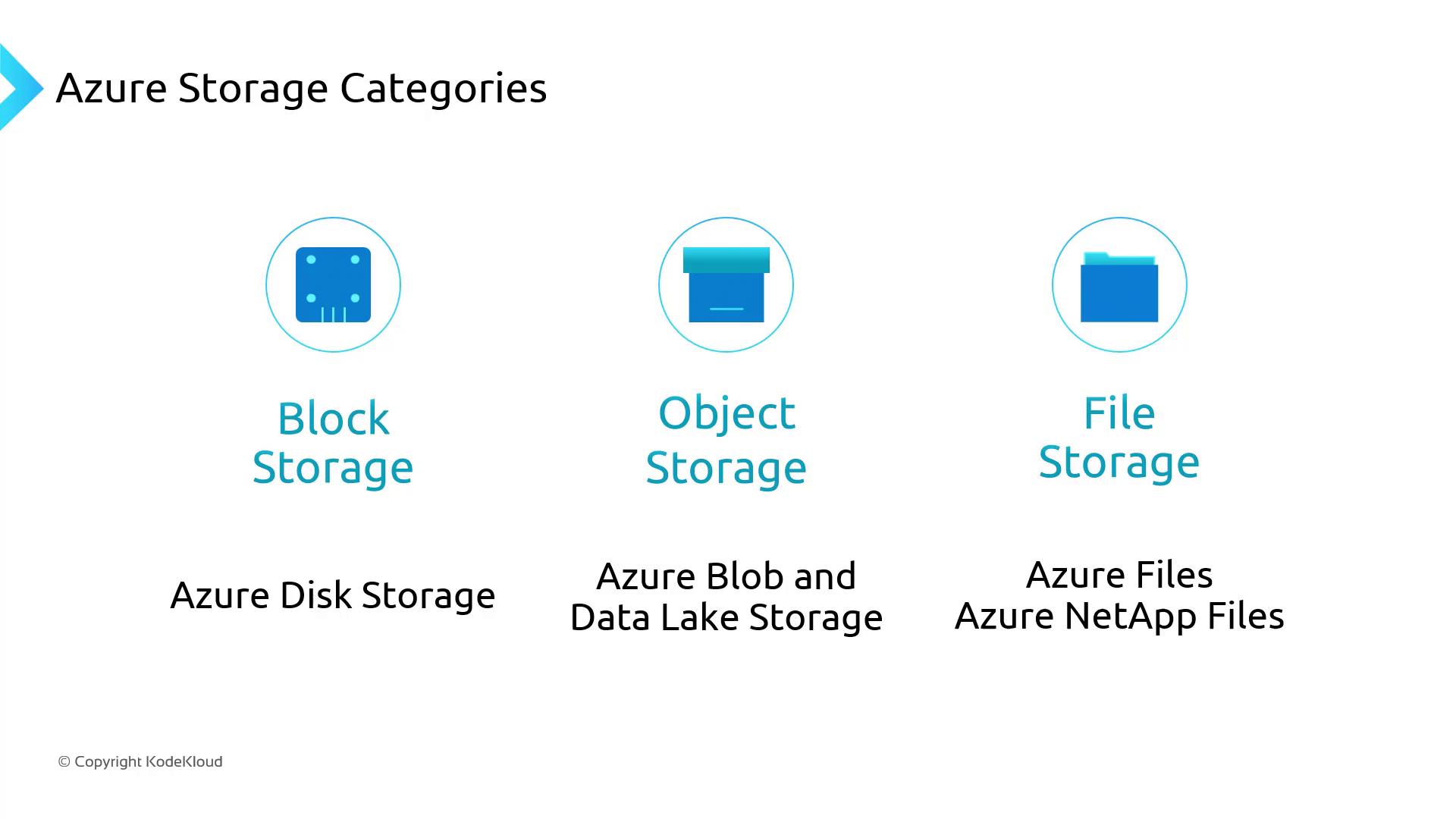
- Block Storage (Azure Disks): Persistent disks for VMs or Kubernetes Data Disks
- File Storage (Azure Files & Azure NetApp Files): SMB/NFS file shares for lift-and-shift or shared volumes
- Object Storage (Azure Blob & Data Lake Storage): Massively scalable unstructured data store
1. Block Storage – Azure Disks
Azure Disks provides high-performance block storage with multiple SKUs to fit your IOPS and throughput needs. As you move from Standard HDD to Ultra Disk, performance and cost both increase. Premium SSD v2 slots in between Premium SSD and Ultra Disk for balanced performance.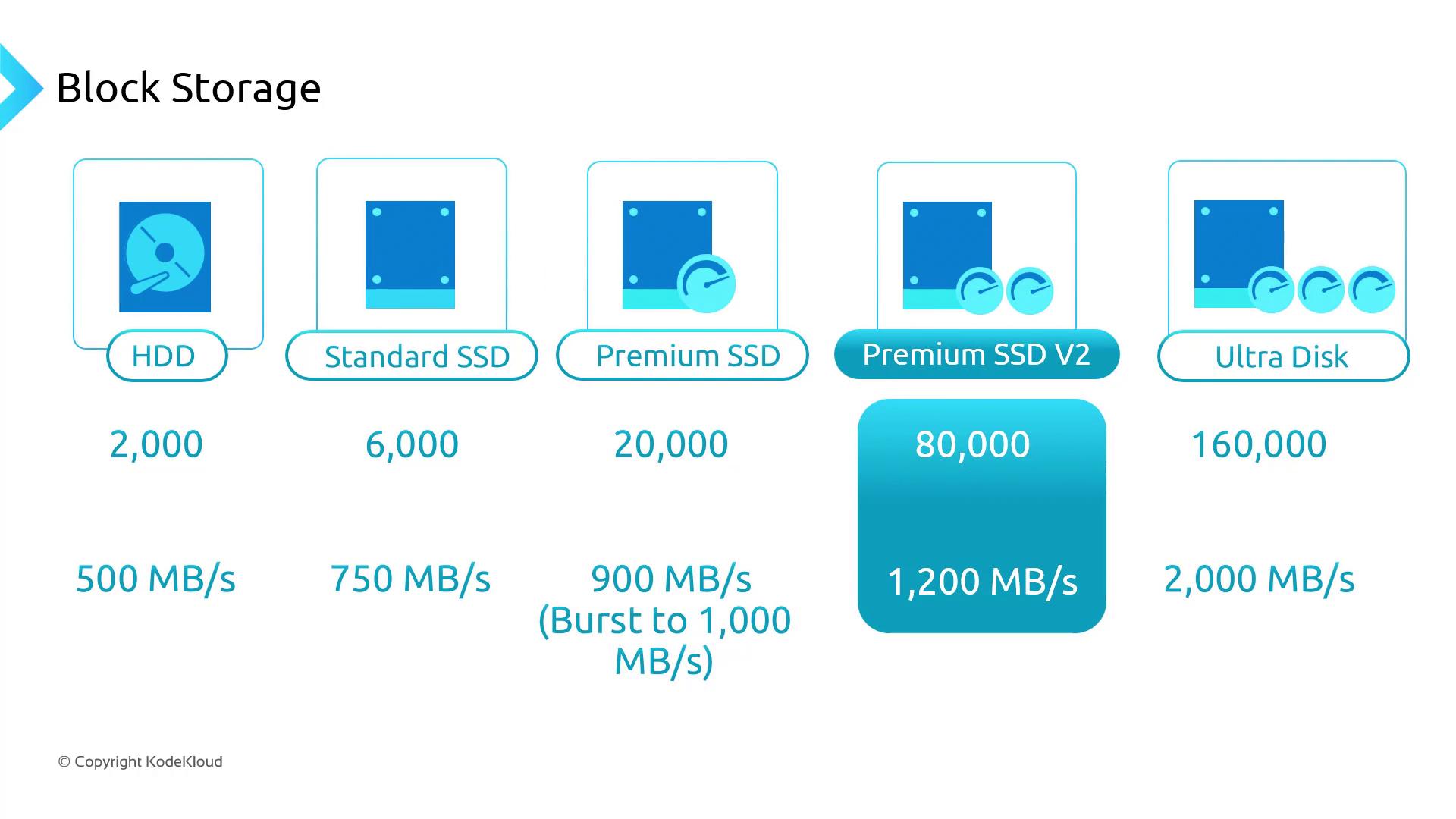
Premium SSD v2 cannot be used as an OS disk.
In AKS, Azure Disks mount as
In AKS, Azure Disks mount as
ReadWriteOnce, so a disk is accessible by a single node at a time.2. File Storage – Azure Files & Azure NetApp Files
For workloads requiring shared file access, Azure Files offers fully managed SMB and NFS shares: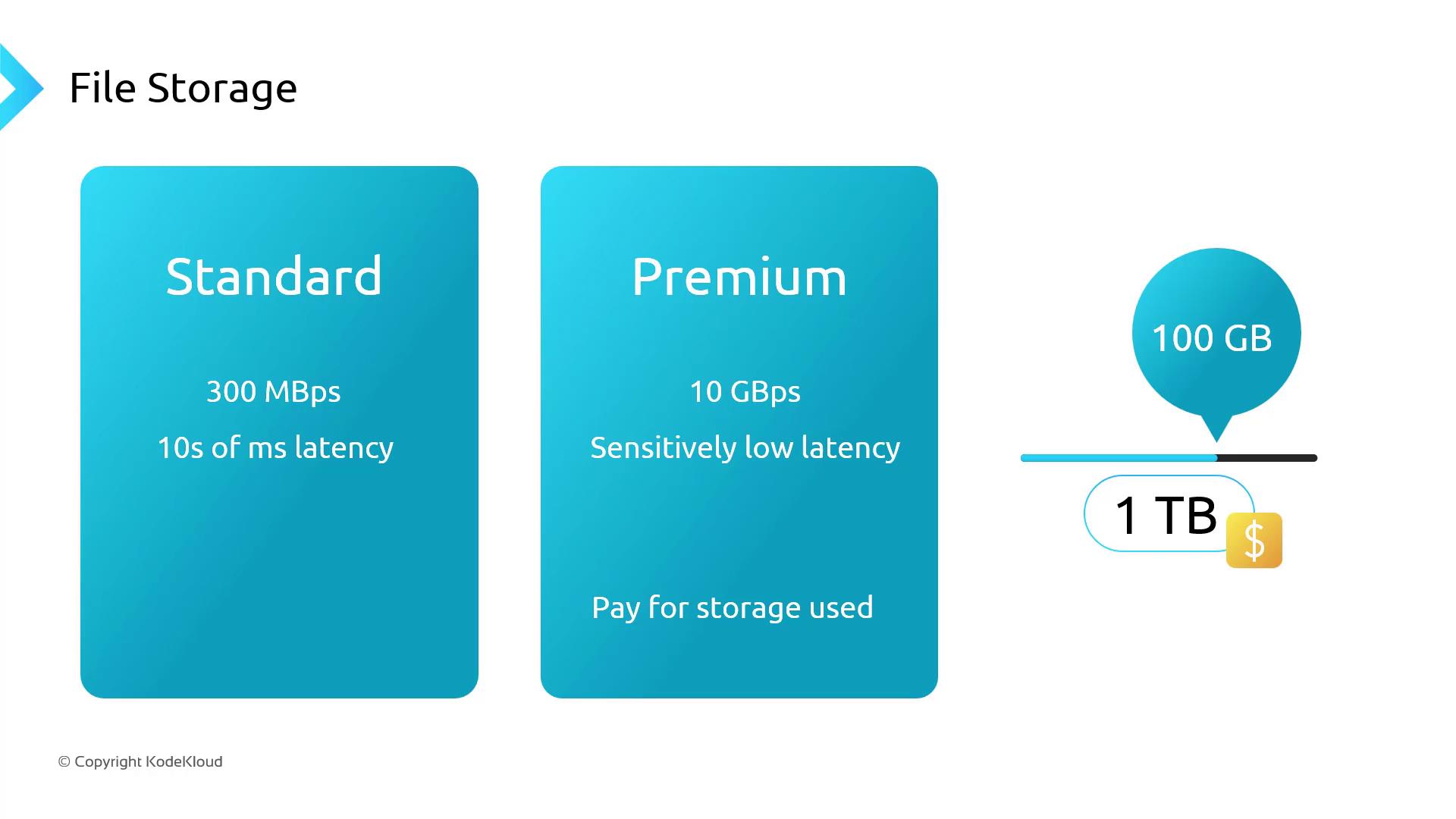
If you provision 1 TB on a Premium share but only use 100 GB, you pay for the full 1 TB.
Consider Azure NetApp Files for enterprise-grade performance and multitenant workloads.
Consider Azure NetApp Files for enterprise-grade performance and multitenant workloads.
3. Object Storage – Azure Blob & Data Lake Gen2
Azure Blob Storage is designed for massive volumes of unstructured data. You can select performance tiers (Standard or Premium) and enable a hierarchical namespace (ADLS Gen2) for analytics workloads. Four durability options ensure data resilience: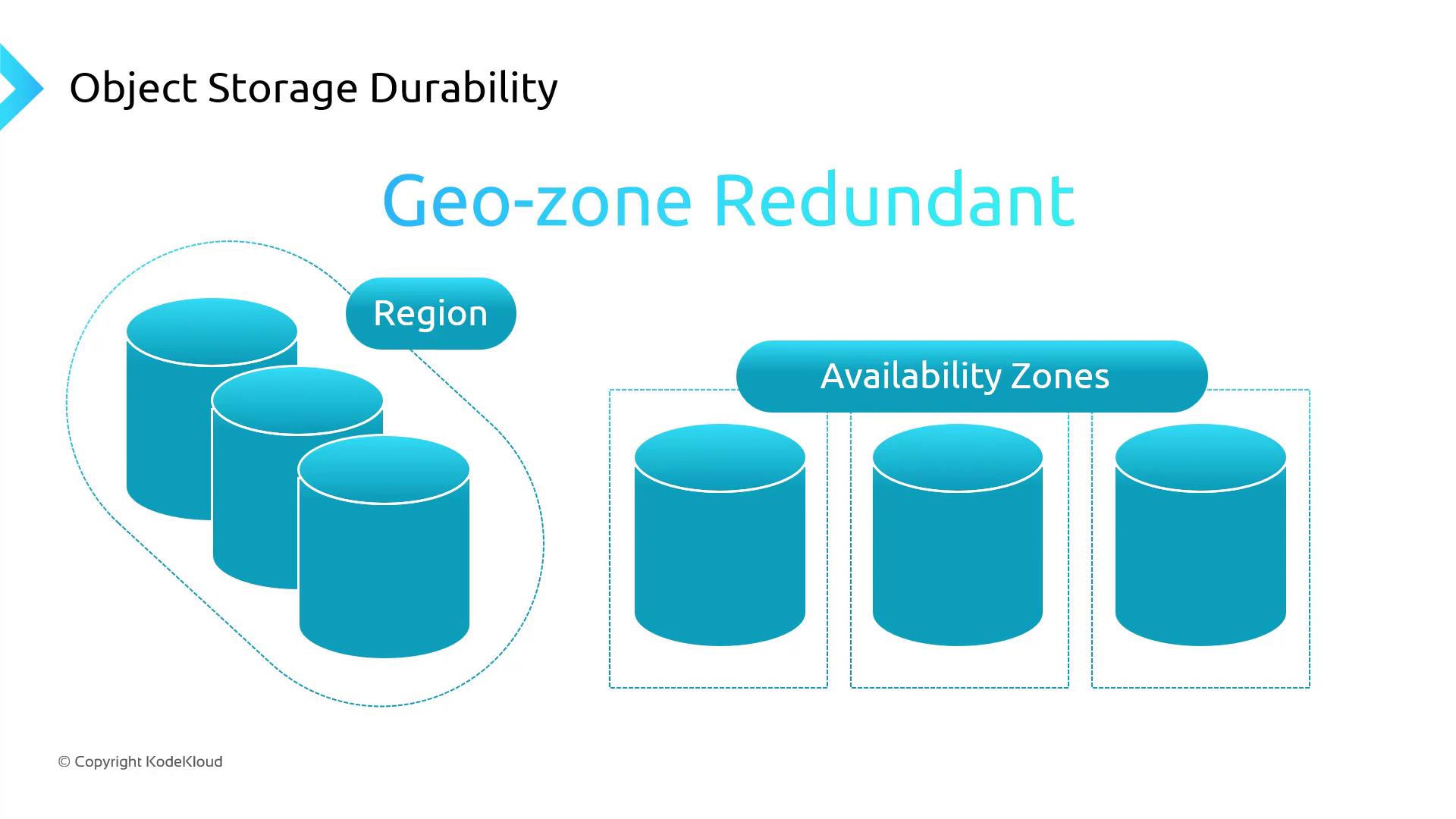
Links and References
- Azure Disks documentation
- Azure Files documentation
- Azure NetApp Files overview
- Azure Blob Storage overview
- Blob CSI driver GitHub