This article reviews DevOps prerequisites and explores leveraging Jenkins for CI/CD in a Node.js project at Dasher Technologies.
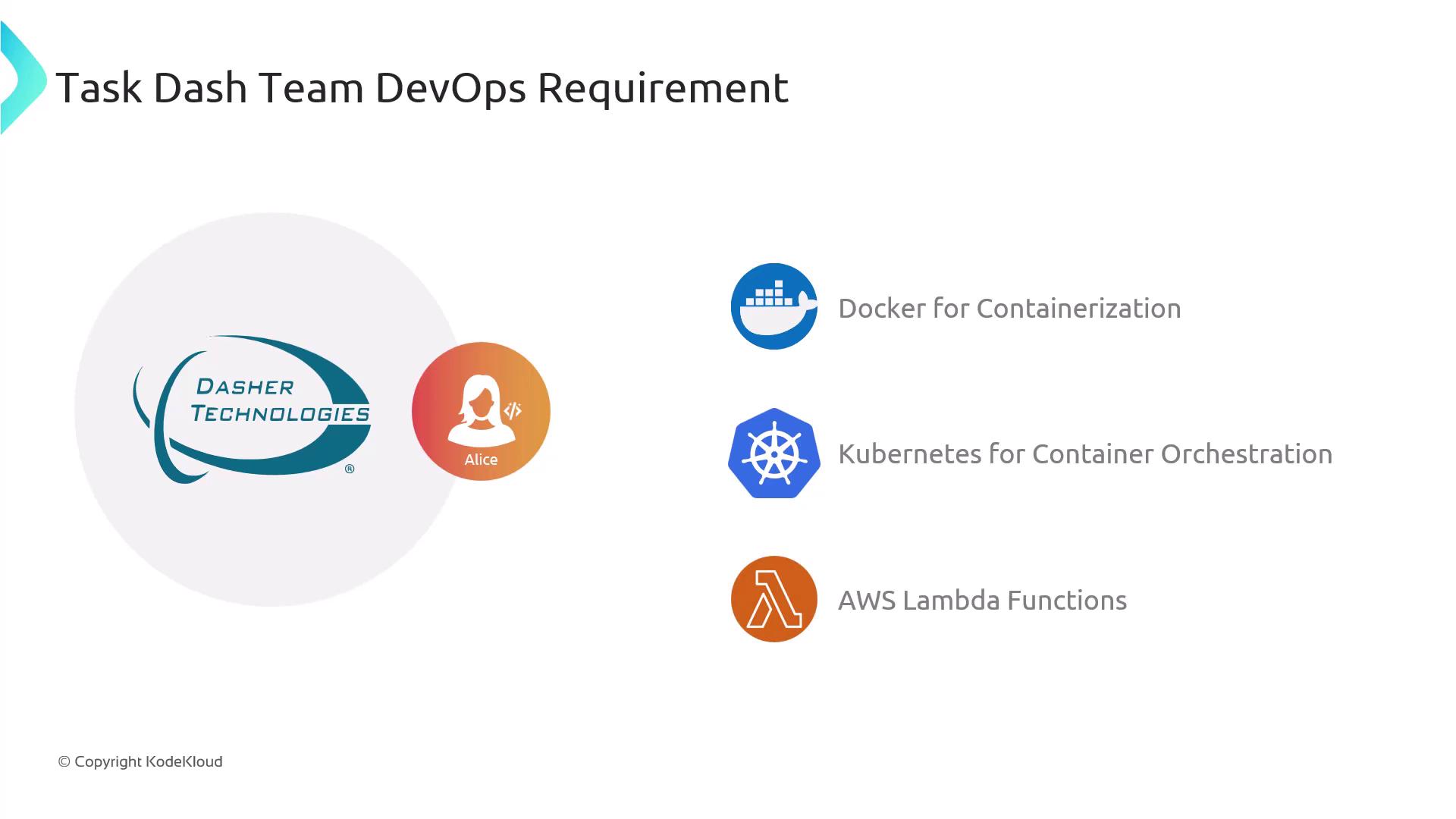
In this article, we review the essential DevOps prerequisites for a cutting-edge software provider and explore how Jenkins can be leveraged to meet these requirements. Dasher Technologies, a leading software provider, offers a platform that seamlessly integrates data, applications, and devices across on-premises environments. Recently, their research and development team has been evaluating the transition of services to the cloud along with the integration of container technologies.Dasher Technologies initially focused on a Node.js-based project with plans to eventually adopt similar practices for projects developed in Java and Python. To drive this initiative, a dedicated DevOps team was assembled under the leadership of Alice. Her responsibility is to establish DevOps pipelines from the ground up, adhering to industry best practices. The project will utilize a multi-cloud infrastructure, leveraging Docker for containerization, Kubernetes for orchestrating containers, and AWS Lambda functions for serverless deployments.Alice’s initial assessment highlighted several challenges with the current Node.js project:
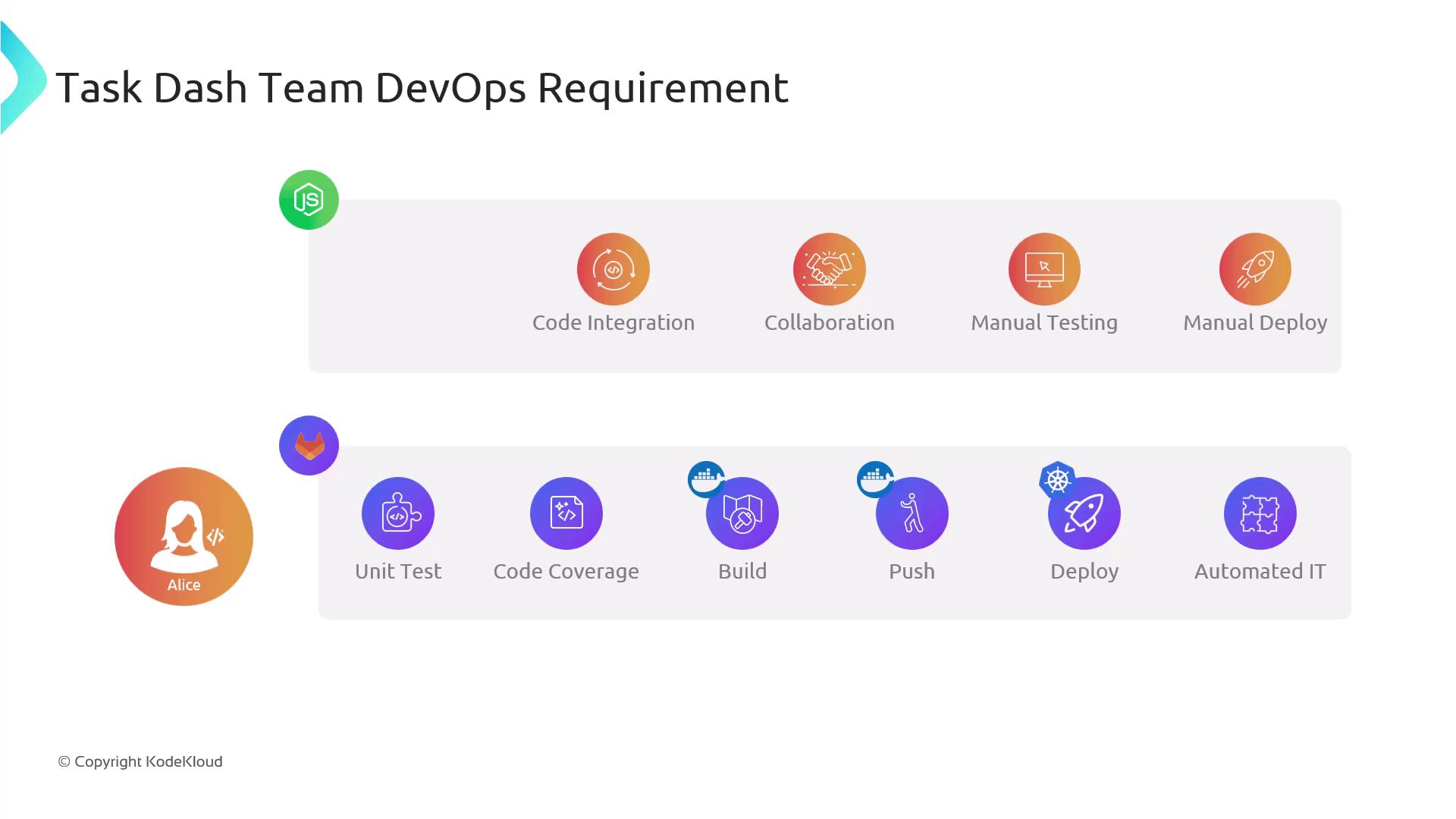
Lack of a version control system, resulting in developers writing and manually integrating code independently.
Slow and ineffective testing due to manual execution.
Limited collaboration resulting from developers working on completely separate code branches.
Infrequent integrations and testing that introduce significant risks during software releases.
Manual deployments across development, staging, and production environments.
To address these challenges, Alice and her team proposed the implementation of a Continuous Integration and Continuous Deployment (CI/CD) pipeline. The key steps in their proposed solution include:
Implementing a Source Control Management tool—such as GitHub, GitLab, or Git—to enhance version control and improve developer collaboration.
Adopting unit testing and code coverage practices to accelerate testing processes and minimize bugs.
Utilizing Docker to build and push container images, with subsequent deployment to orchestration platforms like Kubernetes.
Integrating automated integration testing into the pipeline to serve as the final validation step before deployments.
Successful implementation of these CI/CD practices is expected to streamline the development process and overcome the existing operational challenges.
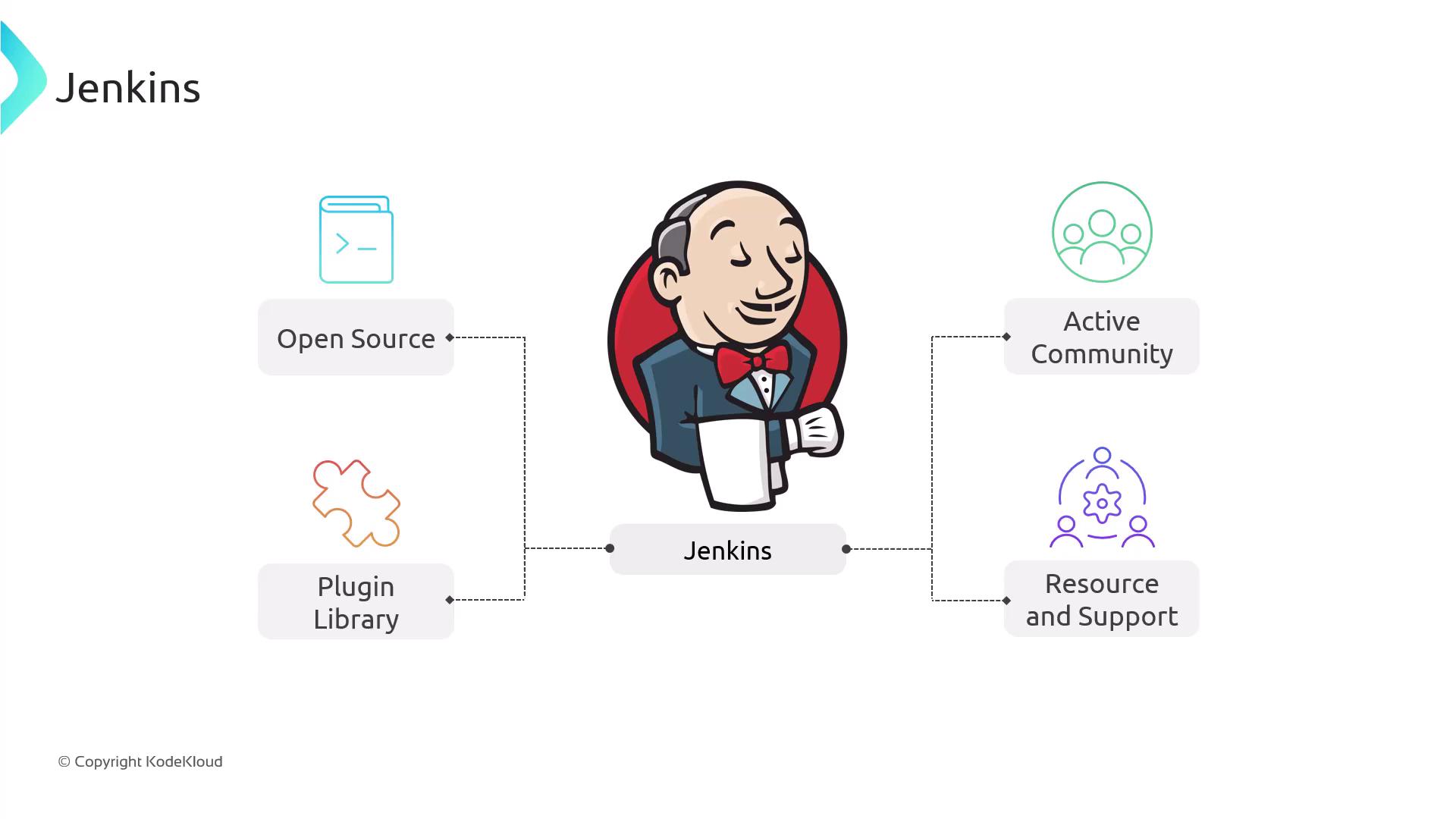
Alice now faces the additional challenge of selecting the most appropriate CI/CD tool. After evaluating several alternatives—including well-established platforms like Jenkins and Bamboo alongside modern solutions such as Travis CI and CircleCI—she determined that Jenkins offers significant advantages. Although not the newest technology available, Jenkins remains a competitive choice due to its open-source nature, extensive plugin ecosystem, and a large, active community that provides robust support. This combination of customizability, rich features, and community backing positions Jenkins as a powerful and adaptable solution for CI/CD.
Throughout this article, our focus will be on creating Jenkins pipelines tailored for the Node.js application. We will cover essential topics such as integration testing, security best practices, and multi-platform deployment strategies.
Thank you for following along in this lesson. Stay tuned as we delve deeper into the process of building a robust, scalable CI/CD pipeline using Jenkins.