

Ingress Resource vs Ingress Controller
An Ingress Resource is a Kubernetes object that declares hostname- and path-based routing rules. By itself, it performs no traffic routing. An Ingress Controller is a Pod (or set of Pods) running inside the cluster. It monitors Ingress resources and programs the underlying proxy or load balancer to enforce those rules.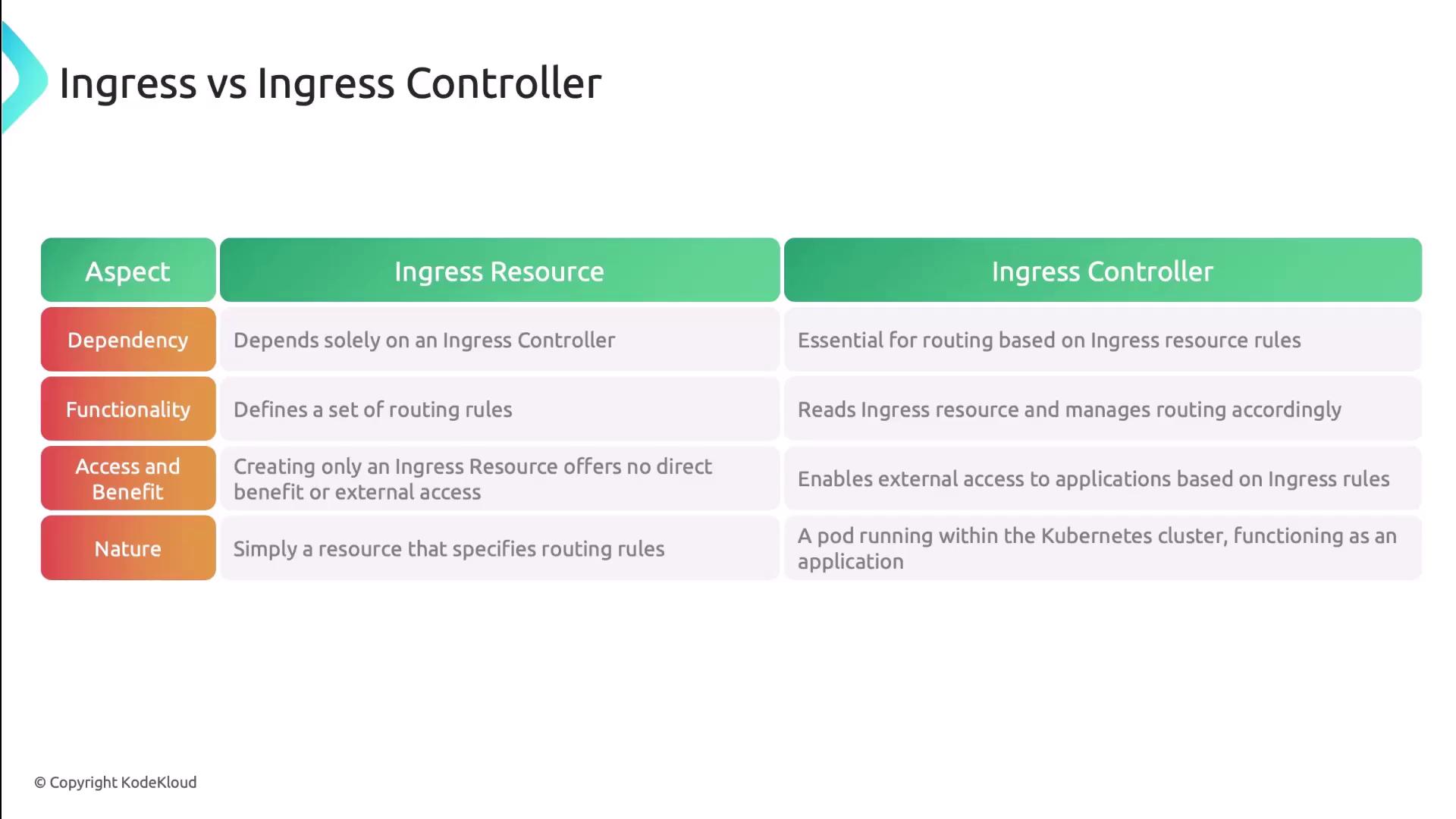
Defining an Ingress without an active controller means no external traffic will reach your Services.
Kubernetes Architecture with Ingress
Clients send HTTP(S) requests to the cluster’s external endpoint. The Ingress controller intercepts these requests, matches them against Ingress rules, and forwards them to the appropriate Service, which then load-balances to the backend Pods.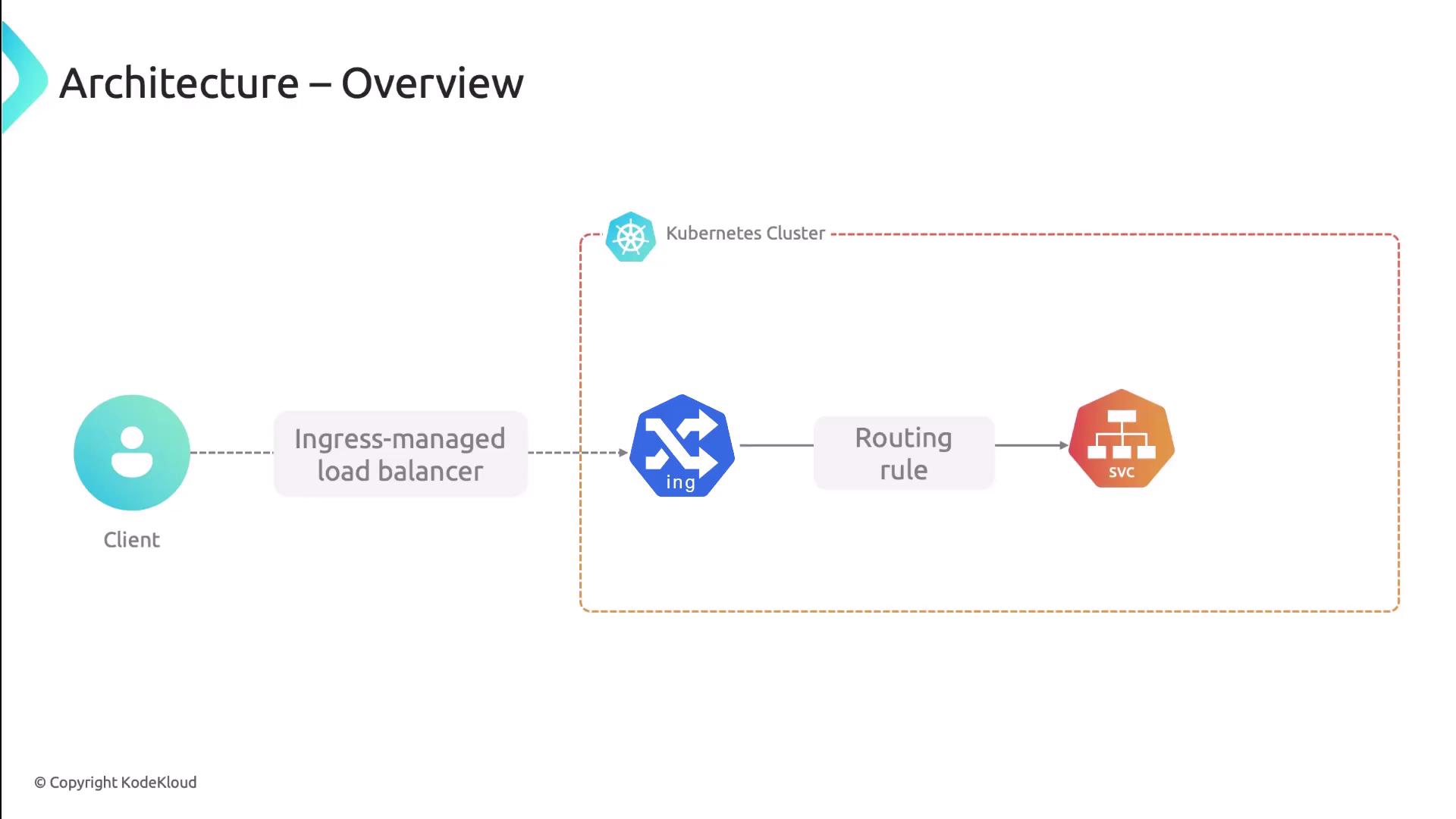
Cloud-based Ingress Controllers
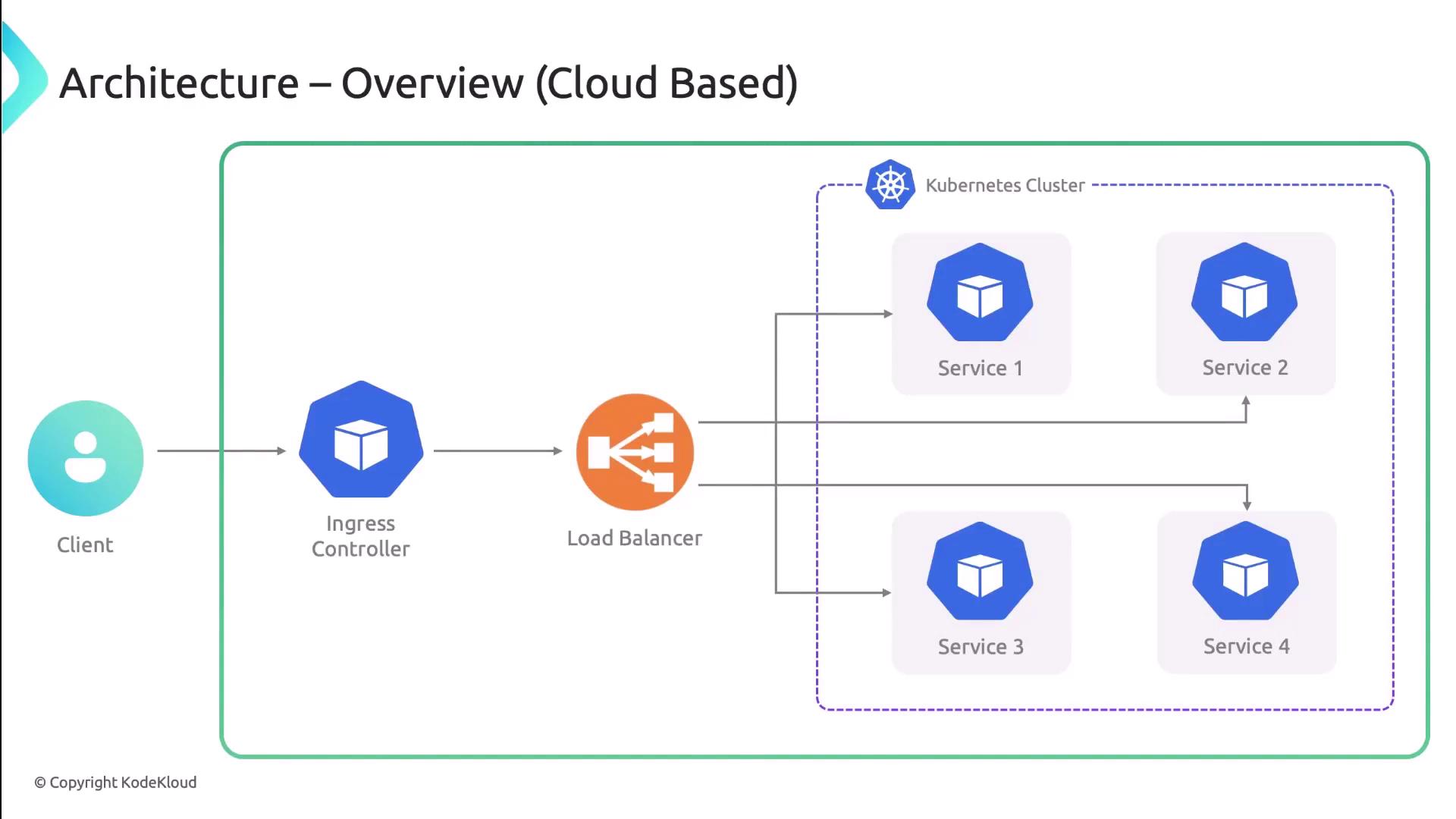
Cloud providers offer managed Ingress controllers that integrate with native infrastructure services—load balancers, firewalls, IAM, and more—simplifying setup and scaling.
Key benefits:
- Automatic provisioning of cloud LoadBalancer resources
- Built-in security features (WAF, IAM integration)
- Managed upgrades and high availability
- Reduced operational overhead
Non-cloud-based Ingress Controllers
Self-managed controllers run anywhere you choose—on-premises, private clouds, or public clouds where you handle cluster exposure. You’ll need to configure a Service of type LoadBalancer or NodePort to expose the Ingress controller externally.Deployment Models: Deployment vs DaemonSet
Choosing Deployment or DaemonSet affects how Ingress Pods are scheduled, how traffic is distributed, and resource consumption.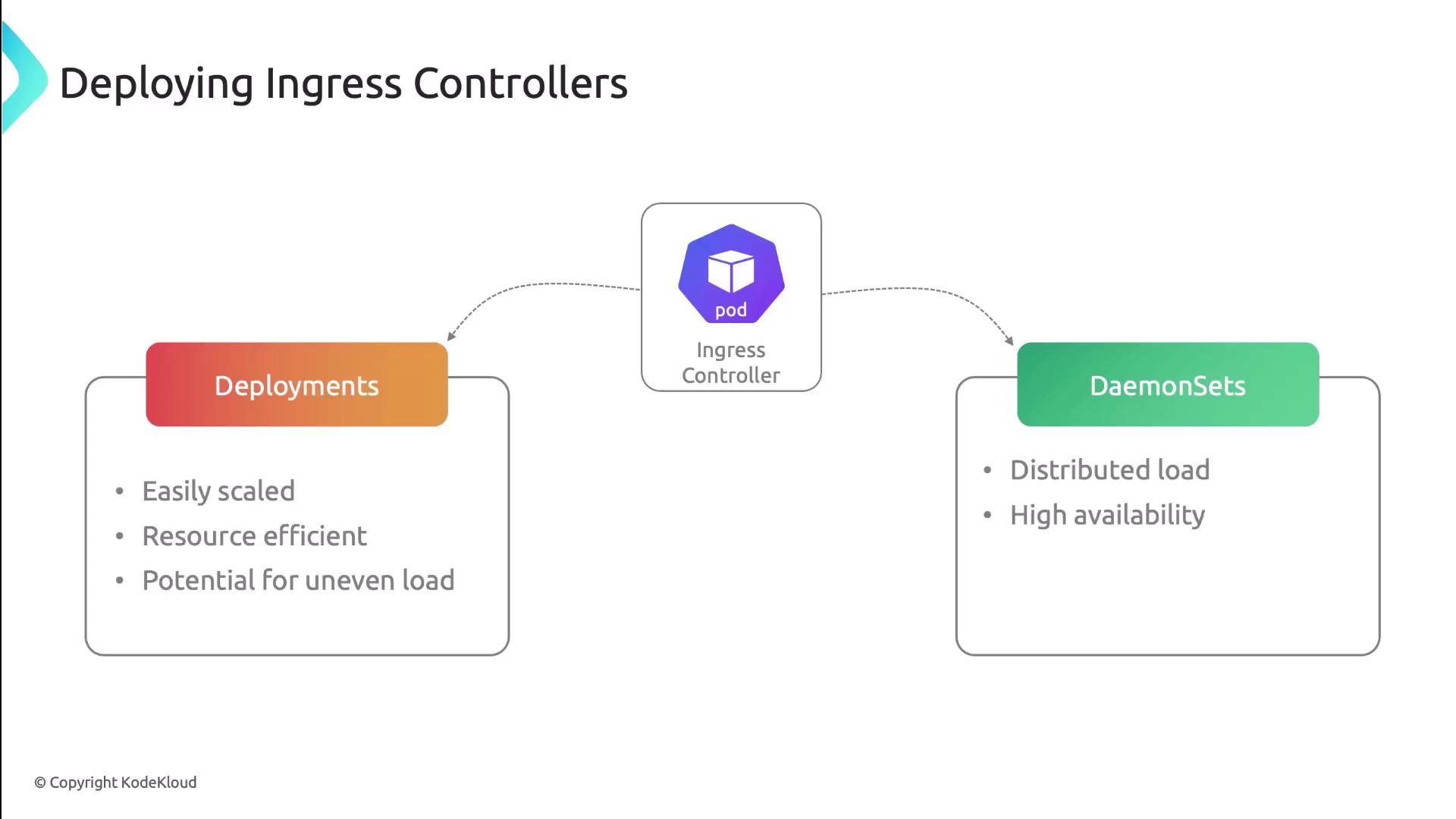
- Use Deployment when traffic patterns fluctuate and you want to optimize resource usage.
- Use DaemonSet for uniform low-latency ingress on every node and built-in failover.
Factors to Consider
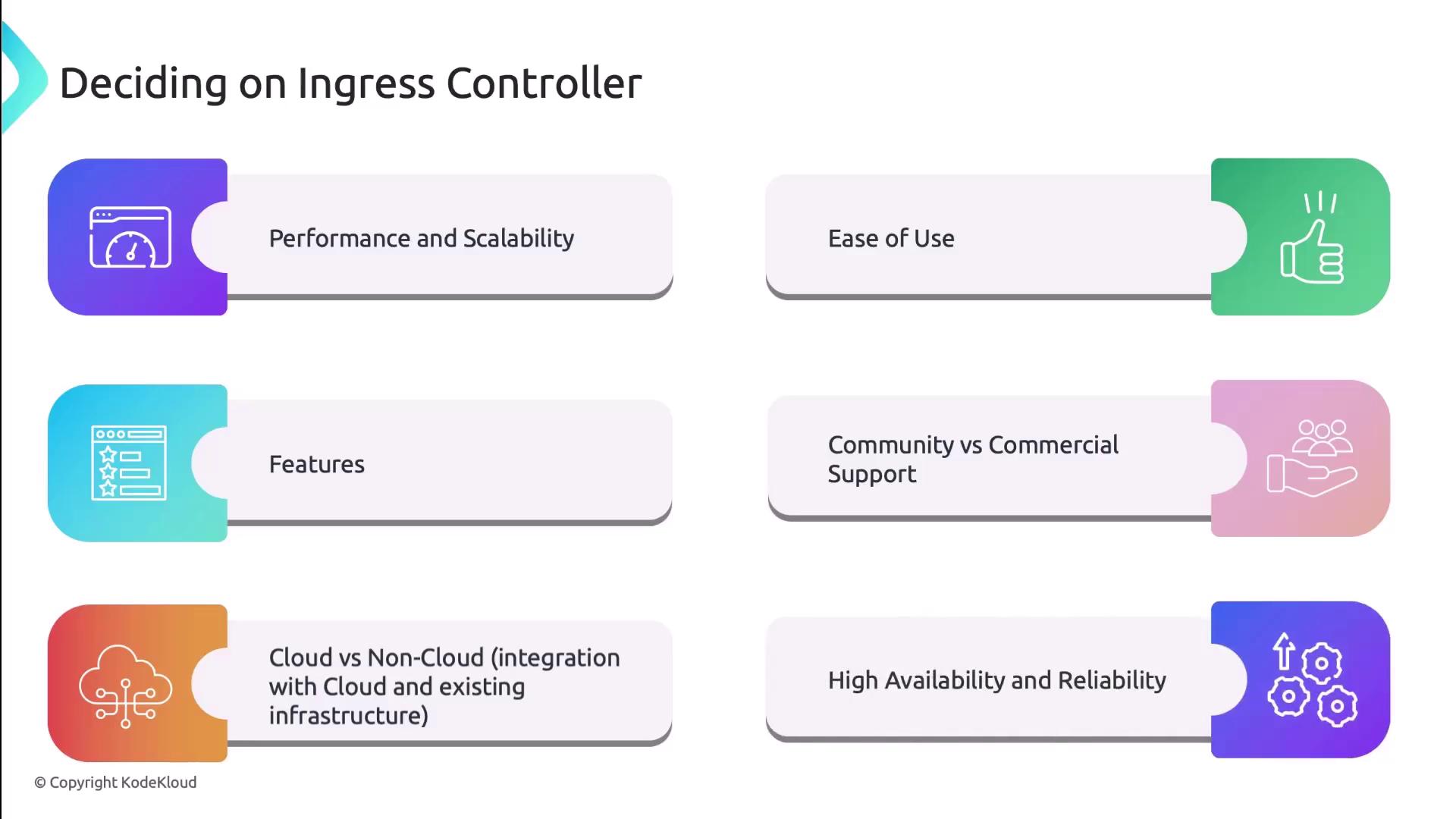
Before selecting an Ingress controller or deployment model, evaluate:- Traffic volume, throughput, and latency requirements
- Scaling capabilities (static vs dynamic)
- Features: supported protocols, SSL/TLS, middleware (auth, rate limiting)
- Integration with your cloud or on-prem infrastructure
- Configuration complexity and learning curve
- API/automation support for CI/CD integration
- Community support, plugin ecosystem, and commercial options
- Cost: managed service fees vs self-managed resource costs
- High availability, failover strategies, and load balancing algorithms
References
- Kubernetes Ingress Documentation
- AWS Load Balancer Controller Guide
- NGINX Ingress Controller
- Traefik Official Docs